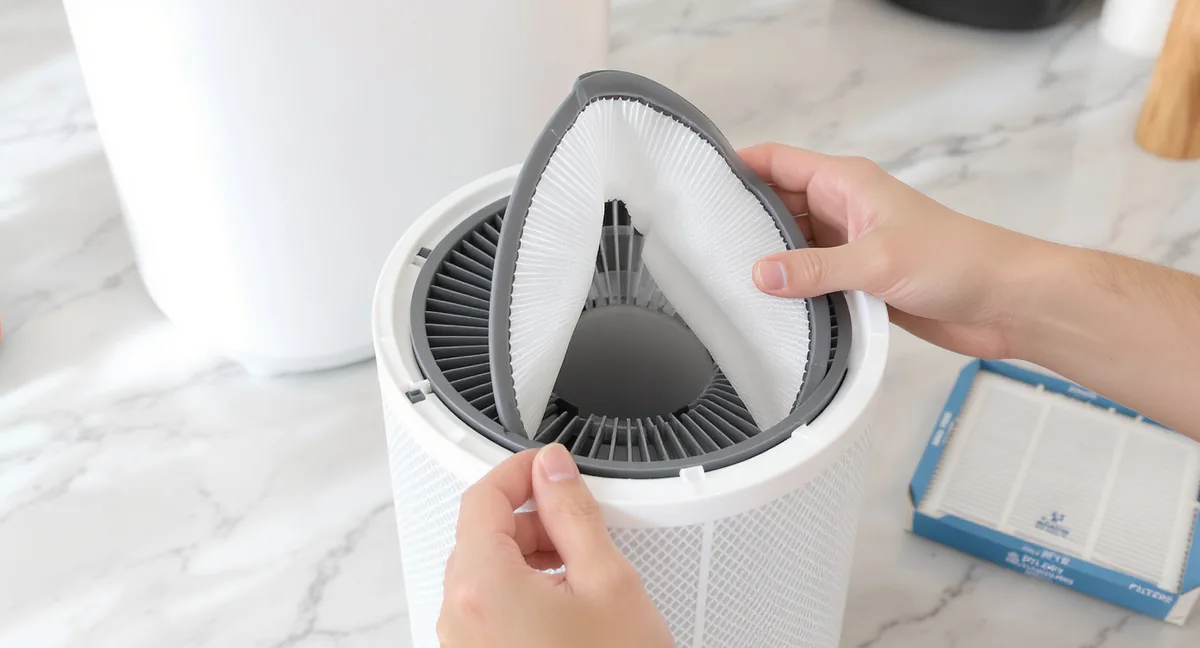
An air purifier is only as effective as its filters. A clogged or expired filter does not just stop cleaning the air — it can actually reduce airflow, increase energy consumption, and become a breeding ground for trapped bacteria and mold. Regular maintenance is the difference between a purifier that protects your health and one that just makes noise.
The good news is that maintaining an air purifier is straightforward. Most models require just 10 minutes of attention every few weeks, plus a filter swap once or twice a year.
Understanding Your Purifier's Filter System
Most quality air purifiers use a multi-stage filtration system:
| Filter Type | What It Catches | Washable? | Typical Lifespan |
|---|---|---|---|
| Pre-filter | Hair, large dust, pet fur | Yes (most models) | Permanent with cleaning |
| HEPA filter | PM2.5, pollen, mold, dander, bacteria | No | 6-12 months |
| Activated carbon filter | VOCs, odors, gases, smoke | No | 3-6 months |
| Ionizer plate (if applicable) | Enhances particle capture | Yes (wipe clean) | Permanent |
Understanding which filters your model uses — and which are washable versus disposable — is step one of proper maintenance.
Monthly Maintenance: Cleaning the Pre-Filter
The pre-filter is your first line of defense. It catches large particles before they reach the HEPA filter, extending its life significantly. Here is how to clean it:
- Power off and unplug the purifier
- Remove the pre-filter — Consult your manual for panel removal instructions
- Vacuum the pre-filter using a brush attachment on low suction
- Wash if applicable — Many pre-filters can be rinsed under lukewarm water. Do not use soap unless the manufacturer specifies it
- Dry completely before reinstalling — A damp pre-filter can grow mold. Allow 24 hours of air drying
- Wipe the exterior and air intake vents with a damp cloth to remove surface dust
On models like the Coway Airmega AP-1512HH, the pre-filter indicator will light up every 2-4 weeks as a cleaning reminder. Do not ignore it — skipping pre-filter maintenance can cut your HEPA filter's life in half.
When to Replace Your HEPA Filter
Manufacturer timelines are guidelines, not guarantees. Your actual replacement schedule depends on:
- Daily runtime — 24/7 operation wears filters faster than 8-hour use
- Local air quality — Urban environments and wildfire seasons load filters faster
- Pets in the home — Pet dander and fur accelerate clogging
- Household size — More people means more activity and more airborne particles
Signs Your HEPA Filter Needs Replacing
- Reduced airflow — The purifier sounds the same but you feel less air output
- Persistent odors — Smells that the purifier used to eliminate now linger
- Filter indicator light — Most modern purifiers track filter usage hours electronically
- Visible discoloration — A heavily used HEPA filter turns from white to dark grey
- Increased allergy symptoms — Sneezing or congestion returns despite the purifier running
Important: Never vacuum or wash a True HEPA filter. Doing so damages the fiber structure and destroys filtration efficiency. HEPA filters must be replaced, not cleaned.
Carbon Filter Replacement
Activated carbon filters have a shorter life than HEPA filters because they become saturated with adsorbed gases. Once saturated, a carbon filter cannot capture any more VOCs or odors — and in some cases, it can begin releasing trapped chemicals back into the air (a process called off-gassing).
Replace carbon filters every 3-6 months depending on usage and odor exposure. If you cook frequently, have pets, or live near a source of pollution, err on the shorter side.
Maintenance Schedule by Model
Here is a quick reference for two of our most recommended purifiers:
Coway Airmega AP-1512HH
- Pre-filter: Clean every 2-4 weeks (indicator light reminds you)
- HEPA filter: Replace every 12 months (~$40)
- Carbon filter: Replace every 6 months (~$20)
- Annual maintenance cost: Approximately $80
Levoit Core 400S
- Pre-filter: Integrated with HEPA — not separately washable
- 3-in-1 filter (pre-filter + HEPA + carbon): Replace every 6-8 months (~$40)
- Annual maintenance cost: Approximately $60-80
Recommended Products
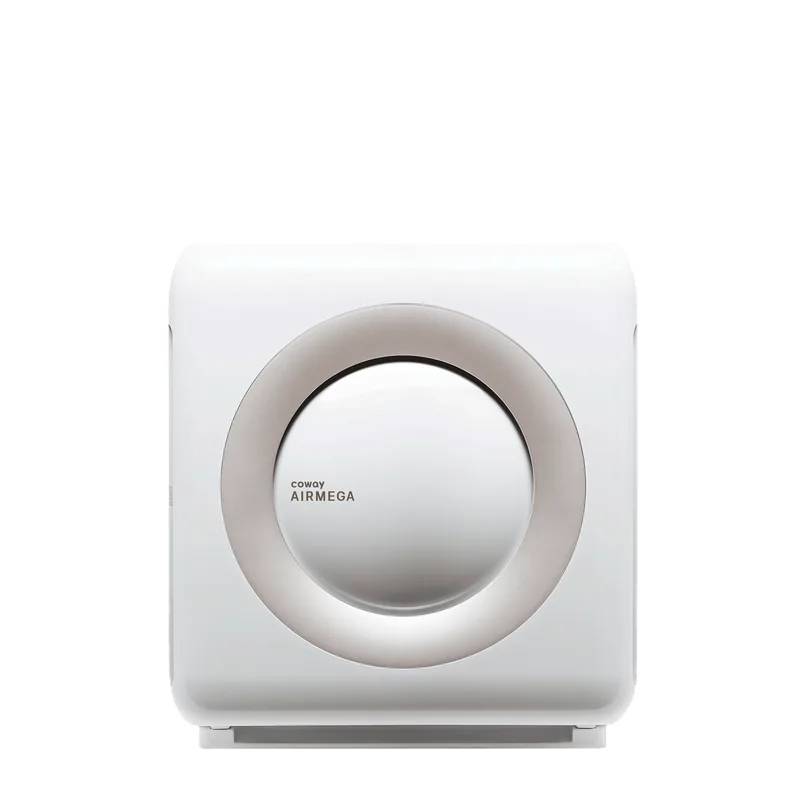
The Coway Mighty features a filter replacement indicator and one of the lowest annual filter costs of any premium purifier. Its separately washable pre-filter extends HEPA life significantly.
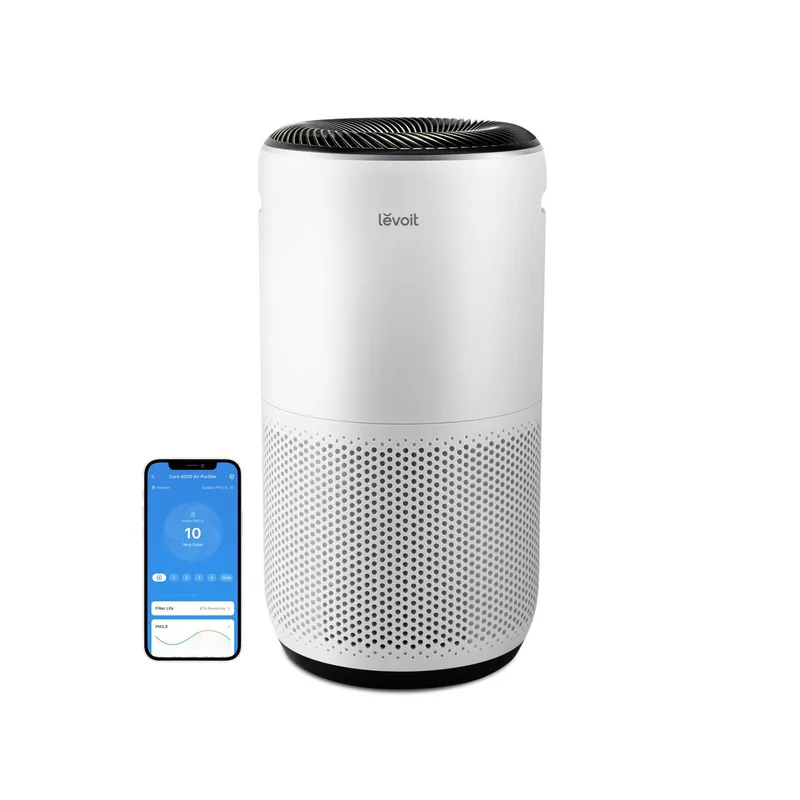
The Levoit Core 400S uses an integrated 3-in-1 filter system that simplifies replacement — one filter swap covers pre-filtration, HEPA, and carbon in a single step.
The Bottom Line
Maintaining your air purifier takes minimal effort but delivers maximum return. Clean your pre-filter monthly, replace HEPA and carbon filters on schedule, and pay attention to your purifier's indicator lights. A well-maintained purifier running with fresh filters will outperform even the most expensive model running on neglected, clogged media. Think of filter replacements not as an expense but as an investment in the clean air you bought the purifier for in the first place.
This guide was researched and written by the AirQualityNest editorial team. We update our content regularly to reflect the latest products, pricing, and research.
Continue Reading
HEPA Filter Explained
Everything you need to know about HEPA filtration technology
Activated Carbon Filters Explained
How carbon filters work and when to replace them
Do Air Purifiers Really Work?
Science-backed evidence on air purifier effectiveness
How to Tell If Your Air Purifier Is Working
Signs your purifier is filtering effectively
Air Purifier Noise Levels Explained
Understanding decibel ratings and quiet operation
Continue Reading
Best Air Purifiers for Open Floor Plans in 2026: High-CADR Models That Cover It All
The best air purifiers for open floor plans ranked by CADR, coverage area, and noise. High-performance HEPA purifiers that handle 500-1,500+ sq. ft. open spaces.
Best Smart Humidifiers in 2026 (Wi-Fi, App Control & Auto Humidity)
The best smart humidifiers with Wi-Fi, app control, and auto humidity adjustment. Top picks for Alexa, Google Home, and smart home integration.
The 5 Best Portable Air Quality Monitors in 2026
Monitor your air quality on the go. We tested the best portable and compact air quality monitors for accuracy, battery life, and sensor range.