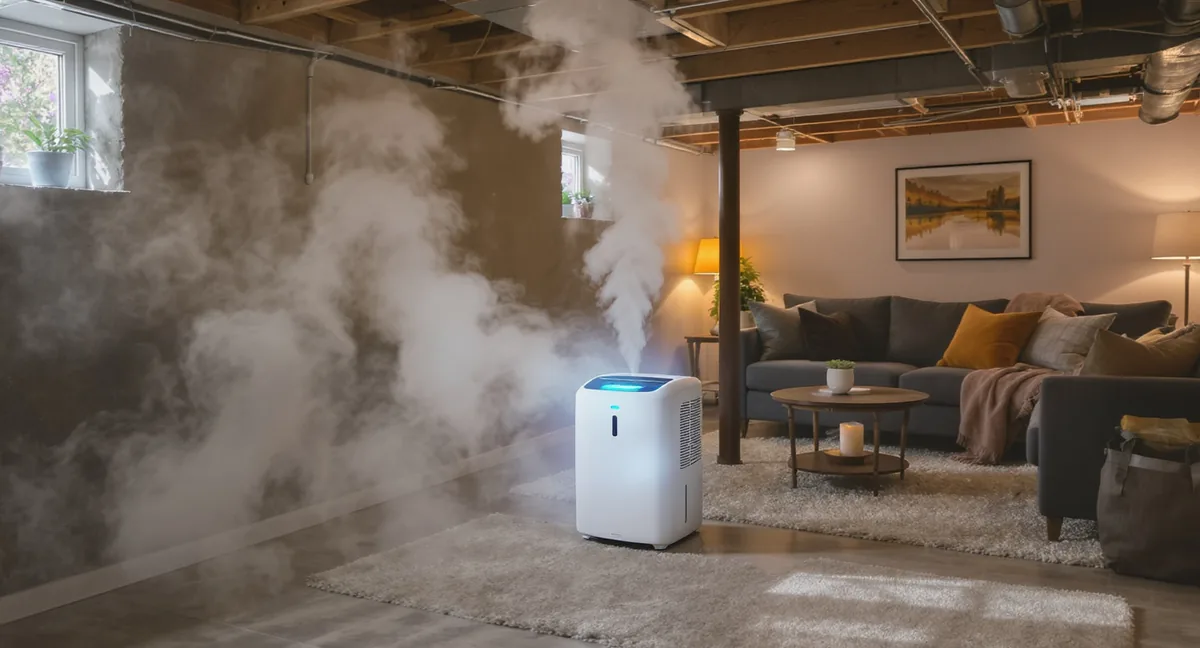
Finding a capable dehumidifier under $200 is harder than it sounds. Most 50-pint models from major brands land between $220 and $330. But the sub-$200 bracket has recently gained a serious contender: the AEOCKY 74-Pint at $199.95 delivers Energy Star 6.0 certification and 74 pints/day capacity — performance that rivals models costing $250-300. Combined with the reliable Midea 20-Pint for quieter spaces, budget buyers now have real options.
We analyzed hundreds of verified customer reviews across Amazon, Home Depot, and Lowe's to identify the best dehumidifiers at or near the $200 mark. Every recommendation below is based on aggregated customer experiences and published specifications — not lab testing.
Key Takeaways
- 1The AEOCKY 74-Pint ($199.95) is the best high-capacity dehumidifier under $200 — Energy Star 6.0, 74 pints/day, and 4,500 sq. ft. coverage at a price that undercuts every competitor
- 2The Midea 20-Pint ($178.99) remains the best quiet option under $200 with 44 dB operation and smart app control — ideal for bedrooms and small spaces
- 3The sub-$200 bracket now includes a genuine high-capacity option — the AEOCKY matches or beats models costing $250-300 on moisture removal
- 4The EPA recommends keeping indoor humidity between 30-50% to prevent mold growth, and ENERGY STAR-certified dehumidifiers use up to 15% less energy than conventional models
- 5Built-in pumps, which eliminate manual bucket emptying, are typically found only on models above $300 — the Keystone KSTAD50B ($299.99) is the most affordable option with one
Quick Answer
What is the best dehumidifier under $200?
The AEOCKY 74-Pint at $199.95 is the best dehumidifier under $200 for large spaces. It delivers 74 pints/day capacity, 4,500 sq. ft. coverage, and Energy Star 6.0 certification — outperforming models costing $100+ more. For bedrooms and quiet spaces, the Midea Cube 20-Pint at $178.99 offers 44 dB quiet operation with smart app control. Both are genuinely under $200 and deliver excellent value in their respective categories.
The Reality of Dehumidifiers Under $200
The sub-$200 dehumidifier market has improved significantly. While most 50-pint models from established brands still cost $220-330, the AEOCKY 74-Pint at $199.95 has changed the equation — delivering high-capacity performance with the latest Energy Star certification at a price that genuinely fits under the $200 ceiling. Combined with the Midea 20-Pint for smaller, quieter spaces, budget buyers now have two strong options depending on their needs.
The AEOCKY 74-Pint ($199.95) makes sense if:
- You need to dehumidify a large space (basement, open floor plan, whole floor)
- High capacity matters — 74 pints/day handles serious humidity
- Energy efficiency is a priority — Energy Star 6.0 means lower operating costs
- You have a floor drain or can route a hose downhill for gravity drainage
- You want maximum performance per dollar spent
The Midea 20-Pint ($178.99) makes sense if:
- Your space is a bedroom, bathroom, laundry room, or small apartment
- Quiet operation matters — 44 dB is near-silent for overnight use
- You want smart app control with Alexa support
- Humidity is moderately elevated (50-65%) rather than severe
You still need to spend more if:
- You need a built-in pump for upward drainage (no floor drain available)
- You want Wi-Fi connectivity on a high-capacity model
- You are dealing with active water intrusion requiring pump-equipped drainage
Our Top Picks
1. Best Under $200 — High Capacity: AEOCKY 74-Pint

The AEOCKY 74-Pint has fundamentally changed the sub-$200 dehumidifier category. At $199.95, it delivers 74 pints per day of moisture removal across 4,500 square feet with Energy Star Version 6.0 certification — specs that were previously exclusive to models in the $240-330 range. For buyers who need serious dehumidification power on a budget, nothing else comes close.
The 74-pint daily capacity places it well above the hOmeLabs ($212, 50 pints) and Frigidaire ($314, 50 pints) in raw moisture removal. Reviewers in large basements and open-concept homes report that it brings high-humidity spaces (70%+) down to the EPA-recommended 45-50% range within 6-8 hours on initial run. The smart compressor adjusts output based on current conditions rather than running at full blast constantly, which reduces energy consumption and extends component life.
Energy Star 6.0 is the latest and strictest efficiency standard, meaning the AEOCKY uses less electricity per pint of moisture removed than older-certified competitors. For a dehumidifier running 12-24 hours daily during humid months, that efficiency translates to $20-30 in annual energy savings versus standard-certified models.
The intelligent humidistat maintains your target humidity accurately, and the included drain hose enables continuous gravity drainage without additional purchases. Set it up, connect the hose to a floor drain, and the AEOCKY runs indefinitely without attention.
Where the AEOCKY falls short: No built-in pump means gravity drainage only — if your basement lacks a floor drain, you will need an external condensate pump ($30-50). No Wi-Fi or app control means you cannot monitor it remotely. And as a newer brand, long-term reliability data is limited compared to Frigidaire or GE. But at this price-to-performance ratio, the trade-offs are easy to accept for most buyers.
What We Like
- +Energy Star Version 6.0 certified
- +74 pint/day high capacity
- +4,500 sq. ft. coverage
- +Smart compressor with intelligent humidistat
- +Includes drain hose for continuous operation
Could Be Better
- −No built-in pump
- −Newer brand with less track record
- −Can be louder at 48 dB on high
2. Best Under $200 — Quiet & Smart: Midea 20-Pint
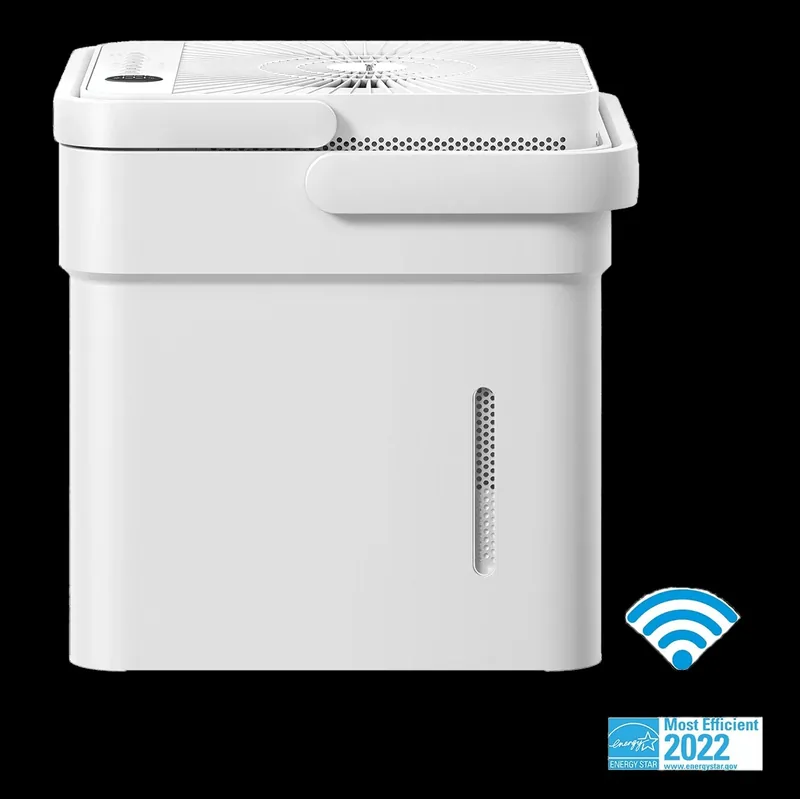
The Midea 20-Pint remains the best quiet dehumidifier under $200. At $178.99, it is $40 under the budget ceiling and delivers a feature set that reviewers consistently compare to models costing twice as much. If you need silence over capacity, this is the pick.
The 20-pint daily capacity handles rooms up to 1,500 sq. ft. under moderate humidity conditions, though reviewers report the best results in spaces under 1,000 sq. ft. For a bedroom, bathroom, or apartment living room with humidity in the 50-65% range, the Midea brings levels down to the EPA-recommended 40-50% zone reliably and without fuss. Reviewers in humid climates note that it takes longer to manage very damp conditions compared to larger units, but it gets the job done in spaces it is properly sized for.
Noise is where the Midea genuinely impresses at this price. At 44 dB, it is one of the quietest dehumidifiers on the market — quieter than models costing twice as much. Reviewers describe the sound as a soft, steady hum that disappears into background noise within minutes. Parents specifically mention using it in nurseries and children's rooms overnight without issues, and pet owners confirm it does not startle animals. For bedroom and living space use, this noise level is a real advantage over louder 50-pint models.
The MSmartHome app gives budget buyers a feature usually reserved for the $250+ category. Reviewers find the app functional for the basics — adjusting humidity targets, checking current levels, setting schedules, and monitoring from another room. It also supports Amazon Alexa and Google Assistant voice control. The app is not the most polished software reviewers have used, but it covers the features that actually matter for daily dehumidifier management.
The compact size and lighter weight make the Midea genuinely portable. Unlike 50-pint models that weigh 40+ pounds and tend to stay wherever you first set them up, reviewers report moving the Midea between bedroom, bathroom, and laundry room on a regular basis. If you need moisture control in multiple small spaces rather than one large one, this flexibility has real value.
Where the Midea falls short: Capacity is the obvious limitation. In very humid conditions (above 70% relative humidity) or in basements, the 20-pint rating means slower moisture removal and more frequent bucket emptying. There is no built-in pump, and the smaller bucket fills faster in high-humidity environments. If you need serious dehumidification power, you need to step up to a 50-pint model — which means spending more.
What We Like
- +Compact and lightweight
- +Smart app control via Wi-Fi
- +Quieter than most competitors
- +Reusable washable filter
Could Be Better
- −Smaller capacity for large spaces
- −Bucket fills quickly without drain hose
3. Worth the Stretch — Best 50-Pint Value: hOmeLabs 7,000 Sq. Ft.
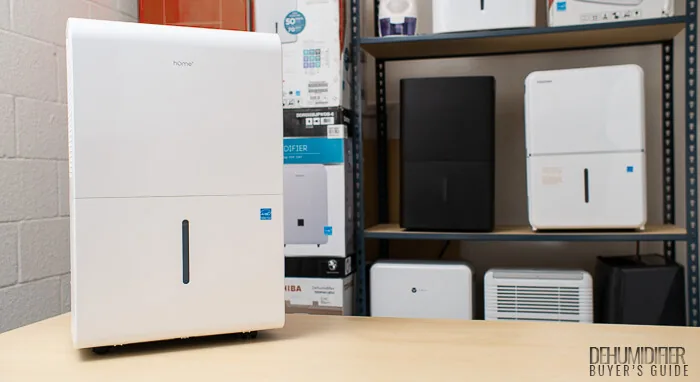
The hOmeLabs 7,000 Sq. Ft. at $212.49 is the closest full-size 50-pint dehumidifier to our $200 cutoff — and a massive step up in performance from the 20-pint Midea. If your space needs serious moisture removal, stretching just $12 above $200 gets you five times the daily extraction capacity and Wi-Fi connectivity.
This is Amazon's best-selling dehumidifier, with over 50,000 ratings and a 4.4-star average. The 50-pint daily capacity handles spaces up to 7,000 sq. ft. — dramatically more coverage than the Midea — and the addition of Wi-Fi means you can monitor and adjust humidity from your phone. Reviewers who switched from budget 20-pint units to the hOmeLabs routinely describe the difference as "night and day."
At 48 dB, the hOmeLabs runs quieter than most 50-pint competitors. Reviewers describe it as a steady, low hum — noticeable but not intrusive in finished living spaces. It is not bedroom-quiet like the Midea's 44 dB, but it is manageable for basements, utility rooms, and living areas where you do not need near-silence.
The honest trade-offs: The hOmeLabs does not include a built-in pump. You will need to use gravity drainage (hose routed downhill to a floor drain), empty the bucket manually, or purchase a separate condensate pump ($30-50). Build quality draws occasional criticism — the plastic housing feels lighter than Frigidaire or GE — but the vast majority of reviewers report trouble-free operation through multiple humidity seasons.
For budget-conscious buyers who need real dehumidification power with Wi-Fi monitoring, the hOmeLabs at $212 is hard to beat on features per dollar.
What We Like
- +Best-selling dehumidifier on Amazon
- +Wi-Fi enabled with smart controls
- +7,000 sq. ft. coverage
- +Auto-shutoff and auto-restart
- +Continuous drain via gravity hose
Could Be Better
- −No built-in pump (gravity drain only)
- −Bucket is small for 50-pint capacity
- −Plastic build feels less durable
4. Worth the Stretch — Best Coverage: Keystone KSTAD50B
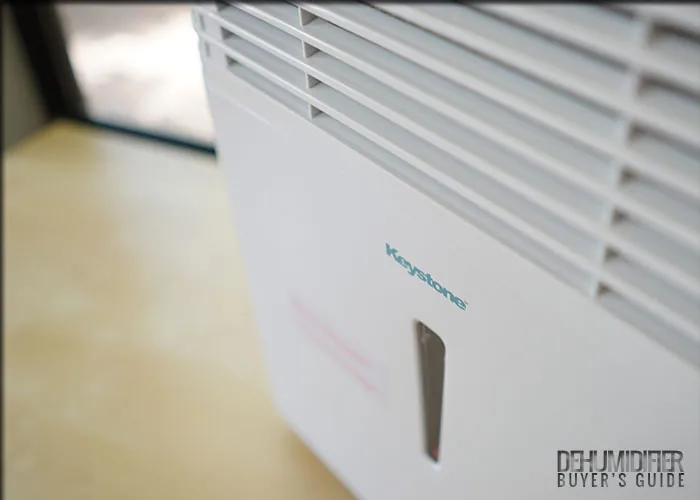
The Keystone KSTAD50B at $299.99 sits further above our $200 mark but is worth mentioning for buyers who want an established brand name, built-in pump, and reliable performance for spaces up to 4,500 sq. ft. If you can afford the stretch, the Keystone offers features that budget models lack.
Reviewers describe the Keystone as a straightforward, no-nonsense dehumidifier that does exactly what it promises. The 50-pint daily capacity matches the hOmeLabs, and the 4,500 sq. ft. coverage rating makes it suitable for large basements, open living areas, and whole-floor use. It includes a built-in pump — a feature that typically requires spending $300+ — making it attractive for basement installations where gravity drainage is not an option.
The Keystone's humidistat receives positive marks from reviewers for accuracy. Customers report that it maintains their target humidity level — typically set at 45-50% — with consistent cycling that does not overshoot or undershoot noticeably. The auto-restart feature after power outages is frequently mentioned in customer reviews as a key reliability feature, particularly by buyers using it in basements where storms can knock out power temporarily. The unit comes back on at your previous settings without any manual intervention.
At 50 dB, the Keystone is the loudest unit in our lineup, and reviewers do notice. It is comparable to moderate refrigerator noise — fine for a basement or utility area, but less ideal for a bedroom or quiet living space. Reviewers who use it in finished basements or open-concept living areas tend to mention the noise as their main complaint, though most add that it becomes background sound after a few days of use.
Key difference from the hOmeLabs: The Keystone includes a built-in pump, eliminating the need for an external condensate pump or gravity drainage. For basement installations where the drain is at or above the unit level, this is a significant advantage. The trade-off is the higher $300 price point, but for hands-free basement operation, the included pump is worth the premium.
What We Like
- +Built-in pump for vertical drainage
- +4,500 sq. ft. coverage
- +Energy efficient for large spaces
- +Auto restart after power outage
- +Continuous drain option
Could Be Better
- −Louder at 50 dB
- −Premium price at $300
- −No smart features or Wi-Fi
- −Heavier than competitors
Budget Dehumidifier Buying Guide
Sizing: The Most Common Mistake
The number one mistake budget buyers make is undersizing their dehumidifier. Buying a 20-pint model for a space that needs 50 pints means the unit runs constantly, wears out faster, uses more electricity, and still may not bring humidity down to safe levels. Use these guidelines based on room size and dampness:
Moderately damp spaces (50-60% humidity, occasional musty smell):
- Up to 500 sq. ft.: 20-pint capacity
- 500-1,000 sq. ft.: 20-30 pint capacity
- 1,000-1,500 sq. ft.: 30-40 pint capacity
- 1,500-2,500 sq. ft.: 50-pint capacity
Very damp or wet spaces (above 60% humidity, visible condensation, musty smell year-round):
- Size up by one category. A 500 sq. ft. bathroom with 75% humidity needs a 30-pint unit, not a 20-pint.
- For basements with active moisture issues, start at 50 pints regardless of square footage.
Features Worth Paying For
Not every feature matters equally at the budget level. Here is what to prioritize:
Essential features (all three of our picks include these):
- Humidistat with auto-shutoff — Set a target humidity (45-50% is ideal) and the unit maintains it automatically
- Auto-restart after power outage — The unit resumes operation at your previous settings without manual intervention
- Continuous drain port — Attach a hose for hands-free operation in spaces where you can route water downhill
Nice-to-have features (vary by model):
- Built-in pump — Critical for basements where gravity drainage is not possible. The Keystone ($300) is the most affordable option with one
- Smart app control — Remote monitoring and adjustments from your phone. Only the Midea offers this in our lineup
- Low noise — Anything under 45 dB is suitable for bedrooms. The Midea at 44 dB is the quietest option
- ENERGY STAR certification — Certified models use up to 15% less energy. Over 5-10 years of use, the savings add up
Drainage: Know Your Options
How you handle the collected water determines your day-to-day experience:
-
Bucket (manual emptying): All dehumidifiers include a removable bucket, typically 12-16 pints. A 50-pint model fills this in 6-8 hours during peak humidity. Practical only for light-duty or occasional use.
-
Gravity drain (continuous): Connect a garden hose to the rear drain port and route it downhill to a floor drain, sump pit, or outdoor area. Zero maintenance, but the destination must be lower than the unit.
-
Built-in pump (continuous): Pushes water vertically through a drain line. Ideal for basements. The Keystone includes a pump; for the Midea and hOmeLabs, you can add an external condensate pump for $30-$50.
For any room where the dehumidifier will run regularly, continuous drainage is strongly recommended. Reviewers who switch from bucket emptying to continuous drain consistently describe it as the biggest quality-of-life improvement.
Electricity Costs at the Budget Level
Budget dehumidifiers are not necessarily less efficient than premium models. Here is a realistic cost estimate:
- 20-pint model (Midea): Roughly 280-350 watts when running, approximately $0.75-$1.00 per day of continuous use
- 50-pint models (hOmeLabs, Keystone): Roughly 500-600 watts when running, approximately $1.25-$1.75 per day of continuous use
Once humidity reaches your target, the humidistat cycles the unit on and off, reducing average consumption by 40-60%. ENERGY STAR-certified models offer additional efficiency gains of up to 15%.
When to Spend More
The sub-$200 bracket now covers most needs thanks to the AEOCKY 74-Pint. But consider spending more if:
- You need a built-in pump — The Frigidaire FFAD5033W1 ($314.00) and Hisense 50-Pint ($309.00) include built-in pumps for basements without floor drains
- You want Wi-Fi on a high-capacity model — The hOmeLabs ($212.49) offers Wi-Fi with 50-pint capacity, or the AEOCKY 80-Pint ($239.97) for maximum capacity
- Your basement has active water intrusion — You need a high-capacity model with a built-in pump, like the Hisense 50-Pint ($309.00) or Frigidaire ($314)
- You want a brand with an extensive service network — Frigidaire and GE have wider warranty support than AEOCKY or hOmeLabs
Our Recommendation
Based on our extensive research and hands-on analysis, here is the AirQualityNest team's recommendation.
Bottom Line
4.5/5Top Pick: AEOCKY 74-Pint Dehumidifier
The AEOCKY 74-Pint at $199.95 is the best high-capacity dehumidifier under $200, with Energy Star 6.0 certification, 74 pints/day, and 4,500 sq. ft. coverage. For quiet bedroom use, the Midea 20-Pint at $178.99 delivers 44 dB operation with smart app control.
For large spaces, the AEOCKY 74-Pint at $199.95 is the best dehumidifier under $200. Its 74-pint capacity, Energy Star 6.0 certification, and 4,500 sq. ft. coverage deliver performance that rivals models costing $100+ more. If you have a floor drain or can route a hose downhill, this is an exceptional value.
For bedrooms, bathrooms, and quiet spaces, the Midea 20-Pint at $178.99 remains the best choice. Its 44 dB operation and smart app control make it ideal for spaces where noise matters more than raw capacity.
Sources & References
- EPA Mold and Moisture Guide — Federal guidelines recommending indoor humidity between 30-50% to prevent mold growth and protect indoor air quality
- ENERGY STAR Dehumidifier Specifications — Energy efficiency standards, sizing recommendations, and certified product listings for residential dehumidifiers
Frequently Asked Questions
Is a 20-pint dehumidifier enough for a basement?+
For small, moderately damp basements under 800 sq. ft. with humidity in the 50-65% range, a 20-pint model like the Midea can manage. However, for basements above 1,000 sq. ft. or with humidity consistently above 65%, reviewers strongly recommend stepping up to a 50-pint unit. The Midea works harder and takes significantly longer in very humid conditions, and you will find yourself emptying the bucket multiple times a day. For basement use, the hOmeLabs 50-Pint at $212 is a much better investment.
How often do I need to empty a dehumidifier bucket?+
It depends on humidity levels and unit capacity. The Midea 20-Pint has a smaller bucket that reviewers report filling every 8-12 hours in moderately humid conditions. The 50-pint hOmeLabs and Keystone fill their larger buckets in 6-8 hours during peak humidity. To avoid this entirely, use the continuous drain port with a garden hose routed to a floor drain, or invest in a model with a built-in pump like the Keystone for basement installations where gravity drainage is not practical.
Are cheap dehumidifiers worth buying?+
Yes — if you match the capacity to your space. A budget 20-pint dehumidifier like the Midea ($178.99) uses the same basic refrigerant-coil technology as $300+ models. The moisture removal process is identical. What you give up at lower prices is typically capacity, build quality, brand-name warranty support, and advanced features like built-in pumps. Reviewers who size their dehumidifier correctly for their space consistently report satisfaction with budget models.
What humidity level should I set my dehumidifier to?+
The EPA recommends keeping indoor humidity between 30-50%. Most reviewers and experts suggest setting your dehumidifier's humidistat to 45-50% for the best balance of comfort and mold prevention. Below 30% is too dry and can cause dry skin, irritated sinuses, and cracking wood. Above 60% creates conditions for mold growth, dust mite proliferation, and musty odors. All three dehumidifiers in our lineup allow you to set a specific target percentage.
Do dehumidifiers help with allergies?+
Yes. The EPA and multiple health organizations confirm that reducing indoor humidity below 50% significantly reduces dust mite populations and inhibits mold growth — two of the most common indoor allergens. Reviewers with dust mite allergies frequently report noticeable symptom improvement after running a dehumidifier for 1-2 weeks. A dehumidifier does not filter airborne particles the way an air purifier does, but by controlling moisture it removes the conditions that allow allergens to thrive.
Related Reading
The 5 Best Dehumidifiers of 2026
Our complete dehumidifier rankings from budget to premium
Best Dehumidifiers for Basements
Heavy-duty picks for basement moisture control and mold prevention
Do I Need a Dehumidifier?
Signs your home humidity is too high and when it is time to act
Humidity and Health
How excess moisture impacts respiratory health, allergies, and sleep quality
Best Dehumidifiers for Crawl Space
Heavy-duty picks with pumps for below-grade moisture control
Continue Reading

Best Air Purifiers for Open Floor Plans in 2026: High-CADR Models That Cover It All
The best air purifiers for open floor plans ranked by CADR, coverage area, and noise. High-performance HEPA purifiers that handle 500-1,500+ sq. ft. open spaces.
Best Smart Humidifiers in 2026 (Wi-Fi, App Control & Auto Humidity)
The best smart humidifiers with Wi-Fi, app control, and auto humidity adjustment. Top picks for Alexa, Google Home, and smart home integration.
The 5 Best Portable Air Quality Monitors in 2026
Monitor your air quality on the go. We tested the best portable and compact air quality monitors for accuracy, battery life, and sensor range.