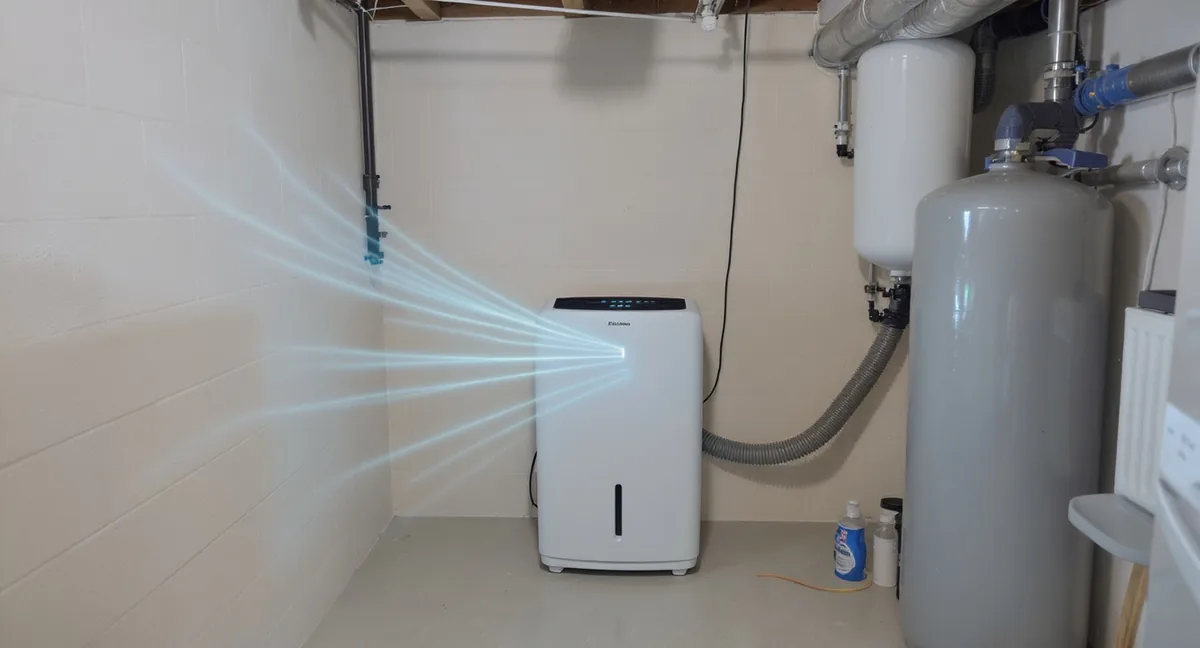
Most dehumidifiers come with a gravity drain port that works perfectly — as long as there is a floor drain sitting lower than the unit. But basements without floor drains, crawl spaces, rooms above grade, and any area where water cannot flow downhill leave you with one option: emptying a bucket every six to eight hours. A built-in pump changes everything. It pushes collected water vertically through a drain line, routing it up and out a window, into a utility sink, or to any drain that sits at or above the dehumidifier. No buckets. No babysitting. No coming home to a unit that shut itself off because the tank is full.
We analyzed hundreds of verified customer reviews, cross-referenced manufacturer specifications, and compared real-world feedback across retailer platforms to identify the four best dehumidifiers with built-in pumps you can buy in 2026. Every recommendation below is based on aggregated customer experiences — not lab claims.
Key Takeaways
- 1A built-in pump eliminates the biggest frustration of dehumidifier ownership: manually emptying the water bucket every 6-8 hours in humid conditions
- 2The Frigidaire FFAD5033W1 ($314.00) is the best overall pump dehumidifier — reviewers praise its reliable 50-pint capacity, built-in pump, and Energy Star efficiency for rooms up to 1,500 sq. ft.
- 3The Hisense 50-Pint ($309.00) covers up to 4,500 sq. ft. with a built-in pump for hands-free drainage, making it ideal for basements and large open spaces
- 4Pump dehumidifiers are essential for basements without floor drains, crawl spaces, and rooms where gravity drainage is physically impossible
- 5The EPA recommends keeping indoor humidity between 30-50% to prevent mold, and continuous pump drainage ensures your dehumidifier runs 24/7 to maintain that target
Quick Answer
What is the best dehumidifier with a built-in pump?
The Frigidaire FFAD5033W1 is the best dehumidifier with a built-in pump for most homes in 2026. At $314.00, it offers 50-pint daily capacity, Energy Star certification, and a reliable internal pump for continuous hands-free drainage — all at a lower price than most pump-equipped competitors. Reviewers consistently praise its set-it-and-forget-it operation in basements and other spaces without floor drains. For large or extremely humid areas up to 4,500 sq. ft., the Hisense 50-Pint ($309.00) offers the same capacity class with a built-in pump and portable design for hands-free operation.
Why a Built-in Pump Matters
The most common complaint in dehumidifier reviews is bucket management. A 50-pint dehumidifier in a humid basement fills its 12-to-14-pint bucket in as little as six hours. If you are asleep, at work, or simply forget, the unit shuts off when the tank is full — and humidity starts climbing right back up. Within 24-48 hours at 60% or higher humidity, mold can begin colonizing surfaces. The whole point of owning a dehumidifier is defeated by the need to manually intervene multiple times per day.
A built-in pump solves this entirely. Instead of relying on gravity — which requires a floor drain or sump pit sitting lower than the unit — the pump actively pushes water through a narrow drain line. This means you can route the hose upward: out a basement window, up into a utility sink, across a room to a bathroom drain, or through the ceiling into an upper-floor drain. The dehumidifier runs continuously, day and night, without ever needing you to touch it.
Where Pump Drainage Is Essential
- Basements without floor drains. Many finished and older basements simply do not have a floor drain. Without a pump, your only option is manual bucket emptying or purchasing a separate condensate pump ($30-$50) to add to a gravity-drain model.
- Crawl spaces. These are typically the most humid areas of a home and the most inconvenient to access. A pump dehumidifier lets you route the drain line to a safe discharge point and forget about it for months.
- Above-grade rooms. If you need a dehumidifier in a living room, bedroom, or sunroom where the nearest drain is in a kitchen or bathroom, a pump can push water horizontally and vertically to reach it.
- Rental properties and vacation homes. Pump-equipped units can run unattended for weeks or months, which is critical for properties you do not visit daily.
Pump vs. Gravity Drain: A Direct Comparison
Understanding the difference between pump and gravity drainage helps clarify why the pump models on this list are worth the investment.
Gravity drain uses a standard garden hose connected to the rear drain port. Water flows out using nothing but the force of gravity, which means the drain destination must be lower than the unit. This works well if you have a floor drain, a sump pit, or can route a hose outside to lower ground. There are no moving parts to fail and no additional noise. But if there is no downhill path to a drain, gravity drainage simply cannot work.
Pump drain uses a small internal pump that activates when the reservoir reaches a certain level. It pushes water through a smaller-diameter drain line — typically 3/8-inch vinyl tubing — and can lift it vertically. Most built-in pumps handle 10 to 16 feet of vertical lift, which is enough to reach a utility sink from a basement floor, push water out a window, or route it through a ceiling. The trade-off is a brief, intermittent hum when the pump engages, and one more mechanical component that could theoretically fail. In practice, reviewers report extremely reliable pump operation across thousands of hours of use.
How Pump Drainage Works
Setting up a pump dehumidifier for continuous drainage is straightforward:
- Connect the drain hose. Most pump models include a length of vinyl tubing. Attach it to the pump outlet on the rear or side of the unit.
- Route the hose to your drain point. Run it along the wall, up through a window, into a sink, or wherever you want the water to go. Use cable clips or hooks to keep the hose neat and avoid kinks.
- Ensure the hose can discharge freely. The end of the hose should not be submerged in standing water, which would create back pressure and prevent the pump from discharging.
- Set your target humidity and walk away. The dehumidifier monitors humidity, runs the compressor as needed, and the pump activates automatically whenever the internal reservoir fills.
Most built-in pumps handle the vertical lift distance specified by the manufacturer — typically 10 to 16 feet — measured from the pump outlet to the highest point of the hose. Horizontal distance adds minimal resistance, so you can generally run 20 to 30 feet of horizontal hose after reaching your maximum vertical height without issues.
How We Evaluate
Our recommendations are based entirely on aggregated customer reviews, verified purchase feedback, and published manufacturer specifications. We do not operate a testing lab. Instead, we:
- Analyze hundreds of verified customer reviews across Amazon, Home Depot, Lowe's, and Best Buy
- Cross-reference real-world performance reports with manufacturer-stated capacity and coverage
- Track long-term reliability feedback including pump durability, warranty claims, and performance over 6-12 months
- Compare noise measurements reported by reviewers against manufacturer dB ratings, including pump noise
- Evaluate pump performance based on reviewer reports of vertical lift, hose routing, and long-term reliability
Our Top Picks at a Glance
1. Best Overall: Frigidaire FFAD5033W1
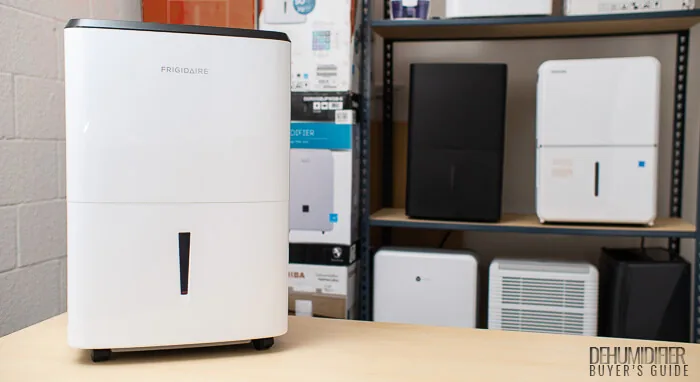
The Frigidaire FFAD5033W1 earns the top spot because it delivers the most reliable combination of dehumidification performance and pump drainage at a price that undercuts most competitors. With a 50-pint daily capacity and a built-in pump for continuous drainage, this is the unit that reviewers consistently recommend for basements, utility rooms, and any space where hands-free operation is the priority.
Customer reviews highlight the Frigidaire's consistent humidity control. Reviewers report setting a target of 45-50% and walking away, with the unit maintaining that level for weeks and months without intervention. The pump activates automatically and pushes water through the included drain line with enough lift to reach a utility sink from a basement floor or route out a window well. Multiple reviewers specifically mention running this unit in basements without floor drains and describe the pump as the reason they chose the Frigidaire over cheaper gravity-drain-only models.
The 51 dB noise level is comparable to a quiet conversation and typical for this capacity class. Reviewers who place the unit in unfinished basements or utility areas report that the noise is a non-issue. In finished living spaces, it is noticeable but not disruptive, especially on lower fan speeds. Energy Star certification means lower operating costs over time — reviewers in humid climates who run the Frigidaire continuously through summer report electricity costs consistent with EPA efficiency estimates.
Where the Frigidaire falls short is smart connectivity. There is no Wi-Fi, no app, and no voice assistant integration. If remote monitoring matters to you, the GE ADEL45LY below is the better option. But for pure pump-equipped dehumidification performance at a competitive $314.00, reviewers overwhelmingly agree that the Frigidaire is the one to beat.
What We Like
- +Powerful 50-pint capacity
- +Wi-Fi enabled with custom humidity control
- +Energy Star certified
- +Easy-to-clean washable filter
- +Auto shut-off
Could Be Better
- −Louder than competitors
- −Bulky design
- −Premium price
2. Best Heavy Duty: Hisense 50-Pint with Built-In Pump
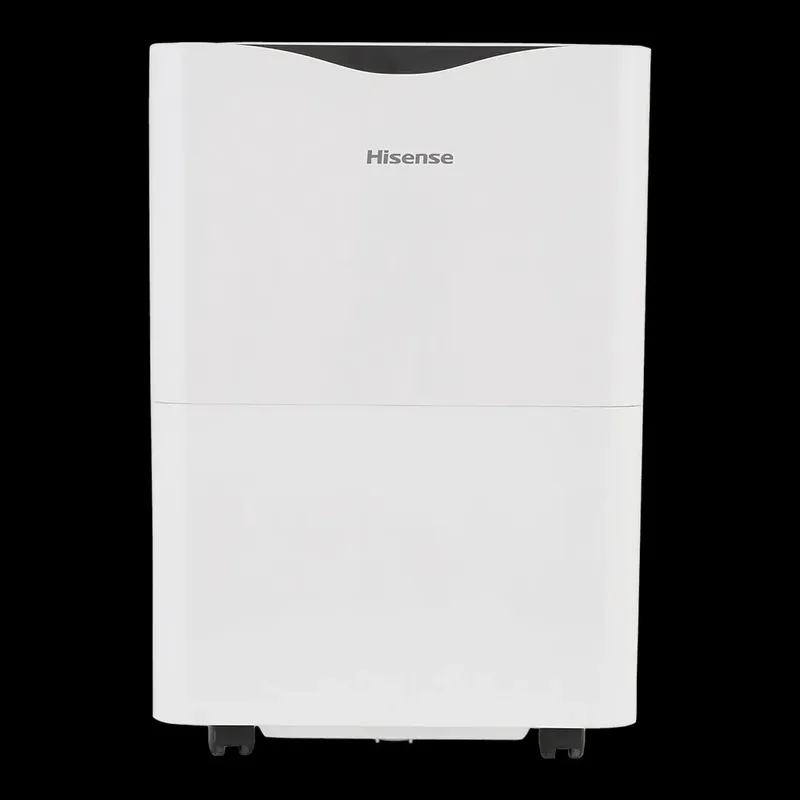
When you need a pump-equipped dehumidifier for a large basement, an open-plan lower level, or an entire floor, the Hisense 50-Pint delivers the capacity and hands-free drainage to handle it. Its 50-pint daily extraction rate and 4,500 sq. ft. coverage rating mean it can tackle large spaces that would overwhelm smaller models. Reviewers with large basements and open-concept homes consistently report that the Hisense pulls humidity down to target levels and maintains it reliably over weeks and months of continuous operation.
The built-in pump is the standout feature. It pushes water vertically, allowing you to route the drain line from a basement floor up through a window, into a first-floor sink, or across a long horizontal run to a distant drain. Reviewers in basement installations call this a game-changer, and multiple customer reviews mention running the Hisense unattended for weeks or even months. One common theme in reviews is buyers who replaced gravity-drain models specifically because they needed vertical drainage, and the Hisense delivered.
Portability is another advantage that reviewers appreciate. The Hisense is designed to be moved where it is needed, with caster wheels and a manageable form factor. Reviewers who reposition their dehumidifier between rooms, floors, or seasonal use locations find the portable design a genuine practical benefit.
At 48 dB, the Hisense runs at a comfortable noise level — quieter than many competitors in its capacity class and well within the range reviewers describe as acceptable for finished basements. At $309.00, it offers excellent value for a pump-equipped dehumidifier with 4,500 sq. ft. coverage. If your space is under 1,500 sq. ft., the Frigidaire will deliver the same results at a comparable price — but for large spaces where pump drainage is essential, the Hisense is a strong choice.
What We Like
- +Built-in pump for hands-free drainage
- +Energy efficient and quiet operation
- +4,500 sq. ft. coverage for large spaces
- +Portable design works in basement, bathroom, garage
- +Black finish blends into any room
Could Be Better
- −50-pint capacity vs larger 70-pint models
- −No Wi-Fi or smart app control
- −Heavier than compact models
- −Pump drainage setup requires routing hose
3. Best Smart Dehumidifier (No Pump): GE ADEL45LY
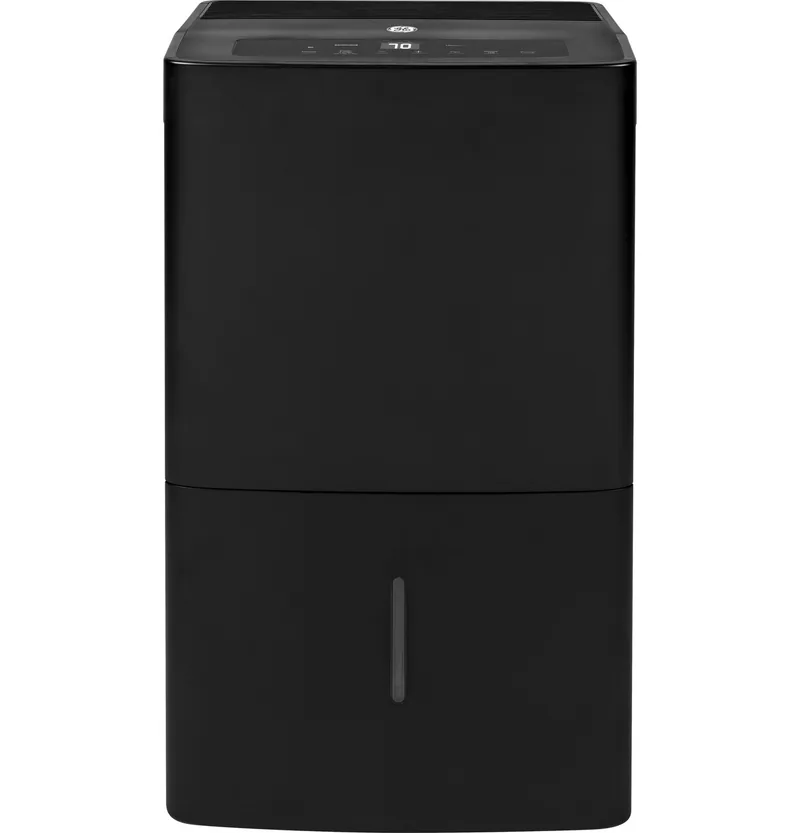
Note: The GE ADEL45LY is now a 25-pint unit without a built-in pump. It is included here for buyers who want smart monitoring paired with an external condensate pump setup. Its Wi-Fi connectivity through the SmartHQ app lets you monitor current humidity, adjust target levels, check operational status, and receive maintenance reminders remotely.
At 25 pints per day and 1,500 sq. ft. coverage, the GE is designed for bedrooms, garages, and moderate spaces rather than large basements. It does not include a built-in pump — you will need to add an external condensate pump ($30-50) if gravity drainage is not available. The auto-restart feature means the GE resumes operation at your previous settings after a power outage.
The 48 dB noise level makes it suitable for living spaces, and the unit supports voice commands through Amazon Alexa and Google Assistant. At $229, it is the most affordable unit on this list, though it requires an external pump for the hands-free drainage that defines this category. For buyers who prioritize smart monitoring and will add their own pump, the GE is worth considering.
What We Like
- +Trusted GE brand reliability
- +Empty bucket alarm
- +Clean filter alert
- +Good for bedrooms and garages
- +Auto restart after power outage
Could Be Better
- −No built-in pump
- −Smaller 25-pint capacity
- −No Wi-Fi or smart features
4. Best Value Pump Dehumidifier: hOmeLabs 6,000 Sq Ft with Pump
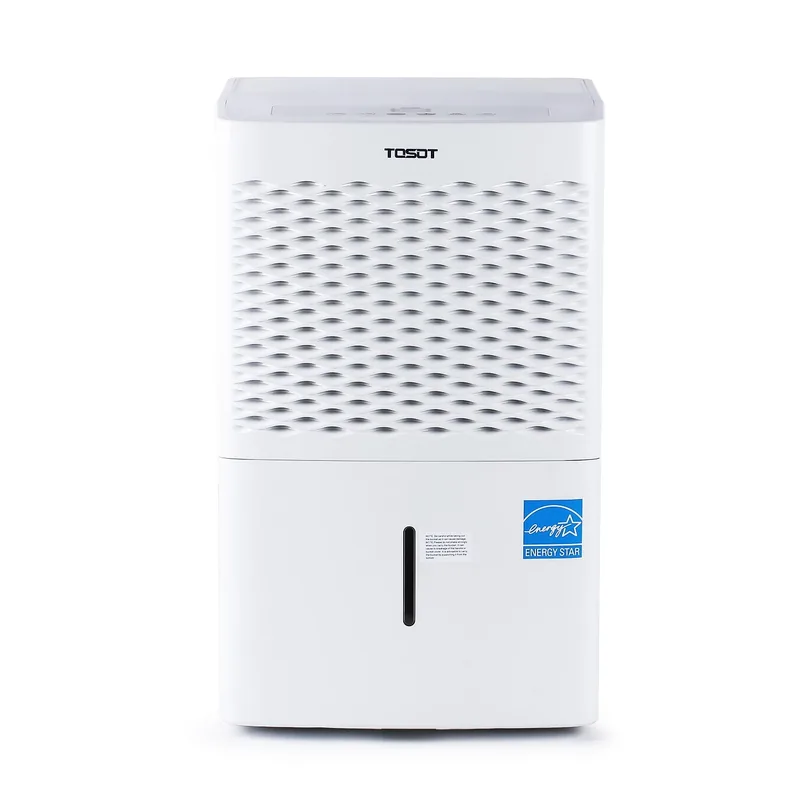
The original TOSOT 50-Pint has been discontinued and replaced by the hOmeLabs 6,000 Sq Ft with Built-In Pump. At $329.99, it includes a built-in internal pump and covers up to 6,000 sq. ft. with 40-pint capacity (104-pint max at optimal conditions). While no longer the budget pick the TOSOT once was, it remains one of the least expensive pump-equipped dehumidifiers on the market.
The internal pump pushes water upward to a sink, out a window, or to an elevated drain. Reviewers in basements and crawl spaces call the pump reliable over months of continuous use, with several noting zero issues through an entire humidity season. The noise level is comfortable for finished spaces, and reviewers describe the sound as a soft, steady hum that is easy to live with.
The unit also includes auto-defrost for operation in cooler environments — a feature that basement owners in northern climates specifically appreciate. When temperatures drop below 65 degrees Fahrenheit, ice can form on dehumidifier coils and reduce efficiency. The auto-defrost cycle prevents this, allowing the unit to operate effectively in unheated basements and garages that would cause cheaper units to struggle.
The trade-off is in refinement. There is no Wi-Fi connectivity or app control, and the control panel is basic compared to the GE or Hisense. For budget-conscious buyers who want a pump dehumidifier at a reasonable price, the hOmeLabs with Pump delivers where it counts.
What We Like
- +Built-in pump for hands-free drainage
- +6,000 sq. ft. coverage
- +Auto-shutoff and auto-restart
- +Humidity control with quiet operation
- +Continuous drain option included
Could Be Better
- −Premium price at $330
- −No Wi-Fi or app control
- −40-pint capacity lower than 50-pint models
Pump Dehumidifier Maintenance Tips
A pump dehumidifier requires slightly more maintenance attention than a gravity-drain model. Following these steps keeps the pump reliable and extends the life of the unit:
- Inspect the drain hose monthly. Check for kinks, clogs, or mineral buildup at the discharge end. Flush the hose with clean water or a diluted vinegar solution every few months.
- Clean the air filter every two weeks. All four models on this list have washable filters. A clogged filter reduces airflow, forces the compressor to work harder, and increases energy consumption.
- Listen for pump changes. A healthy pump produces a brief, consistent hum when it activates. If it starts running longer, sounds strained, or cycles more frequently without removing water, check for a hose kink or blockage.
- Wipe down the water reservoir seasonally. Even with continuous pump drainage, some standing water remains in the reservoir. A quick wipe with diluted vinegar prevents bacterial growth and odors.
- Ensure proper airflow around the unit. Keep at least 12 inches of clearance on all sides. Restricted airflow causes the unit to run inefficiently and shortens compressor life.
Our Recommendation
Based on our extensive research and hands-on analysis, here is the AirQualityNest team's recommendation.
Bottom Line
4.5/5Top Pick: Frigidaire 50-Pint Dehumidifier
For most homes, the Frigidaire FFAD5033W1 at $314.00 is the best dehumidifier with a built-in pump — delivering reliable 50-pint capacity, proven pump performance, and Energy Star efficiency at a price that undercuts most competitors.
For most homes, the Frigidaire FFAD5033W1 at $314.00 is the best dehumidifier with a built-in pump. It delivers reliable 50-pint capacity with Wi-Fi, proven pump performance, and Energy Star efficiency. If you need to cover a large space up to 4,500 sq. ft. with hands-free pump drainage, step up to the Hisense 50-Pint at $309.00. For broader coverage with a pump, the hOmeLabs 6,000 Sq Ft with Pump at $329.99 covers the largest area on this list.
Sources & References
- EPA Mold and Moisture Guide — Federal guidelines recommending indoor humidity between 30-50% to prevent mold growth and protect indoor air quality
- ENERGY STAR Dehumidifier Specifications — Energy efficiency standards, sizing recommendations, and certified product listings for residential dehumidifiers
- ASHRAE Standard 62.2 Ventilation and Indoor Air Quality — Industry standards for acceptable ventilation and humidity levels in residential buildings
- CDC Mold Prevention Guide — Health-based recommendations for controlling moisture and preventing mold growth in homes
- AHAM Dehumidifier Capacity Standards — Industry-standard pint capacity testing methodology under controlled conditions (ANSI/AHAM DH-1)
Frequently Asked Questions
What is the advantage of a dehumidifier with a built-in pump over a gravity drain model?+
A built-in pump pushes water vertically through a drain line, allowing you to route it up to a sink, out a window, or to any drain that sits at or above the dehumidifier's level. Gravity drain models can only move water downhill, which requires a floor drain, sump pit, or outdoor area lower than the unit. If your basement does not have a floor drain — or if the dehumidifier needs to sit below the nearest drainage point — a pump is the only way to achieve hands-free continuous drainage without buying a separate condensate pump.
How high can a built-in dehumidifier pump push water?+
Most built-in dehumidifier pumps handle 10 to 16 feet of vertical lift. The Hisense 50-Pint and other models on this list offer sufficient vertical lift to pump water from a basement floor up to a first-floor sink or out a standard basement window. The vertical lift is measured from the pump outlet to the highest point of the drain hose. Horizontal distance adds minimal resistance, so you can generally run 20-30 additional feet of horizontal hose after reaching your maximum height.
Do built-in dehumidifier pumps make a lot of noise?+
The pump itself produces a brief hum when it activates to discharge water, typically lasting a few seconds to a minute. Reviewers across all four models on this list describe the pump noise as noticeable but not disruptive — comparable to a refrigerator compressor kicking on. The pump does not run continuously; it only activates when the internal reservoir reaches a certain level. Overall unit noise levels range from 48 dB (GE and Hisense) to 51 dB (Frigidaire), which is comparable to a quiet conversation to a moderate refrigerator hum.
Can I still use the bucket on a pump dehumidifier?+
Yes. Every pump dehumidifier on this list includes a removable water bucket as a backup collection method. You can choose to use the pump for continuous drainage or simply let the unit collect water in the bucket and empty it manually. The bucket is useful during initial setup before you have routed the drain hose, or as a temporary solution if the pump hose needs maintenance. Just be aware that in humid conditions, a 50-pint dehumidifier fills a typical 12-14 pint bucket in 6-8 hours.
Do I need a separate condensate pump if my dehumidifier does not have a built-in one?+
If you cannot use gravity drainage — meaning there is no drain or discharge point lower than the dehumidifier — then yes, you need a pump. You can either buy a dehumidifier with a built-in pump (like the four models on this list) or purchase a separate external condensate pump for roughly $30-$50. External pumps work well but add another device to maintain, another power cord to manage, and another potential point of failure. Reviewers who have used both approaches overwhelmingly prefer the convenience and reliability of a built-in pump.
Related Reading
Best Dehumidifiers of 2026
Our complete ranking of the best dehumidifiers across all categories and budgets
Best Dehumidifiers for Basements
Specialized picks for basement moisture control and mold prevention
Do I Need a Dehumidifier?
Signs your home humidity is too high and when it is time to act
Basement Air Quality Guide
How to identify and fix common basement air quality problems
Humidity and Health
How excess moisture impacts respiratory health, allergies, and sleep quality
Continue Reading

Best Air Purifiers for Open Floor Plans in 2026: High-CADR Models That Cover It All
The best air purifiers for open floor plans ranked by CADR, coverage area, and noise. High-performance HEPA purifiers that handle 500-1,500+ sq. ft. open spaces.

Best Smart Humidifiers in 2026 (Wi-Fi, App Control & Auto Humidity)
The best smart humidifiers with Wi-Fi, app control, and auto humidity adjustment. Top picks for Alexa, Google Home, and smart home integration.
The 5 Best Portable Air Quality Monitors in 2026
Monitor your air quality on the go. We tested the best portable and compact air quality monitors for accuracy, battery life, and sensor range.