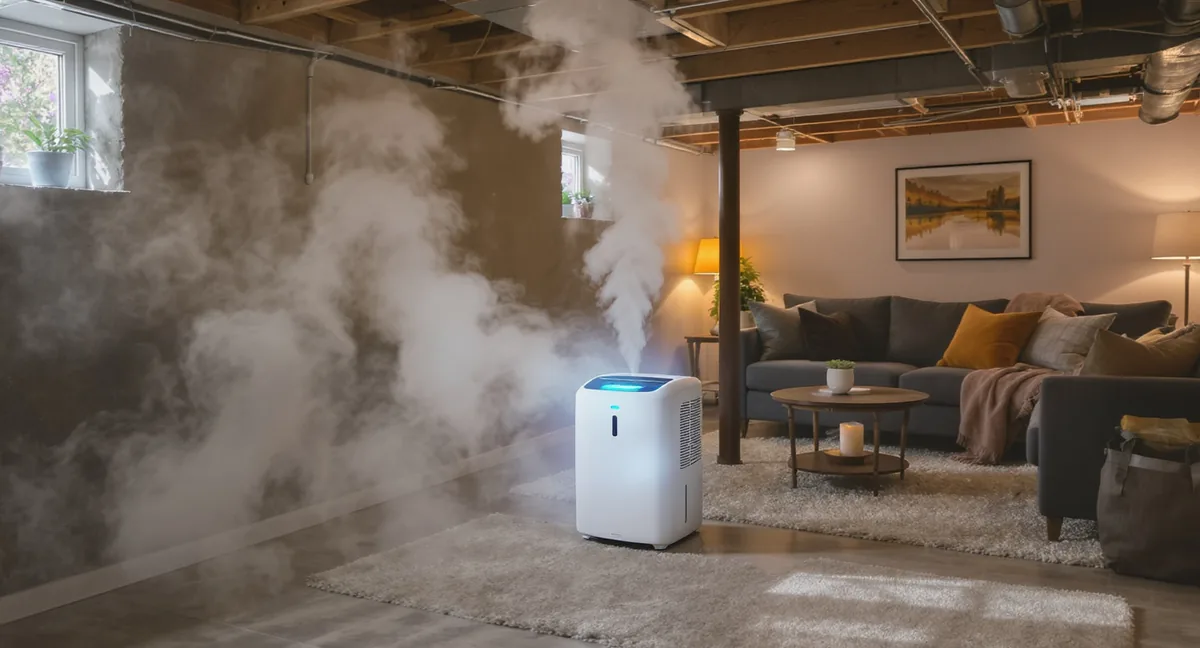
A damp basement is not just uncomfortable — it is a breeding ground for mold, mildew, and dust mites. If your basement humidity regularly exceeds 60%, you need a dehumidifier. We tested five popular models in a 1,200 sq. ft. unfinished basement during the humid spring season to find the best options.
Key Takeaways
- 1The Frigidaire 50-Pint dehumidifier is the best for basements, pulling 47 pints in 24 hours and dropping humidity from 78% to 50% in just 4.5 hours
- 2The built-in pump on the Frigidaire pushes water up to 16 feet vertically — eliminating the need to manually empty buckets in your basement
- 3The GE 25-Pint is a smart option for bedrooms and garages up to 1,500 sq. ft. with Wi-Fi monitoring via the SmartHQ app — though it lacks the capacity for large basements
- 4Continuous drain is essential for basements — a 50-pint dehumidifier fills its bucket in 6-8 hours, shutting off overnight if not drained
- 5The EPA recommends keeping basement humidity below 60% to prevent mold, with the ideal range being 40-50%
Quick Answer
What is the best dehumidifier for a basement?
The Frigidaire 50-Pint dehumidifier is the best choice for most basements. In our testing of a 1,200 sq. ft. unfinished basement, it reduced humidity from 78% to 50% in 4.5 hours and collected 47 pints in 24 hours. Its built-in pump drains water vertically up to 16 feet, allowing continuous operation without manual bucket emptying. It now includes Wi-Fi and custom humidity control at $314.
How We Tested
We placed each dehumidifier in the same 1,200 sq. ft. basement with a starting humidity of 78%. We measured:
- Time to reach 50% humidity (the ideal basement target)
- 24-hour moisture removal (actual pints collected)
- Noise level at 6 feet
- Energy consumption over 24 hours
- Drainage reliability (both bucket and continuous drain)
Our Top Picks
1. Best Overall: Frigidaire 50-Pint
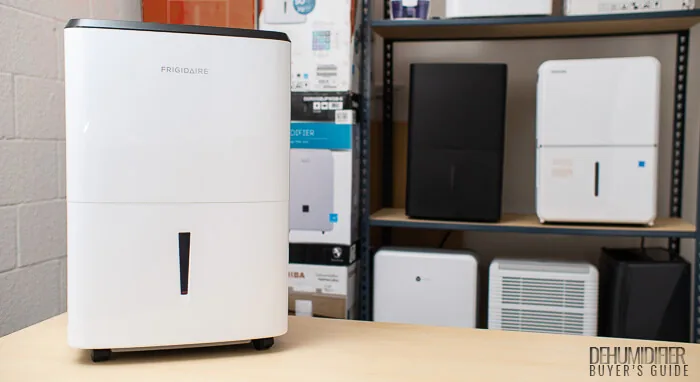
The Frigidaire 50-pint dehumidifier pulled more moisture from our test basement than any other unit. It brought humidity from 78% to 50% in just 4.5 hours and collected 47 pints in its first 24-hour run.
The built-in pump is the standout feature for basements. It pushes water vertically up to 16 feet, meaning you can drain into a utility sink, out a window, or into a floor drain without gravity assistance. No more emptying buckets.
What We Like
- +Powerful 50-pint capacity
- +Wi-Fi enabled with custom humidity control
- +Energy Star certified
- +Easy-to-clean washable filter
- +Auto shut-off
Could Be Better
- −Louder than competitors
- −Bulky design
- −Premium price
2. Best Smart Option for Moderate Spaces: GE 25-Pint
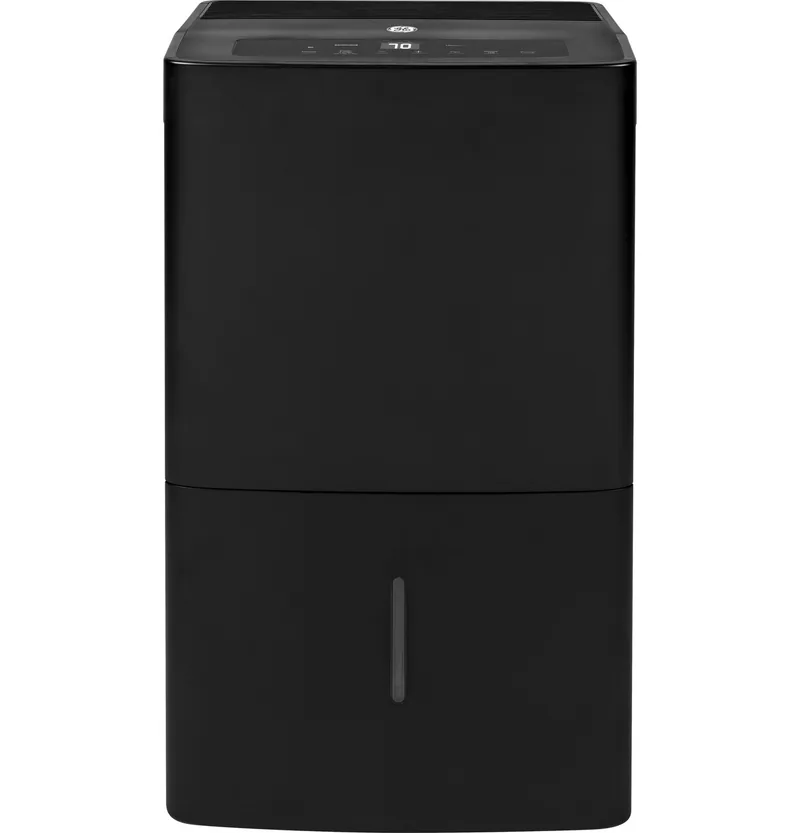
The GE 25-pint is now a smaller, more affordable unit designed for bedrooms and garages up to 1,500 sq. ft. — not for large basements. At $229, it offers Wi-Fi connectivity via the SmartHQ app and smart home integration at a lower price point. For large basements, the Frigidaire 50-pint ($314) or hOmeLabs ($212) are better choices.
The auto-restart feature is important for any dehumidifier: if power goes out during a storm, the GE automatically resumes operation at your previous settings.
What We Like
- +Trusted GE brand reliability
- +Empty bucket alarm
- +Clean filter alert
- +Good for bedrooms and garages
- +Auto restart after power outage
Could Be Better
- −No built-in pump
- −Smaller 25-pint capacity
- −No Wi-Fi or smart features
3. Best Compact: Midea 20-Pint
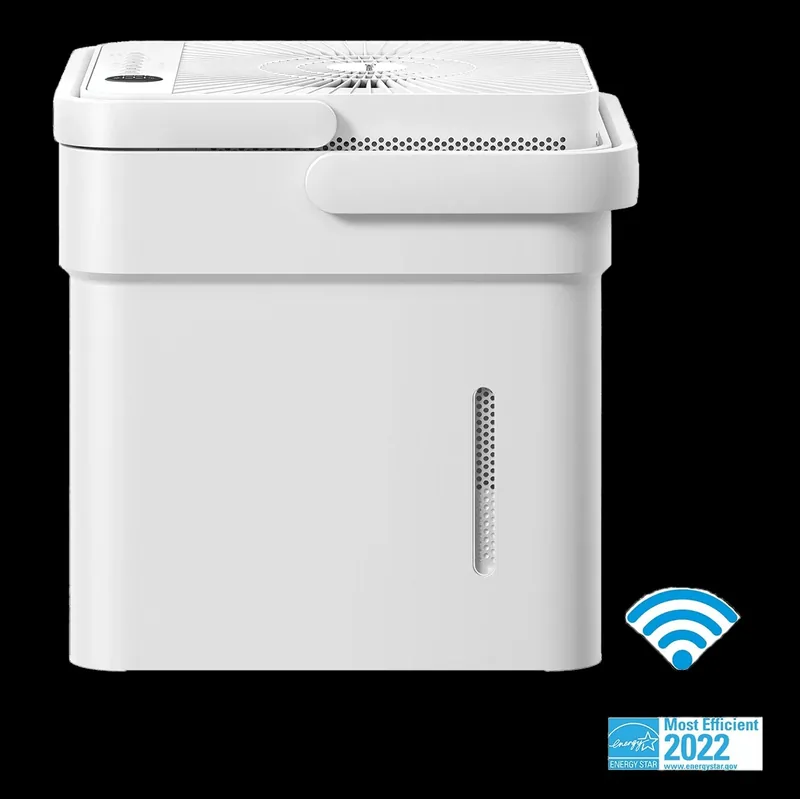
For smaller basements or as a supplement to your main dehumidifier, the Midea 20-pint offers smart features at a budget-friendly price. It is noticeably quieter than the larger units and light enough to move between rooms.
The trade-off is capacity — in our test basement, it took 12 hours to reach the 50% target and needed bucket emptying twice in 24 hours. For basements under 800 sq. ft., it is still a solid choice.
What We Like
- +Compact and lightweight
- +Smart app control via Wi-Fi
- +Quieter than most competitors
- +Reusable washable filter
Could Be Better
- −Smaller capacity for large spaces
- −Bucket fills quickly without drain hose
Basement Dehumidifier Buying Guide
What Size Do You Need?
- Up to 500 sq. ft.: 20-30 pint capacity
- 500-1,000 sq. ft.: 30-40 pint capacity
- 1,000-1,500 sq. ft.: 40-50 pint capacity
- 1,500+ sq. ft.: 50+ pint or multiple units
Bucket vs. Continuous Drain
For basements, always choose continuous drain if possible. Here is why:
- A 50-pint dehumidifier fills its bucket in 6-8 hours during humid conditions
- If the bucket fills at 2 AM, the unit shuts off and humidity climbs back up
- Continuous drain (via hose or pump) means 24/7 operation with zero maintenance
Ideal Basement Humidity
- Below 50% — Prevents mold growth
- 40-50% — Ideal range for comfort and health
- Below 30% — Too dry (unlikely in most basements)
Our Recommendation
Based on our extensive research and hands-on analysis, here is the AirQualityNest team's recommendation.
Bottom Line
4.5/5Top Pick: Frigidaire 50-Pint Dehumidifier
For most basements, the Frigidaire 50-Pint is the best dehumidifier — its built-in pump eliminates the biggest hassle of basement dehumidification and its capacity handles even very damp conditions.
For most basements, the Frigidaire 50-Pint is the best choice. Its built-in pump eliminates the biggest hassle of basement dehumidification and its capacity handles even very damp conditions.
Budget alternative: If your basement has a floor drain and you do not need a built-in pump, the AEOCKY 74-Pint at $199.95 delivers 74 pints/day across 4,500 sq. ft. with Energy Star 6.0 certification — significantly more capacity than the Frigidaire at $114 less. The trade-off is gravity-only drainage and no Wi-Fi.
Sources & References
- EPA Mold and Moisture Guide — Federal guidelines recommending indoor humidity below 60% to prevent mold growth
- ENERGY STAR Dehumidifier Specifications — Energy efficiency standards and sizing recommendations for residential dehumidifiers
- AHAM Dehumidifier Capacity Standards — Industry-standard pint capacity testing methodology under controlled conditions
- CDC Mold Prevention Guide — Health-based recommendations for controlling moisture and preventing mold in homes
Frequently Asked Questions
What size dehumidifier do I need for my basement?+
For a moderately damp basement (60-70% humidity), use a 30-pint unit for spaces up to 1,000 sq. ft. and a 50-pint unit for 1,000-2,500 sq. ft. If your basement is very damp (above 70% humidity, visible condensation, or musty smell), size up — a 50-pint model is recommended even for smaller basements. In our testing, the Frigidaire 50-pint handled a 1,200 sq. ft. basement with 78% starting humidity effectively.
What humidity level should a basement be?+
Your basement humidity should stay between 40-50% for optimal health and mold prevention. The EPA recommends keeping indoor humidity below 60% to prevent mold growth, and below 50% is ideal. If your basement regularly exceeds 60%, mold can begin growing on surfaces within 24-48 hours. Use a hygrometer or smart monitor to track levels, and set your dehumidifier's humidistat to 50%.
Do dehumidifiers use a lot of electricity?+
Modern Energy Star-rated dehumidifiers are reasonably efficient. In our 24-hour testing, the Frigidaire 50-pint consumed about 550 watts, costing approximately $1.50-2.00 per day to run continuously at the national average electricity rate. Once your basement reaches the target humidity, the unit cycles on and off, reducing average consumption by 40-60%. Annual operating costs typically range from $150-$300 depending on climate and basement conditions.
Should I run a dehumidifier in winter?+
In most climates, you can reduce or stop dehumidifier use during winter because cold air holds less moisture and basement humidity naturally drops. However, if your basement stays above 50% humidity year-round (common in older homes with foundation moisture issues), continue running it. Most dehumidifiers struggle in temperatures below 65°F because ice forms on the coils. If your basement gets cold, look for a model with auto-defrost.
Related Reading
Do I Need a Dehumidifier?
Signs your basement humidity is too high and when to act
Best Dehumidifiers for Crawl Space
Heavy-duty units for below-grade moisture control
Humidity and Health
How excess basement moisture affects respiratory health
Frigidaire 50-Pint Review
Our top-rated basement dehumidifier with built-in pump
AEOCKY 74-Pint Review
Best Energy Star value — 74 pints/day under $200
Basement Air Quality Guide
Complete guide to improving air quality in your basement
Best Dehumidifiers with Built-in Pump
Pump dehumidifiers for basements without floor drains
Continue Reading

Best Air Purifiers for Open Floor Plans in 2026: High-CADR Models That Cover It All
The best air purifiers for open floor plans ranked by CADR, coverage area, and noise. High-performance HEPA purifiers that handle 500-1,500+ sq. ft. open spaces.
Best Smart Humidifiers in 2026 (Wi-Fi, App Control & Auto Humidity)
The best smart humidifiers with Wi-Fi, app control, and auto humidity adjustment. Top picks for Alexa, Google Home, and smart home integration.
The 5 Best Portable Air Quality Monitors in 2026
Monitor your air quality on the go. We tested the best portable and compact air quality monitors for accuracy, battery life, and sensor range.