Noise is the number-one reason people stop using their air purifiers. A unit that sounds like a desk fan during the day can feel like a jet engine at 2 a.m. The problem is that most shoppers focus on CADR, filter type, and coverage area — then discover too late that their new purifier is too loud for comfortable use, especially in a bedroom.
This guide explains how air purifier noise is measured, what those decibel numbers actually mean in everyday terms, and how to find a purifier that cleans the air without disrupting your sleep or concentration.
Key Takeaways
- 1Decibels (dB) use a logarithmic scale — every 10 dB increase sounds roughly twice as loud to the human ear, so 40 dB feels twice as loud as 30 dB
- 2For undisturbed sleep, the World Health Organization recommends indoor noise below 30 dB. Look for purifiers that hit 24 dB or lower on their lowest fan speed
- 3Higher CADR always means more airflow and more noise at maximum speed. The key is buying a purifier with more CADR than you need so you can run it on a quieter setting
- 4The Dyson Big Quiet Formaldehyde is the quietest high-performance purifier available at just 20 dB on low, followed by the Levoit Core 400S and Coway Mighty at 24 dB
- 5Placement matters: pulling the purifier at least 12 inches from walls and running it on auto mode lets the unit self-regulate noise based on real-time air quality
Quick Answer
How loud is a typical air purifier?
Most air purifiers produce between 20 and 55 dB depending on the fan speed. On the lowest setting, quality models run at 20-31 dB — quieter than a whisper or a library. On the highest setting, noise typically rises to 48-56 dB, comparable to a normal conversation or moderate rainfall. For bedroom use, look for a purifier rated below 30 dB on its lowest speed so it does not interfere with sleep.
How Decibels Work: The Logarithmic Scale
Decibels (dB) measure sound intensity, but they do not work the way most people assume. Unlike centimeters or pounds, decibels follow a logarithmic scale — meaning that small numerical differences represent large real-world changes in perceived loudness.
Here is the key fact to remember:
Every increase of 10 dB sounds approximately twice as loud to the human ear.
That means a 40 dB purifier does not sound "a little louder" than a 30 dB purifier — it sounds twice as loud. And a 50 dB unit sounds four times as loud as a 30 dB unit. This is why those seemingly small dB differences on a spec sheet matter far more than they appear.
Why This Matters for Air Purifier Shopping
When you compare two purifiers and one is rated at 24 dB on low while the other is rated at 31 dB on low, that 7 dB gap represents a clearly audible difference — roughly 50% louder to your ears. In a quiet bedroom at night, that gap is the difference between barely noticing the purifier and being kept awake by it.
Some additional benchmarks for the logarithmic scale:
- 3 dB increase = sound energy doubles (barely noticeable to most people)
- 5 dB increase = clearly noticeable difference in loudness
- 10 dB increase = sounds about twice as loud
- 20 dB increase = sounds about four times as loud
This is why manufacturers who advertise "only 35 dB" as quiet need scrutiny. At 35 dB, a purifier is audible in a silent room and may disrupt light sleepers. Truly quiet bedroom operation requires 25 dB or lower.
Noise Level Reference Chart
To understand what air purifier dB ratings actually sound like, it helps to compare them against familiar everyday sounds. Here is a reference chart that puts those numbers in context:
| Decibel Level | Everyday Sound | Air Purifier Context |
|---|---|---|
| 10 dB | Breathing, rustling leaves | Near-silent — barely perceptible |
| 20 dB | Quiet whisper at 5 feet | Quietest purifiers on lowest speed (Dyson Big Quiet) |
| 25 dB | Quiet rural nighttime | Premium purifiers on low (Levoit 400S, Coway Mighty) |
| 30 dB | Quiet library, soft humming | Upper limit for undisturbed sleep |
| 35 dB | Quiet home, gentle fan | Audible in a silent room — may bother light sleepers |
| 40 dB | Quiet office, light rain | Moderate purifier speed — noticeable but not disruptive |
| 45 dB | Quiet conversation, refrigerator hum | Most purifiers on medium speed |
| 50 dB | Moderate rainfall, coffee maker | Purifiers on high speed — clearly audible |
| 55 dB | Normal conversation at 3 feet | Loud purifiers on maximum speed |
| 60 dB | Office chatter, background TV | Loudest purifiers at full blast — uncomfortable long-term |
The World Health Organization recommends that continuous nighttime indoor noise stay below 30 dB to avoid sleep disturbance. Anything above 40 dB can fragment sleep cycles even if it does not wake you fully, reducing restorative deep sleep over time.
How Loud Is Too Loud for a Bedroom?
Sleep quality is where noise levels matter most, and this is backed by clear health guidelines.
What the Research Says
The World Health Organization (WHO) Night Noise Guidelines recommend that continuous indoor nighttime noise should not exceed 30 dB to prevent sleep disturbance. The CDC echoes this, noting that noise above 40 dB can interfere with restful sleep even when it does not cause full awakening.
What happens at different noise thresholds during sleep:
- Below 25 dB: No measurable impact on sleep quality. The purifier effectively disappears into the background. This is the ideal range for bedrooms.
- 25-30 dB: Minimal impact for most sleepers. Some very light sleepers may notice the sound initially but typically adjust within a few nights.
- 30-35 dB: Audible in a quiet bedroom. People accustomed to white noise may not mind, but sensitive sleepers or those in already-quiet environments will notice.
- 35-40 dB: Noticeable to most people. At this level, the purifier sounds like a gentle fan running — tolerable for some, but it may delay sleep onset.
- Above 40 dB: Likely to interfere with sleep quality. Even if you fall asleep, sustained noise above 40 dB has been shown to reduce time spent in deep sleep and REM stages.
The Practical Target
For bedroom use, look for a purifier rated at 25 dB or lower on its lowest speed. This gives you a margin of safety below the WHO's 30 dB threshold and ensures the purifier blends into the ambient sounds of your home.
The good news: several popular models hit this target. The Dyson Big Quiet at 20 dB on low, the Levoit Core 400S at 24 dB, and the Coway Mighty at 24.4 dB are all well within the safe range for undisturbed sleep.
Air Purifier Noise Comparison
Here is how five of the most popular air purifiers compare on noise output at both their lowest and highest fan speeds:
| Purifier | Noise (Low) | Noise (High) | CADR (Smoke) | Price |
|---|---|---|---|---|
| Dyson Big Quiet Formaldehyde | 20 dB | 48 dB | 423 | $1,029.00 |
| Levoit Core 400S | 24 dB | 52 dB | 256 | $181.95 |
| Coway Airmega AP-1512HH | 24.4 dB | 53.8 dB | 233 | $229.00 |
| Blueair Blue Pure 211+ | 31 dB | 56 dB | 350 | $299.99 |
| Honeywell HPA300 | ~40 dB* | ~60 dB* | 300 | $249.99 |
*Honeywell does not publish exact dB ratings. Estimated based on customer reports and independent measurements.
Key Observations
The Dyson Big Quiet lives up to its name. At 20 dB on low, it is genuinely whisper-quiet — you would need to put your ear next to it to hear it running. The fact that it also delivers the highest CADR in this group (423) makes it exceptional, though it commands a premium price.
The Levoit Core 400S and Coway Mighty hit the sweet spot. Both operate at 24-24.4 dB on low — well below the WHO sleep threshold — while delivering strong CADR performance in the 230-260 range. These are the best options if you want bedroom-friendly noise without the Dyson price tag.
The Blueair Blue Pure 211+ is noticeably louder on low. At 31 dB, it sits right at the WHO's sleep limit. It is still a fine purifier for living rooms and daytime bedroom use, but light sleepers may find it too present at night.
The Honeywell HPA300 prioritizes raw power over quiet. It delivers excellent CADR but is the loudest option in this comparison. This is a better choice for living rooms, basements, or any space where noise is less of a concern than maximum air cleaning.
The CADR-to-Noise Tradeoff
There is an inescapable physical relationship between air cleaning performance and noise: more airflow means more noise. CADR measures the volume of clean air delivered per minute, and pushing more air through a HEPA filter at higher speeds requires a more powerful fan — which produces more sound.
This is not a design flaw. It is physics. A purifier with 400+ CADR on its highest speed needs to move a significant amount of air, and that moving air generates turbulence and fan noise.
How Manufacturers Handle This Tradeoff
Different brands approach the CADR-to-noise balance in different ways:
Larger, slower fans. The Dyson Big Quiet uses an oversized internal impeller that moves the same volume of air at lower RPMs, dramatically reducing noise. This is why it achieves 423 CADR while staying at just 48 dB on high — because a large fan spinning slowly is quieter than a small fan spinning fast.
Multiple fan speeds. Most quality purifiers offer 3-5 speed settings. Running a 350 CADR purifier on its medium speed might deliver roughly 200 CADR at 35-40 dB — far quieter than maximum speed while still cleaning effectively. This is the most practical way to manage the tradeoff.
Auto mode. Smart purifiers with air quality sensors (like the Levoit Core 400S and Coway Mighty) automatically adjust fan speed based on real-time readings. When the air is clean, the fan drops to its lowest, quietest speed. It ramps up only when it detects a pollution spike — then drops back down.
The Practical Lesson: Buy More CADR Than You Need
The best strategy for quiet operation is counterintuitive: buy a purifier with more CADR than your room technically requires. Here is why:
- A Levoit Core 400S (256 CADR) in a 200 sq. ft. bedroom can run on its lowest speed most of the time, delivering around 120-150 effective CADR at just 24 dB. That is still enough for 4+ air changes per hour in that room.
- A smaller purifier sized exactly for the room would need to run on medium or high to achieve the same air changes — at 35-45 dB.
Oversizing your purifier by one category means you rarely need to run it above the lowest speed, which keeps noise well below the WHO's sleep threshold. This is the single most effective noise-reduction strategy.
How to Reduce Air Purifier Noise
Even with a quiet purifier, placement and usage habits can make a real difference in perceived noise. Here are six strategies that work:
1. Pull the Purifier Away from Walls
Sound reflects off hard surfaces. When a purifier sits flush against a wall, the wall amplifies fan noise and vibration. Position the unit at least 12 inches from any wall and avoid placing it in a corner, where two reflective surfaces compound the effect.
This also improves airflow. Most purifiers draw air from the sides or back — pressing them against a wall restricts intake, forcing the fan to work harder (and louder) for the same clean air output.
2. Use Auto Mode at Night
If your purifier has an air quality sensor and auto mode, use it. Auto mode lets the purifier drop to its lowest speed once the room's air is clean, which usually happens within 30-60 minutes of turning it on. You get the benefit of high-speed cleaning when you first close the door for the night, followed by near-silent maintenance for the rest of the sleep period.
The Levoit Core 400S and Coway Mighty both have responsive auto modes that consistently settle to their quietest speeds overnight.
3. Run on High Before Bed, Switch to Low
If your purifier does not have auto mode, simulate it manually. Run the purifier on its highest speed for 30-60 minutes before bedtime with the bedroom door closed. This "pre-cleans" the room air aggressively. Then switch to the lowest speed right before you get into bed.
At low speed, the purifier maintains air quality in an already-clean room rather than trying to scrub heavily polluted air — so the lower CADR is sufficient.
4. Place It on a Solid, Level Surface
Vibration is a hidden noise source. A purifier sitting on an uneven surface, a hollow shelf, or a flimsy table can rattle and hum at frequencies that are more annoying than the fan itself. Place the unit on:
- A solid floor (not a rug, which can block bottom intakes)
- A sturdy table or nightstand
- A vibration-dampening pad if you notice buzzing on hard surfaces
5. Keep Filters Clean and Replaced on Schedule
A clogged filter restricts airflow, which forces the fan motor to work harder to maintain the same output. This increases both noise and energy consumption. Follow the manufacturer's replacement schedule — typically every 6-12 months — and clean pre-filters monthly if your model has them.
6. Close Doors and Windows
An open door or window introduces a continuous stream of unfiltered air, which keeps the purifier's sensor detecting pollution and the fan running at higher speeds. Closing the room creates a sealed environment that the purifier can clean quickly, allowing it to settle to its quietest speed sooner.
Our Quietest Pick
For bedrooms and nurseries where noise is the top priority, the Dyson Big Quiet Formaldehyde is the clear standout. At 20 dB on its lowest speed, it is functionally silent — quieter than a whisper and below the threshold of perception for most people in a room with any ambient noise at all.
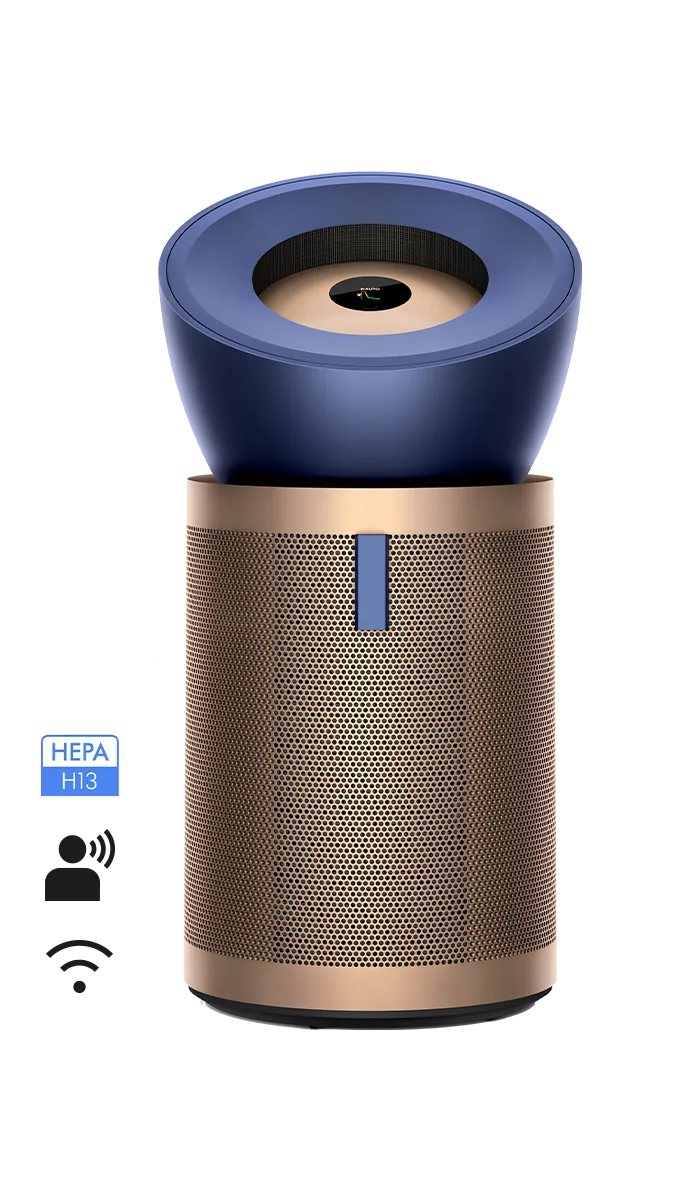
What makes the Dyson exceptional is not just its low-speed quietness but the fact that it pairs that silence with 423 CADR — the highest in this comparison. You are not sacrificing air cleaning performance for quiet. Even on high, it reaches only 48 dB, which is quieter than many competitors on their medium settings.
The tradeoff is price: at $1,029.00, the Dyson Big Quiet costs significantly more than the Levoit Core 400S ($181.95) or Coway Mighty ($229.00), both of which are also excellent bedroom choices at 24 dB on low. If budget is the deciding factor, either of those models will deliver quiet, effective air cleaning for most bedrooms.
For a budget-friendly alternative that still runs quietly, the Levoit Core 400S at 24 dB on low offers strong CADR performance and smart app control at less than half the Dyson's price.
Sources & References
- World Health Organization — Night Noise Guidelines for Europe — Recommends that continuous nighttime indoor noise not exceed 30 dB to prevent sleep disturbance and associated health effects
- CDC — Noise and Hearing Loss Prevention — Documents the health effects of sustained noise exposure, including sleep disruption at levels above 40 dB
- AHAM (Association of Home Appliance Manufacturers) — Publishes verified CADR ratings and noise specifications for air purifiers under standardized testing conditions
This guide was researched and written by the AirQualityNest editorial team. We update our content regularly to reflect the latest products, pricing, and research.
Frequently Asked Questions
Is 50 dB too loud for an air purifier in a bedroom?+
Yes, 50 dB is too loud for comfortable bedroom use, especially during sleep. At 50 dB, a purifier sounds comparable to moderate rainfall or a coffee maker — noticeable and potentially disruptive. The World Health Organization recommends keeping continuous nighttime noise below 30 dB for undisturbed sleep. Most purifiers reach 50+ dB only on their highest speed settings. For bedroom use, run your purifier on its lowest speed (typically 20-31 dB) or use auto mode, which will settle to the quietest setting once the room air is clean.
Do air purifiers get louder over time?+
They can. The most common cause of increased noise is a dirty or clogged filter. As the filter accumulates particles over months of use, it restricts airflow and forces the fan motor to work harder, which increases both noise and energy consumption. Replacing the filter on the manufacturer's recommended schedule (typically every 6-12 months) usually restores the purifier to its original noise levels. Unusual rattling or buzzing may indicate a loose part, debris inside the housing, or a worn motor bearing — check the unit and contact the manufacturer if cleaning does not resolve it.
Can I use an air purifier as white noise for sleep?+
Many people do. The constant, low-frequency hum of an air purifier on a low or medium setting can function as white noise that masks other disruptive sounds like traffic, barking dogs, or a partner snoring. The key is consistency — the steady fan sound is less disruptive than intermittent noises. If you prefer the white noise effect, a purifier running at 25-35 dB offers a gentle, even hum without being loud enough to disrupt sleep quality. Models with auto mode may not be ideal for this purpose, since they change fan speeds in response to air quality readings, creating inconsistent sound levels.
What is the quietest air purifier you can buy?+
The Dyson Big Quiet Formaldehyde is currently the quietest high-performance air purifier available, rated at just 20 dB on its lowest speed. That is softer than a whisper and effectively inaudible in most rooms. For a more affordable option, the Levoit Core 400S (24 dB on low) and Coway Airmega AP-1512HH (24.4 dB on low) are both exceptionally quiet and well within the WHO's recommended 30 dB threshold for undisturbed sleep. All three models deliver strong CADR performance alongside their quiet operation.
Does a higher CADR rating mean a louder air purifier?+
At maximum speed, generally yes — a higher CADR requires more airflow, which means a more powerful fan and more noise. However, noise levels on the lowest speed setting do not necessarily correlate with maximum CADR. The Dyson Big Quiet has the highest CADR in its class (423) while also being the quietest on low (20 dB). The practical strategy is to buy a purifier with more CADR than your room technically needs, then run it on a lower speed. This gives you effective air cleaning at a fraction of the maximum noise output.
Continue Reading
Best Air Purifiers for Bedrooms
Our top picks for quiet, effective bedroom air purifiers ranked by real-world performance
CADR Rating Explained
Understand Clean Air Delivery Rate and how to match CADR to your room size
Air Purifier Sizing Guide
Step-by-step guide to choosing the right purifier size for any room
Air Purifier Placement Guide
Where to position your purifier for maximum airflow and minimum noise
Best Premium Air Purifiers
High-end purifiers that combine quiet operation with exceptional air cleaning
Continue Reading
Best Air Purifiers for Open Floor Plans in 2026: High-CADR Models That Cover It All
The best air purifiers for open floor plans ranked by CADR, coverage area, and noise. High-performance HEPA purifiers that handle 500-1,500+ sq. ft. open spaces.
Best Smart Humidifiers in 2026 (Wi-Fi, App Control & Auto Humidity)
The best smart humidifiers with Wi-Fi, app control, and auto humidity adjustment. Top picks for Alexa, Google Home, and smart home integration.
The 5 Best Portable Air Quality Monitors in 2026
Monitor your air quality on the go. We tested the best portable and compact air quality monitors for accuracy, battery life, and sensor range.