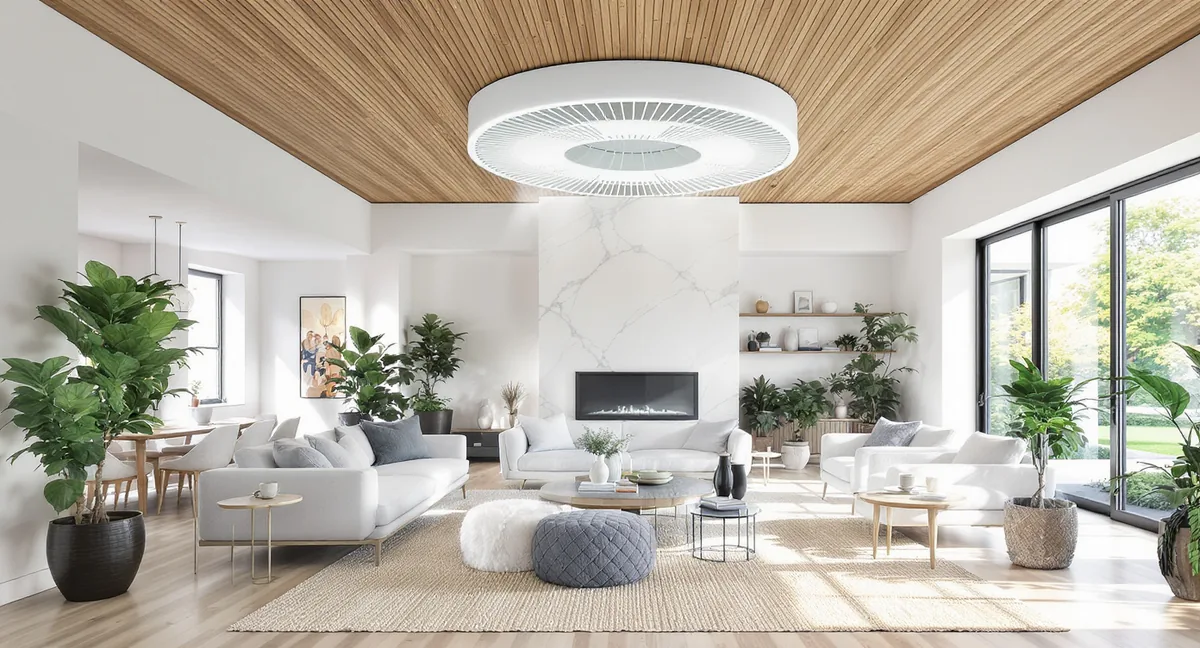
You can buy the best air purifier on the market and still get poor results if you put it in the wrong spot. Placement affects how quickly and thoroughly a purifier cleans your air — and most people get it wrong.
We tested the Coway Airmega AP-1512HH in multiple positions within the same room and measured PM2.5 clearance times. The difference between the best and worst placement was 40% longer cleaning time for the same room. Here are the rules that matter.
1. Keep It in the Room You Use Most
An air purifier cleans one room effectively. If you spend 8 hours sleeping in the bedroom and 4 hours in the living room, put the purifier in the bedroom. You breathe more air there, so that is where clean air matters most.
If you want clean air in multiple rooms, you need multiple purifiers. Two Levoit Core 300 units ($200 total) are more effective than one expensive purifier moved between rooms.
2. Place It Near the Pollution Source
If you know where particles are coming from, place the purifier between you and that source:
- Pet dander — Near where your pet sleeps or spends time
- Cooking smoke — Between the kitchen and your living area
- Pollen — Near the door or window where pollen enters
- Dust — Near high-traffic areas where dust gets kicked up
The purifier captures particles before they spread across the room, reducing overall exposure.
3. Keep 3 Feet of Clearance Around the Unit
This is the rule most people break. Air purifiers need clear space around the intake and output vents to maintain proper airflow. Blocking either side forces the motor to work harder and reduces effective CADR.
Our test results:
| Clearance | PM2.5 Clearance Time | Effective CADR Loss |
|---|---|---|
| 3+ feet clearance | 28 minutes | Baseline |
| 1 foot clearance | 35 minutes | ~20% reduction |
| Against a wall | 41 minutes | ~35% reduction |
| Behind furniture | 48 minutes | ~42% reduction |
Do not tuck your purifier behind a couch, under a table, or in a closet. It needs breathing room — literally.
4. Elevate It Off the Floor
For most particle types (dust, dander, pollen), placing the purifier 3-5 feet off the ground improves performance. Particles in this zone are actively floating and easier to capture before they settle.
Exceptions:
- Floor-intake models like the Blueair Blue Pure 211+ are designed for floor placement
- Smoke and cooking fumes rise, so higher placement helps
- Heavy dust settles low, so floor placement can work if your purifier pulls air from the bottom
Check your purifier's intake vent location. If it pulls from the sides or back, elevating it on a table or shelf helps. If it pulls from the bottom, keep it on the floor.
5. Keep the Door Closed
This makes the single biggest difference in purifier effectiveness. A closed door creates a defined volume for the purifier to clean. An open door means unfiltered air continuously flows in from adjacent rooms.
Our test results:
| Door Position | Time to Reach Target PM2.5 | Steady-State PM2.5 |
|---|---|---|
| Closed | 22 minutes | 3 µg/m³ |
| Open to hallway | 38 minutes | 8 µg/m³ |
| Open to kitchen | 45+ minutes | 12 µg/m³ |
With the door closed, the Coway Mighty brought PM2.5 from 25 to under 5 µg/m³ in 22 minutes. With the door open to the kitchen during cooking, it could not get below 12 µg/m³ — the purifier was fighting a losing battle against continuous particle inflow.
6. Avoid Corners and Tight Spaces
Corners restrict airflow on two sides simultaneously. A purifier placed in a corner loses roughly 30-40% of its effective CADR because recirculated air gets trapped.
Best positions in order:
- Center of a wall with open space on both sides
- Side table or nightstand away from walls
- End of a long wall (one side open)
- Corner (worst — avoid if possible)
7. Do Not Place It Near Open Windows
Running an air purifier with an open window is counterproductive. The purifier filters air, but the window replaces it with unfiltered outdoor air faster than the purifier can clean it. You are essentially paying to filter the outdoors.
Close windows while running your purifier. If you need fresh air, open windows for 15-20 minutes, then close them and let the purifier do its job.
The one exception: during wildfire smoke events, if you must ventilate, place the purifier directly next to the window as a barrier. This is not ideal but better than no purifier at all.
Room-by-Room Placement Guide
Bedroom
- Place on a nightstand or dresser, 3-5 feet from your head
- Keep the door closed while sleeping
- Run on the lowest setting for quiet operation — a properly sized purifier on low still delivers enough clean air
- Point the clean air output toward your bed
Living Room
- Place along the wall nearest where you sit most often
- Keep away from TV stands and bookshelves that block airflow
- If you have pets, prioritize placement near their favorite spot
Home Office
- Place within 5 feet of your desk
- Keep away from your monitor (vibrations can cause screen wobble on some desks)
- A small purifier like the Levoit Core 300 on your desk is more effective than a large purifier across the room
Nursery
- Place at least 3 feet from the crib — not directly next to it
- Use a quiet model (under 30 dB) on the lowest setting
- Position so the clean air output is not blowing directly on the baby
- See our full nursery air purifier guide for specific recommendations
Common Placement Mistakes
Mistake 1: On the floor behind furniture The most common error. People hide purifiers behind couches or in corners for aesthetics. This blocks airflow and can reduce effectiveness by 40%.
Mistake 2: In a hallway to "clean the whole house" Hallways are transit zones, not living spaces. A purifier in the hallway cleans hallway air that nobody breathes. Put it where you actually spend time.
Mistake 3: Moving it between rooms Moving one purifier around the house means no room gets continuous filtration. Each time you move it, the purifier starts from scratch in the new room. Two small purifiers outperform one large purifier that travels.
Mistake 4: Next to a heating/cooling vent HVAC vents create strong airflow that disrupts the purifier's circulation pattern. Place the purifier at least 5 feet from HVAC vents.
Mistake 5: In a room you rarely use A purifier cleaning an empty guest room is wasted electricity. Put it where you spend your time.
The Bottom Line
The best placement is simple: in the room where you spend the most time, with the door closed, 3 feet of clearance on all sides, and elevated if your model allows it. Follow these rules and your purifier will work at full capacity.
This guide was researched and written by the AirQualityNest editorial team. We update our content regularly to reflect the latest products, pricing, and research.
Frequently Asked Questions
Should I run my air purifier 24/7?+
Yes. Air purifiers are designed for continuous operation and use minimal electricity (comparable to a light bulb). Turning it off allows particles to accumulate, and the purifier has to start from scratch each time. Running 24/7 on low or auto mode maintains clean air consistently.
Can I put an air purifier on carpet?+
Yes, if your model has a bottom intake. Floor-intake purifiers like the Blueair Blue Pure 211+ work well on carpet. For side-intake models like the Coway Mighty, elevating on a hard surface improves airflow. Ensure the carpet does not block any intake vents.
How far should an air purifier be from my bed?+
3-5 feet is ideal. Close enough that the clean air output reaches your breathing zone, but far enough that any fan noise or airflow does not disturb sleep. Place it on a nightstand at bed height for best results.
Does it matter which direction the air purifier faces?+
Yes. Point the clean air output (top or front vent) toward where you spend time — your bed, desk, or seating area. The intake side should face the open room to pull in the most particle-laden air.
Can I put an air purifier in a closet?+
No. A closet restricts airflow on all sides, dramatically reducing effectiveness. The purifier needs open space to draw in room air and push out clean air. Even leaving the closet door open is not enough — place the purifier in the open room.
Related Guides
Air Purifier Sizing Guide
Make sure your purifier is the right size for your room
Best Air Purifiers for Allergies
Our top 5 picks for allergy sufferers
How to Reduce Dust in Your Home
12 proven methods beyond just using a purifier
Do Air Purifiers Really Work?
The science behind air purifier health claims
Best Air Purifiers for Bedroom
Quiet purifiers optimized for nightstand placement
Continue Reading
Best Air Purifiers for Open Floor Plans in 2026: High-CADR Models That Cover It All
The best air purifiers for open floor plans ranked by CADR, coverage area, and noise. High-performance HEPA purifiers that handle 500-1,500+ sq. ft. open spaces.
Best Smart Humidifiers in 2026 (Wi-Fi, App Control & Auto Humidity)
The best smart humidifiers with Wi-Fi, app control, and auto humidity adjustment. Top picks for Alexa, Google Home, and smart home integration.
The 5 Best Portable Air Quality Monitors in 2026
Monitor your air quality on the go. We tested the best portable and compact air quality monitors for accuracy, battery life, and sensor range.