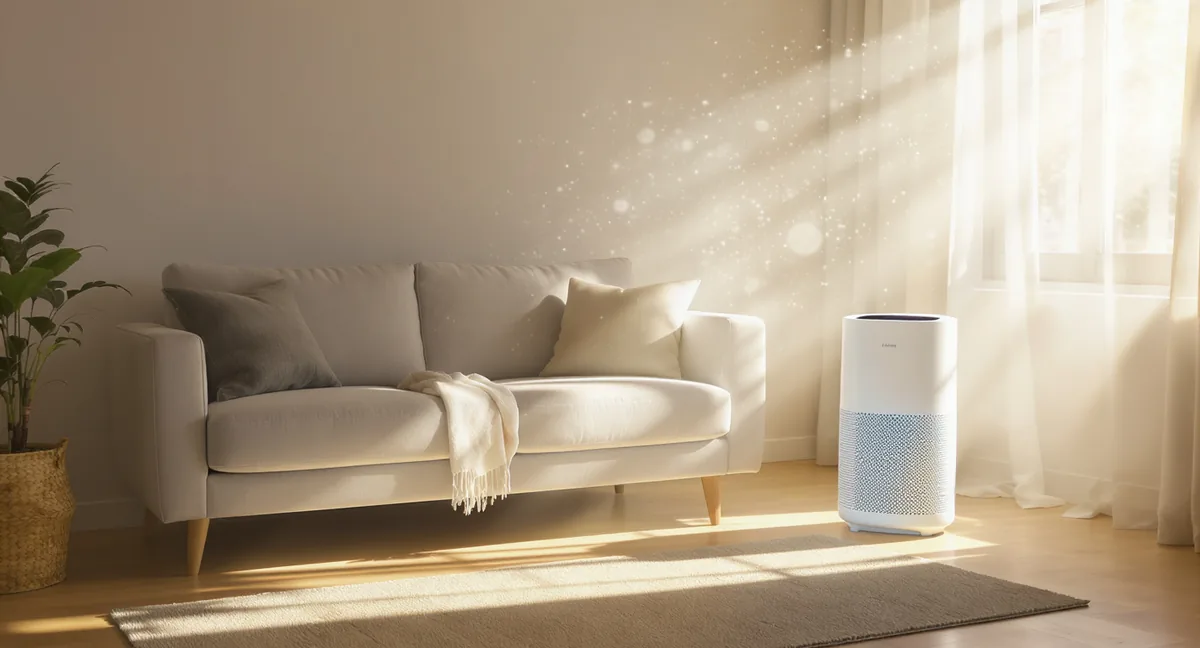
If you have ever shopped for an air purifier, you have seen the acronym CADR on spec sheets. It stands for Clean Air Delivery Rate, and it is the single most important number to compare when choosing a purifier. Yet most shoppers either ignore it or misunderstand what it actually tells them.
This guide explains exactly what CADR measures, how the testing works, what numbers to aim for, and where CADR falls short — so you can make a genuinely informed purchase.
Key Takeaways
- 1CADR (Clean Air Delivery Rate) measures how many cubic feet of clean air a purifier delivers per minute — higher is always better
- 2Every purifier receives three CADR scores: Smoke (smallest particles), Dust (medium), and Pollen (largest). Smoke CADR is the most important for health-related concerns
- 3Use the 2/3 rule: your purifier's Smoke CADR should be at least two-thirds of your room's square footage (e.g., 200+ CADR for a 300 sq. ft. room)
- 4CADR is measured by AHAM using brand-new filters at maximum fan speed — real-world performance will be lower as filters age and at quieter settings
- 5CADR does not measure removal of gases, VOCs, or odors — only particulate matter. A high CADR alone does not mean comprehensive air cleaning
Quick Answer
What is a good CADR rating for an air purifier?
A good CADR rating depends on your room size. Apply the 2/3 rule: the purifier's Smoke CADR should be at least two-thirds of your room's square footage. For a typical 300 sq. ft. bedroom or living room, look for a Smoke CADR of 200 or higher. Ratings above 300 are considered excellent, and anything above 400 is exceptional and suitable for very large spaces.
What CADR Is and How It Is Measured
CADR stands for Clean Air Delivery Rate. It measures the volume of filtered air that an air purifier delivers, expressed in cubic feet per minute (CFM). The higher the number, the faster the purifier removes particles from the air.
The standard was developed and is administered by AHAM (Association of Home Appliance Manufacturers), an independent industry organization that tests air purifiers in controlled laboratory conditions. Here is how their testing process works:
- A sealed test chamber — AHAM places the purifier inside a standardized 1,008 cubic foot room (roughly 11 x 11 feet with 8-foot ceilings).
- Known pollutants are introduced — A measured quantity of smoke, dust, or pollen particles is released into the chamber.
- The purifier runs at maximum speed — The unit operates at its highest fan setting while sensors measure how quickly particle concentration drops.
- Natural decay is subtracted — Particles settle naturally over time even without a purifier. AHAM subtracts this natural settling rate so the CADR reflects only what the purifier itself removed.
The result is a number that directly tells you: this purifier delivers X cubic feet of clean air per minute for this particle type. A purifier with a Smoke CADR of 233 delivers 233 cubic feet of smoke-free air per minute.
AHAM's CADR testing is voluntary — manufacturers submit their products for certification. Most reputable brands participate because a verified CADR score gives consumers a reliable way to compare products apples-to-apples. If a purifier does not list a CADR rating, that is a red flag. It may mean the manufacturer chose not to submit for testing, which often signals a weaker-performing unit.
The Three CADR Numbers: Smoke, Dust, and Pollen
Every AHAM-certified purifier receives three separate CADR scores based on different particle sizes:
Smoke CADR (0.09 - 1.0 microns)
Smoke particles are the smallest of the three test categories. This is the most demanding test and typically produces the lowest CADR number. Because small particles are hardest to filter, Smoke CADR is the most relevant metric for health concerns like fine particulate matter (PM2.5), wildfire smoke, and combustion byproducts.
This is the number you should focus on when comparing purifiers.
Dust CADR (0.5 - 3.0 microns)
Dust particles are medium-sized. This test measures effectiveness against common household dust, dust mite debris, and mold spores. The Dust CADR is usually slightly higher than Smoke CADR because these particles are easier to capture.
Pollen CADR (5.0 - 11.0 microns)
Pollen particles are the largest of the three categories. Any decent HEPA filter captures pollen effectively, so this number is usually the highest of the three and the least useful for differentiation. Even budget purifiers tend to score well here.
What the Three Numbers Look Like in Practice
| Purifier | Smoke CADR | Dust CADR | Pollen CADR |
|---|---|---|---|
| Dyson Big Quiet Formaldehyde | 423 | 423 | 423 |
| Blueair Blue Pure 211+ | 350 | 350 | 350 |
| Levoit Core 400S | 256 | 260 | 256 |
| Coway Airmega AP-1512HH | 233 | 246 | 240 |
| Levoit Core 300 | 141 | 140 | 145 |
Notice that some purifiers (like the Dyson and Blueair) have identical scores across all three categories, while others show slight variation. When all three numbers are the same, it indicates consistent airflow performance regardless of particle size.
How CADR Relates to Room Size: The 2/3 Rule
Knowing a purifier's CADR is only useful if you know how to match it to your space. AHAM provides a simple guideline known as the 2/3 rule:
Your purifier's Smoke CADR should be at least two-thirds (2/3) of your room's square footage.
This rule assumes standard 8-foot ceilings and targets approximately 2 air changes per hour (ACH) — meaning the purifier filters the entire room volume twice every 60 minutes. That is the minimum for noticeable air quality improvement.
The 2/3 Rule in Practice
| Room Size (sq. ft.) | Minimum Smoke CADR | Example Purifier |
|---|---|---|
| 150 | 100+ | Levoit Core 300 (141) |
| 200 | 133+ | Levoit Core 300 (141) |
| 300 | 200+ | Coway Mighty (233) |
| 400 | 267+ | Blueair Blue Pure 211+ (350) |
| 500 | 333+ | Blueair Blue Pure 211+ (350) |
| 600 | 400+ | Dyson Big Quiet (423) |
For allergy or asthma relief, you should target 4 or more air changes per hour, which effectively means doubling the requirement. In that case, think of the effective room coverage as roughly half of what the 2/3 rule suggests — or equivalently, the CADR should match or exceed your room's full square footage.
How to Calculate Air Changes Per Hour
If you want the precise number, use this formula:
ACH = (CADR x 60) / (Room Area x Ceiling Height)
For example, the Coway Mighty (233 CADR) in a 300 sq. ft. room with 8-foot ceilings:
ACH = (233 x 60) / (300 x 8) = 13,980 / 2,400 = 5.8 ACH
That is well above the 4 ACH threshold for allergy relief, making the Coway Mighty an excellent fit for a 300 sq. ft. room.
CADR Ranges: What the Numbers Actually Mean
Not all CADR ratings are created equal. Here is how to interpret the numbers you will encounter:
Below 100 CADR — Personal / Desktop
Purifiers in this range are intended for very small spaces (under 150 sq. ft.) or for close-range personal use at a desk. They will not meaningfully clean a full bedroom. Avoid these unless you are buying for a specific small-space purpose.
100-200 CADR — Small Room
Suitable for bedrooms, home offices, and nurseries under 250 sq. ft. The Levoit Core 300 at 141 CADR is the standout in this range — affordable and effective for small rooms, though it will not keep up in larger spaces.
200-300 CADR — Medium Room (The Sweet Spot)
This is where the best value purifiers live. Models like the Coway Airmega AP-1512HH (233 CADR) and Levoit Core 400S (256 CADR) handle bedrooms and living rooms up to 350-400 sq. ft. comfortably. For most homes, a purifier in this range delivers the best balance of performance, noise, and cost.
300-400 CADR — Large Room
Purifiers in this range can handle large living rooms and open-concept areas up to 500 sq. ft. The Blueair Blue Pure 211+ at 350 CADR is the benchmark here — hard to beat for the price in large spaces.
400+ CADR — Exceptional / Whole-Room
Very few consumer purifiers reach this level. The Dyson Big Quiet Formaldehyde at 423 CADR is rated for spaces up to 1,076 sq. ft. on paper, though real-world coverage in open floor plans will be smaller. These models command premium prices but offer genuine whole-room performance.
| CADR Range | Rating | Suitable For |
|---|---|---|
| Under 100 | Weak | Desktops and personal spaces only |
| 100-200 | Good | Small bedrooms and offices (150-250 sq. ft.) |
| 200-300 | Great | Medium rooms (250-400 sq. ft.) — best value range |
| 300-400 | Excellent | Large living rooms (400-500 sq. ft.) |
| 400+ | Exceptional | Very large rooms and open-concept spaces (500+ sq. ft.) |
CADR vs. Other Specs You Will See
Manufacturers use several different metrics to describe purifier performance. Here is how they compare to CADR — and which ones to trust.
CADR vs. Manufacturer Square Footage Claims
Nearly every purifier box lists a "room coverage" number — something like "covers up to 540 sq. ft." These numbers are based on the manufacturer's own assumptions about how many air changes per hour are needed, and they almost always assume the bare minimum (1.5-2 ACH).
The problem: 2 ACH is barely enough for noticeable improvement. For allergy relief, you need 4+ ACH, which effectively halves the coverage claim.
| Purifier | Manufacturer Rating | Realistic Coverage (4+ ACH) |
|---|---|---|
| Dyson Big Quiet | 1,076 sq. ft. | ~500 sq. ft. |
| Blueair Blue Pure 211+ | 540 sq. ft. | ~350 sq. ft. |
| Levoit Core 400S | 403 sq. ft. | ~270 sq. ft. |
| Coway Mighty | 361 sq. ft. | ~240 sq. ft. |
| Levoit Core 300 | 219 sq. ft. | ~150 sq. ft. |
Bottom line: Ignore the square footage claim on the box. Calculate from the CADR using the 2/3 rule — it is more reliable.
CADR vs. Air Changes Per Hour (ACH)
ACH tells you how many times per hour the entire room volume passes through the filter. CADR and ACH measure related but different things:
- CADR is an absolute measure of clean air delivery. It does not change with room size.
- ACH is relative — it depends on both the purifier's CADR and the room's volume.
A purifier with 233 CADR delivers 5.8 ACH in a 300 sq. ft. room but only 3.5 ACH in a 500 sq. ft. room. The purifier did not change — the room did.
Use CADR to compare purifiers. Use ACH to determine whether a specific purifier is right for a specific room.
CADR vs. Filter Efficiency (99.97%)
Filter efficiency (like the 99.97% True HEPA standard) tells you what percentage of particles the filter captures in a single pass. CADR tells you how much air actually passes through the filter per minute. Both matter:
- A filter with 99.97% efficiency but low airflow will not clean a room quickly.
- A high-airflow fan with a poor filter will move a lot of air but not actually clean it.
CADR captures both variables — it reflects the total volume of genuinely clean air delivered. That is why it is more useful than filter efficiency alone.
Limitations of CADR: What It Does Not Tell You
CADR is the best standardized metric we have for comparing air purifiers, but it has real limitations you should understand before buying.
1. CADR Only Measures Particulates
CADR testing uses smoke, dust, and pollen — all particles. It does not measure removal of:
- Volatile organic compounds (VOCs) — off-gassing from furniture, paint, and cleaning products
- Formaldehyde — a common indoor pollutant from building materials
- Odors — cooking smells, pet odors, cigarette smoke smell
- Carbon monoxide or radon — hazardous gases that require dedicated detection
If you need gas and odor removal, look for a purifier with a substantial activated carbon filter in addition to a high CADR rating. The weight of the carbon matters — models with 2+ pounds of activated carbon (like the Dyson Big Quiet) will significantly outperform those with thin carbon sheets.
2. Testing Uses Brand-New Filters at Maximum Speed
AHAM tests purifiers with fresh, unused filters running at the highest fan speed. In real life:
- Filters degrade as they accumulate particles. A six-month-old HEPA filter will deliver lower CADR than a new one.
- Most people run their purifiers on medium or low settings for noise reasons. At half speed, effective CADR drops significantly.
What to do about it: Buy a purifier with more CADR than you technically need. Running a larger unit on medium speed is quieter than running a smaller unit on high — and you will still get adequate airflow even as the filter ages.
3. The Test Chamber Is Small and Sealed
AHAM's test chamber is approximately 1,008 cubic feet — a small sealed room with no doors opening, no HVAC system cycling, and no new pollutants being introduced. Your home is not this controlled. Real-world factors that reduce effective performance include:
- Open doors and windows allow unfiltered air to enter
- Cooking, pets, and human activity continuously generate new particles
- HVAC systems redistribute particles from room to room
4. CADR Does Not Reflect Noise at Usable Speeds
A purifier with 350 CADR at maximum speed may be too loud to run at that speed in a bedroom. Some manufacturers publish CADR at multiple speeds, but most only provide the maximum number. Check noise levels (in dB) separately.
5. No Standardized Test for Long-Term Performance
CADR is a snapshot measurement with a new filter. There is no standard test that measures how performance degrades over six or twelve months of continuous use. Filter replacement schedules vary by manufacturer — following them is critical for maintaining close-to-rated performance.
Real-World CADR Comparison
Here is how five popular purifiers stack up on the metrics that matter most:
| Feature | Dyson Big Quiet | Blueair 211+ | Levoit 400S | Coway Mighty | Levoit 300 |
|---|---|---|---|---|---|
| Smoke CADR | 423 | 350 | 256 | 233 | 141 |
| Dust CADR | 423 | 350 | 260 | 246 | 140 |
| Pollen CADR | 423 | 350 | 256 | 240 | 145 |
| Rated Coverage | 1,076 sq. ft. | 540 sq. ft. | 403 sq. ft. | 361 sq. ft. | 219 sq. ft. |
| Realistic Coverage (4 ACH) | ~500 sq. ft. | ~350 sq. ft. | ~270 sq. ft. | ~240 sq. ft. | ~150 sq. ft. |
| Price | $1,029.00 | $299.99 | $181.95 | $229.00 | $99.00 |
| CADR per Dollar | 0.73 | 1.17 | 1.16 | 1.02 | 1.41 |
| Noise (Low) | 20 dB | 31 dB | 24 dB | 24.4 dB | 24 dB |
| Filter Type | HEPA H13 + Catalytic | HEPASilent + Carbon | True HEPA H13 + Carbon | True HEPA + Carbon | True HEPA H13 + Carbon |
CADR per dollar is a useful way to compare value. The Levoit Core 300 delivers the most clean air per dollar spent, while the Dyson Big Quiet commands a premium for its exceptional coverage and formaldehyde-destroying catalytic oxidation filter.
How to Use CADR When Shopping
Here is a step-by-step approach to using CADR effectively:
-
Measure your room. Multiply length by width to get square footage. If you are placing the purifier in a bedroom, measure just the bedroom — not the whole apartment.
-
Apply the 2/3 rule. Multiply your room's square footage by 0.67 to find the minimum Smoke CADR you need. For allergy relief, use the full square footage as your CADR target instead.
-
Compare Smoke CADR across models. Ignore marketing claims about coverage. Focus on the verified CADR number.
-
Check noise levels at lower speeds. A purifier with 350 CADR on high might only deliver 180 CADR on the medium setting you will actually use. Look for models that maintain good airflow at quieter speeds.
-
Factor in filter costs. A cheaper purifier with expensive replacement filters ($80+ every six months) can cost more over two years than a pricier unit with affordable filters.
-
Consider what CADR does not cover. If you need VOC or odor removal, prioritize models with substantial activated carbon filters alongside a high CADR.
Our Top Recommendation
For most rooms between 200 and 400 sq. ft., the Coway Airmega AP-1512HH offers the best overall combination of CADR performance, noise levels, filter costs, and price:
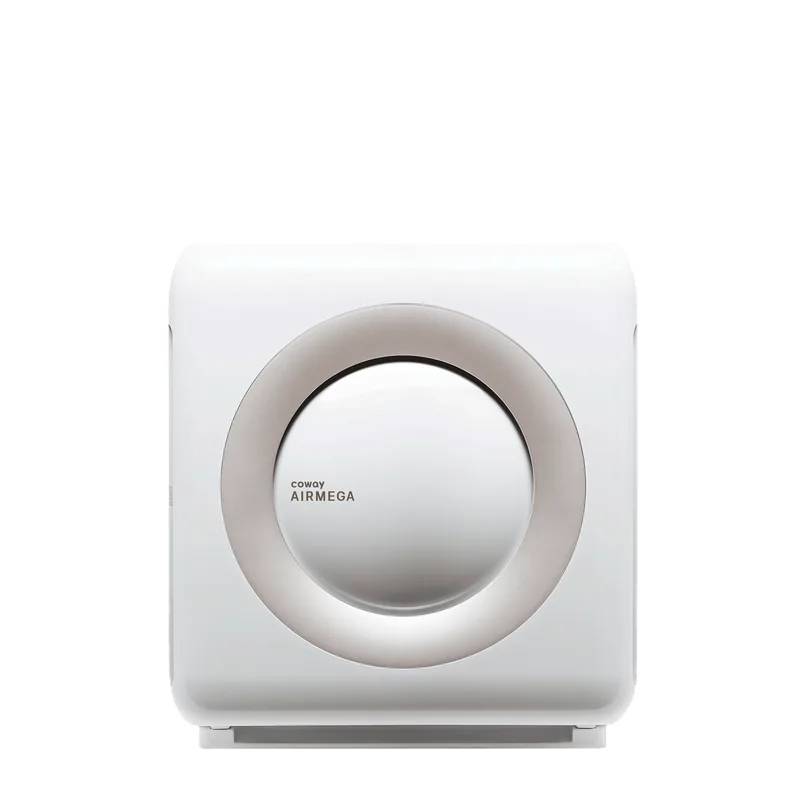
At 233 Smoke CADR, the Coway Mighty delivers 5.8 air changes per hour in a 300 sq. ft. room — well above the allergy-relief threshold. Annual filter costs are approximately $40, making it one of the most economical purifiers to own long-term.
For large rooms over 400 sq. ft., step up to the Blueair Blue Pure 211+ at 350 CADR, or the Dyson Big Quiet at 423 CADR if budget allows and you need formaldehyde removal.
Sources & References
- AHAM (Association of Home Appliance Manufacturers) — Develops and administers the CADR testing standard, the industry benchmark for rating air purifier performance by particle type
- EPA Guide to Air Cleaners in the Home — Recommends using CADR ratings to match air purifier capacity to room size for effective particle reduction
- FTC (Federal Trade Commission) — Enforces truth-in-advertising standards for air purifier marketing claims, including performance and coverage ratings
This guide was researched and written by the AirQualityNest editorial team. We update our content regularly to reflect the latest products, pricing, and research.
Frequently Asked Questions
What does CADR stand for?+
CADR stands for Clean Air Delivery Rate. It is a standardized measurement developed by AHAM (Association of Home Appliance Manufacturers) that tells you how many cubic feet of filtered air a purifier delivers per minute. The higher the CADR, the faster the purifier cleans the air in your room. Each purifier is tested for three particle types — Smoke, Dust, and Pollen — with Smoke CADR being the most important number to compare because it uses the smallest, hardest-to-capture particles.
Is a higher CADR always better?+
In terms of raw air cleaning performance, yes — higher CADR always means faster particle removal. However, the highest CADR purifiers tend to be more expensive, larger, louder at top speed, and have costlier replacement filters. The key is matching the CADR to your room size using the 2/3 rule. A 141 CADR purifier is perfectly adequate for a 200 sq. ft. bedroom, and spending more on a 350 CADR unit would deliver diminishing returns in that small space. Buy enough CADR for your room, plus some margin so you can run the purifier on a quieter setting.
Why do some purifiers not list a CADR rating?+
AHAM CADR testing is voluntary — manufacturers choose whether to submit their products. Some skip it because testing costs money, but others avoid it because their performance may not compare favorably. If a purifier does not have an AHAM-verified CADR rating, treat its coverage claims with skepticism. A few reputable brands (like Dyson) have historically conducted their own internal testing but have more recently started participating in AHAM certification as well. When in doubt, prefer models with verified CADR scores.
Does CADR apply to gases, VOCs, and odors?+
No. CADR only measures the removal of airborne particles — smoke, dust, and pollen. It does not test or rate a purifier's ability to remove gases, volatile organic compounds (VOCs), formaldehyde, or odors. For gas removal, you need a purifier with a substantial activated carbon filter. The weight of the carbon matters more than marketing claims — look for models with at least 1-2 pounds of activated carbon for meaningful gas and odor reduction.
How often should I replace filters to maintain the rated CADR?+
Follow the manufacturer's recommended replacement schedule, which is typically every 6-12 months depending on the model and usage conditions. CADR is tested with brand-new filters, so performance gradually decreases as filters accumulate particles. Running a purifier with a clogged filter not only reduces CADR but can restrict airflow and cause the motor to work harder, increasing noise and energy consumption. Homes with pets, smokers, or high outdoor pollution may need to replace filters more frequently. Many modern purifiers include filter life indicators that track actual usage rather than relying on a fixed calendar schedule.
Continue Reading
Air Purifier Sizing Guide
Use CADR and room measurements to find the right purifier size with our step-by-step guide
What Is a HEPA Filter?
Understand True HEPA vs. HEPA-type and why filter grade matters alongside CADR
Best Air Purifiers for Allergies
Our top-rated purifiers ranked by real-world allergy relief performance
Best Air Purifiers for Smoke
High-CADR purifiers optimized for wildfire and cigarette smoke
Activated Carbon Filters Explained
What CADR does not cover — how carbon filters handle gases, VOCs, and odors
Continue Reading

Best Air Purifiers for Open Floor Plans in 2026: High-CADR Models That Cover It All
The best air purifiers for open floor plans ranked by CADR, coverage area, and noise. High-performance HEPA purifiers that handle 500-1,500+ sq. ft. open spaces.
Best Smart Humidifiers in 2026 (Wi-Fi, App Control & Auto Humidity)
The best smart humidifiers with Wi-Fi, app control, and auto humidity adjustment. Top picks for Alexa, Google Home, and smart home integration.
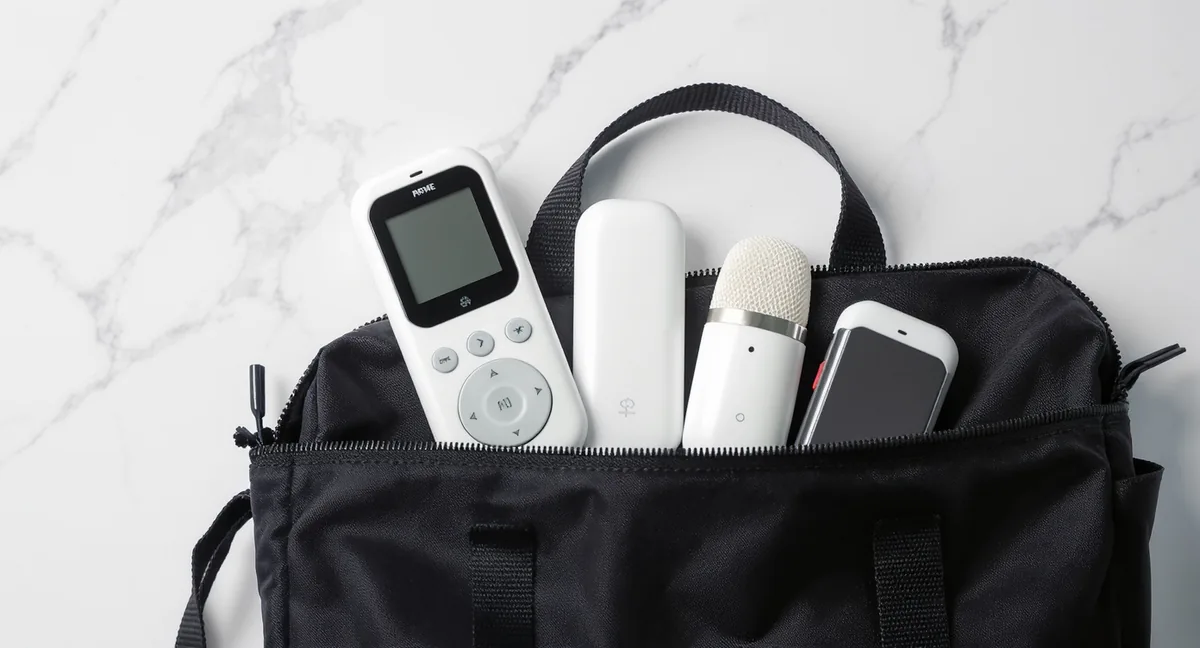
The 5 Best Portable Air Quality Monitors in 2026
Monitor your air quality on the go. We tested the best portable and compact air quality monitors for accuracy, battery life, and sensor range.