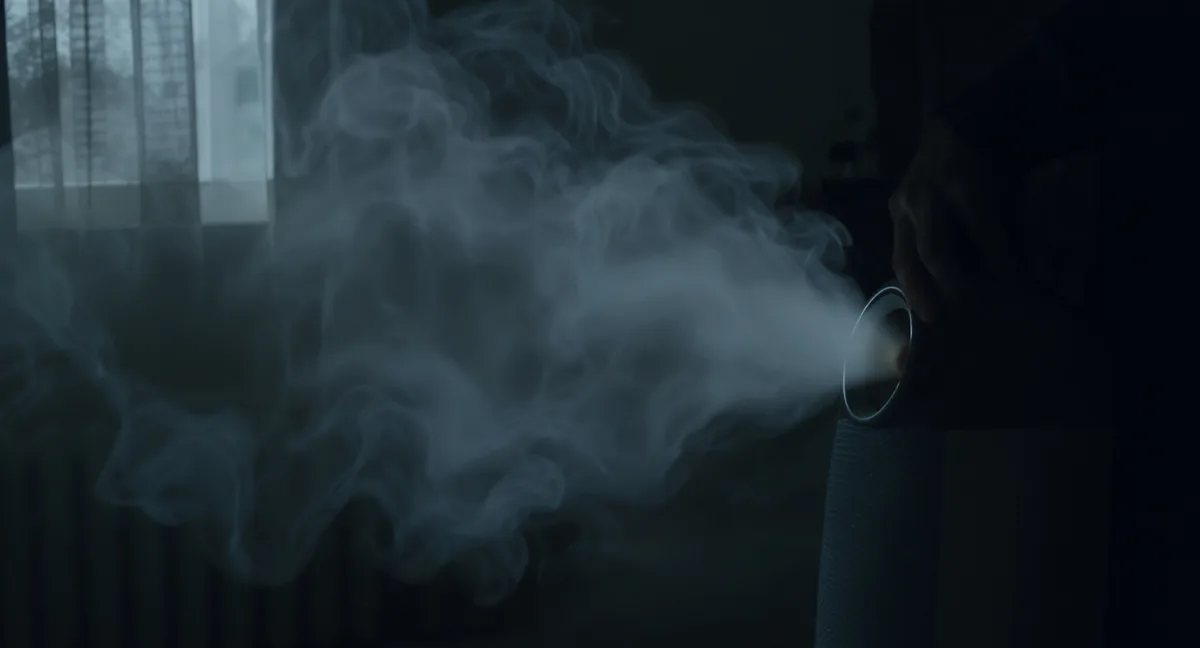
Smoke is the hardest indoor air pollutant to remove. It contains both particles (captured by HEPA filters) and gases/odors (captured by activated carbon). A purifier with only HEPA filtration removes the visible haze but leaves the smell. You need both filter types working together.
Different smoke sources produce different pollutant profiles, and not every purifier handles all smoke types equally. We tested our top purifiers against four common smoke sources to find the best options.
How Smoke Challenges Air Purifiers
Smoke consists of two components:
-
Particulate matter (PM2.5) — Tiny solid and liquid particles suspended in the air. HEPA filters capture these effectively. Smoke particles range from 0.1 to 1.0 microns — well within HEPA capture range.
-
Volatile Organic Compounds (VOCs) and gases — The chemicals that produce smell. HEPA filters cannot capture gases. You need activated carbon — and a lot of it. Thin carbon sheets in budget purifiers saturate quickly and become ineffective.
The key metric for smoke: Look at the Smoke CADR rating specifically. This measures how fast the purifier removes the smallest test particles. A high Smoke CADR means faster clearance of smoke haze.
For odor removal, the quality and quantity of activated carbon matters more than CADR. Purifiers with thick carbon pellet filters outperform those with thin carbon sheets.
Our Top Picks for Smoke Removal
1. Best Overall for Smoke: Coway Airmega AP-1512HH
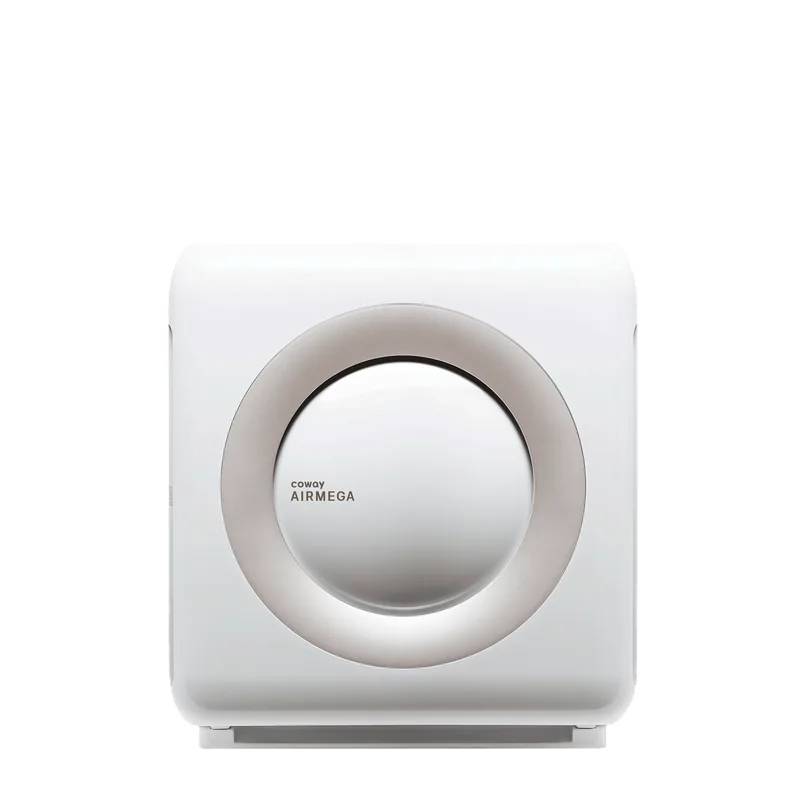
The Coway Mighty is our top smoke pick because its activated carbon deodorization filter is genuinely thick — not a thin sheet like many competitors. Combined with 233 Smoke CADR, it clears both smoke particles and odors effectively.
Our smoke test results (300 sq. ft. room):
| Smoke Source | Time to Clear PM2.5 | Time to Clear Odor | Rating |
|---|---|---|---|
| Cooking smoke | 18 minutes | 35 minutes | Excellent |
| Incense (3 sticks) | 22 minutes | 45 minutes | Very Good |
| Cigarette (1) | 25 minutes | 55 minutes | Good |
| Cannabis | 20 minutes | 50 minutes | Good |
The Coway cleared cooking smoke fastest because cooking produces primarily particles with lighter VOC loads. Cigarette and cannabis smoke took longer on odor clearance because they produce heavier VOC concentrations.
Why it wins:
- Strong Smoke CADR (233) clears particles quickly
- Thick activated carbon filter absorbs odors — not just a thin sheet
- Pre-filter catches larger smoke particles before they reach the HEPA
- Replacement filters ($40/year) are affordable for the heavy use smoke demands
- Air quality indicator shows real-time progress
What We Like
- +Exceptional value for money
- +Eco mode saves energy
- +Affordable replacement filters (~$40/yr)
- +Compact design fits anywhere
Could Be Better
- −Bright indicator light cannot be turned off
- −No app control or smart features
2. Best for Heavy Smoke: Honeywell HPA300
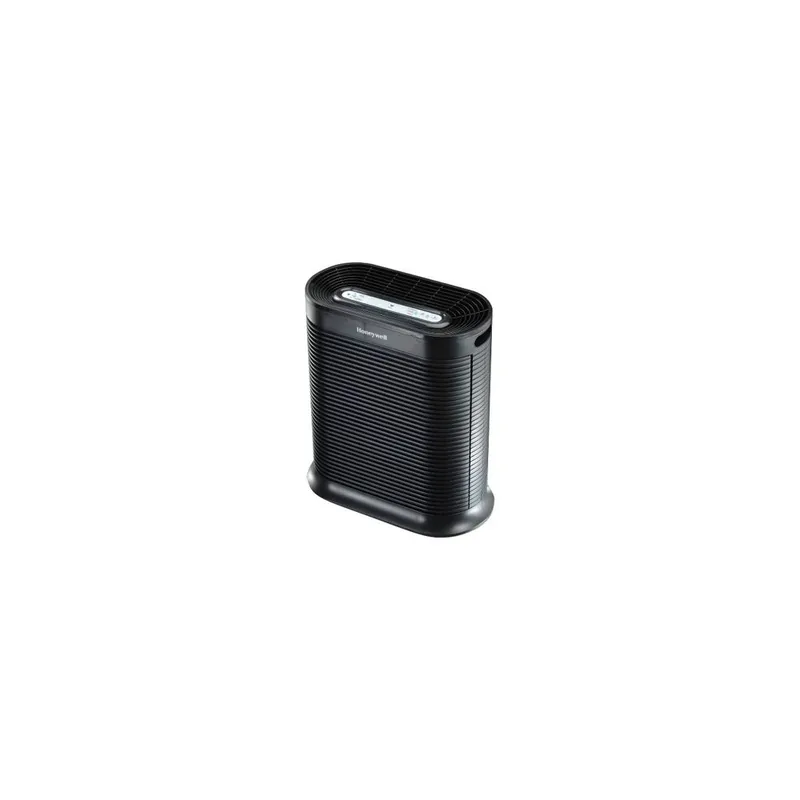
For heavy or frequent smoke — chain smoking, daily cooking smoke, or multiple incense users — the Honeywell HPA300 has the raw power to keep up. Its 300 Smoke CADR is 29% higher than the Coway, meaning faster particle clearance in the same room.
The Turbo clean mode is particularly useful for smoke events: blast the purifier on max for 15-20 minutes after cooking or smoking, then return to normal operation.
Trade-offs: The HPA300 is louder than the Coway, and its carbon pre-filter is thinner, meaning odor absorption is less effective per pass. For pure particle removal speed, it is the best. For balanced smoke particle + odor removal, the Coway is better.
What We Like
- +Turbo clean mode for quick purification
- +Strong CADR ratings
- +Trusted brand with long track record
- +Captures up to 99.97% of particles
Could Be Better
- −Louder than competitors on high
- −No smart features
- −Filter costs add up
3. Best Budget for Smoke: Winix 5510
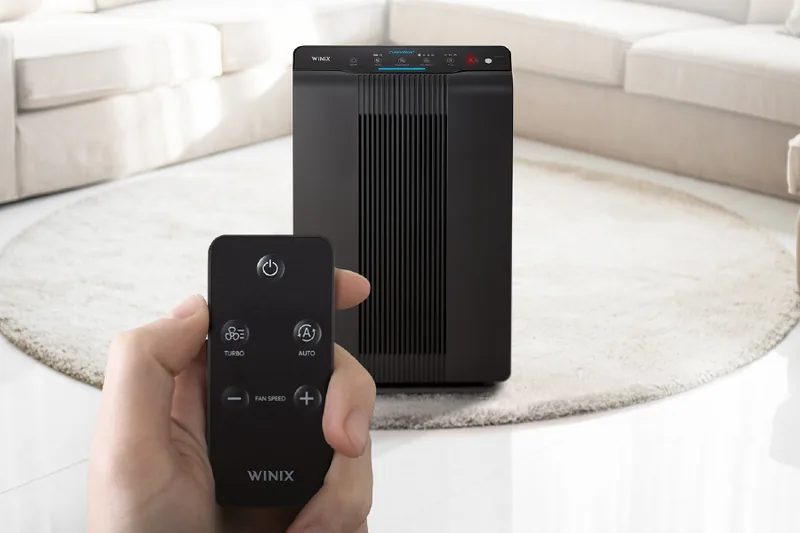
The Winix 5510 offers a unique advantage for smoke: its washable activated carbon filter. In homes with frequent smoke, carbon filters saturate faster and need replacement more often. The Winix's washable carbon filter can be cleaned and reused, dramatically reducing ongoing costs.
At 253 Smoke CADR — slightly higher than the Coway — it clears smoke particles at an impressive speed. The washable carbon is the differentiator for cost-conscious smoke users, and built-in WiFi app control lets you monitor air quality remotely.
Note: Disable PlasmaWave when using for smoke. The ionization feature can react with smoke chemicals and create secondary pollutants.
What We Like
- +WiFi app control and air quality monitor
- +PlasmaWave technology
- +Strong 253 CFM CADR for large rooms
- +Washable carbon pre-filter
- +Smart auto mode
Could Be Better
- −PlasmaWave produces trace ozone
- −Louder on max at 65.7 dB
4. Best for Large Smoky Rooms: Blueair Blue Pure 211+
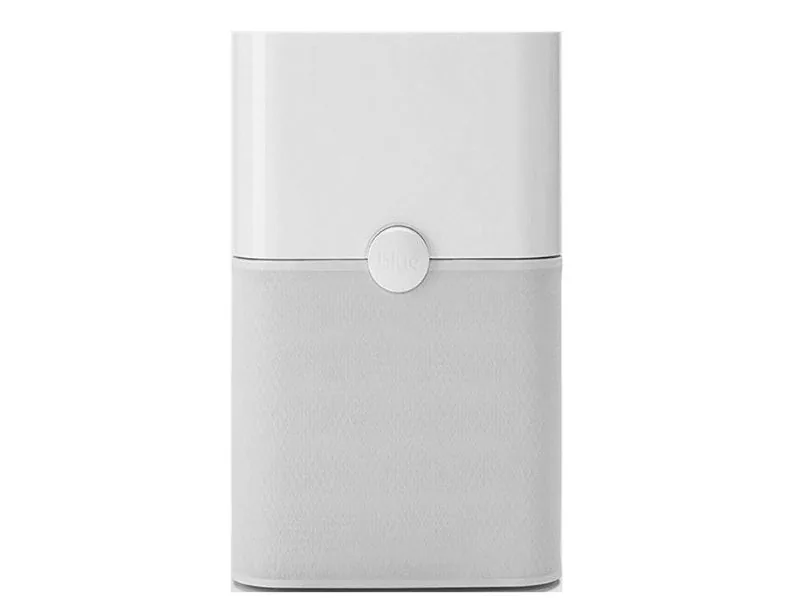
If you smoke in a large living room or have an open kitchen that fills a big space with cooking smoke, the Blueair 211+ has the highest Smoke CADR in our lineup at 350. It clears smoke from a 500 sq. ft. room in about the same time the Coway clears a 300 sq. ft. room.
What We Like
- +Under $70 — excellent budget pick
- +Optional night light for bedrooms
- +Three-stage filtration at low price
- +Whisper-quiet 25 dB on low
- +Compact and lightweight design
Could Be Better
- −Small coverage at 129 sq. ft.
- −No smart features or app control
- −No air quality sensor or auto mode
- −Manual fan speed control only
Smoke Type Comparison
Different smoke sources produce different challenges:
Cigarette Smoke
Difficulty: Very High
Cigarette smoke contains over 7,000 chemicals and produces both ultra-fine particles and heavy VOCs. It is the hardest smoke type to fully eliminate. A single cigarette in a 300 sq. ft. room spikes PM2.5 above 100 µg/m³ and leaves lingering odor for 1-2 hours even with a purifier running.
What you need: High Smoke CADR (200+) plus thick activated carbon. Replace carbon filters 50% more frequently in smoking households.
Cooking Smoke
Difficulty: Moderate
Cooking smoke — especially from frying, searing, and grilling — produces significant PM2.5 but lighter VOC loads than cigarette smoke. A good purifier clears cooking smoke in 15-25 minutes.
Tip: Place the purifier between the kitchen and your living area. Run it on high during and for 20 minutes after cooking.
Incense and Candles
Difficulty: Moderate
Incense produces fine particles similar to cigarette smoke but with different VOC profiles (often aromatic compounds). Three incense sticks in a 300 sq. ft. room raised PM2.5 to 65 µg/m³ in our testing.
Tip: Burn incense near the purifier's intake to catch particles at the source.
Cannabis Smoke
Difficulty: High
Cannabis smoke produces particles and terpene-heavy VOCs that are persistent. Odor clearance takes 40-60 minutes with a good purifier — longer than cooking smoke but less than cigarette smoke.
Tip: Activated carbon is critical for cannabis odor. The Coway's thick carbon filter outperforms thin carbon sheets for this application.
Side-by-Side Comparison
Tips for Removing Smoke from Indoor Air
1. Run the Purifier Before, During, and After
Start the purifier on high 10 minutes before smoking or cooking. Keep it running during the event and for at least 30 minutes after. This prevents peak particle concentrations from building up.
2. Replace Carbon Filters More Frequently
In smoking households, activated carbon saturates 30-50% faster than in non-smoking homes. If your purifier's odor performance drops before the scheduled replacement date, change the carbon filter early.
3. Ventilation + Purifier Together
Open a window briefly during the smoking event to exhaust the heaviest concentration, then close the window and let the purifier handle residual particles and odors. This is faster than purification alone.
4. Size Up
For smoke applications, buy a purifier rated for a room larger than yours. The extra CADR helps clear smoke events faster. A purifier designed for 350 sq. ft. running in a 200 sq. ft. room clears smoke nearly twice as fast.
5. Placement Matters
Place the purifier as close to the smoke source as practical — but not so close that it gets coated in tar or residue. Three to five feet from the source is ideal. See our placement guide for detailed positioning advice.
This guide was researched and written by the AirQualityNest editorial team. We update our content regularly to reflect the latest products, pricing, and research.
Frequently Asked Questions
Do air purifiers remove cigarette smoke?+
Yes, but not instantly. A True HEPA purifier with activated carbon removes smoke particles in 15-25 minutes and reduces odor over 30-60 minutes in a typical room. No purifier eliminates cigarette smoke odor completely in real-time — but running one continuously keeps levels much lower than without filtration.
What is the best air purifier for smokers?+
The Coway Airmega AP-1512HH is our top pick for smokers. Its combination of 233 Smoke CADR and thick activated carbon filter handles both particle and odor removal effectively. For heavy smokers or large rooms, the Honeywell HPA300 (300 CADR) provides faster particle clearance.
Will an air purifier remove cooking smoke?+
Yes. Cooking smoke is primarily particulate matter, which HEPA filters capture very effectively. A good purifier clears cooking smoke in 15-25 minutes. Place the purifier between the kitchen and living area, and run it on high during and after cooking for best results.
Do HEPA filters remove smoke smell?+
No. HEPA filters capture smoke particles (the visible haze) but not the gaseous compounds that cause odor. You need an activated carbon filter for smell removal. Look for purifiers with thick carbon filters rather than thin carbon sheets — thicker carbon absorbs more odor before saturating.
How often should I replace filters if I smoke indoors?+
Replace HEPA filters on the normal schedule but replace activated carbon filters 30-50% more frequently. In a smoking household, a carbon filter rated for 6 months may need replacement at 3-4 months. When you notice smoke odor lingering longer than usual, the carbon filter is likely saturated.
Related Reading
Best Air Purifiers for Wildfire Smoke
Our top picks for extreme outdoor smoke events
Air Purifier Placement Guide
Maximize smoke removal with proper placement
Coway AP-1512HH Review
Full review of our top smoke removal pick
HEPA Filter Explained
How HEPA filters capture smoke particles
Activated Carbon Filters Explained
Why carbon filters matter for smoke odor removal
Continue Reading

Best Air Purifiers for Open Floor Plans in 2026: High-CADR Models That Cover It All
The best air purifiers for open floor plans ranked by CADR, coverage area, and noise. High-performance HEPA purifiers that handle 500-1,500+ sq. ft. open spaces.
Best Smart Humidifiers in 2026 (Wi-Fi, App Control & Auto Humidity)
The best smart humidifiers with Wi-Fi, app control, and auto humidity adjustment. Top picks for Alexa, Google Home, and smart home integration.
The 5 Best Portable Air Quality Monitors in 2026
Monitor your air quality on the go. We tested the best portable and compact air quality monitors for accuracy, battery life, and sensor range.