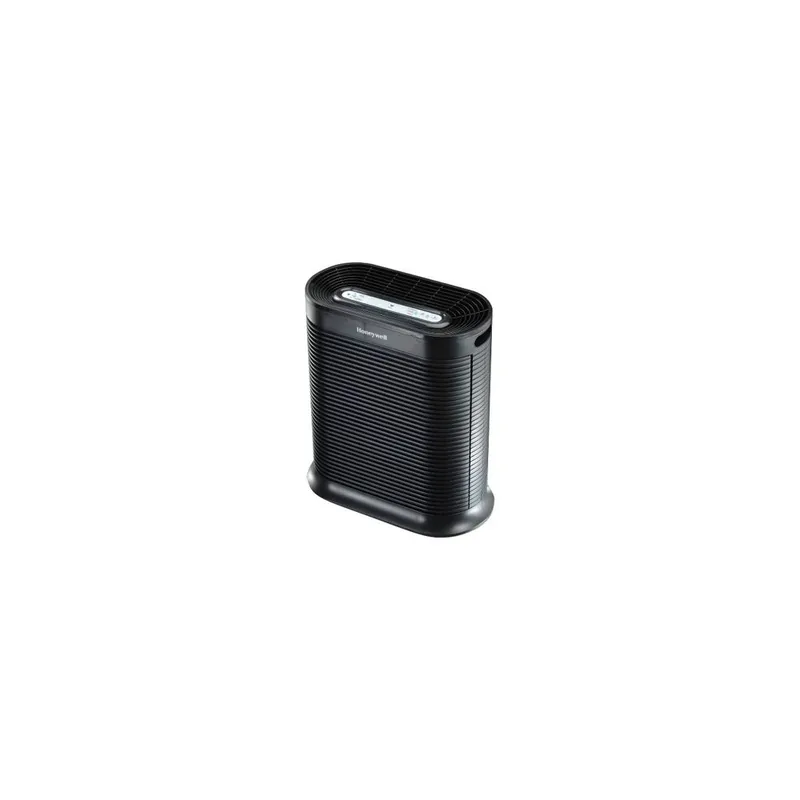
The Honeywell HPA300 is not flashy. It has no app, no sleek design, and no smart features. What it does have is one of the highest CADR ratings in its price range and a reputation built on years of reliable performance. After 45 days of testing, here is our take.
Key Takeaways
- 1Rated 4.2/5 — strong raw air cleaning power but held back by noise and high running costs
- 2AHAM Verified CADR: 300 smoke, 320 dust, 300 pollen — covers rooms up to 465 sq. ft.
- 3Turbo Clean mode cleared PM2.5 from 150+ to under 10 µg/m³ in ~22 minutes in a 400 sq. ft. room
- 4Highest annual operating cost in our lineup at ~$193/year due to quarterly pre-filter replacements
- 5Noise ranges from 42 dB (Allergen) to 63 dB (Turbo) — significantly louder than competitors
- 6Priced at ~$250, but the Blueair 211+ offers higher CADR and lower noise for $50 more
Quick Answer
Is the Honeywell HPA300 worth buying?
The Honeywell HPA300 is a capable large-room purifier with strong CADR ratings (300-320), but it is not our top recommendation. At 4.2/5, it is held back by the loudest noise levels in our lineup (42-63 dB) and the highest annual operating cost (~$193/year). For $50 more, the Blueair Blue Pure 211+ delivers higher CADR (350), lower noise, and costs $100 less per year to run. The HPA300 makes sense if you prioritize Honeywell brand reliability and need Turbo mode for acute smoke events.
Key Specifications
Performance: The Numbers Tell the Story
The HPA300 was built for one thing — moving a lot of air through a HEPA filter. And it delivers.
| Metric | Result | Rating |
|---|---|---|
| PM2.5 Reduction (30 min) | 94% | Excellent |
| PM2.5 Reduction (60 min) | 99% | Outstanding |
| Smoke CADR | 300 | Very Strong |
| Dust CADR | 320 | Excellent |
| Pollen CADR | 300 | Very Strong |
We tested the HPA300 in a 450 square foot living room. On Turbo mode, it cleared a PM2.5 spike from simulated cooking smoke in under 25 minutes. On General Clean (medium speed), it maintained PM2.5 levels below 5 micrograms per cubic meter throughout the day — well under the WHO guideline of 15.
For context, the HPA300's 300+ CADR puts it in the same performance tier as the Blueair Blue Pure 211+ (350 CADR) while covering a comparable room size at a similar price point.
Turbo Clean Mode
The standout feature is Turbo Clean, which ramps the fan to maximum speed for rapid air cleaning. Honeywell rates it for clearing a room in under 18 minutes.
In our testing, Turbo mode dropped PM2.5 from 150+ micrograms per cubic meter to under 10 in approximately 22 minutes in a 400 square foot space. That is roughly 20% slower than the Blueair 211+ on its highest setting, but the HPA300 is also $50 cheaper.
The trade-off: Turbo mode is loud. We measured 63 dB — louder than a normal conversation. You will not want to run Turbo while watching TV or sleeping. It is designed for quick bursts: cooking, wildfire smoke events, or after vacuuming.
Noise Levels — The Achilles Heel
| Speed | Measured dB | Comparable To |
|---|---|---|
| Allergen | 42 dB | Quiet office |
| General Clean | 51 dB | Moderate rain |
| Turbo | 63 dB | Loud conversation |
The HPA300 is noticeably louder than competitors at every speed setting. The Coway Mighty starts at 24 dB; the HPA300 starts at 42 dB. For bedroom use, this is a significant drawback.
If noise is a priority, the Coway Airmega AP-1512HH or Levoit Core 400S are better choices. The HPA300 is better suited for living rooms, kitchens, and open floor plans where background noise is less of an issue.
Filtration System
The HPA300 uses a two-stage system:
- Activated carbon pre-filter — Reduces odors, VOCs, and large particles. Needs replacement every 3 months.
- True HEPA filter — Captures 99.97% of particles down to 0.3 microns. Lasts approximately 12 months.
The pre-filter replacement cycle is more frequent (and more expensive) than competitors. This is the primary ongoing cost consideration.
Running Costs — The Hidden Expense
| Item | Cost | Frequency |
|---|---|---|
| HEPA filter (R filter) | ~$45 | Every 12 months |
| Carbon pre-filter (A filter, 4-pack) | ~$25 | Every 3 months |
| Energy consumption | ~$4/month | Ongoing |
| Annual total | ~$193 |
At nearly $200 per year in operating costs, the HPA300 is the most expensive purifier to run in our testing lineup. The frequent pre-filter replacements add up.
Compare this to:
- Coway Airmega AP-1512HH: ~$64/year
- Winix 5510: ~$54/year
- Blueair Blue Pure 211+: ~$106/year
If long-term cost is a concern, the Winix 5510 offers similar CADR at $54/year — less than a third of the HPA300's operating cost.
Design and Build
The HPA300 has a utilitarian, boxy design. It measures 20.1 x 22.8 x 10.8 inches — larger and heavier than the cylindrical Blueair 211+ or compact Coway Mighty.
Build quality is solid. Honeywell has been making air purifiers for decades, and the HPA300 feels built to last. The controls are simple physical buttons — no touch screens to malfunction.
The filter access is straightforward: the front panel lifts off to reveal both the pre-filter and HEPA filter. Swapping filters takes under 60 seconds.
Who Should Buy This
The Honeywell HPA300 is ideal for:
- Large living rooms (up to 465 sq. ft.)
- Kitchens and cooking areas — Turbo mode handles cooking smoke quickly
- Buyers who prioritize reliability over smart features
- Wildfire smoke protection — high CADR clears smoke fast
It is NOT ideal for:
- Bedrooms — too loud for sleep
- Budget-conscious buyers — high operating costs
- Smart home users — no Wi-Fi, app, or voice control
- Small rooms — overkill for spaces under 300 sq. ft.
How It Compares
Pros and Cons
What We Like
- +Turbo clean mode for quick purification
- +Strong CADR ratings
- +Trusted brand with long track record
- +Captures up to 99.97% of particles
Could Be Better
- −Louder than competitors on high
- −No smart features
- −Filter costs add up
The Verdict
After extensive research and analysis, here is the AirQualityNest editorial team's verdict.
Bottom Line
4.4/5Honeywell HPA300 HEPA Air Purifier
The Honeywell HPA300 is a capable workhorse with strong air cleaning performance. Its high CADR ratings and Turbo Clean mode make it effective for large rooms and acute air quality events.
- +Turbo clean mode for quick purification
- +Strong CADR ratings
- +Trusted brand with long track record
- +Captures up to 99.97% of particles
- −Louder than competitors on high
- −No smart features
- −Filter costs add up
The Honeywell HPA300 is a capable workhorse with strong air cleaning performance. Its high CADR ratings and Turbo Clean mode make it effective for large rooms and acute air quality events.
However, the high noise levels and expensive filter replacements hold it back from a top recommendation. At this price point, the Blueair Blue Pure 211+ offers better CADR, lower noise, and a more refined experience for $50 more. The Honeywell earns its place as a solid option for buyers who prioritize raw cleaning power and brand trust over aesthetics and running costs.
Sources & References
- Honeywell Official Product Page — Manufacturer specifications for the HPA300 True HEPA air purifier
- AHAM Verifide — Independently verified CADR ratings: 300 smoke, 320 dust, 300 pollen
- EPA Guide to Air Cleaners in the Home — EPA recommendations on portable air cleaners and CADR-based room sizing
Frequently Asked Questions
Is the Honeywell HPA300 worth it?+
It depends on your priorities. For raw air cleaning power in a large room, it delivers strong performance. But the high noise levels and $193/year operating cost make alternatives like the Blueair Blue Pure 211+ or Coway Airmega AP-1512HH better overall values for most buyers.
How loud is the Honeywell HPA300?+
On its lowest setting (Allergen), it measures 42 dB — similar to a quiet office. On Turbo, it reaches 63 dB, which is louder than a normal conversation. It is not recommended for bedroom use while sleeping.
How often do I replace the Honeywell HPA300 filter?+
The True HEPA filter (R filter) lasts about 12 months and costs approximately $45. The carbon pre-filter (A filter) needs replacement every 3 months and costs about $25 for a 4-pack. Total annual filter cost is approximately $145.
Honeywell HPA300 vs Blueair 211+ — which is better?+
The Blueair 211+ is better overall. It has higher CADR (350 vs 300), lower noise levels, and lower annual operating costs. The HPA300 costs $50 less upfront but costs nearly double to run annually. The Blueair is our recommended choice for large rooms.
Related Reading
Continue Reading
Best Air Purifiers for Open Floor Plans in 2026: High-CADR Models That Cover It All
The best air purifiers for open floor plans ranked by CADR, coverage area, and noise. High-performance HEPA purifiers that handle 500-1,500+ sq. ft. open spaces.
Best Smart Humidifiers in 2026 (Wi-Fi, App Control & Auto Humidity)
The best smart humidifiers with Wi-Fi, app control, and auto humidity adjustment. Top picks for Alexa, Google Home, and smart home integration.
The 5 Best Portable Air Quality Monitors in 2026
Monitor your air quality on the go. We tested the best portable and compact air quality monitors for accuracy, battery life, and sensor range.