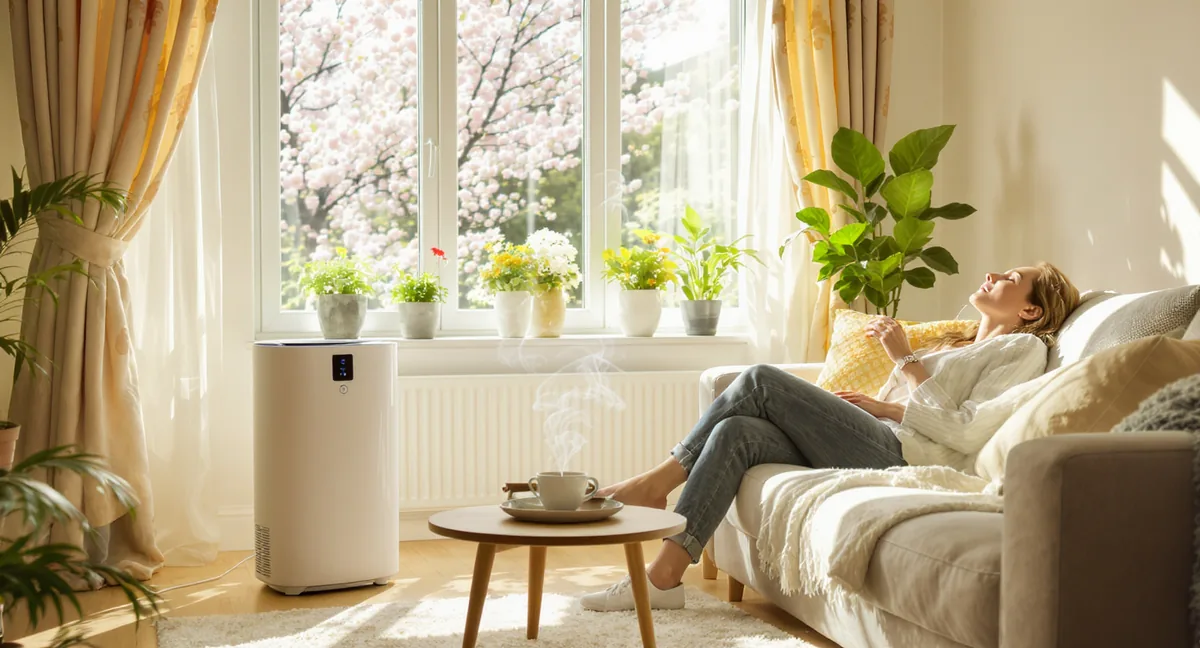
Seasonal allergies affect roughly 81 million Americans each year, according to the Asthma and Allergy Foundation of America. If you already own an air purifier, you are ahead of most people — but simply turning it on is not enough. The difference between a purifier that barely dents your symptoms and one that makes allergy season genuinely bearable comes down to setup, timing, and strategy.
This guide covers everything you need to do before and during spring and fall allergy seasons to get the most out of your air purifier. If you are still shopping for a unit, we include our top picks for allergy sufferers at the end.
Key Takeaways
- 1Replace your HEPA filter 2-4 weeks before allergy season starts — a partially loaded filter from winter reduces airflow and particle capture when you need it most
- 2Position your purifier between the main entry point for allergens (front door, most-used window) and the room where you spend the most time, with at least 3 feet of clearance on all sides
- 3Run your purifier on high for the first 30-60 minutes after coming home or opening windows, then switch to auto mode for continuous protection throughout the day
- 4Keep windows closed on high pollen count days (check AirNow.gov or your local weather app) and save ventilation for early morning or after rain when counts drop by 50-80%
- 5True HEPA filtration captures 99.97% of pollen particles — pollen grains range from 10-100 microns, well above the 0.3 micron HEPA threshold, making HEPA far more effective than ionic purifiers for allergy relief
Quick Answer
How should I set up my air purifier for allergy season?
Replace the HEPA filter 2-4 weeks before pollen season begins, deep clean the unit, and position it in the room where you spend the most time — ideally between the main allergen entry point and your breathing zone. Run it on high for 30-60 minutes when you first come home or after opening windows, then switch to auto mode. Keep windows closed on high pollen days, shower before bed to remove pollen from hair and skin, and change clothes after spending time outdoors.
Spring Allergy Season: What You Are Fighting
Spring allergies arrive in overlapping waves, and understanding the timeline helps you prepare your purifier before symptoms hit.
Tree pollen (February through May) is the first wave. Birch, oak, maple, cedar, and elm trees release massive quantities of pollen as temperatures rise above 50 degrees Fahrenheit. Tree pollen grains are relatively large at 20-40 microns, making them easy for HEPA filters to capture. The challenge is volume — a single birch tree can produce up to 5.5 million pollen grains per day, and these grains travel up to 60 miles on wind currents. Even if you do not have a birch tree in your yard, pollen from miles away reaches your home.
Grass pollen (May through July) overlaps with the tail end of tree pollen season. Timothy, Bermuda, Kentucky bluegrass, and ryegrass are the most common culprits. Grass pollen grains are slightly smaller at 15-25 microns but are produced in enormous quantities by lawns, parks, and roadside vegetation. For many allergy sufferers, grass pollen triggers stronger symptoms than tree pollen because exposure is harder to avoid — it comes from every direction.
The practical implication: spring allergy season is not one event but a four-to-five-month stretch from February through July. Your air purifier needs to run consistently throughout this entire period, not just for a few weeks in April.
Fall Allergy Season: A Different Set of Triggers
Fall allergies involve different allergens that require slightly different strategies.
Ragweed (August through November) dominates fall allergy season. A single ragweed plant produces up to one billion pollen grains per season, and these grains are small enough (18-20 microns) to stay airborne for hours. The CDC reports that ragweed pollen has been detected up to 400 miles from its source. Peak ragweed counts typically occur in mid-September, but the season can extend into November in warmer climates.
Mold spores (September through November) become a significant outdoor allergen as fallen leaves decompose. Leaf litter creates a damp environment where outdoor mold thrives, releasing spores into the air. Mold spores are smaller than pollen at 1-30 microns but still well within HEPA capture range. Raking leaves, mowing over leaf debris, or walking through piles sends concentrated bursts of mold spores into the air — and onto your clothing.
Fall also brings the closed-house problem. As temperatures drop, windows get shut and HVAC systems switch to heating mode. Dust mites, pet dander, and indoor mold that accumulated during summer get recirculated through ductwork. Your air purifier must now handle both incoming outdoor allergens and stirred-up indoor irritants simultaneously.
How Allergens Get Inside Your Home
Even with windows closed, pollen and mold spores find their way indoors through several pathways.
Doors and windows are the most obvious route. Every time you open the front door, you allow a burst of outdoor air — and whatever is floating in it — into your home. During peak pollen season, opening a window for just 15 minutes can elevate indoor pollen counts for hours.
Your HVAC system pulls outdoor air through fresh air intakes and distributes it throughout your home. A standard MERV-8 furnace filter captures large particles but lets smaller pollen grains and most mold spores pass through. Upgrading to a MERV-13 filter significantly reduces what your HVAC delivers into your living spaces.
You carry allergens inside on your body. Pollen clings to hair, skin, clothing, and shoes. A study published in the Annals of Allergy, Asthma & Immunology found that clothing worn outdoors during high pollen days can carry hundreds of thousands of pollen grains indoors. Your jacket draped over a chair becomes a slow-release pollen source for hours.
Pets are allergen transport vehicles. Dogs and cats that spend time outdoors collect pollen and mold spores in their fur. When they come inside, shake, and settle onto furniture, they distribute those allergens throughout the room. A dog returning from a walk during peak ragweed season carries a measurable pollen load on its coat.
Gaps and seals around windows, doors, dryer vents, and utility penetrations allow outdoor air infiltration even when everything is closed. Older homes with poorer sealing have significantly higher indoor pollen counts than well-sealed newer construction.
Pre-Season Prep Checklist
Preparing your air purifier before allergy season starts makes a meaningful difference. Here is what to do 2-4 weeks before your region's pollen season begins.
1. Replace or inspect your HEPA filter. If your current filter has more than 6 months of use on it, replace it before the season. A partially loaded filter has reduced airflow, which lowers the effective CADR of your purifier at exactly the moment you need maximum performance. Fresh HEPA media captures pollen at near-100% efficiency. A clogged filter forces the fan to work harder while delivering less clean air.
2. Clean or replace the pre-filter. The pre-filter catches large particles like dust and pet hair before they reach the HEPA. Many pre-filters are washable — vacuum them thoroughly and wash with lukewarm water if the manufacturer allows it. A clean pre-filter protects the HEPA filter and maintains airflow.
3. Replace the activated carbon filter. Carbon filters lose their absorption capacity over time, even when not actively filtering heavy odors. A fresh carbon filter is especially useful during spring when mold and mildew smells become more prevalent as snow melts and ground thaws.
4. Clean the exterior and sensor. Dust the unit's exterior, paying attention to intake and exhaust vents. If your purifier has an air quality sensor (the Levoit Core 400S and Coway AP-1512HH both do), clean the sensor port with a dry cotton swab. A dirty sensor gives inaccurate readings, which means auto mode will not respond properly to pollen spikes.
5. Inspect window seals. Check weatherstripping around the windows in the room where your purifier runs. Cracked or peeling weatherstripping lets outdoor air — and pollen — seep in continuously. A $5 roll of foam weatherstripping can cut pollen infiltration significantly.
6. Upgrade your HVAC filter. If you are still using a basic fiberglass furnace filter, switch to MERV-13. This reduces the pollen load that your HVAC distributes throughout the house, letting your portable purifier focus on what gets through.
Optimal Placement During Allergy Season
Where you place your purifier during allergy season matters more than any other time of year, because you are fighting a constant influx of particles rather than a stable indoor environment.
Position it between the allergen source and your breathing zone. During allergy season, the primary allergen source is wherever outdoor air enters — the front door, the bedroom window, or the HVAC vent. Place the purifier along the path between that entry point and where you spend the most time. This intercepts allergens before they reach you.
Bedroom placement is the highest priority. You spend 7-9 hours per night in your bedroom breathing the same air. If you only have one purifier, it belongs in the bedroom during allergy season. Position it 3-5 feet from your bed, between the door or window and your pillow. Run it continuously while you sleep.
Keep 3 feet of clearance on all sides. Do not push the purifier against a wall or tuck it behind furniture. Restricted airflow reduces effective CADR by 20-40%. The unit needs space for unobstructed air intake and clean air output.
If you have multiple purifiers, prioritize these rooms: bedroom first, then home office (where you spend daytime hours), then the room nearest the main entry door. A small purifier like the Winix 5510 near the front door acts as a first line of defense, catching pollen as it enters before it spreads through the house.
Elevate the unit 2-3 feet off the ground if possible. Pollen grains that enter through doors and windows are initially suspended at mid-room height before settling. A purifier elevated on a sturdy table or dresser captures airborne pollen more effectively than one sitting on the floor.
When to Run on High vs Auto Mode
Most people leave their purifier on auto mode year-round, and during non-allergy months that is perfectly fine. During allergy season, a more intentional approach makes a noticeable difference.
Run on high for the first 30-60 minutes after coming home. When you walk through the door, you bring a pollen cloud with you on your clothing, hair, and shoes. Running the purifier on its highest speed for 30-60 minutes scrubs those particles from the air before they settle onto furniture and bedding. After this initial purge, switch to auto mode.
Run on high for 30 minutes after opening any door or window. Any exchange with outdoor air introduces a burst of allergens. If someone propped the back door open to let the dog out, run on high immediately afterward.
Use auto mode overnight. Smart purifiers like the Levoit Core 400S monitor air quality in real time and adjust fan speed automatically. Overnight, with windows and doors closed, indoor air quality stabilizes and the unit drops to its quietest setting. If a pollen spike occurs — from a pet moving around or HVAC cycling — auto mode ramps up to compensate.
Run on medium during cooking. Cooking releases PM2.5 particles that can trigger inflammation in already-irritated airways. Running on medium during meal prep addresses cooking particles while keeping noise manageable.
Consider running on high before bedtime if you did not shower. If you come home late and go straight to bed without showering, your hair and skin carry pollen onto your pillow. Running the purifier on high while you wind down helps offset that pollen load.
Window Management Strategy
Windows are the single biggest variable in allergy-season air quality. Here is how to manage them strategically.
Check pollen counts before opening any window. Use AirNow.gov, the Weather Channel app, or your local news forecast. On days when tree pollen, grass pollen, or ragweed counts are rated "High" or "Very High," keep every window in your home sealed. No amount of air purification can offset a constant stream of pollen-laden outdoor air.
Ventilate during low-count windows. Pollen counts are typically lowest in the early morning before wind picks up (before 7 a.m.) and immediately after rainfall. Rain washes pollen out of the air, creating a window of 1-3 hours with dramatically reduced counts. If you need fresh air, these are your safest opportunities.
Never run an air purifier with windows open. An open window replaces filtered indoor air with unfiltered outdoor air faster than any consumer purifier can clean it. You are essentially paying to filter the entire atmosphere. Close the windows, let the purifier clean the sealed room, and enjoy the fresh air you have already captured indoors.
Use exhaust fans instead of open windows when possible. Bathroom exhaust fans and kitchen range hoods ventilate your home without creating the wide-open pathway that a window does. They also create slight negative pressure that reduces pollen infiltration through gaps and seals.
If you must open windows, place the purifier directly in the airflow path. Sometimes you need cross-ventilation for comfort — especially in homes without air conditioning during transitional seasons. Position the purifier between the open window and the rest of the room. This will not eliminate all incoming pollen, but it intercepts a significant portion before it disperses.
Keep bedroom windows closed during sleep. Even if outdoor temperatures are comfortable, the 7-9 hours of pollen exposure while you sleep with an open window can undo an entire day of allergen management. Use the purifier instead of the breeze.
HEPA vs Ionic for Allergies
If you are comparing air purification technologies specifically for seasonal allergies, the answer is straightforward: HEPA wins decisively.
True HEPA filters capture pollen with near-perfect efficiency. Pollen grains range from 10 to 100 microns in diameter — far larger than the 0.3 micron HEPA threshold. At these particle sizes, HEPA filtration efficiency approaches 100%. Every pollen grain that passes through a True HEPA filter gets permanently trapped. It does not re-enter your air.
Ionic purifiers relocate allergens — they do not remove them. Ionizers charge airborne particles, causing them to stick to walls, floors, furniture, and bedding. The pollen is still in your room, just sitting on a surface instead of floating in the air. When you walk past, sit down, or flip a pillow, those settled particles re-suspend. Reviewers of ionic purifiers consistently report that allergy symptoms return quickly after any disturbance in the room.
Ionizers may produce ozone. Some ionic purifiers generate ozone as a byproduct. Ozone is a respiratory irritant that can worsen allergy symptoms, trigger asthma, and cause chest tightness — exactly the symptoms you are trying to avoid. The California Air Resources Board (CARB) requires air purifiers sold in California to meet strict ozone emission limits, but not all ionizers comply.
HEPA purifiers have measurable CADR ratings. CADR tells you exactly how much clean air a purifier delivers per minute. Ionizers do not produce measurable CADR in the same way, making it impossible to size them for your room or verify their performance.
The one legitimate use for ionizers during allergy season: some HEPA purifiers include a built-in ionizer as a supplemental feature (the Coway AP-1512HH has one, for example). When combined with HEPA filtration, the ionizer can pre-charge particles to improve filter capture efficiency slightly. Used this way — as a supplement to HEPA, not a replacement — ionizers are harmless and marginally helpful. Just make sure you can turn the ionizer off if you prefer to avoid any ozone production.
Our Top Picks for Allergy Season
These four purifiers consistently earn praise from allergy sufferers based on customer reviews across major retailers. Each one uses True HEPA filtration and handles the specific demands of pollen and mold spore removal.
Best Overall for Allergies: Coway Airmega AP-1512HH
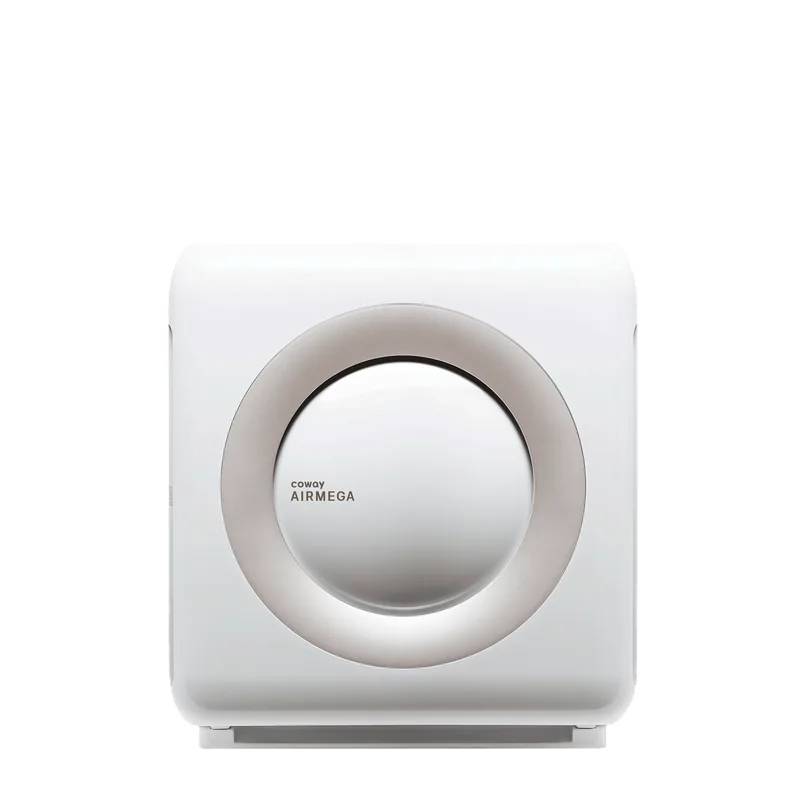
The Coway Mighty is the purifier allergy sufferers recommend most frequently. Its four-stage filtration system — pre-filter, carbon deodorization filter, True HEPA, and optional ionizer — handles both pollen particles and the VOCs that can accompany seasonal mold growth.
Customer reviews highlight three features that matter during allergy season. First, the real-time air quality indicator changes color when particle levels spike — when you walk in from outside carrying pollen, you can literally see the ring shift from blue to purple as the sensor detects the influx. Second, auto mode responds to those spikes within seconds, ramping the fan up before you even notice symptoms. Third, with a CADR of 246 for pollen, it cleans a standard bedroom in under 15 minutes on high.
Annual filter costs run approximately $40 — important when you are running a purifier 24/7 for months at a time during allergy season.
Best Smart Features for Allergies: Levoit Core 400S
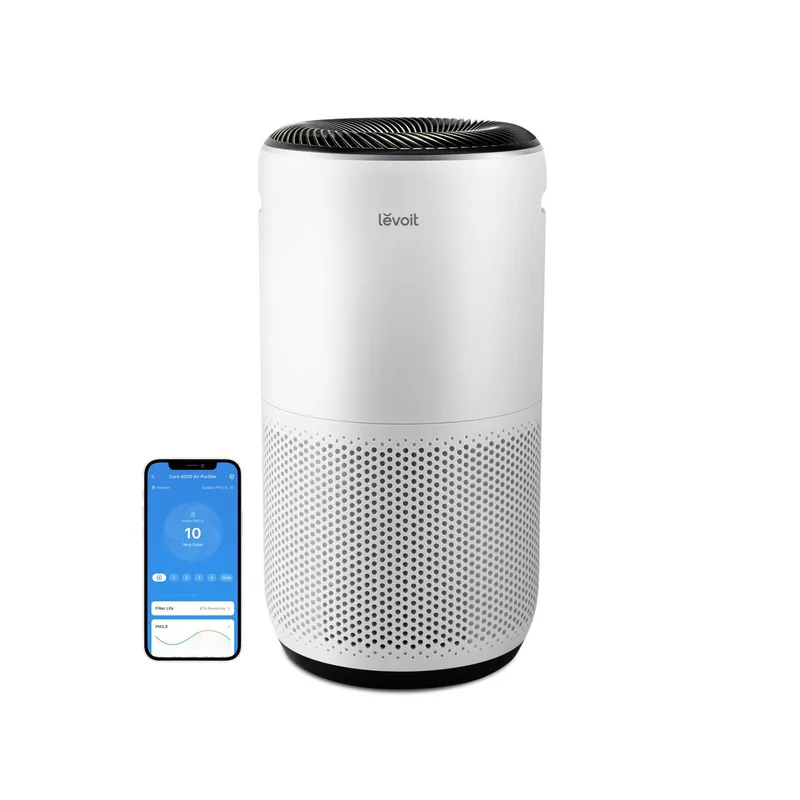
The Levoit Core 400S stands out for allergy sufferers who want data-driven control. The VeSync app provides real-time PM2.5 readings, historical air quality charts, and the ability to set schedules — useful for programming high-speed runs before you arrive home from work.
Where the Levoit excels during allergy season is its auto mode responsiveness. Reviewers consistently note that the unit detects air quality changes within 10-15 seconds and adjusts fan speed accordingly. When you open the front door on a high-pollen day, the Levoit ramps up before you have taken your shoes off. When pollen settles and air quality stabilizes, it drops back to whisper-quiet 24 dB operation.
The H13 HEPA filter provides 99.95% capture efficiency at 0.3 microns — more than sufficient for pollen grains that are 30-100 times larger than the HEPA threshold. The three-stage filtration (pre-filter, HEPA, activated carbon) also handles the musty smells that accompany spring snowmelt and fall leaf decay.
Best for Large, Pollen-Heavy Rooms: Blueair Blue Pure 211+
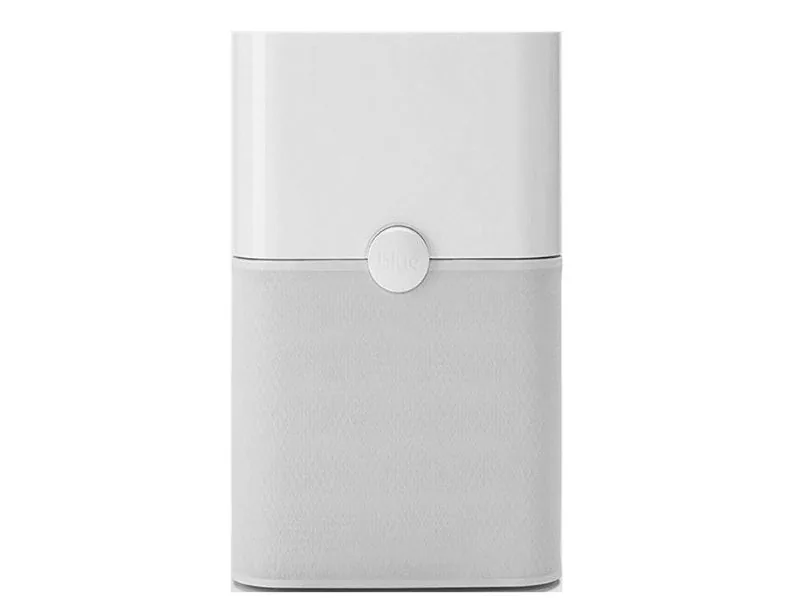
If your main living area is over 400 square feet — an open-concept living room and kitchen, a large family room, or a finished basement — the Blueair 211+ provides the raw airflow needed to keep a big space clean during pollen season. Its 350 CADR handles rooms up to 540 square feet, cycling the air roughly 5 times per hour.
The 360-degree air intake is particularly valuable during allergy season because pollen enters from every direction — doors, windows, HVAC vents, and on people walking through the room. A purifier that only draws air from one side may miss particles approaching from the opposite direction. The Blueair pulls air from all sides simultaneously.
Customer reviews from allergy sufferers praise the 211+ for its ability to maintain low particle counts even in high-traffic rooms where doors open frequently. The combination of high CADR and omnidirectional intake means it recovers quickly after pollen bursts from door openings.
Best Budget Allergy Fighter: Winix 5510
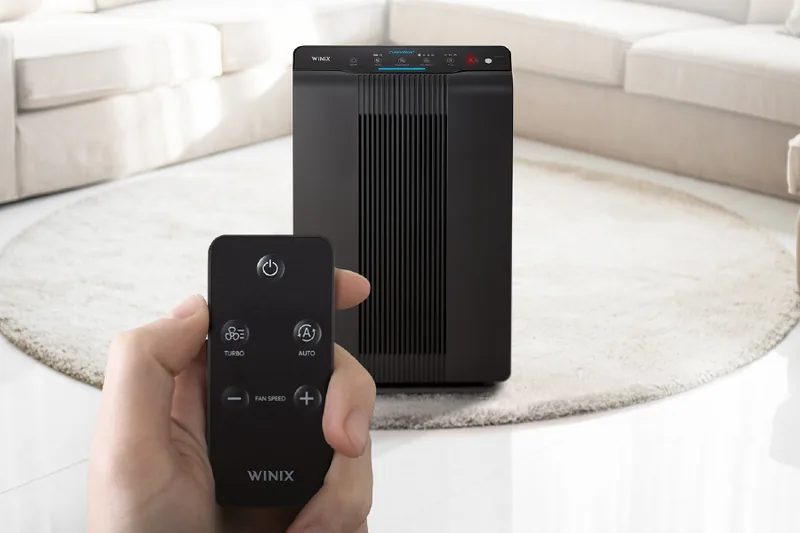
The Winix 5510 delivers allergy-grade filtration at a significantly lower price point than the other picks on this list. Its True HEPA filter and PlasmaWave technology provide effective pollen capture for rooms up to 392 square feet — suitable for most bedrooms and home offices.
Reviewers who use the Winix specifically for allergies highlight its auto mode sensor and washable carbon pre-filter. The washable pre-filter is a cost-saving feature that matters during allergy season, when filters load faster due to increased particle counts. Instead of replacing the pre-filter every few months, you rinse it under the tap and reuse it — extending the HEPA filter's life and reducing annual costs.
The smart sensor and auto mode, combined with four fan speeds including sleep mode, give you the flexibility to run aggressive filtration when needed and quiet operation overnight.
Side-by-Side Comparison
This guide was researched and written by the AirQualityNest editorial team. We update our content regularly to reflect the latest products, pricing, and research.
Frequently Asked Questions
Should I run my air purifier 24/7 during allergy season?+
Yes. During peak allergy season, run your purifier continuously. Pollen enters your home through door openings, HVAC systems, and on clothing throughout the day. Turning the purifier off for even a few hours allows particle levels to build up, and it takes 30-60 minutes of high-speed operation to bring them back down. Use auto mode to save energy — the purifier will run at its lowest (and quietest) speed when air quality is stable and ramp up only when it detects a particle spike.
How often should I replace my HEPA filter during allergy season?+
During heavy allergy seasons, HEPA filters load 20-30% faster than normal because they are capturing higher volumes of pollen and mold spores. Check your filter monthly by looking at its color — a visibly gray or discolored filter has accumulated significant material. Most manufacturers recommend replacement every 6-12 months, but during allergy season you may need to replace at the 6-month mark rather than pushing to 12 months. A clogged filter restricts airflow and reduces the effective CADR of your purifier.
Does an air purifier help with allergy symptoms at night?+
Significantly. A HEPA air purifier running in the bedroom reduces airborne allergen exposure during the 7-9 hours you sleep, which is the longest single period of continuous breathing in any environment. Multiple customer reviews report noticeable improvements in morning congestion, sneezing, and eye irritation after adding a bedroom purifier. For best results, keep the bedroom door closed while sleeping, run the purifier on auto mode, and shower before bed to remove pollen from your hair and skin.
Can I use my air purifier and open windows at the same time during allergy season?+
It is not recommended. An open window brings in unfiltered outdoor air faster than a consumer air purifier can clean it. On high pollen days, this creates a losing battle — the purifier works at full capacity while pollen continuously pours in. Instead, ventilate during low-count periods (early morning or right after rain), then close windows and let the purifier clean the sealed room. If you must open a window for temperature comfort, position the purifier directly in the airflow path between the window and the room.
Is a HEPA air purifier better than allergy medication?+
They work differently and are best used together. Allergy medications treat your body's immune response to allergens — antihistamines block histamine, and nasal corticosteroids reduce inflammation. An air purifier reduces the number of allergens you are exposed to in the first place. Think of the purifier as reducing the allergen load and medication as managing your body's reaction to whatever gets through. Many allergy sufferers report that using both allows them to reduce medication dosage or frequency, though you should always consult your doctor before changing medication routines.
Sources & References
- Asthma and Allergy Foundation of America — Pollen Allergy — Reports that over 81 million Americans were diagnosed with seasonal allergic rhinitis in 2021 and provides detailed pollen season timelines by region
- CDC — Allergies and Hay Fever — Documents the prevalence of seasonal allergies across age groups and the health impact of allergen exposure including asthma exacerbation
- EPA — Indoor Air Quality and Allergens — Provides guidance on reducing indoor allergen exposure through air filtration, ventilation strategies, and humidity control
- NIH — National Institute of Allergy and Infectious Diseases: Pollen Allergy — Explains the immune mechanism behind pollen allergies and documents ragweed pollen dispersal ranges of up to 400 miles from source plants
- American College of Allergy, Asthma & Immunology — Air Filters — Recommends HEPA air purifiers as part of a comprehensive allergen reduction strategy and notes that HEPA filters remove 99.97% of airborne particles
Related Reading
Best Air Purifiers for Allergies
Our top-rated purifiers for allergy relief ranked by filtration performance and customer satisfaction
HEPA Filter Explained
How HEPA filtration works and why it is the gold standard for capturing pollen and allergens
Air Purifier Placement Guide
Seven rules for positioning your purifier for maximum effectiveness in any room
Air Purifier Maintenance Guide
Filter replacement schedules and cleaning routines to keep your purifier running at peak performance
How to Improve Indoor Air Quality
Comprehensive strategies beyond air purifiers for cleaner, healthier indoor air
Continue Reading
Best Air Purifiers for Open Floor Plans in 2026: High-CADR Models That Cover It All
The best air purifiers for open floor plans ranked by CADR, coverage area, and noise. High-performance HEPA purifiers that handle 500-1,500+ sq. ft. open spaces.
Best Smart Humidifiers in 2026 (Wi-Fi, App Control & Auto Humidity)
The best smart humidifiers with Wi-Fi, app control, and auto humidity adjustment. Top picks for Alexa, Google Home, and smart home integration.
The 5 Best Portable Air Quality Monitors in 2026
Monitor your air quality on the go. We tested the best portable and compact air quality monitors for accuracy, battery life, and sensor range.