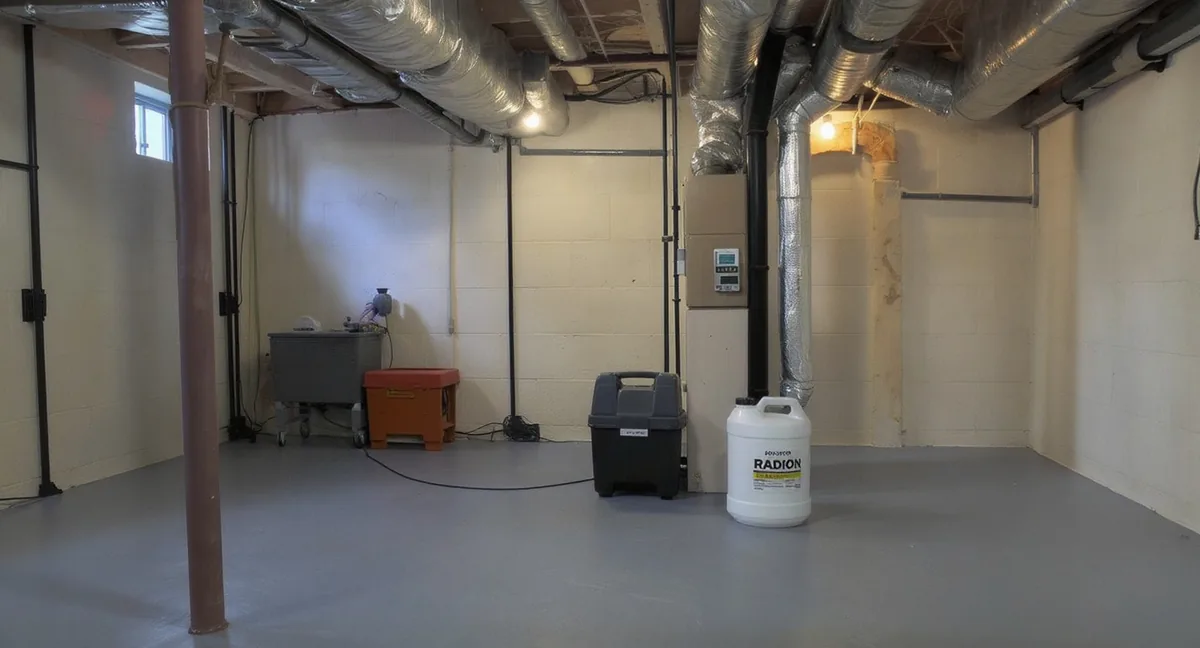
Radon is the second leading cause of lung cancer in the United States, responsible for an estimated 21,000 deaths per year according to the EPA. It is an invisible, odorless, radioactive gas that seeps into homes from the natural decay of uranium in soil and rock. You cannot see it, smell it, or taste it — and it could be accumulating in your home right now.
The only way to know if you have a radon problem is to test. Every home should be tested, regardless of age, construction type, or geographic location.
What Is Radon and Where Does It Come From?
Radon (Rn-222) is a naturally occurring radioactive gas produced by the decay chain of uranium, which is present in virtually all soils worldwide. As uranium breaks down into radium and then radon, the gas migrates through soil pores and can enter buildings through:
- Cracks in foundation slabs and walls — Even hairline cracks provide entry
- Gaps around pipes and cables — Any penetration through the foundation
- Construction joints — Where walls meet the floor slab
- Sump pits and drains — Open sumps act as direct pathways
- Well water — Dissolved radon releases into the air during showers and water use
- Building materials — Rare, but some granite and concrete can emit trace amounts
Radon concentrations tend to be highest in basements and ground floors, where the gas enters, but it can accumulate on any level of a home — especially in tightly sealed, energy-efficient buildings with limited ventilation.
EPA Radon Guidelines
The EPA has established clear action levels:
| Radon Level (pCi/L) | EPA Recommendation |
|---|---|
| Below 2.0 | Low risk. No action required. |
| 2.0 - 3.9 | Consider mitigation. Fix if levels can be reduced. |
| 4.0 and above | Take action. The EPA recommends mitigation at or above 4.0 pCi/L. |
For context, the average indoor radon level in the U.S. is about 1.3 pCi/L, and the average outdoor level is 0.4 pCi/L. However, the EPA emphasizes that there is no truly "safe" level of radon — any exposure carries some lung cancer risk.
Approximately 1 in 15 homes in the United States has radon levels at or above the 4.0 pCi/L action level. In certain regions (the upper Midwest, Appalachia, and the northern Great Plains), the figure is closer to 1 in 3.
How to Test for Radon
Short-Term Testing (2-7 Days)
Short-term test kits are the fastest way to get an initial reading. They use charcoal canisters or electret ion chambers that absorb radon over a set period. You then mail the kit to a lab for analysis.
Best for: Initial screening to determine if further testing is needed.
Cost: $10-30 for a mail-in kit. Results in 1-2 weeks.
Tips for accurate results:
- Test in the lowest livable level of your home (usually the basement or ground floor)
- Keep windows and doors closed for 12 hours before and during the test
- Place the kit 2-6 feet off the floor, away from exterior walls and drafts
- Do not test during storms or high winds
Long-Term Testing (90+ Days)
Long-term tests use alpha track detectors or electronic continuous monitors and provide a more accurate picture of your annual average exposure, accounting for seasonal fluctuations.
Best for: Confirming short-term results and establishing a reliable baseline.
Continuous Electronic Monitoring
Digital radon monitors provide real-time readings and track levels over time. This is the most convenient and informative approach, as you can see how radon levels fluctuate with weather, ventilation changes, and seasons.
Radon Mitigation Systems
If testing reveals levels at or above 4.0 pCi/L, a radon mitigation system can typically reduce concentrations by up to 99%. The most common approach is:
Sub-Slab Depressurization (SSD)
A pipe is inserted through the foundation slab into the gravel bed beneath. A fan creates negative pressure under the slab, drawing radon gas out before it can enter the home. The gas is vented above the roofline where it disperses harmlessly.
- Cost: $800-2,500 for professional installation
- Effectiveness: Reduces radon by 80-99%
- Maintenance: Minimal — check the fan every 1-2 years and retest radon levels annually
Other Mitigation Methods
- Sub-membrane depressurization — For homes with crawl spaces
- Heat recovery ventilators (HRV) — Increase ventilation while conserving energy
- Sealing cracks — Helpful as a supplement but insufficient alone
- Pressurization — Using the HVAC system to create positive pressure that resists radon entry
Recommended Product
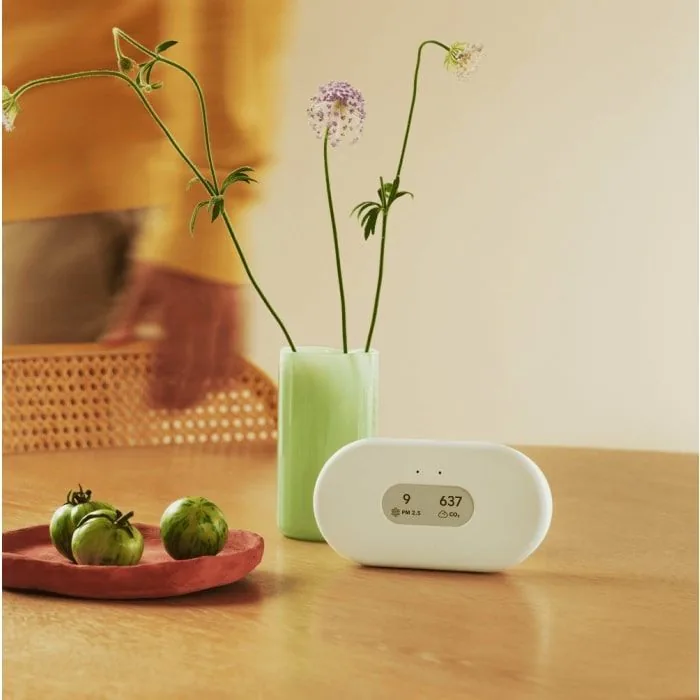
The Airthings View Plus is the best consumer radon monitor available. It provides continuous radon tracking alongside PM2.5, CO2, VOCs, humidity, and temperature — giving you a complete picture of your indoor environment on a single device. Its long-term radon averaging feature helps you understand your true annual exposure.
The Bottom Line
Radon is a serious and preventable health threat. Testing is cheap, fast, and could save your life. If you have never tested your home — or if it has been more than two years since your last test — do it now. A short-term kit costs less than a pizza, and a continuous monitor gives you permanent peace of mind. If levels are high, professional mitigation is affordable and highly effective. There is simply no reason to live with unknown radon exposure.
This guide was researched and written by the AirQualityNest editorial team. We update our content regularly to reflect the latest products, pricing, and research.
Continue Reading
How to Test Your Home Air Quality
A complete guide to testing and monitoring indoor air quality
AQI Explained
Understanding the Air Quality Index and what the numbers mean
How to Improve Indoor Air Quality
Practical steps to reduce pollutants in your home
Best Radon Detectors for Home
Top radon detectors ranked by accuracy and value
Airthings View Plus Review
Best continuous radon monitor with multi-sensor tracking
Continue Reading

Best Air Purifiers for Open Floor Plans in 2026: High-CADR Models That Cover It All
The best air purifiers for open floor plans ranked by CADR, coverage area, and noise. High-performance HEPA purifiers that handle 500-1,500+ sq. ft. open spaces.
Best Smart Humidifiers in 2026 (Wi-Fi, App Control & Auto Humidity)
The best smart humidifiers with Wi-Fi, app control, and auto humidity adjustment. Top picks for Alexa, Google Home, and smart home integration.

The 5 Best Portable Air Quality Monitors in 2026
Monitor your air quality on the go. We tested the best portable and compact air quality monitors for accuracy, battery life, and sensor range.