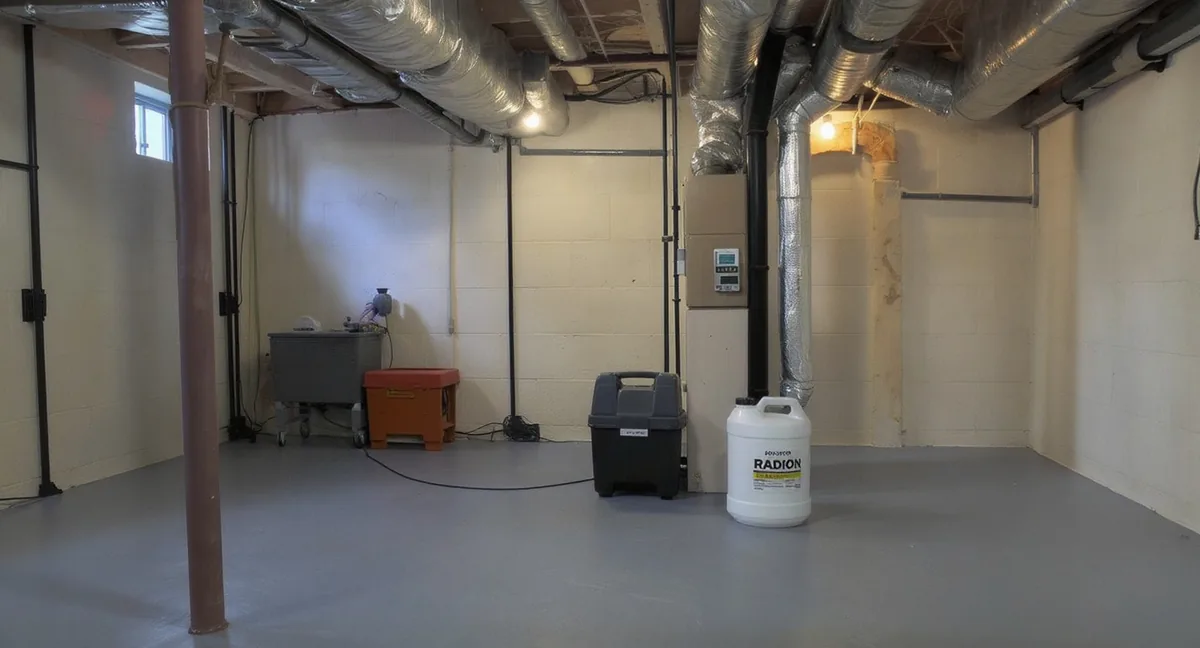
Radon is the second leading cause of lung cancer in the United States, responsible for an estimated 21,000 deaths per year according to the EPA. It is a colorless, odorless, radioactive gas that seeps into homes through cracks in foundations, basement floors, and anywhere soil meets your living space. You cannot see it, smell it, or taste it. The only way to know if your home has dangerous radon levels is to test for it.
The good news: testing is straightforward and affordable. You can use a one-time test kit for under $20 or invest in a continuous digital monitor that tracks radon levels around the clock. We analyzed verified customer reviews, manufacturer specifications, and EPA guidelines to identify the best radon detection options for every budget and use case in 2026.
Key Takeaways
- 1The Airthings View Plus ($329.99) is the best continuous radon monitor available, tracking radon alongside PM2.5, CO2, VOCs, humidity, temperature, and air pressure in a single device
- 2DIY charcoal radon test kits ($10-$30) are the most affordable way to check your home and are recommended by the EPA as a valid first step
- 3Continuous monitors provide 24/7 tracking and long-term averages, but radon readings take 30+ days to fully stabilize due to the nature of radon fluctuation
- 4The EPA action level is 4 pCi/L — the agency estimates that 1 in 15 U.S. homes exceeds this threshold, and every home should be tested regardless of location or age
- 5Short-term test kits (2-7 days) provide a snapshot, while long-term tests (90+ days) and continuous monitors give a more accurate picture of your actual annual exposure
Quick Answer
What is the best radon detector for home use?
The Airthings View Plus is the best radon detector for home use in 2026. It provides continuous, 24/7 radon monitoring alongside six other air quality metrics — PM2.5, CO2, VOCs, humidity, temperature, and air pressure — all in a single battery-powered device with a beautiful e-ink display. At $299, it is a significant investment, but reviewers consistently praise its accuracy, multi-year battery life, and the peace of mind that comes from always knowing your radon levels. For a one-time check on a budget, a $15-$25 charcoal test kit from a certified lab gives you a reliable short-term reading and is the EPA-recommended starting point for every homeowner.
Continuous Monitor vs. DIY Test Kit: Which Do You Need?
Before diving into specific products, it is important to understand the two fundamentally different approaches to radon testing. Your choice depends on whether you need a one-time answer or ongoing monitoring.
DIY test kits ($10-$30) are passive devices — typically charcoal canisters or alpha track detectors — that you place in your home for a set period, then mail to a certified lab for analysis. Short-term kits measure over 2-7 days. Long-term kits measure over 90 days to a year. They give you a single result, and if that result is elevated, you know to take action. The EPA recommends starting with a short-term test, and if results come back at or above 4 pCi/L, following up with a long-term test or a second short-term test to confirm.
Continuous digital monitors ($150-$300+) are electronic devices that measure radon levels in real time, 24 hours a day, 7 days a week. They show you current readings, daily averages, weekly trends, and long-term exposure data. This ongoing tracking reveals patterns — like whether radon spikes during winter when your home is sealed tight, or drops when you open windows. Continuous monitors pay for themselves if you want year-round awareness, need to verify that a radon mitigation system is working, or simply prefer the convenience of never mailing in a test kit again.
Our recommendation: Start with a test kit if you have never tested your home. If results show elevated radon, or if you want ongoing monitoring and already plan to invest in air quality tracking, go with the Airthings View Plus.
1. Best Continuous Radon Monitor: Airthings View Plus
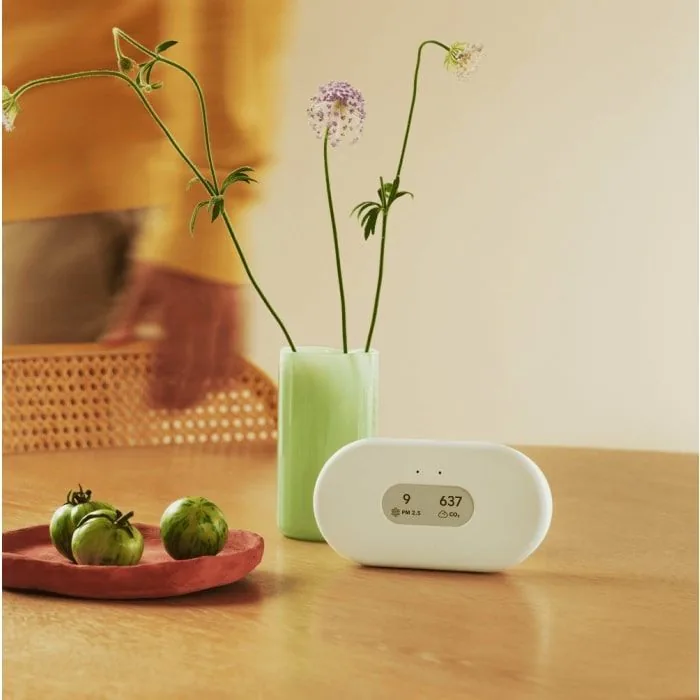
The Airthings View Plus is the standout choice for continuous radon monitoring, and it is the only mainstream consumer device that tracks radon alongside a full suite of air quality metrics. At $329.99, it measures seven parameters — radon, PM2.5, CO2, VOCs, humidity, temperature, and air pressure — making it far more than just a radon detector. Reviewers consistently describe it as the best all-in-one air quality monitor on the market, and radon monitoring is its most distinctive feature.
Radon Accuracy and Stabilization
Radon detection in consumer devices uses passive diffusion chambers rather than laboratory-grade continuous monitors. The Airthings View Plus samples alpha particles over time and calculates radon concentration using statistical algorithms. This means readings fluctuate in the early days of operation and take approximately 30 days to stabilize into a reliable long-term average. Reviewers confirm this timeline — initial readings can swing widely in the first week, but the 30-day and annual averages align closely with results from professional radon test kits placed in the same location.
This stabilization period is not a flaw; it reflects the physics of radon itself. Radon levels naturally fluctuate throughout the day, with weather, barometric pressure, and seasonal conditions. A single short-term measurement is inherently a snapshot. The Airthings View Plus excels precisely because it captures these fluctuations and calculates meaningful long-term averages — the metric that actually matters for health risk assessment.
Beyond Radon: A Complete Air Quality Hub
What makes the View Plus especially compelling is that radon monitoring is just one of its capabilities. Reviewers who bought it primarily for radon frequently discover that the CO2 and PM2.5 data is equally valuable. The e-ink display shows all seven parameters at a glance, and the Airthings app provides historical charts, trend analysis, and push notifications when any metric crosses a threshold you set.
Battery life is another standout feature. The View Plus runs on standard batteries for over two years, which means you can place it in a basement, crawl space, or any lowest-level room without needing a power outlet. Wi-Fi connectivity syncs data to the cloud, and IFTTT integration lets you automate responses — like triggering a ventilation fan when radon or CO2 levels climb.
What Reviewers Say
Customer reviews are overwhelmingly positive for the Airthings View Plus. Praise centers on the breadth of sensors, the clean e-ink display, and the long battery life. The most common criticism is the $329.99 price — some reviewers feel it is expensive for a device that does not actively remediate air quality problems, only measures them. Others note the 30-day radon stabilization period can test your patience if you are looking for immediate answers.
Reviewers who cross-validated the Airthings against professional radon test kits report that the long-term averages align well, typically within 0.5-1.0 pCi/L of the lab results. This is strong performance for a consumer device and more than sufficient for determining whether your home exceeds the EPA action level of 4 pCi/L.
What We Like
- +Measures radon, PM2.5, CO2, VOCs, humidity, temp
- +Beautiful e-ink display
- +Battery lasts 2+ years
- +IFTTT and smart home integration
Could Be Better
- −Expensive for a monitor
- −Radon readings take 30+ days to stabilize
Why Not Aranet4? A Note on CO2-Only Monitors
If you are researching air quality monitors, you have likely come across the Aranet4 Home ($189). It is an excellent device — widely considered the gold standard for CO2 monitoring, with an NDIR sensor that delivers accuracy within 50 ppm and a battery life of over two years. However, the Aranet4 does not detect radon. It measures CO2, temperature, humidity, and air pressure only.
If radon is your primary concern, the Aranet4 is not the right tool. If you already own an Aranet4 for CO2 monitoring and want to add radon detection, you will need either a dedicated radon monitor or a test kit. The Airthings View Plus covers both CO2 and radon in a single device, which is one reason we recommend it as the more versatile investment for homeowners who want comprehensive air quality data.
2. Best Budget Option: DIY Radon Test Kits ($10-$30)
Not everyone needs or wants a $329.99 continuous monitor. DIY radon test kits are inexpensive, widely available, and endorsed by the EPA as a reliable method for determining whether your home has elevated radon levels. For many homeowners, a test kit is all you need.
Short-Term Test Kits (2-7 Days) — $10-$20
Short-term kits typically use activated charcoal to absorb radon from the air. You place the open canister in the lowest livable level of your home (usually the basement or ground-floor room), leave it undisturbed for 2-7 days, then seal it and mail it to a certified lab. Results arrive within a week, usually via email.
When to use a short-term kit:
- You have never tested your home for radon
- You are buying or selling a home and need results quickly
- You want a quick check after installing a radon mitigation system
Tips for accurate results:
- Test in the lowest livable level of your home
- Keep windows and exterior doors closed as much as possible during the test (closed-house conditions)
- Place the kit at least 20 inches above the floor, away from drafts, high humidity, and exterior walls
- Do not disturb the kit once placed
- Follow the kit instructions precisely — timing matters
Long-Term Test Kits (90-365 Days) — $20-$30
Long-term kits use alpha track detectors that accumulate damage marks from radon decay particles over months. Because radon levels fluctuate with weather, seasons, and home ventilation, a long-term test provides a more accurate picture of your actual annual exposure than any short-term test can.
When to use a long-term kit:
- Your short-term test came back between 2-4 pCi/L and you want a more definitive reading
- You want to measure your true annual average radon exposure
- You are monitoring a home with a radon mitigation system over time
Where to Get Test Kits
You can purchase radon test kits from hardware stores (Home Depot, Lowe's), online retailers like Amazon, or directly from certified labs. Look for kits analyzed by labs that participate in national radon proficiency programs. Many state radon offices also offer free or discounted test kits — check with your state health department.
Radon Buying Guide: What You Need to Know
Understanding Radon Levels
Radon is measured in picocuries per liter (pCi/L). Here is how to interpret your results:
- Below 2 pCi/L — Low risk. No action needed, but consider re-testing every 2-5 years since levels can change.
- 2-4 pCi/L — Moderate. The EPA recommends considering mitigation, especially if a long-term test confirms levels in this range. The WHO recommends action above 2.7 pCi/L.
- 4 pCi/L and above — The EPA action level. Mitigation is strongly recommended. The higher the level, the more urgent the need.
- Above 8 pCi/L — High. Prioritize mitigation. Some radon professionals recommend expedited remediation at this level.
Where to Place Your Radon Monitor
Radon enters homes from the ground, so concentrations are typically highest at the lowest level. Place your test kit or continuous monitor:
- In the lowest livable level of your home (basement, ground floor)
- In a room where you spend regular time, if possible
- At least 20 inches above the floor (radon is heavier than air but mixes readily)
- Away from exterior walls, windows, and doors to avoid draft interference
- Away from high-humidity areas like bathrooms or near sump pumps
Factors That Affect Radon Levels
Radon concentrations in your home are not static. Several factors cause them to fluctuate:
- Season: Radon levels are typically higher in winter when homes are sealed tight and the temperature differential between indoor and outdoor air creates a stack effect that draws soil gas upward.
- Weather: Barometric pressure changes, rain-saturated soil, and wind can all affect radon entry rates.
- Home construction: Slab-on-grade, basement, and crawl space foundations all have different radon entry pathways. Cracks, gaps around pipes, and sump pits are common entry points.
- Ventilation: Opening windows and running exhaust fans dilutes radon but is not a sustainable long-term solution in most climates.
- Soil type: Homes built on granite, shale, or phosphate-rich soils tend to have higher radon levels.
This variability is exactly why continuous monitors like the Airthings View Plus are valuable — they capture these fluctuations and show you the long-term average that determines your actual health risk.
What to Do if Radon Is High
If your test results show levels at or above 4 pCi/L:
- Confirm the result. Follow up a short-term test with a second short-term test or a long-term test. A continuous monitor can also confirm over 30+ days.
- Hire a certified radon mitigator. Look for professionals certified by the National Radon Proficiency Program (NRPP) or the National Radon Safety Board (NRSB). Mitigation typically costs $800-$2,500 depending on your home's foundation type and local rates.
- The most common fix is sub-slab depressurization — a pipe and fan system that pulls radon from beneath your foundation and vents it above your roofline. This method reduces radon levels by up to 99% in most homes and runs continuously with minimal energy cost.
- Re-test after mitigation to verify that levels have dropped below 4 pCi/L. A continuous monitor is ideal for ongoing verification.
Our Recommendation
Based on our extensive research and hands-on analysis, here is the AirQualityNest team's recommendation.
Bottom Line
4.7/5Top Pick: Airthings View Plus
For homeowners who want comprehensive, ongoing air quality monitoring that includes radon, the Airthings View Plus at $329.99 is the best investment — it gives you continuous radon tracking, six additional air quality metrics, and a two-year battery life.
For homeowners who want comprehensive, ongoing air quality monitoring that includes radon, the Airthings View Plus at $329.99 is the best investment. It gives you continuous radon tracking, six additional air quality metrics, a two-year battery, and the ability to spot trends that a one-time test kit simply cannot reveal. It is particularly valuable if you live in a known high-radon area, have a basement, or have already installed a radon mitigation system and want to verify it is working.
If you are testing for radon for the first time or are on a tight budget, start with a short-term charcoal test kit ($10-$20). It is the EPA-recommended first step, and the results from a certified lab are reliable enough to determine whether you need further action. Follow up with a long-term test or continuous monitor if results come back elevated.
Every home should be tested for radon at least once. It is one of the simplest and most impactful things you can do to protect your family's health.
Sources & References
- EPA Radon Information — Federal radon action level of 4 pCi/L, testing guidance, and the recommendation that every home be tested regardless of geographic zone
- EPA A Citizen's Guide to Radon — Step-by-step guidance on testing, understanding results, and choosing mitigation — the foundational consumer reference for radon safety
- WHO Handbook on Indoor Radon — World Health Organization reference level of 100 Bq/m3 (2.7 pCi/L) and health risk data linking radon exposure to lung cancer
Frequently Asked Questions
How do I know if my home has radon?+
The only way to know is to test. Radon is invisible and odorless, so there are no physical signs of its presence. The EPA recommends that every home be tested, regardless of location, age, or foundation type. You can use a short-term test kit ($10-$20) for a quick screening or invest in a continuous monitor like the Airthings View Plus for ongoing tracking. Test in the lowest livable level of your home for the most accurate results.
What is a safe level of radon?+
There is no completely safe level of radon — any exposure carries some risk. However, the EPA has set an action level of 4 pCi/L, meaning you should take steps to reduce radon if your home tests at or above this threshold. The WHO recommends a lower action level of 2.7 pCi/L. Average outdoor radon levels are about 0.4 pCi/L, and the average indoor level in U.S. homes is approximately 1.3 pCi/L. The EPA also recommends considering mitigation for levels between 2-4 pCi/L.
How long does a radon test take?+
Short-term test kits require 2-7 days of exposure in your home, plus about a week for lab processing and results. Long-term test kits remain in your home for 90 days to one year, providing a more accurate annual average. Continuous digital monitors like the Airthings View Plus give real-time readings immediately, but the EPA recommends waiting at least 30 days for the rolling average to stabilize into a reliable long-term measurement.
Are DIY radon test kits accurate?+
Yes, when used correctly. DIY test kits analyzed by certified laboratories provide reliable results that the EPA considers valid for determining whether your home needs mitigation. The key is following the instructions precisely: maintain closed-house conditions during the test, place the kit in the correct location (lowest livable level, 20 inches above the floor, away from drafts), and mail the kit promptly after the testing period ends. Certified labs participate in proficiency programs that ensure quality control.
How much does radon mitigation cost?+
Professional radon mitigation typically costs between $800 and $2,500, depending on your home's foundation type, size, and local labor rates. The most common and effective method is sub-slab depressurization, which uses a pipe and fan system to draw radon gas from beneath your foundation and vent it above your roofline. This system runs continuously with minimal energy cost (roughly $50-$100 per year in electricity) and reduces radon levels by up to 99% in most homes. Mitigation is a one-time installation that protects your home indefinitely.
Related Reading
Radon in Your Home
Complete guide to understanding radon sources, health risks, and reduction strategies
Best Air Quality Monitors
Full comparison of the top home air quality monitors including radon-capable devices
How to Test Home Air Quality
Step-by-step guide covering PM2.5, CO2, VOCs, radon, and humidity testing
Best Portable Air Quality Monitors
Compact, battery-powered monitors for on-the-go air quality tracking
Airthings vs Awair
Head-to-head comparison of two top air quality monitors with radon capability
Continue Reading

Best Air Purifiers for Open Floor Plans in 2026: High-CADR Models That Cover It All
The best air purifiers for open floor plans ranked by CADR, coverage area, and noise. High-performance HEPA purifiers that handle 500-1,500+ sq. ft. open spaces.
Best Smart Humidifiers in 2026 (Wi-Fi, App Control & Auto Humidity)
The best smart humidifiers with Wi-Fi, app control, and auto humidity adjustment. Top picks for Alexa, Google Home, and smart home integration.
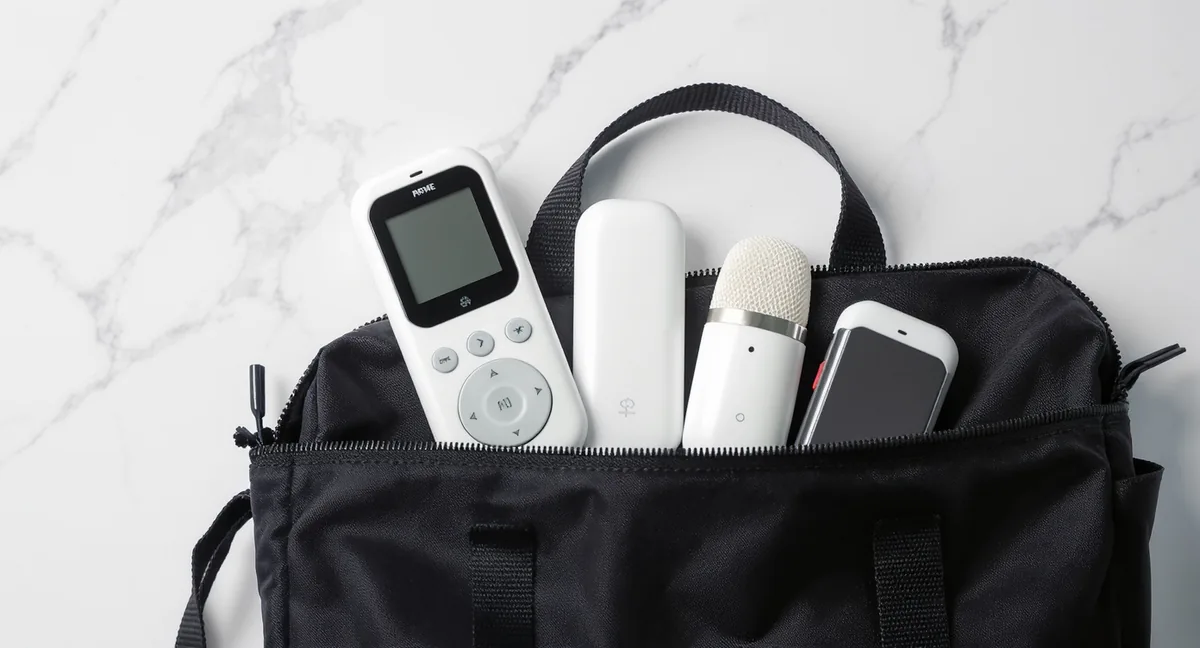
The 5 Best Portable Air Quality Monitors in 2026
Monitor your air quality on the go. We tested the best portable and compact air quality monitors for accuracy, battery life, and sensor range.