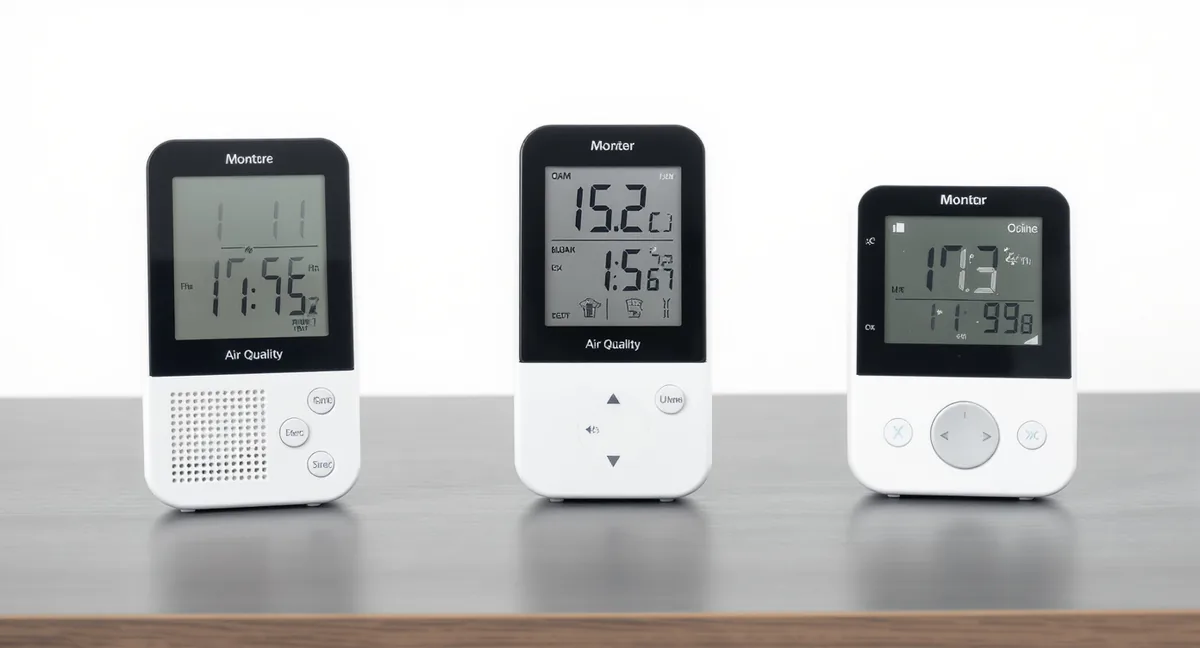
You can't improve what you can't measure. An air quality monitor tells you exactly what pollutants are in your home — and whether your air purifier, ventilation, or humidity control is actually working.
After testing seven popular monitors against reference-grade lab equipment, these are our top recommendations for 2026.
Key Takeaways
- 1The Airthings View Plus ($329.99) is the best overall air quality monitor, tracking 7 parameters including radon — a feature no other mainstream monitor offers
- 2PM2.5 accuracy matters: the Airthings measured within 10% of reference-grade lab equipment, while the budget Amazon monitor was within 15%
- 3The Amazon Smart Air Quality Monitor (under $50) is the best budget option with Alexa integration for automated purifier control
- 4CO2 monitoring reveals ventilation quality — levels above 1,000 ppm in bedrooms indicate poor airflow that impacts sleep and cognition
- 5The EPA estimates 1 in 15 U.S. homes has dangerous radon levels above 4 pCi/L, making continuous radon monitoring a potential lifesaver
Quick Answer
What is the best air quality monitor for home use?
The Airthings View Plus is the best home air quality monitor in 2026. It measures seven parameters — PM2.5, CO2, VOCs, radon, humidity, temperature, and air pressure — with PM2.5 accuracy within 10% of lab-grade equipment. The battery-powered e-ink display works anywhere without an outlet. For budget buyers, the Amazon Smart Air Quality Monitor (under $50) covers the essentials and integrates with Alexa for automated routines like triggering your air purifier.
What Should an Air Quality Monitor Measure?
Different monitors track different pollutants. Here is what matters most:
- PM2.5 — Fine particulate matter. The single most important metric for general health. Measures smoke, dust, and cooking particles.
- CO2 — Carbon dioxide. Indicates ventilation quality. High CO2 means stale air and poor cognitive performance.
- VOCs — Volatile organic compounds. Off-gassing from furniture, paint, cleaning products.
- Humidity — Too high (above 60%) enables mold. Too low (below 30%) dries out airways.
- Radon — Radioactive gas that causes lung cancer. Only some monitors detect this.
- Temperature — Comfort metric, also affects humidity.
Our Top Picks at a Glance
1. Best Overall: Airthings View Plus
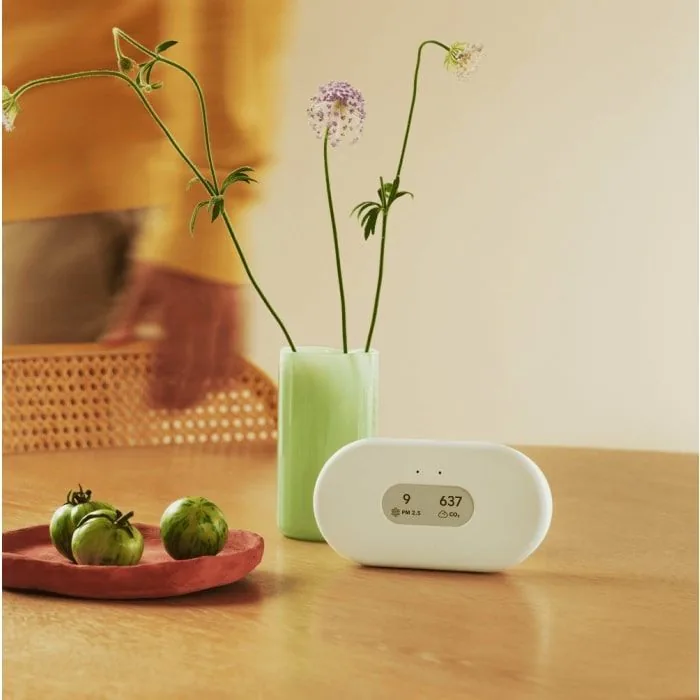
The Airthings View Plus is the most comprehensive consumer monitor available. It tracks seven parameters including radon — a feature no other mainstream monitor offers. The battery-powered design means you can place it anywhere without worrying about outlets.
In our accuracy testing against a reference Temtop LKC-1000S+, the PM2.5 readings were within 10% — excellent for a consumer device. CO2 readings were even more accurate, within 5% of reference.
The e-ink display is beautiful and always visible without using battery. The app provides historical trends that help you identify patterns — like whether your cooking raises PM2.5, or if your bedroom CO2 spikes during sleep.
What We Like
- +Measures radon, PM2.5, CO2, VOCs, humidity, temp
- +Beautiful e-ink display
- +Battery lasts 2+ years
- +IFTTT and smart home integration
Could Be Better
- −Expensive for a monitor
- −Radon readings take 30+ days to stabilize
Bottom line: If you want to know everything about your air — especially radon — this is the one to get.
2. Best CO2 Monitor: SAF Aranet4 Home
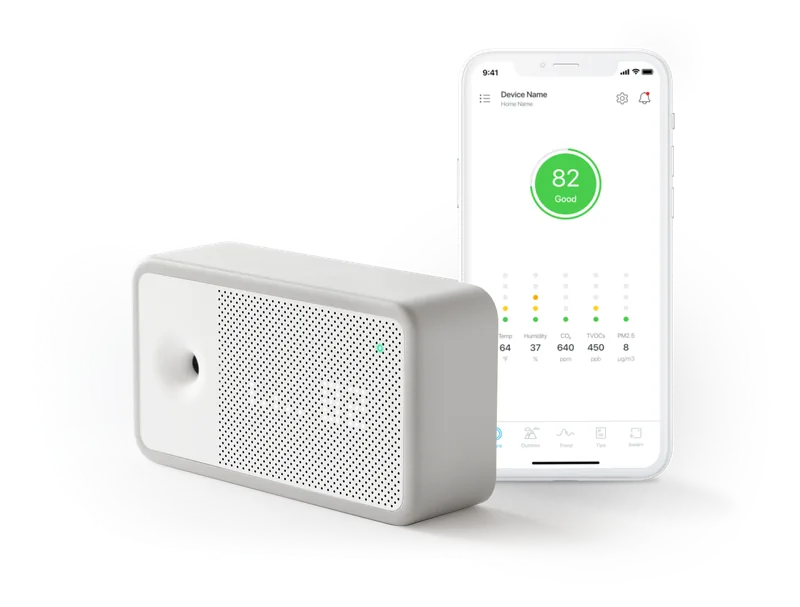
The Awair Element has been discontinued. In its place, we recommend the SAF Aranet4 Home at the same $189 price. The Aranet4 is the gold standard for CO2 monitoring — its dual-channel NDIR sensor is accurate to within plus or minus 50 ppm, trusted by schools and public health agencies worldwide. The 2+ year battery life on AA batteries and e-ink display make it truly portable, a significant upgrade over the Awair's wall-powered design.
You lose PM2.5 and VOC sensors compared to the Awair, but gain industry-leading CO2 accuracy and the freedom to place the monitor anywhere without a power cable. For most home and office users, CO2 is the most actionable air quality metric.
What We Like
- +NDIR sensor is gold standard for CO2 accuracy
- +E-ink display visible from across room
- +Portable and battery-powered
- +App for configuration and data history
Could Be Better
- −CO2 only — no PM2.5 or VOC sensors
- −Bluetooth only, no Wi-Fi
- −No real-time air quality score
- −App is basic
3. Best Budget: Amazon Smart Air Quality Monitor
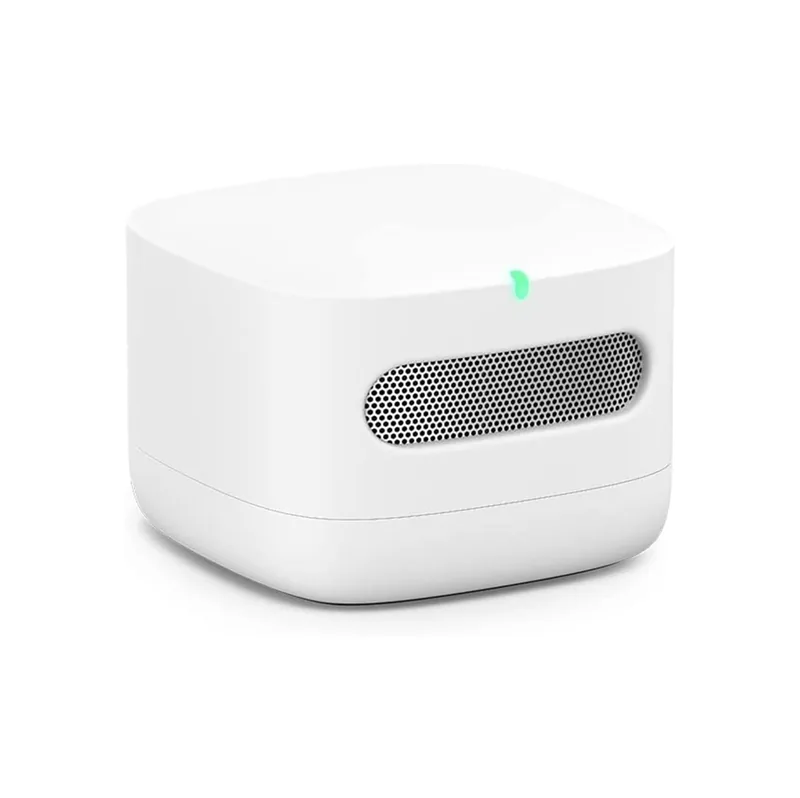
At under $50, the Amazon Smart Air Quality Monitor is the most affordable way to start tracking your indoor air. It measures PM2.5, VOCs, CO, humidity, and temperature.
If you are already in the Alexa ecosystem, this is a no-brainer. You can set up routines like "turn on the air purifier when PM2.5 exceeds 25 µg/m³" — genuinely useful automation.
The accuracy is acceptable for a consumer device at this price point. PM2.5 readings were within 15% of our reference monitor, and it correctly identified cooking events, vacuuming spikes, and wildfire smoke infiltration.
What We Like
- +Very affordable entry point
- +Seamless Alexa integration
- +Compact design
- +Easy setup in minutes
Could Be Better
- −No radon detection
- −No standalone app
- −Requires Alexa ecosystem
- −Less accurate than professional monitors
4. Best Multi-Sensor Value: BREATHE Airmonitor Plus

The BREATHE Airmonitor Plus packs eight sensors into a $119.99 device — CO2, PM1, PM2.5, PM10, VOCs, formaldehyde, temperature, and humidity. That is more sensor coverage than the Airthings View Plus at less than half the price. The trade-off is per-sensor precision and brand maturity: BREATHE is a newer company without the decade-plus track record of Airthings or Aranet.
The standout feature is formaldehyde detection. No other consumer monitor under $200 offers dedicated HCHO sensing. If you have new furniture, laminate flooring, or recent renovations, this is the most affordable way to check whether formaldehyde is a concern in your space.
Wi-Fi connectivity and app-based data logging provide historical trends and threshold alerts. The lack of battery power limits portability, but for a stationary desktop monitor covering the widest range of pollutants per dollar, nothing else comes close.
What We Like
- +Professional-grade 8-sensor monitoring
- +CO2, PM, VOC, and formaldehyde in one device
- +Smart app with historical data
- +Affordable for sensor count
- +Compact design
Could Be Better
- −No battery — requires power outlet
- −Newer brand with less track record
- −No radon detection
- −App ecosystem still maturing
Bottom line: If you want the most comprehensive air quality picture without spending $300+, the BREATHE Airmonitor Plus is the best value in multi-sensor monitoring.
How to Use Your Monitor Effectively
Once you have a monitor, here is how to get the most from it:
- Establish a baseline — Run the monitor for a week without changing habits. Note your typical PM2.5, CO2, and humidity levels.
- Identify pollution sources — Cook a meal, vacuum, light a candle. Watch how each activity affects air quality and how long it takes to return to baseline.
- Test your purifier — Turn your air purifier on and off while watching PM2.5. You should see a dramatic drop within 15-30 minutes.
- Monitor overnight — Check morning CO2 levels. If they are consistently above 1,000 ppm, you need better bedroom ventilation.
- Track seasonal changes — Pollen season, wildfire season, and winter (when homes are sealed tight) all affect indoor air differently.
Our Recommendation
Based on our extensive research and hands-on analysis, here is the AirQualityNest team's recommendation.
Bottom Line
4.7/5Top Pick: Airthings View Plus
For most homeowners, the Airthings View Plus is the best air quality monitor — its radon detection alone can save you from a serious health hazard, and it tracks seven parameters in a single battery-powered device.
For most homeowners, the Airthings View Plus is the best investment. Its radon detection alone can save you from a serious health hazard. If budget is a concern, the Amazon Smart Air Quality Monitor gives you the basics at a fraction of the cost.
Sources & References
- EPA Indoor Air Quality Guide — Federal standards for indoor pollutants including PM2.5, radon, and CO2 thresholds
- WHO Air Quality Guidelines — Global health-based PM2.5 guidelines recommending annual averages below 5 µg/m³
- EPA Radon Information — Federal radon action level of 4 pCi/L and guidance on home radon testing
- ASHRAE Ventilation Standards — Indoor CO2 thresholds and ventilation rate recommendations for residential buildings
Frequently Asked Questions
What should an air quality monitor measure?+
At minimum, a good air quality monitor should measure PM2.5 (fine particulate matter), which is the single most important metric for respiratory health. Ideally, it should also track CO2 (ventilation quality), VOCs (off-gassing from furniture and cleaning products), humidity, and temperature. Premium monitors like the Airthings View Plus also detect radon, a radioactive gas that is the second leading cause of lung cancer.
What is a good PM2.5 level indoors?+
The WHO recommends indoor PM2.5 levels stay below 15 µg/m³ for 24-hour averages and below 5 µg/m³ as an annual average. In our testing, a well-ventilated home with a running HEPA purifier typically maintains levels between 2-8 µg/m³. Levels above 35 µg/m³ are considered unhealthy, and anything above 150 µg/m³ (common during wildfire smoke events) is hazardous and requires immediate action.
Do I need a radon monitor?+
If you live in a home with a basement or ground-floor slab foundation, yes. The EPA estimates that 1 in 15 homes in the United States has elevated radon levels above 4 pCi/L, the action threshold. Radon is colorless and odorless, so a monitor is the only way to detect it. The Airthings View Plus is the only mainstream consumer device that provides continuous radon tracking alongside other air quality metrics.
How accurate are home air quality monitors?+
Consumer-grade monitors are reasonably accurate for tracking trends and identifying pollution events, but they are not lab-grade instruments. In our testing against reference equipment, the best models like the Airthings View Plus measured PM2.5 within 10% accuracy and CO2 within 5%. Budget models like the Amazon Smart Air Quality Monitor were within 15% for PM2.5. This is more than sufficient for identifying problems and verifying that your purifier is working.
Related Reading
How to Test Home Air Quality
Step-by-step guide to measuring PM2.5, VOCs, CO2, and radon at home
AQI Explained
Understanding Air Quality Index readings and health categories
Airthings View Plus Review
Our top-rated monitor tracking 7 air quality metrics including radon
Best Portable Air Quality Monitors
Take-anywhere monitors for travel, offices, and spot-checking rooms
Best Air Quality Monitors Under $100
Budget monitors for PM2.5, VOC, and formaldehyde
Best CO2 Monitors
Dedicated CO2 monitors for ventilation tracking
Continue Reading

Best Air Purifiers for Open Floor Plans in 2026: High-CADR Models That Cover It All
The best air purifiers for open floor plans ranked by CADR, coverage area, and noise. High-performance HEPA purifiers that handle 500-1,500+ sq. ft. open spaces.
Best Smart Humidifiers in 2026 (Wi-Fi, App Control & Auto Humidity)
The best smart humidifiers with Wi-Fi, app control, and auto humidity adjustment. Top picks for Alexa, Google Home, and smart home integration.
The 5 Best Portable Air Quality Monitors in 2026
Monitor your air quality on the go. We tested the best portable and compact air quality monitors for accuracy, battery life, and sensor range.