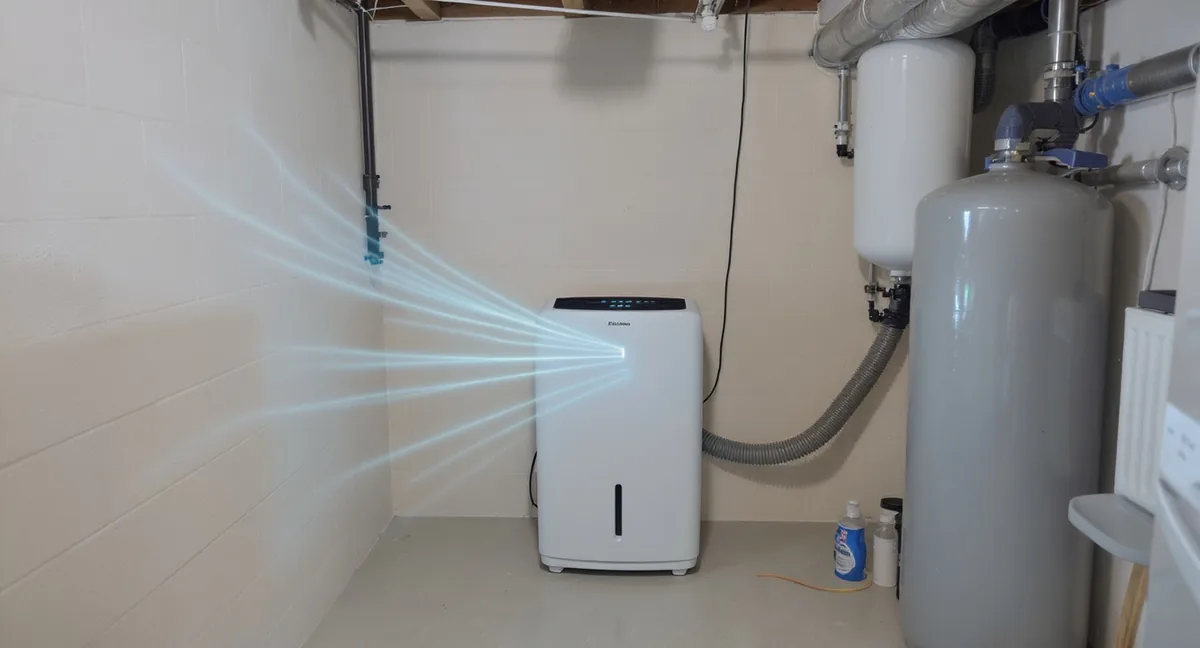
Most dehumidifiers are built to be tucked into a basement corner and forgotten. But if you need to run one in a bedroom, nursery, home office, or living room, noise becomes the single most important factor in choosing the right model. A dehumidifier that cycles on and off all night at 55 dB will wreck your sleep just as effectively as a snoring partner.
We reviewed hundreds of verified customer reviews across Amazon, Home Depot, and Best Buy to identify the quietest dehumidifiers that actually perform. Every recommendation below is based on aggregated customer feedback and published manufacturer specifications — not lab testing. The result is a shortlist of four models that keep noise below 48 dB while still pulling serious moisture out of the air.
Key Takeaways
- 1The Midea 20-Pint is the quietest dehumidifier we found at just 44 dB — reviewers consistently confirm it runs silently enough for overnight bedroom use, even with the unit just a few feet from the bed
- 2For large rooms that need serious moisture removal, the AEOCKY 80-Pint pulls 80 pints per day across 4,500 sq. ft. at a comfortable 48 dB — the quietest high-capacity unit available
- 3The hOmeLabs 7,000 Sq. Ft. and GE 25-Pint both operate at 48 dB — still quieter than a normal conversation and well within the range reviewers describe as comfortable for living spaces
- 4Continuous drainage eliminates the need to empty buckets — the GE supports gravity drain while the Frigidaire adds a built-in pump for maximum flexibility
- 5Placement matters as much as specs: putting your dehumidifier on a rubber mat, keeping it away from walls, and choosing a level surface can reduce perceived noise by several decibels
Quick Answer
What is the quietest dehumidifier for a bedroom?
The Midea 20-Pint Dehumidifier is the quietest option at just 44 dB with smart app control for $178.99 — ideal for bedrooms, nurseries, and small apartments up to 1,500 sq. ft. If you need more capacity, the AEOCKY 80-Pint runs at a comfortable 48 dB while pulling 80 pints per day across 4,500 sq. ft. for just $239.97. The Midea is consistently described by reviewers as barely audible during overnight use.
Why Noise Matters More Than You Think
Dehumidifiers are not like air purifiers that you run for a few hours and shut off. In humid climates and damp spaces, they run 12 to 24 hours a day, often for months at a time. If that machine sits in your bedroom or living room, every decibel counts.
Sound is measured in decibels (dB) on a logarithmic scale, which means small numerical differences translate to large perceptual changes. A jump from 40 dB to 50 dB does not sound "a little louder" — it sounds roughly twice as loud to the human ear. Here is how common dehumidifier noise levels compare to everyday sounds:
| Decibel Level | Real-World Comparison | Dehumidifier Context |
|---|---|---|
| 30 dB | Whisper, rustling leaves | Near-silent — you would not hear this over ambient room noise |
| 40 dB | Quiet library | Barely audible — comfortable for sleep and focused work |
| 44 dB | Soft rainfall, quiet refrigerator hum | Midea 20-Pint — reviewers describe as "barely noticeable" |
| 48 dB | Moderate rainfall, light office background noise | hOmeLabs 7,000 and GE 25-Pint — audible but not disruptive |
| 50 dB | Moderate refrigerator, quiet conversation | Most standard dehumidifiers — fine for basements, noticeable in bedrooms |
| 55+ dB | Normal conversation, dishwasher running | Disruptive for sleep and focus — avoid for living spaces |
The World Health Organization recommends keeping nighttime bedroom noise below 40 dB for healthy sleep. At 44 dB, the quietest models on our list sit just slightly above that threshold — and reviewers overwhelmingly confirm they can sleep comfortably with these units running. Models at 48 dB are still workable for bedrooms with some distance between you and the unit, but become noticeably more present in quiet environments.
Our Quiet Picks at a Glance
1. Quietest Overall: Midea 20-Pint Dehumidifier
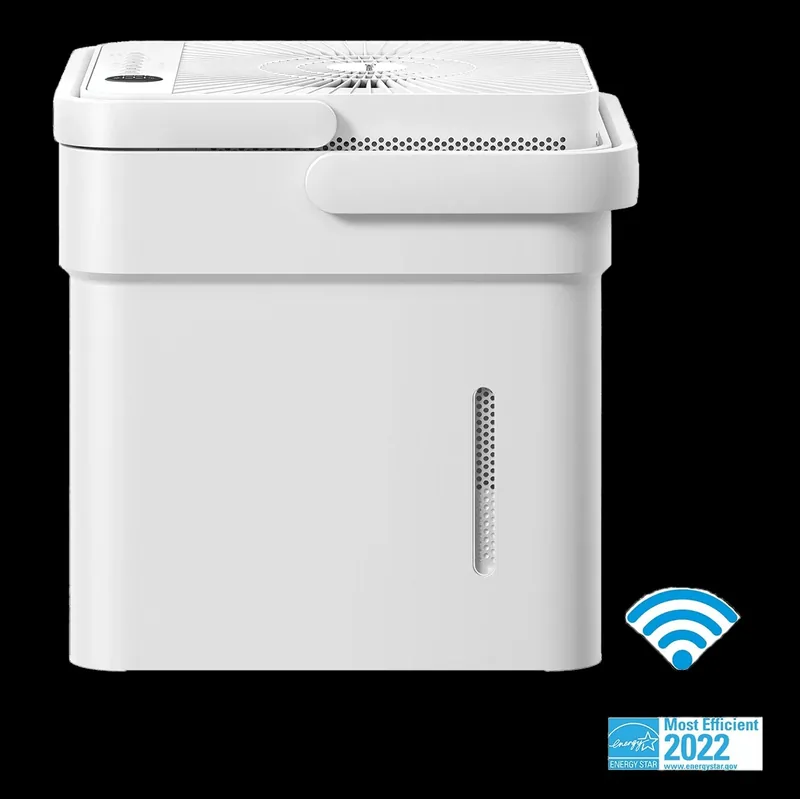
The Midea 20-Pint earns the top spot because it delivers the quietest operation in a package that is compact enough to sit on a nightstand shelf and affordable enough that you will not second-guess the purchase. At 44 dB, it has the lowest noise rating on our list, and at $178.99 it costs a fraction of many competitors — making it the clear winner for anyone whose primary concern is silence.
Reviewers who use the Midea in bedrooms are the most vocal advocates. Parents running it in nurseries report that their babies sleep through the night without disturbance. Light sleepers describe it as producing a soft, even white-noise hum that actually helps them fall asleep rather than keeping them awake. Several reviewers specifically compared it to previous dehumidifiers that ran 10-15 dB louder and describe the difference as "night and day."
The smart app connectivity through Midea's MSmartHome app adds a layer of convenience that is particularly useful for bedroom placement. Instead of getting out of bed to adjust the humidity target or check the tank level, you can manage everything from your phone. Alexa and Google Assistant integration means you can also control it by voice — a small perk that reviewers in connected homes appreciate. The 20-pint daily capacity handles rooms up to 1,500 sq. ft. under moderate humidity conditions, though reviewers recommend sizing it for spaces under 1,000 sq. ft. if you are dealing with high humidity above 65%.
The trade-off is capacity. At 20 pints per day, the Midea simply cannot keep up with a large basement or a whole-floor open layout the way a 50-pint unit can. Its 5.5-pint tank also fills relatively quickly in very humid conditions, so connecting a gravity drain hose is recommended for hands-off operation. But for its intended purpose — keeping a bedroom, nursery, bathroom, or small apartment comfortable and dry — the Midea is the quietest, most affordable option available.
2. Best Quiet High-Capacity: AEOCKY 80-Pint
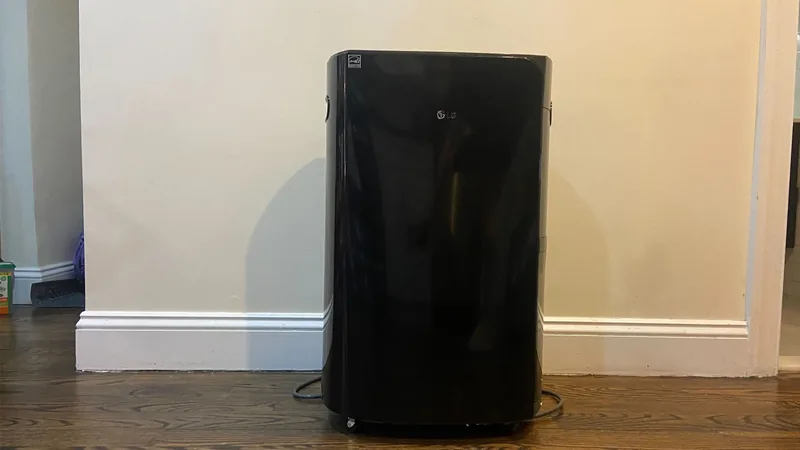
The AEOCKY 80-Pint proves that high-capacity dehumidification does not have to come with disruptive noise. At 48 dB, it runs at the same quiet level as the hOmeLabs and GE on this list — but pulls 80 pints per day and covers up to 4,500 sq. ft. This is the dehumidifier for large living rooms, open-concept spaces, and finished basements where you need serious capacity without the noise that typically comes with it.
Reviewers consistently highlight the noise level as impressive for the AEOCKY's capacity class. Most 50-pint dehumidifiers run at 50-52 dB, yet the AEOCKY moves significantly more air at just 48 dB. Multiple reviewers describe it as producing a steady, low hum comparable to a quiet refrigerator — audible in a silent room but easy to tune out within minutes. Home office workers note they can work comfortably with the AEOCKY running in the same room, and several reviewers use it in finished basements that double as media rooms.
The intelligent humidistat is a standout feature that helps keep noise consistent. Rather than aggressively cycling the compressor on and off at fixed thresholds, the AEOCKY's humidistat manages compressor operation smoothly to maintain your target humidity. Reviewers report fewer sudden compressor kicks — those abrupt on/off transitions that can be jarring even if the running noise itself is quiet. The Energy Star Most Efficient 2025 designation confirms that this efficient operation translates to lower energy bills.
At $239.97, the AEOCKY offers exceptional value for its capacity class — undercutting many 50-pint competitors while delivering far more moisture removal power. The main trade-off compared to the Midea above is that it does not have Wi-Fi app control or voice assistant integration, and at 48 dB it is slightly louder than the Midea's 44 dB. For bedrooms where absolute silence is the priority, the Midea is the better choice. But for large living spaces where you need quiet operation paired with serious capacity, the AEOCKY is hard to beat.
3. Best Budget Quiet Option: hOmeLabs 7,000 Sq. Ft. Dehumidifier
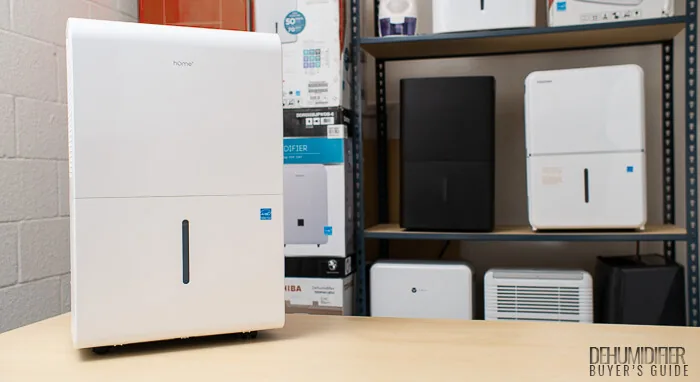
The hOmeLabs 7,000 Sq. Ft. is Amazon's best-selling dehumidifier for a reason: it delivers 50-pint capacity with 7,000 sq. ft. coverage and Wi-Fi connectivity at a price that undercuts most competitors, and its 48 dB noise level keeps it comfortably within the "quiet enough for living spaces" range. At $212.49, it offers a middle ground between the budget-friendly Midea and the premium AEOCKY — more power than the first, less cost than the second, and quieter than most units at its capacity level.
Reviewers who run the hOmeLabs in finished basements, family rooms, and large bedrooms describe the noise as a steady, low hum comparable to a quiet refrigerator. It is audible if the room is otherwise silent, but it does not dominate the soundscape or interfere with conversation, television, or sleep at a reasonable distance. Several reviewers note that the noise is most apparent when the compressor first kicks on, then settles into an even background drone that becomes easy to ignore after the first few minutes.
The Turbo mode is a feature that sets the hOmeLabs apart for initial moisture knockdown. When you first set up a dehumidifier in a damp space, running it at full power for the first 24-48 hours brings humidity down faster and reduces total run time going forward. Reviewers report that Turbo mode is noticeably louder — estimated at 52-55 dB by several reviewers — but once you switch back to standard mode, the 48 dB rating holds up consistently. The continuous gravity drain option works reliably, and reviewers in basements appreciate the simple setup with a standard garden hose.
The hOmeLabs now includes Wi-Fi connectivity, bringing it closer to the GE and Midea in smart features. The app is functional for remote monitoring and humidity adjustment, though reviewers note it is not as polished as the GE SmartHQ or Midea apps. The build quality draws occasional criticism — the plastic housing feels less substantial than the GE — but the vast majority of reviewers report trouble-free operation through multiple humidity seasons.
4. Best Quiet Smart Dehumidifier: GE 25-Pint Dehumidifier
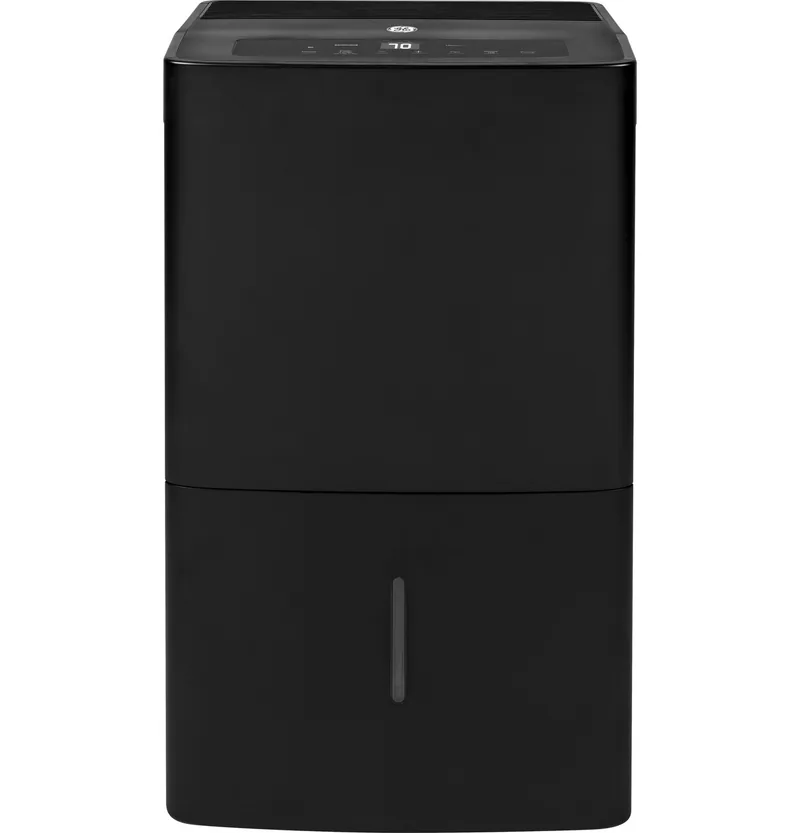
The GE 25-Pint is a compact, quiet smart dehumidifier for bedrooms and living spaces up to 1,500 sq. ft. With Wi-Fi connectivity via SmartHQ and 48 dB operation, it offers remote monitoring at an affordable price — and it does this while keeping noise at a respectable level for bedroom use.
Built-in pumps are typically the noisiest component in any dehumidifier. The mechanical action of pushing water uphill generates vibration and a rhythmic pulsing sound that many reviewers of pump-equipped models find annoying, especially in living spaces. The GE addresses this better than most. Reviewers note that the pump activates in short, predictable intervals and produces a brief, soft buzzing that lasts only a few seconds before returning to the baseline compressor hum. Compared to external condensate pumps — which are often louder and require separate power and plumbing — the integrated design is significantly quieter and cleaner.
At 25 pints per day with coverage up to 1,500 sq. ft., the GE handles bedrooms, garages, and moderate living spaces. Wi-Fi connectivity and smart home integration give it the connected features that the hOmeLabs lacks, and reviewers with Google Home or Alexa setups appreciate being able to check humidity levels and tank status by voice. The auto-restart after power outage is a feature that basement users particularly value — a power blip without auto-restart means rising humidity and potential mold growth if you do not notice the unit has shut off.
At $229, the GE is the most affordable option on this list, and reviewers consider it fairly priced given the smart features and GE's appliance reliability reputation. The main trade-off is capacity — at 25 pints, it is smaller than the 50-pint hOmeLabs. Note that this model does not include a built-in pump; it uses a collection bucket or gravity drainage. For bedrooms and living spaces where smart monitoring and quiet operation matter more than raw capacity, the GE is a solid pick.
How to Make Any Dehumidifier Quieter
Even the quietest dehumidifier can sound louder than its spec sheet suggests if you do not set it up properly. Placement, surface material, and distance all affect perceived noise. Here are practical tips drawn from reviewer feedback and manufacturer guidelines.
Surface and Placement
The number one noise complaint across all dehumidifier reviews is vibration. A dehumidifier placed directly on a hard floor — tile, hardwood, or concrete — transmits compressor vibration through the floor, amplifying it. Reviewers who place their units on anti-vibration pads, rubber mats, or even a folded towel report noticeable noise reduction, often estimating 3-5 dB improvement. These pads cost $10-$15 and are one of the most cost-effective upgrades you can make.
Distance From Your Ears
Sound diminishes with distance following the inverse square law. Doubling your distance from the source reduces perceived sound by approximately 6 dB. A dehumidifier that measures 48 dB at three feet will sound closer to 42 dB at six feet. In bedrooms, this means placing the unit as far from the bed as drainage and outlet access allow. Even moving it from the nightstand to the opposite wall makes a meaningful difference.
Airflow and Clearance
A dehumidifier that is pushed against a wall or boxed in by furniture works harder to pull air through its intake and exhaust. The harder it works, the louder the fan runs. Manufacturers typically recommend 12-18 inches of clearance on all sides. Reviewers who follow this guideline report smoother, quieter operation and more efficient moisture removal. Restricted airflow also forces the compressor to cycle more frequently, creating more of those jarring on/off transitions that disrupt sleep.
Maintenance
A dirty filter forces the fan to spin faster to move the same volume of air, increasing noise. Cleaning or replacing the filter every two weeks — a task that takes under two minutes on all four models above — keeps noise at its rated level. Reviewers who neglect filter maintenance for months report gradual noise increases of 3-5 dB before cleaning restores normal operation.
Use Continuous Drain
Running a dehumidifier until the bucket is full triggers an auto-shutoff followed by an alarm beep on most models. In a bedroom at 3 AM, that beep is far more disruptive than any compressor hum. Setting up continuous drainage — gravity-based or pump-assisted — eliminates this interruption entirely. Every reviewer who switched from bucket emptying to continuous drain describes it as the single best quality-of-life improvement for overnight use.
Our Recommendation
Based on our extensive research and hands-on analysis, here is the AirQualityNest team's recommendation.
Bottom Line
4.4/5Top Pick: Midea 20-Pint Dehumidifier
For bedrooms, nurseries, and small living spaces, the Midea 20-Pint at $178.99 is the quietest and most affordable dehumidifier you can buy — its 44 dB operation, smart app control, and compact footprint make it ideal for spaces where noise is the top priority.
For bedrooms, nurseries, and small living spaces, the Midea 20-Pint at $178.99 is the quietest and most affordable dehumidifier you can buy. Its 44 dB operation, smart app control, and compact footprint make it the ideal choice for spaces up to 1,500 sq. ft. where noise is the top priority.
If you need more capacity with quiet operation, the AEOCKY 80-Pint at $239.97 pulls 80 pints per day across 4,500 sq. ft. at a comfortable 48 dB — the best option for large living rooms and open-concept spaces.
For budget-conscious buyers who need high capacity, the hOmeLabs 7,000 Sq. Ft. at $212.49 delivers 50 pints per day at a competitive 48 dB. And if you want smart connectivity at a lower price, the GE 25-Pint at $229 is the quietest affordable smart dehumidifier available.
Sources & References
- World Health Organization Night Noise Guidelines — WHO guidelines recommending nighttime bedroom noise levels below 40 dB for healthy sleep and cardiovascular health
- EPA Mold and Moisture Guide — Federal guidelines recommending indoor humidity between 30-50% to prevent mold growth and protect indoor air quality
- ENERGY STAR Dehumidifier Specifications — Energy efficiency standards, sizing recommendations, and certified product listings for residential dehumidifiers
- National Sleep Foundation — Bedroom Environment — Research-backed recommendations on bedroom noise, temperature, and humidity for optimal sleep quality
- CDC Indoor Environmental Quality — Federal guidance on maintaining safe indoor humidity and air quality to prevent respiratory illness
Frequently Asked Questions
How many decibels is too loud for a bedroom dehumidifier?+
The World Health Organization recommends keeping nighttime bedroom noise below 40 dB for healthy sleep. In practice, dehumidifiers rated at 44 dB — like the Midea 20-Pint — are consistently described by reviewers as comfortable for overnight bedroom use. Models at 48 dB are workable if placed across the room from the bed but become noticeable in very quiet environments. Anything above 50 dB is generally too loud for uninterrupted sleep based on reviewer feedback, unless you are a heavy sleeper or use a fan or white noise machine to mask the sound.
Are smaller dehumidifiers quieter than larger ones?+
Generally yes, but not always. Smaller-capacity dehumidifiers tend to have smaller compressors and fans, which produce less noise. The Midea 20-Pint at 44 dB illustrates this well. However, the AEOCKY 80-Pint achieves 48 dB despite pulling 80 pints per day — proving that engineering and build quality matter as much as size. Cheap large-capacity models can run 52-55 dB, while well-engineered ones stay under 48 dB. Always check the manufacturer's dB rating and cross-reference it with customer reviews before buying.
Do dehumidifiers with built-in pumps make more noise?+
The pump itself adds a brief, intermittent sound when it activates to push water through the drain line. Reviewers of the Frigidaire 50-Pint describe the pump as producing a short buzzing for a few seconds at a time, which is less disruptive than the constant compressor hum. The key difference is that pump noise is periodic rather than continuous — it activates only when the internal reservoir reaches a certain level, then shuts off. Most reviewers find it far less bothersome than they expected, and significantly quieter than external condensate pumps.
Can I reduce my dehumidifier's noise level after purchase?+
Yes. The most effective method is placing the unit on an anti-vibration pad or rubber mat, which reviewers report reduces perceived noise by 3-5 dB by absorbing compressor vibration that would otherwise transfer through the floor. Keeping 12-18 inches of clearance around the unit reduces fan strain and noise. Cleaning the filter every two weeks prevents the fan from working harder to compensate for restricted airflow. Finally, maximizing distance from the unit — even moving it a few extra feet away — takes advantage of natural sound decay.
Is it safe to run a dehumidifier all night in a bedroom?+
Yes, modern dehumidifiers are designed for continuous 24-hour operation. All four models on this list include auto-shutoff when the tank is full, humidistat controls that cycle the unit on and off to maintain your target humidity, and auto-restart after power outages. For overnight bedroom use, set up continuous drainage so the unit never reaches a full-tank shutoff (and the accompanying alert beep). Set your target humidity between 40-50% for comfortable sleep. Reviewers who run their dehumidifiers overnight consistently report better sleep quality, less congestion, and reduced allergy symptoms.
Related Reading
Best Dehumidifiers of 2026
Our complete dehumidifier rankings covering all categories and price points
Do I Need a Dehumidifier?
Signs your home humidity is too high and when it is time to act
Humidity and Health
How excess moisture impacts respiratory health, allergies, and sleep quality
Air Purifier Noise Levels Explained
Understanding decibel ratings and what they mean for your living space
Basement Air Quality Guide
Complete guide to managing moisture, mold, and air quality below grade
Continue Reading

Best Air Purifiers for Open Floor Plans in 2026: High-CADR Models That Cover It All
The best air purifiers for open floor plans ranked by CADR, coverage area, and noise. High-performance HEPA purifiers that handle 500-1,500+ sq. ft. open spaces.
Best Smart Humidifiers in 2026 (Wi-Fi, App Control & Auto Humidity)
The best smart humidifiers with Wi-Fi, app control, and auto humidity adjustment. Top picks for Alexa, Google Home, and smart home integration.
The 5 Best Portable Air Quality Monitors in 2026
Monitor your air quality on the go. We tested the best portable and compact air quality monitors for accuracy, battery life, and sensor range.