Summer brings a unique set of indoor air quality challenges that most people do not think about until symptoms appear. While spring allergy season gets all the attention, summer quietly introduces problems that can be equally harmful — and in some cases, more dangerous.
High humidity creates the conditions for mold growth. Ground-level ozone from smog peaks during hot, sunny days. VOCs from building materials, furniture, and household products off-gas faster in heat. And wildfire smoke, which has become an annual summer event across much of North America, can push outdoor air quality into hazardous territory for days or weeks at a time. Your home is supposed to be your refuge, but without the right strategy, summer indoor air can be worse than what is outside.
This guide covers every major summer air quality challenge and gives you a practical plan for managing each one.
Key Takeaways
- 1Summer humidity above 60% triggers mold growth within 24-48 hours — a dehumidifier is the most effective single tool for keeping levels in the safe 40-50% range
- 2VOCs from furniture, paint, flooring, and household products off-gas up to twice as fast in summer heat, making ventilation and purification more important during hot months
- 3Wildfire smoke and ground-level ozone make outdoor air dangerous on many summer days — check AQI before opening windows, and keep a HEPA purifier ready for smoke events
- 4Running your AC and air purifier simultaneously is not redundant — AC handles temperature and some moisture, while the purifier handles particles and VOCs that AC filters miss
- 5Basements are the most vulnerable room in summer — warm moist air meeting cool foundation walls creates condensation and ideal mold conditions even when the rest of your home feels fine
Quick Answer
How do I maintain good indoor air quality in summer?
Focus on three priorities: keep humidity between 40-50% using a dehumidifier in problem areas, run a HEPA air purifier to handle particles and smoke, and check outdoor AQI before opening windows. Run your AC on auto fan mode (not 'on') to maximize dehumidification during cooling cycles. Address basement moisture separately — basements need their own dehumidifier in most climates. During wildfire smoke events, seal the house and run purifiers on high until AQI drops below 100.
The Four Summer Air Quality Threats
Summer indoor air quality is attacked from four directions simultaneously. Understanding each threat helps you prioritize your response.
High humidity and mold. Warm air holds dramatically more moisture than cold air. At 90 degrees Fahrenheit, air holds nearly three times more water vapor than at 50 degrees. When that moisture-laden outdoor air enters your home — through doors, windows, HVAC intakes, and foundation walls — indoor humidity can climb past 60% without obvious warning signs. At 60% relative humidity, mold begins growing on drywall, wood, fabric, and any organic surface within 24-48 hours. By the time you smell something musty, a colony has been actively releasing spores for days.
Ground-level ozone. Ozone forms when sunlight reacts with nitrogen oxides and volatile organic compounds in the atmosphere — both of which spike during summer from vehicle exhaust, industrial emissions, and higher temperatures. Ozone is a powerful respiratory irritant that worsens asthma, reduces lung function, and causes chest pain and coughing. According to the EPA, ozone levels peak between noon and 6 PM on hot, sunny days — exactly when people are tempted to open windows for ventilation.
Accelerated VOC off-gassing. Volatile organic compounds are released by paint, adhesives, composite wood furniture, vinyl flooring, cleaning products, and dozens of other household materials. The rate of off-gassing increases with temperature — a study published in Environmental Science & Technology found that VOC emissions from building materials can double when temperatures rise from 73 degrees to 95 degrees Fahrenheit. In a home that heats up during the day, especially rooms with direct sun exposure, summer VOC concentrations can be significantly higher than winter levels.
Wildfire smoke. Wildfire seasons have been expanding in both duration and intensity across North America. Smoke from fires burning hundreds of miles away can degrade local air quality for days or weeks. Fine particulate matter (PM2.5) from wildfire smoke is small enough to penetrate deeply into your lungs and even enter your bloodstream. During major smoke events, outdoor AQI can exceed 300 — well into the "hazardous" range — and that smoke infiltrates homes through every gap and crack in the building envelope.
Humidity: The Biggest Summer Challenge
Of the four threats, humidity is the one that causes the most widespread damage to the most homes. It is also the most manageable with the right equipment.
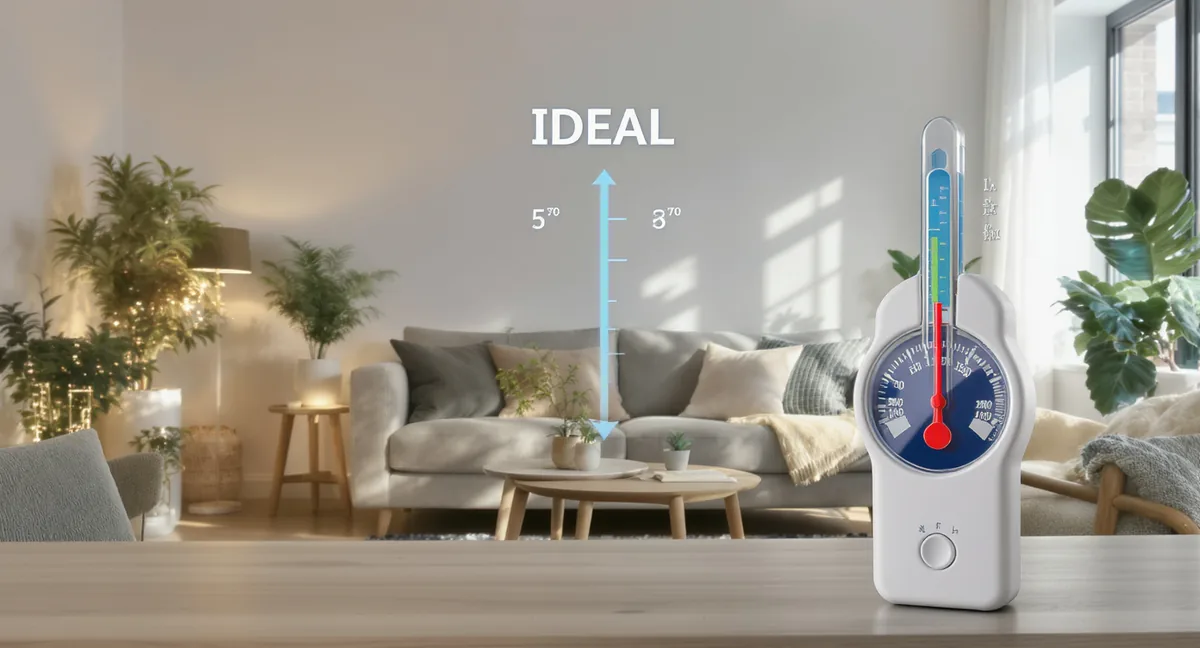
The target range is 40-50% relative humidity. According to expert recommendations, this range prevents mold growth while keeping air comfortable for breathing. Below 40% is unnecessarily dry for summer. Above 50% invites dust mites. Above 60% invites mold.
Air conditioning helps but is often insufficient. Your AC removes moisture while the compressor is running, but modern high-efficiency systems are designed to cool quickly and cycle off. Each time the compressor stops, moisture that condensed on the evaporator coil re-evaporates into your home's air. You end up with a cool but clammy home — 72 degrees but uncomfortable. Setting your AC fan to "auto" rather than "on" helps, because "on" mode blows unconditioned air through ducts between cooling cycles, redistributing moisture.
A dehumidifier fills the gap. In basements, bathrooms, laundry rooms, and any space where humidity consistently exceeds 50%, a dedicated dehumidifier is the most effective solution. Based on our research, a 50-pint dehumidifier handles most basements and open living spaces, while a 20-pint unit works for bedrooms and closets.
Dehumidifier maintenance in peak season. Summer is when your dehumidifier works hardest, and maintenance becomes critical. Empty the collection bucket daily (or connect a hose for continuous drainage). Clean the filter every two weeks — a clogged filter restricts airflow and reduces extraction capacity. Wipe down the bucket and internal components monthly to prevent bacterial and mold growth inside the unit itself. A neglected dehumidifier can become a source of the very problems it is supposed to prevent.
VOCs Off-Gas Faster in Heat
Many people do not realize that their furniture, flooring, and household products release more chemicals in summer. This is a physics problem — higher temperatures provide more energy for volatile compounds to escape from solid materials into the air.
New furniture and building materials are the biggest sources. Composite wood (particle board, MDF, plywood) releases formaldehyde. New carpet off-gases styrene and 4-phenylcyclohexene. Vinyl flooring releases phthalates. Paint and stain release toluene and xylene. These emissions peak when the products are new and decline over months, but summer heat can cause a secondary spike even in materials that are several months old.
Practical steps to reduce summer VOC exposure:
- Run an air purifier with an activated carbon filter to adsorb VOCs — HEPA alone does not capture gas-phase pollutants
- Ventilate during cooler parts of the day (early morning, evening) when outdoor ozone levels are lower
- Avoid bringing new composite wood furniture into your home during the hottest months if possible
- Keep window blinds or curtains closed on sun-facing windows to reduce direct solar heating of furniture and flooring
- Choose low-VOC or zero-VOC products when painting, staining, or refinishing during summer
Wildfire Smoke and Ozone
Wildfire smoke has become an annual summer concern for communities far from any active fire. Smoke can travel thousands of miles, affecting air quality in cities that have never experienced a wildfire directly.
During smoke events, seal your home. Close all windows and doors. Switch your HVAC to recirculate mode if available, and if your system pulls in outdoor air, consider turning it off and using standalone air purifiers instead. Seal gaps under doors with rolled towels if needed.
Run your HEPA air purifier on the highest setting. Wildfire smoke is composed primarily of PM2.5 particles, which are well within HEPA capture range. A high-CADR purifier can significantly reduce indoor PM2.5 during smoke events. According to expert recommendations, you want at least 5 air changes per hour in the rooms you spend the most time in during heavy smoke days.
Check AQI before opening windows. Services like AirNow.gov provide real-time AQI readings and forecasts. When AQI is below 50 (green), outdoor air is clean and ventilation is safe. Between 51-100 (yellow), sensitive individuals should limit exposure. Above 100 (orange and higher), keep the house sealed. During summer, ozone levels add another layer — even on clear days without smoke, ozone can push AQI above 100 during afternoon hours.
Create a clean air room. If you do not have enough purifiers for the whole house, designate one room — ideally a bedroom — as your clean air room during smoke events. Close the door, seal gaps, and run the purifier continuously. Spend as much time in this room as possible until AQI improves.
Running AC and Air Purifier Together
A common question is whether running an air purifier while the AC is on is redundant. It is not — they handle different problems.
Your AC handles temperature and partial dehumidification. The standard MERV-8 filter in most residential HVAC systems captures large dust particles but allows PM2.5, pollen, mold spores, and all gas-phase pollutants (VOCs, ozone) to pass through. Even if you upgrade to a MERV-13 filter, your HVAC system does nothing about VOCs or odors.
Your air purifier handles fine particles and gases. A HEPA filter captures 99.97% of particles down to 0.3 microns — orders of magnitude smaller than what your HVAC filter catches. An activated carbon pre-filter or filter stage adsorbs VOCs, cooking odors, and smoke chemicals that your AC completely ignores.
Best practice for summer: Run your AC to maintain temperature and baseline dehumidification. Run your air purifier continuously in occupied rooms for particle and VOC control. Position the purifier so it does not compete with HVAC airflow — place it away from supply vents and return air registers so it draws room air rather than being overwhelmed by conditioned airflow.
Basement Moisture Issues
Basements are the most vulnerable room in summer, and many homeowners do not realize their basement has a humidity problem until mold is visible.
The physics work against you. Warm, humid outdoor air enters the basement through windows, doors, and the concrete walls themselves (concrete is vapor-permeable). When that warm, moist air contacts the cooler surfaces of basement walls and floors, moisture condenses — exactly the way a cold glass sweats on a humid day. This creates persistently wet surfaces where mold thrives.
Signs of basement moisture problems:
- Musty or earthy smell, even faintly
- Condensation on windows, pipes, or walls
- White powdery deposits on concrete walls (efflorescence — mineral salts left behind as moisture evaporates)
- Peeling paint or bubbling wallpaper
- Damp-feeling carpet or soft spots in flooring
- Visible mold on walls, ceiling tiles, stored boxes, or furniture
Based on our research, the most effective basement solution is a dehumidifier with continuous drainage. Position the dehumidifier near the greatest moisture source (exterior walls, sump pit area) and run a hose to a floor drain for hands-free operation all summer. Set the target to 45-50% humidity and let it run continuously. A 50-pint unit handles most basements up to 1,500 square feet.
Summer Cooking and Grilling Impacts
Summer cooking habits affect indoor air quality in ways that are easy to overlook.
Indoor cooking generates PM2.5, NO2, and VOCs. Frying, sauteing, and broiling produce significant particulate matter — the EPA notes that cooking is one of the largest sources of indoor PM2.5 in most homes. Gas stoves add nitrogen dioxide (NO2) to the mix. Even electric cooking generates particles from heated oils and fats.
Grilling near open windows or doors. If your grill is near an exterior door or window, smoke and particulates from grilling can drift inside. Position grills away from any openings, and close nearby windows and doors while grilling.
Run your range hood exhaust fan. This is the single most effective step for cooking-related air quality. A vented range hood (one that exhausts to the outdoors, not a recirculating model) removes PM2.5, NO2, and cooking VOCs at the source. Run it on high during cooking and for 15-20 minutes afterward. If you do not have a vented range hood, open a window near the stove and run a portable air purifier in the kitchen during and after cooking.
When to Open Windows vs Keep Sealed
The decision to open or close windows in summer is more nuanced than it seems. Opening windows brings in fresh air but can also bring in ozone, pollen, humidity, and wildfire smoke. Here is a decision framework based on expert recommendations.
Open windows when:
- AQI is below 50 (green on AirNow.gov)
- Pollen count for your allergens is low or moderate
- Outdoor temperature is below 80 degrees (to avoid adding heat and humidity)
- Time is early morning (before 10 AM) or late evening — ozone peaks mid-afternoon
- After rain — pollen counts drop 50-80% and particulate matter is washed from the air
Keep windows sealed when:
- AQI is above 100 (orange or worse)
- Wildfire smoke is visible or forecast
- Pollen count for your allergens is high or very high
- Outdoor temperature exceeds 85 degrees with high humidity
- Between noon and 6 PM on hot sunny days (peak ozone hours)
When in doubt, check AirNow.gov, your local weather app, or your outdoor air quality monitor before opening up. A few minutes of checking saves hours of purifier runtime trying to clean contaminated air.
Signs Your Home Has a Humidity Problem
Many humidity problems develop gradually, making them easy to miss. Based on our research, here are the warning signs to watch for during summer.
Condensation on windows. Water droplets forming on the inside of windows mean indoor humidity is high enough to condense on the coolest surface in the room. If you see this during summer (as opposed to winter, when it is common), your humidity is significantly elevated.
Musty or earthy smell. This is the smell of mold volatile organic compounds (MVOCs) — chemical byproducts of active mold growth. If you can smell it, mold is growing somewhere nearby, even if you cannot see it.
Peeling paint or wallpaper. Moisture migrating through walls breaks the bond between paint and the wall surface. Bubbling, peeling, or cracking paint on exterior walls or basement walls is a strong indicator of moisture infiltration.
Swollen or sticking doors and windows. Wood absorbs moisture from humid air and expands. If doors or windows that opened smoothly in winter suddenly stick or are hard to close, indoor humidity is high enough to cause dimensional changes in wood.
Visible mold. By the time you see mold — dark spots on walls, ceilings, or in bathroom corners — the colony has been growing for days or weeks. Visible mold means humidity has been above 60% in that area for an extended period.
Feeling clammy indoors despite AC running. If your home feels cool but uncomfortable, your AC is handling temperature but not adequately dehumidifying. This is especially common with oversized or high-efficiency AC systems that short-cycle.
Our Top Picks for Summer Air Quality
Based on our analysis of customer reviews and specifications, these two products address the most critical summer air quality challenges.
Best Dehumidifier for Summer: Frigidaire FFAD5033W1
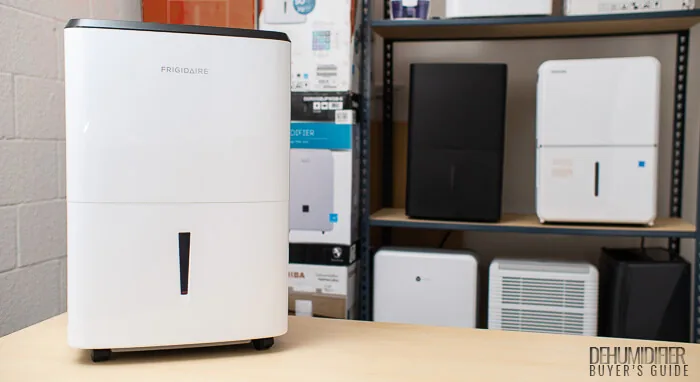
The Frigidaire FFAD5033W1 is our top dehumidifier recommendation for summer moisture control. With a 50-pint-per-day extraction capacity, it handles basements, living rooms, and open floor plans up to 1,500 square feet — the spaces where summer humidity problems are most severe.
The built-in pump is the feature that separates this unit from budget alternatives. Instead of emptying a bucket twice a day during peak humidity, you connect a hose and drain continuously into a sink, floor drain, or out a window. Customer reviews consistently praise the pump feature as the difference between actually using a dehumidifier and abandoning it because bucket emptying is too inconvenient.
Energy Star certification means it operates efficiently during the continuous summer-long operation it is designed for. The digital humidistat lets you set a target humidity (we recommend 45-50%), and the unit cycles automatically to maintain it. At approximately $250, it is among the most cost-effective 50-pint models available.
Best Air Purifier for Smoke and Smog: Blueair Blue Pure 211+
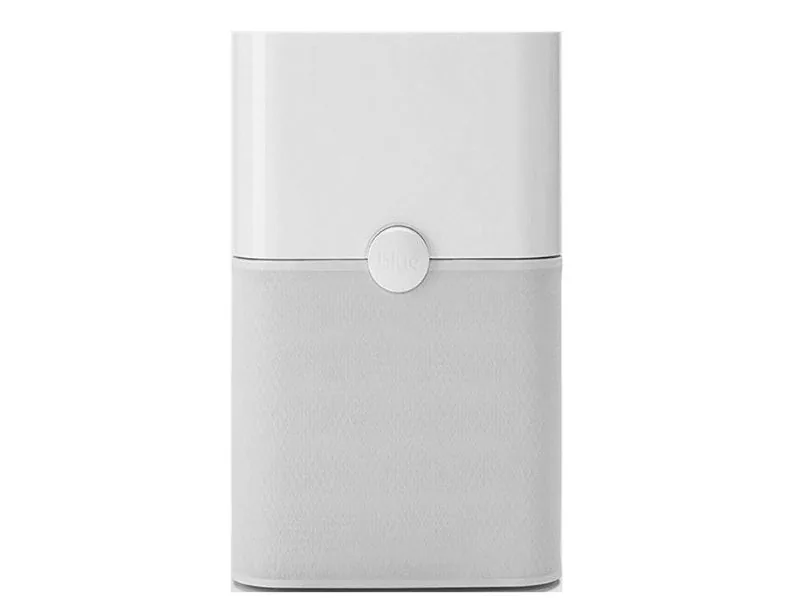
For wildfire smoke, ground-level ozone days, and general summer particulate matter, the Blueair Blue Pure 211+ delivers the high CADR needed to clean large rooms quickly. Its 350 CADR handles rooms up to 540 square feet with 5 air changes per hour — exactly the rate experts recommend during smoke events.
The 360-degree air intake pulls contaminated air from all directions, which is particularly valuable during smoke events when particles infiltrate from every crack and gap in your home's envelope. Combined filtration — mechanical particle filter plus activated carbon — handles both PM2.5 smoke particles and the VOCs and odors that accompany wildfire smoke.
Customer reviews from wildfire-affected regions are consistently enthusiastic. Reviewers report visible haze clearing within 20-30 minutes of running the 211+ on high, and PM2.5 readings on their monitors dropping from hazardous levels to single digits within an hour. During non-smoke days, it handles summer cooking particles, pollen, and general indoor pollution with equal effectiveness.
This guide was researched and written by the AirQualityNest editorial team. We update our content regularly to reflect the latest products, pricing, and research.
Frequently Asked Questions
What is the ideal indoor humidity in summer?+
Keep indoor humidity between 40-50%. This range prevents mold growth (which begins above 60%), discourages dust mites (which thrive above 50%), and maintains comfort. Use a hygrometer to monitor levels and a dehumidifier to maintain them, especially in basements, bathrooms, and laundry rooms. Setting your AC fan to auto rather than on also helps by preventing moisture redistribution between cooling cycles.
Should I run my air purifier and AC at the same time?+
Yes. They handle different problems. Your AC manages temperature and provides partial dehumidification, but its filter (typically MERV-8) allows PM2.5, pollen, mold spores, and all VOCs to pass through. A HEPA air purifier captures fine particles your AC misses, and the activated carbon filter adsorbs VOCs and odors. Running both provides comprehensive coverage — temperature control plus air quality control.
How do I protect indoor air quality during wildfire smoke?+
Seal your home by closing all windows and doors. Run HEPA air purifiers on the highest setting in rooms where you spend the most time. Create a dedicated clean air room (ideally a bedroom) by closing the door, sealing gaps, and running the purifier continuously. Check AQI on AirNow.gov before opening any windows. Avoid activities that generate additional indoor pollution — no candles, no cooking with high heat, no vacuuming without a HEPA-equipped vacuum.
Why does my house smell musty in summer?+
A musty smell indicates active mold growth, which happens when humidity exceeds 60% on surfaces for 24-48 hours or more. Common summer sources include basements where warm humid air meets cool foundation walls, bathrooms with inadequate ventilation, and areas around AC drip pans or condensate lines. Address the moisture source first with a dehumidifier, improved ventilation, or leak repair. Then use a HEPA air purifier to capture airborne mold spores.
When is it safe to open windows in summer?+
Check AQI and pollen counts before opening windows. Open when AQI is below 50, pollen is low, outdoor temperature is below 80 degrees, and the time is early morning or evening (to avoid peak ozone between noon and 6 PM). After rain is also an excellent window — pollen drops 50-80% and particulates are washed from the air. Keep windows sealed during high AQI days, wildfire smoke events, high pollen counts, and hot, humid afternoons.
Sources & References
- EPA — Ground-level Ozone Pollution — Documents how ground-level ozone forms from sunlight reacting with NOx and VOCs, peaks during summer afternoons, and causes respiratory harm
- EPA — A Brief Guide to Mold, Moisture, and Your Home — Recommends 30-50% indoor humidity, details mold growth conditions, and provides prevention strategies for residential settings
- EPA — Wildfire Smoke: A Guide for Public Health Officials — Recommends creating clean air rooms with HEPA filtration and sealing homes during smoke events to reduce PM2.5 exposure
- Xiong et al. — VOC emissions from building materials (Environmental Science & Technology) — Research demonstrating that VOC emission rates from building materials increase significantly with temperature, with some compounds doubling in emission rate between 73-95°F
- AirNow.gov — Air Quality Index — Real-time AQI data and forecasts for ozone, PM2.5, and wildfire smoke across the United States
Related Reading
Summer Humidity and Mold Prevention
Deep dive into summer mold prevention strategies and dehumidifier recommendations
Best Dehumidifiers for 2026
Our top-rated dehumidifiers across all sizes and budgets for summer moisture control
Best Air Purifiers for Wildfire Smoke
High-CADR purifiers tested for smoke particle removal during wildfire events
Humidity and Health: Finding Your Ideal Level
Complete guide to the 30-50% humidity sweet spot and what happens outside it
How to Improve Indoor Air Quality
Comprehensive strategies beyond single devices for cleaner, healthier indoor air
Continue Reading
Best Air Purifiers for Open Floor Plans in 2026: High-CADR Models That Cover It All
The best air purifiers for open floor plans ranked by CADR, coverage area, and noise. High-performance HEPA purifiers that handle 500-1,500+ sq. ft. open spaces.
Best Smart Humidifiers in 2026 (Wi-Fi, App Control & Auto Humidity)
The best smart humidifiers with Wi-Fi, app control, and auto humidity adjustment. Top picks for Alexa, Google Home, and smart home integration.
The 5 Best Portable Air Quality Monitors in 2026
Monitor your air quality on the go. We tested the best portable and compact air quality monitors for accuracy, battery life, and sensor range.