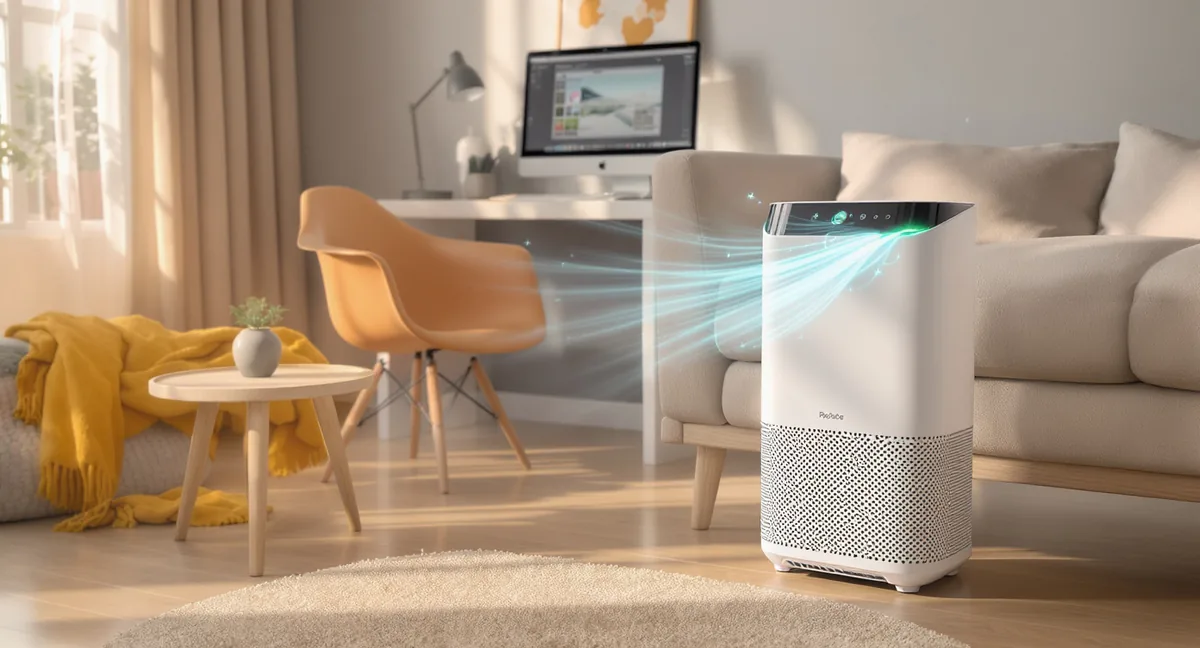
Your garage or workshop is likely the most polluted room on your property. Sawdust from woodworking, paint and stain fumes, car exhaust that lingers after you pull in, welding smoke, adhesive off-gassing, and solvent vapors all concentrate in a space that typically has minimal ventilation, no HVAC filtration, and poor insulation. Unlike a bedroom or living room, a garage generates industrial-grade pollutants in a residential setting — and your lungs pay the price.
Based on our research across published specifications, customer reviews, and expert recommendations, clearing garage air requires a different class of purifier than what works indoors. You need raw airflow power (high CADR), substantial activated carbon for VOCs and chemical fumes, and durable construction that can handle temperature swings and heavy particulate loads. Smart features and whisper-quiet operation are irrelevant here — what matters is moving and cleaning large volumes of contaminated air.
Key Takeaways
- 1The Honeywell HPA300 ($249.99) is the best overall garage air purifier — its 300 CADR and 465 sq. ft. coverage deliver the raw airflow needed for large, poorly ventilated garage spaces
- 2Activated carbon capacity is critical for garages — sawdust is only half the problem, while paint fumes, adhesive VOCs, car exhaust, and solvent vapors require carbon filtration that HEPA alone cannot provide
- 3Garage air purifiers work significantly harder than indoor units — expect to replace filters 30-50% sooner than manufacturer estimates due to heavy dust loads and chemical exposure
- 4For serious chemical exposure from painting, staining, or epoxy work, the Austin Air HealthMate's 15 lbs of carbon is unmatched — no other consumer purifier comes close for sustained VOC adsorption
- 5An air purifier supplements but does not replace proper ventilation — always open the garage door or use exhaust fans when generating heavy fumes from painting, welding, or running engines
Quick Answer
What is the best air purifier for a garage?
The Honeywell HPA300 at $249.99 is the best air purifier for most garages and workshops. Its 300 CADR is the highest in the sub-$300 range, covering spaces up to 465 sq. ft. with aggressive air cycling that clears sawdust, smoke, and particulates fast. The no-nonsense mechanical controls work reliably in dusty, temperature-variable garage environments where touchscreens and Wi-Fi connections are unnecessary. For workshops with heavy chemical exposure — painting, staining, epoxy — upgrade to the Austin Air HealthMate ($845) for its 15 lbs of activated carbon.
Why Garages Need a Different Kind of Purifier
A bedroom air purifier and a garage air purifier solve fundamentally different problems. In your bedroom, you are filtering dust mites, pollen, and pet dander — light, dry particles in a climate-controlled room. In a garage or workshop, you are dealing with:
- Sawdust and wood particles — Power tools generate massive volumes of fine wood dust. Table saws, sanders, routers, and planers throw particles ranging from visible chips down to sub-micron dust that stays airborne for hours and penetrates deep into lung tissue
- Paint and stain fumes — Latex paints emit formaldehyde and glycols. Oil-based paints and stains release toluene, xylene, and mineral spirits. These are gaseous VOCs that pass straight through a HEPA filter
- Car exhaust — Starting your car in the garage releases carbon monoxide, nitrogen dioxide, benzene, and fine particulate matter. Even with the door open, exhaust lingers and concentrates in enclosed spaces
- Welding and soldering smoke — Metal fumes containing manganese, chromium, and zinc oxide, plus flux gases, require both particle and gas-phase filtration
- Adhesive and epoxy off-gassing — Construction adhesives, wood glue, two-part epoxy, and caulking release VOCs during application and curing that can persist for days
- Temperature extremes — Garages are uninsulated and subject to heat in summer and cold in winter, stressing purifier components designed for indoor comfort ranges
This means your garage purifier needs high CADR for rapid particulate clearing and substantial activated carbon for chemical and VOC adsorption. Smart features, sleep modes, and app connectivity are wasted here — you need a workhorse, not a smart home gadget.
Our Top Picks at a Glance
1. Best Overall: Honeywell HPA300
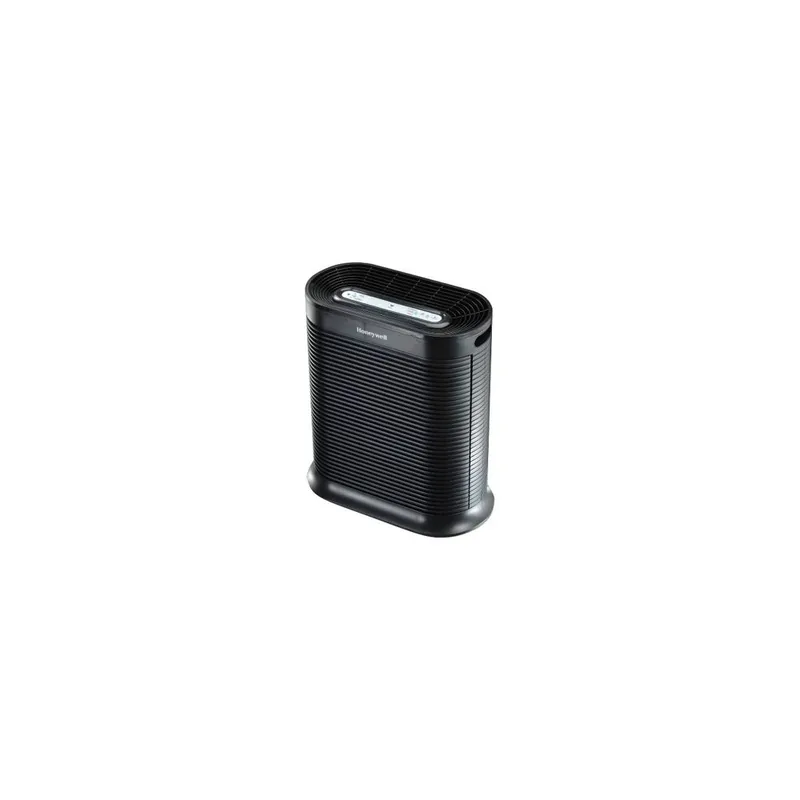
The Honeywell HPA300 is the ideal garage workhorse. Its 300 CADR — the highest in the sub-$300 price range — moves a serious volume of air through three parallel True HEPA filters, clearing sawdust clouds, sanding particulates, and smoke faster than any comparably priced competitor. Coverage of 465 sq. ft. handles a standard two-car garage with room to spare.
Based on customer reviews, woodworkers and hobbyists consistently praise the HPA300 for its ability to visibly clear shop dust within 20 to 30 minutes on turbo mode. The three-filter parallel design provides more total filter surface area than single-filter units, which means it handles the heavy particulate loads from power tools without choking on airflow as quickly. This translates directly to longer filter life under demanding garage conditions.
The mechanical controls are a genuine advantage in a garage environment. Touchscreens and capacitive buttons fail when covered in sawdust or operated with gloves. The HPA300's physical knobs and switches work every time, regardless of how dirty your hands are. There is no Wi-Fi module to malfunction, no app to troubleshoot — just reliable, powerful air cleaning.
The turbo mode is loud, but in a garage where you are running a table saw or a compressor, noise is irrelevant. Run it on turbo during active woodworking, then drop to medium or low to clear residual dust after you finish.
What We Like
- +Turbo clean mode for quick purification
- +Strong CADR ratings
- +Trusted brand with long track record
- +Captures up to 99.97% of particles
Could Be Better
- −Louder than competitors on high
- −No smart features
- −Filter costs add up
2. Best Budget Compact for Workbench Zones: Levoit LV-H132
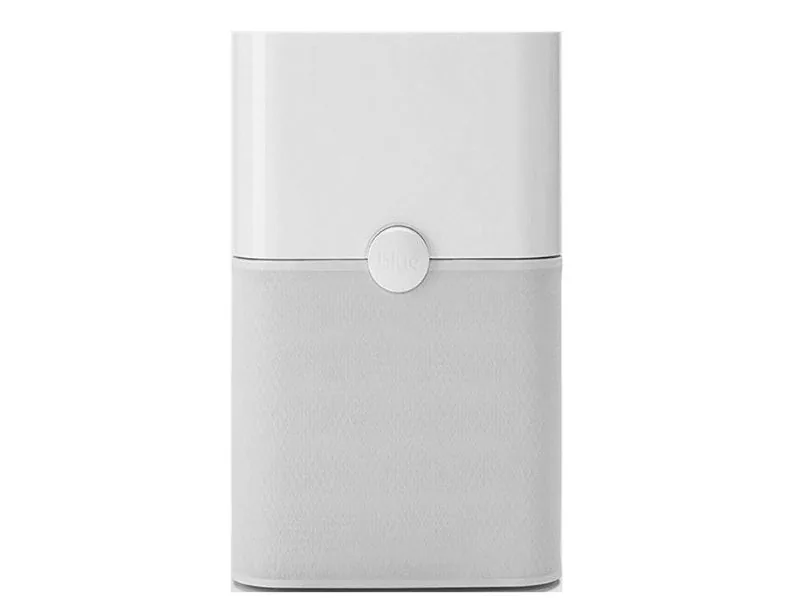
The Levoit LV-H132 at $69.99 fills a practical role in garage and workshop setups: a compact, affordable purifier positioned directly at your primary workbench to provide localized clean air where you breathe most. With True HEPA filtration, an activated carbon filter, and a fine preliminary filter, it captures both fine dust particles and the VOCs from adhesives, stains, and finishes within its 129 sq. ft. zone.
The compact size is an advantage in crowded workshops. It fits on a shelf, on the corner of a workbench, or on top of a tool chest without taking up valuable workspace. AHAM Verified performance ensures the filtration claims hold up, and at 25-50 dB across its three speeds, it runs quietly enough to hear over hand tools.
At $69.99, it is affordable enough to buy two or three for multi-zone coverage — one at the workbench, one at the finishing station, one at the assembly area. This zone-based approach costs less than a single premium purifier and provides targeted clean air exactly where you need it. For workshops that already have the Honeywell HPA300 as the primary unit, adding an LV-H132 at the workbench extends your clean-air coverage for minimal additional cost.
What We Like
- +Under $70 — excellent budget pick
- +Optional night light for bedrooms
- +Three-stage filtration at low price
- +Whisper-quiet 25 dB on low
- +Compact and lightweight design
Could Be Better
- −Small coverage at 129 sq. ft.
- −No smart features or app control
- −No air quality sensor or auto mode
- −Manual fan speed control only
3. Best for Serious Woodworkers: Medify MA-40
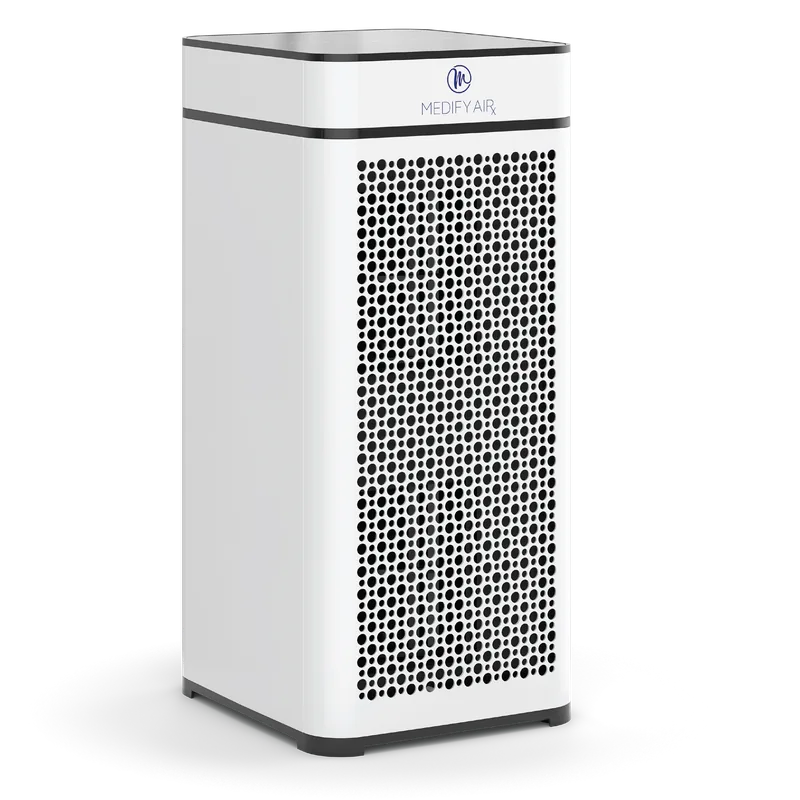
The Medify MA-40 earns the serious woodworker spot with its dual-intake design and 840 sq. ft. coverage — the largest in this roundup by a wide margin. If you have a dedicated workshop, a large detached garage, or a multi-bay space with multiple workstations, the MA-40's airflow capacity handles the volume that smaller units struggle with.
The dual air intake pulls air from both sides of the unit simultaneously, effectively doubling the capture zone compared to single-intake designs. For workshops where you move between a table saw on one side and a workbench on the other, this dual-sided approach means neither work area is in a dead zone.
The H13 True HEPA filter captures 99.97% of particles down to 0.3 microns, including the fine wood dust from sanding that is most dangerous to inhale. The integrated activated carbon layer handles the chemical component — wood stain vapors, finish off-gassing, and adhesive fumes — though the carbon quantity is moderate rather than heavy-duty.
According to customer reviews, the MA-40 performs well in garage environments despite its more refined appearance. The touch controls are less ideal than the Honeywell's mechanical switches for dusty hands, but the timer function is useful for setting the purifier to run for several hours after you leave the workshop, clearing residual airborne particles while you are no longer generating new ones.
What We Like
- +Dual-intake design for faster purification
- +H13 True HEPA medical-grade filter
- +Strong 330 CADR at competitive price
- +Timer and 3 fan speeds
- +Sleek modern design
Could Be Better
- −Loud on highest setting (66 dB)
- −Filters need frequent replacement (3-4 months)
- −No smart app or Wi-Fi
- −Higher long-term filter costs
4. Best for Chemical Exposure: Austin Air HealthMate
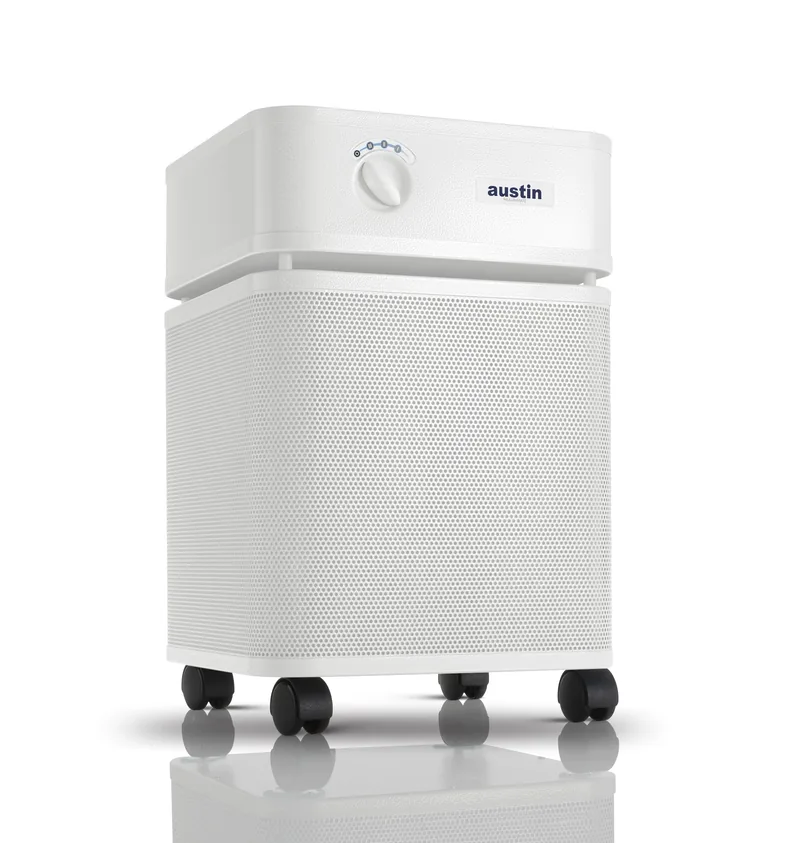
If your garage work involves serious chemical exposure — spray painting, polyurethane application, epoxy work, fiberglass resin, or solvent-based finishes — the Austin Air HealthMate is in a class by itself. Its filter contains 15 pounds of activated carbon and zeolite, more than five times the carbon found in any other purifier on this list. That massive carbon bed provides the surface area and depth needed to adsorb formaldehyde, toluene, xylene, benzene, and hundreds of other chemical compounds that workshop activities generate.
The five-year filter life is a critical practical advantage. Carbon filters lose effectiveness as they saturate with chemical compounds, and the thin carbon layers in most purifiers saturate within weeks in a chemically active garage environment. The HealthMate's deep carbon bed sustains effective VOC adsorption for years, providing consistent chemical protection without the cost and hassle of frequent filter replacements.
At $845, the HealthMate is a significant investment. But for anyone regularly exposed to paint fumes, chemical solvents, or adhesive off-gassing in their workshop, the health protection and long-term filter economics make it worthwhile. Based on our research, customer reviews from woodworkers, painters, and hobbyists consistently note the dramatic reduction in chemical odors and respiratory irritation after installing the HealthMate in their workspace.
The all-steel construction withstands the temperature swings and rough handling of a garage environment better than the plastic housings of consumer-grade purifiers. It is built to last in conditions that would degrade lesser units.
What We Like
- +5-year filter life saves money long-term
- +15 lbs of carbon for superior gas/chemical removal
- +Medical-grade True HEPA
- +Made in USA with steel housing
- +Ideal for chemical sensitivities and MCS
Could Be Better
- −Very heavy at 47 lbs
- −Loud on highest setting
- −No smart features or auto mode
- −High upfront cost
5. Best Budget for Small Workshop Corners: Levoit Core 300
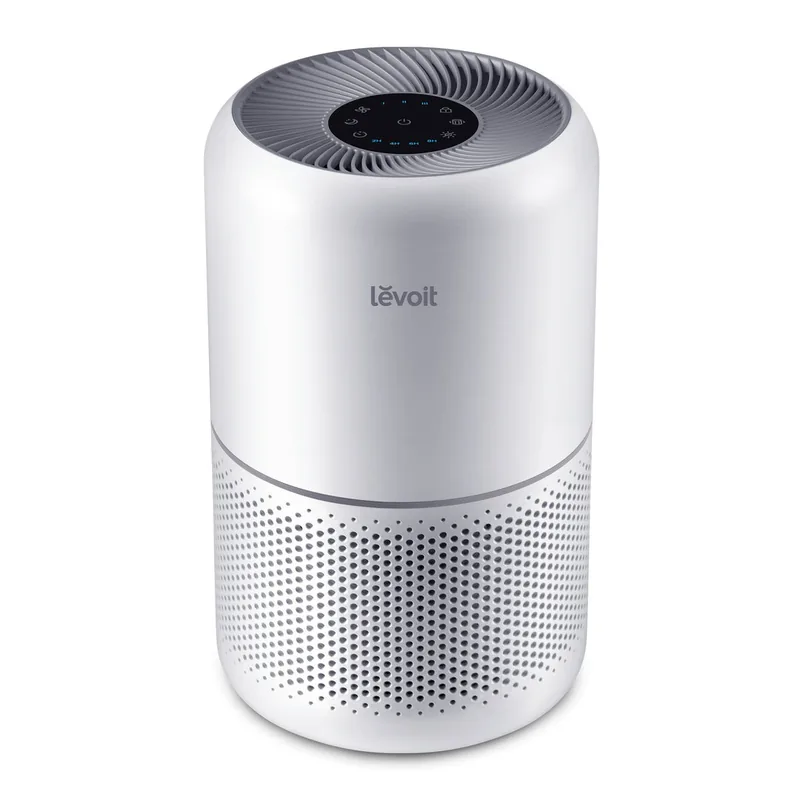
Not every garage setup requires a full-scale purifier. If you have a small workshop corner in a single-car garage, a hobby bench in a basement, or a compact craft area, the Levoit Core 300 at $99.99 delivers meaningful air cleaning at a fraction of the cost of the larger units on this list.
The 141 CADR and 219 sq. ft. coverage handle a dedicated workstation area effectively. Place it within a few feet of your primary work surface — next to a scroll saw, a small sanding station, or a painting bench — and it captures localized particles before they disperse throughout the rest of the garage.
The compact cylindrical design fits into tight workshop spaces where larger purifiers would be impractical. It can sit on a shelf, on a workbench corner, or on the floor beside your tool chest without taking up valuable workspace. The 360-degree intake pulls air from all directions, so placement orientation does not matter.
According to customer reviews, the Core 300 works well as a supplementary purifier — running alongside a dust collection system or in addition to a larger unit. It is also an excellent entry point for hobbyists who want to test whether an air purifier makes a noticeable difference before investing in a higher-capacity unit.
The filter replacement cost of roughly $20 every six to eight months makes ongoing operation affordable, though expect to replace filters closer to every four to five months in a dusty workshop.
What We Like
- +Under $100 price point
- +Whisper-quiet at lowest setting
- +Compact cylinder design
- +Multiple filter options available
Could Be Better
- −Small room coverage only
- −No auto mode or air quality sensor
- −No smart features
Garage Air Purifier Placement and Usage Tips
Getting the most out of your garage purifier requires some practical adjustments beyond what indoor use demands.
Placement
Position the purifier at breathing height when possible. Many garage pollutants — especially dust from power tools — settle downward over time, but the fine particles that damage your lungs stay airborne at head height. Placing the purifier on a workbench or shelf (3 to 5 feet off the ground) captures these particles more effectively than floor placement.
Keep it away from direct dust streams. Do not place the purifier directly behind a table saw or miter saw where large chips and shavings will blast into the intake. Position it off to the side, 4 to 6 feet from your primary dust source, where it captures airborne fine particles without being overwhelmed by large debris that clogs the pre-filter rapidly.
Allow clearance around the unit. Most purifiers need 12 to 18 inches of clearance on all sides for proper airflow. In a cluttered garage, it is tempting to wedge the purifier into a corner behind toolboxes — resist this. Restricted airflow reduces performance dramatically.
Usage
Run on high during active work, then let it cycle down. Start the purifier before you begin work and run it at maximum during sawing, sanding, painting, or any dust or fume-generating activity. After you finish, leave it running on medium for at least 30 to 60 minutes to clear residual airborne particles.
Supplement with ventilation for heavy chemical work. An air purifier is not a substitute for opening the garage door when spraying paint, applying polyurethane, or working with solvents. Use both — ventilation removes the bulk concentration while the purifier catches what remains and continues cleaning the air after you close up.
Pre-filter maintenance is critical. In a garage, pre-filters clog 3 to 5 times faster than in indoor environments. Check and clean washable pre-filters weekly during active workshop use. Replace disposable pre-filters at the first sign of heavy dust buildup — a clogged pre-filter reduces CADR by 20 to 40%.
The Verdict
For most garages and workshops, the Honeywell HPA300 at $249.99 is the best choice — its 300 CADR, mechanical controls, and no-nonsense design are built for the demands of a dusty, uncontrolled garage environment. The Levoit LV-H132 at $69.99 is an affordable workbench-zone companion that delivers True HEPA + carbon filtration in a compact package. The Medify MA-40 handles the largest spaces at 840 sq. ft. with dual intake. For serious chemical exposure from painting and finishing work, the Austin Air HealthMate and its 15 lbs of activated carbon is the only consumer-grade option that provides sustained VOC protection. And the Levoit Core 300 at $99.99 is the smart budget entry point for small workshop corners and hobby stations.
The AirQualityNest editorial team researches and reviews products independently to help you find the best options for your needs.
Related Reading
Best Air Purifiers for VOCs
Top purifiers with heavy activated carbon for chemical and VOC removal
Carbon Filters Explained
How activated carbon adsorbs VOCs, formaldehyde, and chemical fumes
Best Air Purifiers for Large Rooms
High-CADR purifiers for spaces over 400 sq. ft.
VOCs in Your Home
Common sources of volatile organic compounds and their health effects
Continue Reading
Best Air Purifiers for Open Floor Plans in 2026: High-CADR Models That Cover It All
The best air purifiers for open floor plans ranked by CADR, coverage area, and noise. High-performance HEPA purifiers that handle 500-1,500+ sq. ft. open spaces.
Best Smart Humidifiers in 2026 (Wi-Fi, App Control & Auto Humidity)
The best smart humidifiers with Wi-Fi, app control, and auto humidity adjustment. Top picks for Alexa, Google Home, and smart home integration.
The 5 Best Portable Air Quality Monitors in 2026
Monitor your air quality on the go. We tested the best portable and compact air quality monitors for accuracy, battery life, and sensor range.