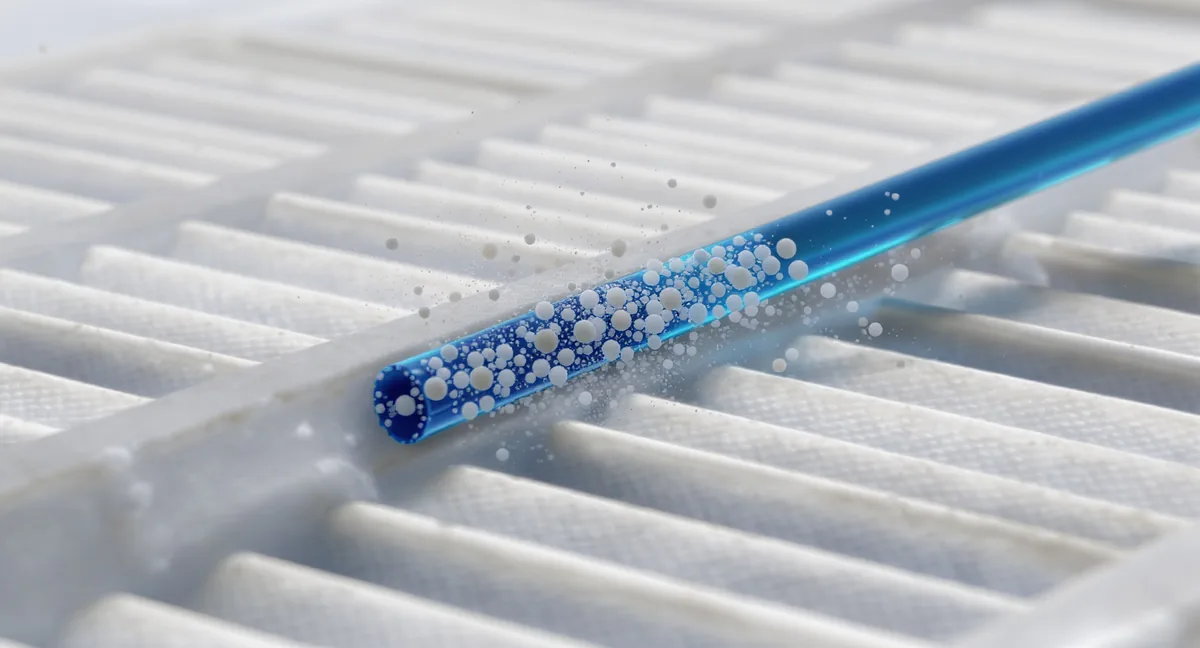
If you are shopping for an air purifier, you have probably seen two main technologies: HEPA filters and ionic (ionizer) purifiers. They sound like they do the same thing — clean your air — but they work in fundamentally different ways, and one is dramatically more effective than the other.
Here is the short version: HEPA filters physically trap particles and remove them from your air. Ionizers charge particles so they stick to surfaces around your room. One removes pollutants. The other relocates them. That distinction matters more than most marketing would have you believe.
How HEPA Filters Work
HEPA stands for High-Efficiency Particulate Air. A True HEPA filter must capture 99.97% of particles at 0.3 microns in diameter — this is the internationally recognized standard (DOE STD-3020-2015). The 0.3 micron threshold is called the Most Penetrating Particle Size (MPPS), meaning particles both smaller and larger are actually caught at even higher rates.
HEPA filters use a dense mat of randomly arranged fibers — typically fiberglass or synthetic material — that captures particles through three physical mechanisms:
-
Impaction — Large particles (above 1 micron) traveling with the airstream cannot follow the air as it curves around fibers. Their inertia carries them directly into the fiber, where they stick. This is how dust, pollen, and mold spores are primarily captured.
-
Interception — Medium-sized particles following the airstream pass within one radius of a fiber and make contact. The particle adheres to the fiber through van der Waals forces. This catches particles in the 0.1-1 micron range.
-
Diffusion — The smallest particles (below 0.1 microns) move erratically due to Brownian motion — random collisions with gas molecules. This zigzag movement dramatically increases the probability of hitting a fiber. Counterintuitively, HEPA filters become more efficient for the very smallest particles because of this effect.
The key point: once a HEPA filter captures a particle, that particle is permanently removed from your air. It stays trapped in the filter until you replace it. The air coming out of a HEPA purifier contains 99.97% fewer particles than the air going in.
How Ionic Air Purifiers Work
Ionic air purifiers (ionizers) take a completely different approach. Instead of trapping particles in a filter, they emit a stream of negatively charged ions into the room. These ions attach to airborne particles — dust, allergens, smoke — giving them a negative electrical charge.
Once charged, these particles are attracted to positively charged surfaces: your walls, ceiling, floor, furniture, curtains, and bedding. The particles settle out of the air and cling to these surfaces through electrostatic attraction.
Some ionizers use a collector plate (electrostatic precipitator) that provides a positively charged surface inside the unit to attract the charged particles. This is better than the wall-settling approach because at least the particles are collected in one place. But most consumer ionizers simply release ions into the room without any collection mechanism.
There are two critical things to understand about this process:
The particles are not removed from your room. They are moved from the air to your surfaces. When you walk across the room, sit on the couch, or turn on a ceiling fan, many of these settled particles get re-suspended into the air. You breathe them again. A 2019 study in the journal Environmental Science & Technology found that ionizer-treated rooms showed significant particle re-suspension rates during normal activity, reducing the effective cleaning benefit by 30-60%.
Ionizers do not have a CADR rating in the traditional sense. Because they do not pass air through a filter and exhaust clean air, the standard AHAM testing protocol does not capture their performance the same way. This makes direct comparison with HEPA purifiers difficult — which is convenient for ionizer marketing but unhelpful for consumers.
Head-to-Head Comparison
| Feature | HEPA Filter | Ionic / Ionizer |
|---|---|---|
| How it works | Physically traps particles in filter media | Charges particles to settle on surfaces |
| Particle removal | Permanently trapped in filter | Relocated to surfaces, can re-suspend |
| Efficiency | 99.97% at 0.3 microns (verified standard) | Varies widely, typically 20-80% |
| CADR rating | Yes, standardized and comparable | Rarely tested; no standard method |
| Ozone production | None | Some models produce harmful ozone levels |
| Noise level | Fan noise on higher speeds | Usually silent (no fan in many models) |
| Ongoing cost | Filter replacements ($30-80/year) | Minimal (no filter to replace) |
| Maintenance | Replace filters on schedule | Clean collector plates; dust surfaces |
| Allergens | Removed from room entirely | Settled on surfaces, can re-enter air |
| Smoke particles | Highly effective (200-350 CADR typical) | Poor — smoke particles are too small and light |
| Pet dander | Excellent (2.5-10 micron particles trapped) | Moderate — settles dander but does not remove it |
| Bacteria/viruses | Trapped in filter | Charged but not killed (some may settle) |
| Safety | No concerns | Potential ozone exposure risk |
The Ozone Problem with Ionizers
This is where ionizers cross from "less effective" into "potentially harmful." Many ionic air purifiers produce ozone (O3) as a byproduct of the ionization process. Ozone is a reactive gas that irritates the lungs, aggravates asthma, and can cause chest pain, coughing, and shortness of breath even at low concentrations.
The EPA states clearly: "When inhaled, ozone can damage the lungs. Relatively low amounts of ozone can cause chest pain, coughing, shortness of breath, and throat irritation."
California's Air Resources Board (CARB) has set the strictest standard for ozone emissions from air purifiers: 50 parts per billion (ppb). Some ionic purifiers — particularly older models and cheap imports — exceed this threshold. A 2021 analysis by the California Department of Public Health found that 30% of tested ionizer models produced ozone above recommended levels during continuous operation.
Not all ionizers are equally problematic. Technologies like Winix PlasmaWave and Sharp Plasmacluster claim to produce ozone well below safety thresholds (under 5 ppb). These have been CARB-certified. But the fact that any ozone is produced is worth considering, especially for households with asthma sufferers, children, or elderly family members.
HEPA filters produce zero ozone. They are purely mechanical — no electrical discharge, no chemical reaction, no byproducts.
When Ionizers Make Sense
Despite everything above, ionizers are not entirely worthless. There are specific scenarios where ionization technology adds value — but almost always as a supplement to HEPA filtration, not a replacement.
As a supplementary feature in a HEPA purifier. Several excellent HEPA purifiers include an ionizer as an additional stage. The Winix 5510 uses PlasmaWave alongside its True HEPA and carbon filters. In this configuration, the ionizer provides marginal additional particle treatment while the HEPA does the primary heavy lifting. The ions can help charge very fine particles (below 0.1 microns) that might otherwise pass through the HEPA filter, though HEPA already captures these through diffusion at high rates.
In environments where silence is critical. Pure ionizers without fans are essentially silent. For light sleepers who find even the quietest HEPA fan (20-24 dB) bothersome, an ionizer produces zero noise. However, modern HEPA purifiers on sleep mode are extremely quiet — the Levoit Core 300 runs at 24 dB, which is quieter than a whisper.
As a low-cost supplement in a large open space. Running multiple HEPA purifiers across a very large open floor plan is expensive. An ionizer placed as a secondary unit in a distant corner can provide incremental benefit at low cost and zero noise. But it is a marginal addition, not a primary solution.
Best Purifiers for Each Approach
Best HEPA + Ionizer Combo: Winix 5510
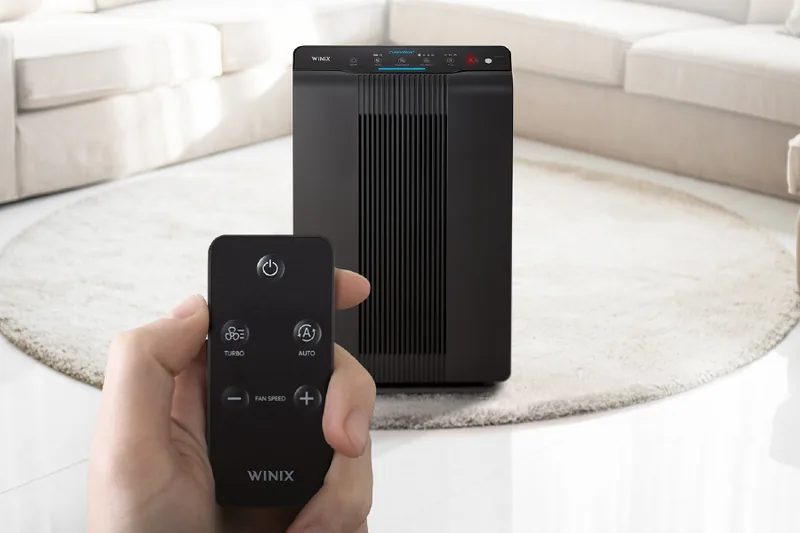
The Winix 5510 demonstrates how ionization should be implemented: as a supplementary feature alongside True HEPA and activated carbon filtration. The PlasmaWave technology generates hydroxyls that break down odor molecules and some VOCs at the molecular level, adding a layer of treatment that HEPA and carbon cannot provide.
Critically, PlasmaWave is CARB-certified with ozone emissions well below safety thresholds. And it can be disabled with a single button press — important for bird owners or anyone who prefers to avoid any ionization.
With a CADR of 253 CFM, the Winix delivers strong HEPA performance as its primary cleaning method. The PlasmaWave is a bonus, not a crutch. The 5510 also adds WiFi app control and a built-in air quality monitor.
Why it represents the best of both technologies:
- True HEPA does the heavy lifting for particle removal
- PlasmaWave adds supplementary odor and VOC treatment
- Ionizer can be fully disabled when not wanted
- CARB-certified for ozone safety
- Washable carbon filter reduces long-term cost
- Strong CADR performance regardless of ionizer status
What We Like
- +WiFi app control and air quality monitor
- +PlasmaWave technology
- +Strong 253 CFM CADR for large rooms
- +Washable carbon pre-filter
- +Smart auto mode
Could Be Better
- −PlasmaWave produces trace ozone
- −Louder on max at 65.7 dB
Best Pure HEPA (No Ionizer): Coway Airmega AP-1512HH
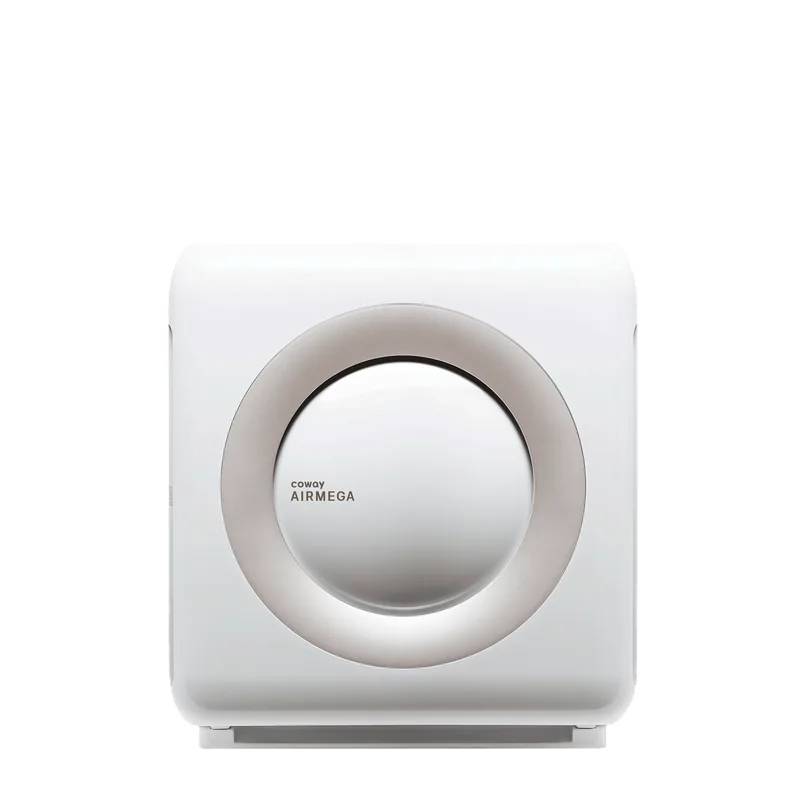
If you want zero ionization and zero ozone risk, the Coway Mighty is the cleanest HEPA solution at this price point. Its four-stage system — pre-filter, deodorization carbon filter, True HEPA, and air quality indicator — delivers outstanding particle removal without any electrical discharge technology.
The Coway does include an ionizer button, but it can be left off permanently, making it a pure mechanical filtration system. Many reviewers and testing organizations (including Wirecutter) recommend running it with the ionizer disabled.
CADR of 233/246/240 delivers rapid air turnover. The air quality sensor provides real-time feedback without generating any ozone. At roughly $40/year in filter costs, it is the most economical True HEPA purifier to operate long-term.
What We Like
- +Exceptional value for money
- +Eco mode saves energy
- +Affordable replacement filters (~$40/yr)
- +Compact design fits anywhere
Could Be Better
- −Bright indicator light cannot be turned off
- −No app control or smart features
Best Budget Pure HEPA: Levoit Core 300
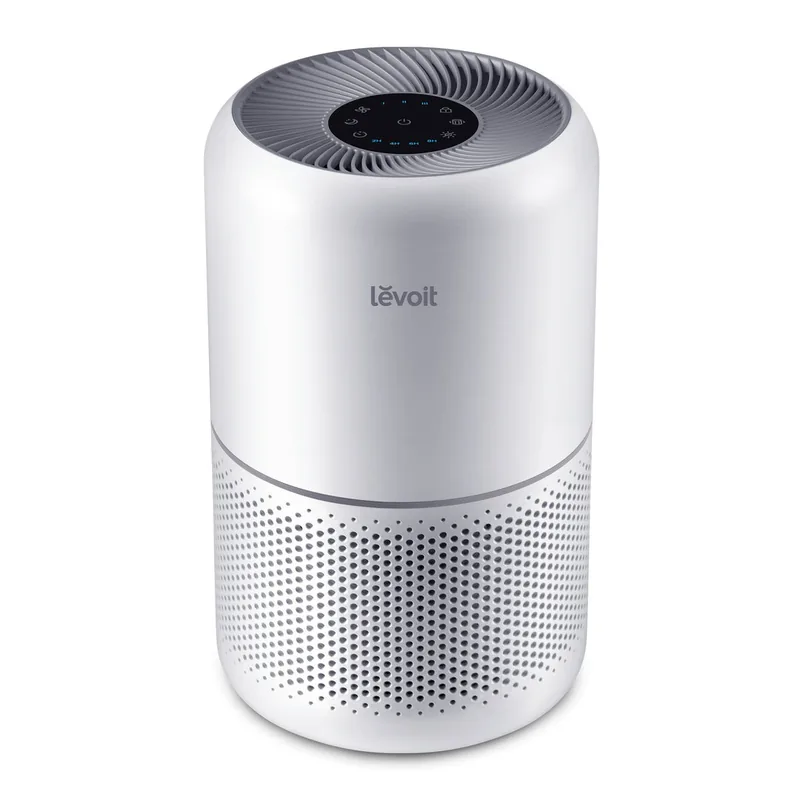
Levoit is explicitly anti-ionizer. The Core 300 uses no ionization technology of any kind — the company markets this as a feature, not a limitation. For health-conscious buyers who want zero ozone exposure, this is the most affordable True HEPA option that performs well.
The H13 HEPA filter captures 99.95% of particles at 0.3 microns. At 24 dB on its lowest setting, it matches the silence advantage that ionizers claim, while actually removing particles from the air rather than relocating them.
CADR of 187 handles rooms up to 219 square feet — ideal for bedrooms, offices, and small living spaces. Replacement filters cost approximately $35/year, making it the cheapest to operate on this list.
What We Like
- +Under $100 price point
- +Whisper-quiet at lowest setting
- +Compact cylinder design
- +Multiple filter options available
Could Be Better
- −Small room coverage only
- −No auto mode or air quality sensor
- −No smart features
Our Recommendation
For the vast majority of people, HEPA filtration is the clear winner. It removes particles from your air permanently, has standardized and verifiable performance ratings, produces zero ozone, and has decades of clinical research supporting its health benefits.
If you want the best of both worlds, the Winix 5510 combines True HEPA with a well-implemented, CARB-certified ionizer that adds value without meaningful safety risk. You can disable the ionizer at any time.
If you prefer zero ionization, the Coway Airmega AP-1512HH (with ionizer left off) or the Levoit Core 300 are excellent pure HEPA options at different price points.
Avoid standalone ionizers as your primary air cleaning device. They do not remove particles from your room, they may produce ozone, and their cleaning performance is unverifiable by standard testing methods. If an ionizer sounds appealing because it is quiet and has no filter costs, remember: you get what you pay for, and in this case you are paying for particle relocation, not particle removal.
This guide was researched and written by the AirQualityNest editorial team. We update our content regularly to reflect the latest products, pricing, and research.
Frequently Asked Questions
Are ionic air purifiers safe?+
Most modern ionic air purifiers from reputable brands are CARB-certified and produce ozone below safety thresholds (50 ppb). However, some cheaper models and older units can produce ozone levels that irritate the lungs, especially during prolonged use in small, poorly ventilated rooms. People with asthma, respiratory conditions, or sensitivities should avoid ionizers or choose CARB-certified models only. HEPA filters produce zero ozone and have no safety concerns.
Do ionic air purifiers produce ozone?+
Many do, yes. Ionization creates electrical discharge that can convert O2 molecules into O3 (ozone). The amount varies by technology and manufacturer. Technologies like Winix PlasmaWave and Sharp Plasmacluster are designed to minimize ozone production (under 5 ppb). However, a 2021 California study found that 30% of tested ionizer models exceeded recommended ozone levels. Always check for CARB certification before buying any air purifier with ionization technology.
Which is better, HEPA or ionizer?+
HEPA is better for actual air cleaning by a wide margin. HEPA filters physically trap 99.97% of particles and permanently remove them from your air. Ionizers charge particles so they settle on surfaces — but those particles can re-enter the air when disturbed. HEPA has standardized performance testing (CADR ratings), decades of clinical research, and zero safety concerns. Ionizers have variable performance, no standardized testing, and potential ozone risks. The only advantages ionizers offer are silence and no filter replacement cost.
Do ionizers really clean the air?+
Ionizers reduce airborne particle counts, but they do not truly clean the air in the way HEPA filters do. They charge particles so they stick to walls, furniture, floors, and bedding. These particles remain in your room and can become airborne again when disturbed by walking, sitting, cleaning, or airflow from HVAC systems. Studies show 30-60% of ionizer-settled particles re-suspend during normal household activity. For genuine particle removal, HEPA filtration is far more effective.
Related Reading
What Is a HEPA Filter?
Deep dive into how HEPA filters work and why the 0.3 micron standard matters
Do Air Purifiers Really Work?
The peer-reviewed science behind air purifier health benefits
Best Air Purifiers for Allergies
Our top-rated HEPA purifiers for allergy relief
Best Air Purifiers for Smoke
Why HEPA outperforms every other technology for smoke particle removal
Best Air Purifiers for Asthma
Ozone-free HEPA purifiers safe for asthma sufferers
Continue Reading
Best Air Purifiers for Open Floor Plans in 2026: High-CADR Models That Cover It All
The best air purifiers for open floor plans ranked by CADR, coverage area, and noise. High-performance HEPA purifiers that handle 500-1,500+ sq. ft. open spaces.
Best Smart Humidifiers in 2026 (Wi-Fi, App Control & Auto Humidity)
The best smart humidifiers with Wi-Fi, app control, and auto humidity adjustment. Top picks for Alexa, Google Home, and smart home integration.
The 5 Best Portable Air Quality Monitors in 2026
Monitor your air quality on the go. We tested the best portable and compact air quality monitors for accuracy, battery life, and sensor range.