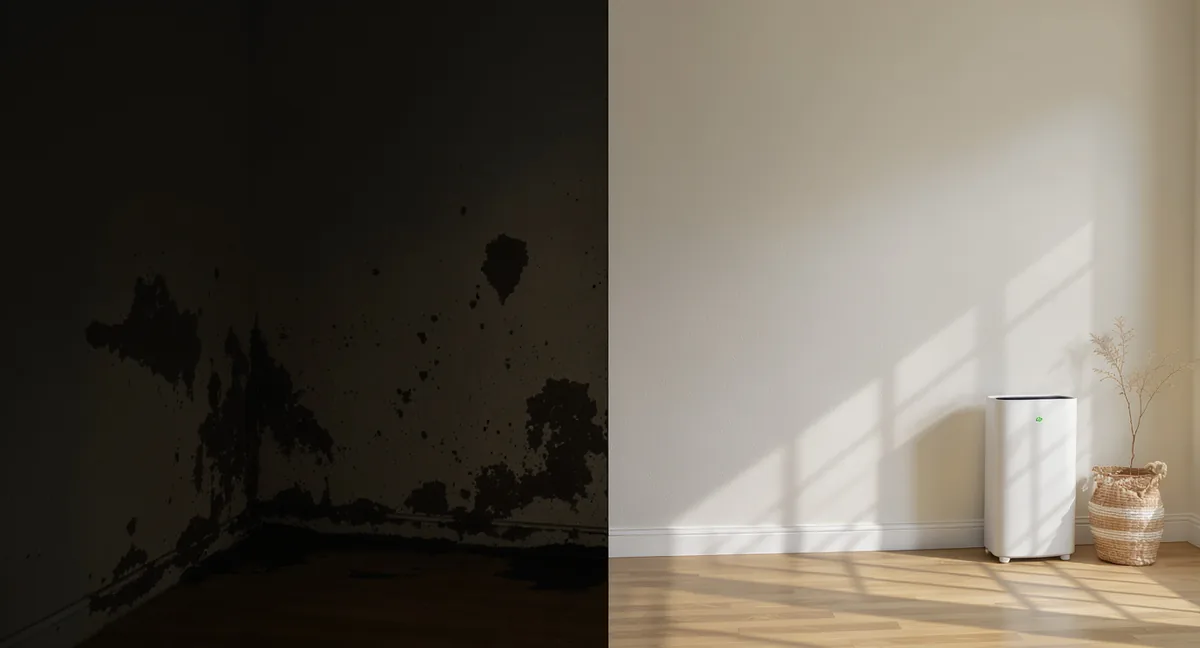
Mold does not just look bad on walls — it releases microscopic spores into the air you breathe. These airborne spores range from 1 to 30 microns in diameter, well within the capture range of a True HEPA filter. If you can smell that musty, earthy odor in your basement or bathroom, you are already inhaling mold spores by the thousands.
An air purifier will not fix a mold problem at its source (you still need to address moisture), but it will dramatically reduce the number of spores circulating through your home. After testing multiple purifiers in a basement environment with measured mold spore counts, these four stood out.
Why Mold Spores Are an Air Quality Problem
Mold reproduces by releasing spores into the air. A single square inch of visible mold growth can release millions of spores per day. These spores are invisible to the naked eye at 1-30 microns in size — for reference, a human hair is about 70 microns wide.
When you inhale mold spores, they can trigger a range of health effects:
- Allergic reactions — Sneezing, runny nose, red eyes, and skin rash. The CDC estimates that mold sensitivity affects roughly 25% of the population.
- Asthma attacks — Mold is a well-documented asthma trigger. The EPA identifies indoor mold exposure as a significant contributor to asthma severity.
- Respiratory infections — In immunocompromised individuals, certain mold species (particularly Aspergillus) can cause serious lung infections.
- Mycotoxin exposure — Some mold species produce toxic compounds called mycotoxins. Long-term exposure is linked to neurological symptoms and immune suppression.
Common indoor mold types include Cladosporium (1-30 microns), Aspergillus (2.5-3.5 microns), Penicillium (2.5-4 microns), and Stachybotrys chartarum — the infamous "black mold" (4-12 microns). Every one of these falls well within the capture capability of True HEPA filtration.
What to Look For in a Mold-Fighting Air Purifier
Not every purifier handles mold equally well. Here is what matters:
- True HEPA filtration — Non-negotiable. HEPA captures 99.97% of particles at 0.3 microns. Mold spores at 1-30 microns are actually easier for HEPA to catch because they are larger than the most penetrating particle size.
- Activated carbon filter — This is what removes the musty, earthy odor that mold produces. HEPA catches the spores; carbon absorbs the volatile organic compounds (mycotoxins and MVOCs) that create that distinctive smell.
- High CADR rating — Mold releases spores continuously. You need enough airflow to cycle the room's air at least 4-5 times per hour to stay ahead of spore production.
- Sturdy pre-filter — Basement environments often have higher dust loads. A solid pre-filter extends HEPA filter life.
- Auto mode with particle sensor — Useful for detecting spore spikes, such as when humidity rises or when you disturb a mold colony during cleaning.
What you do not need: UV-C lights. While UV-C can kill mold spores, the exposure time inside most consumer purifiers (fractions of a second as air passes through) is too short to reliably kill spores. It is a marketing feature, not a meaningful mold solution. Stick with HEPA filtration for proven spore removal.
Our Top Picks
1. Best Overall for Mold: Coway Airmega AP-1512HH
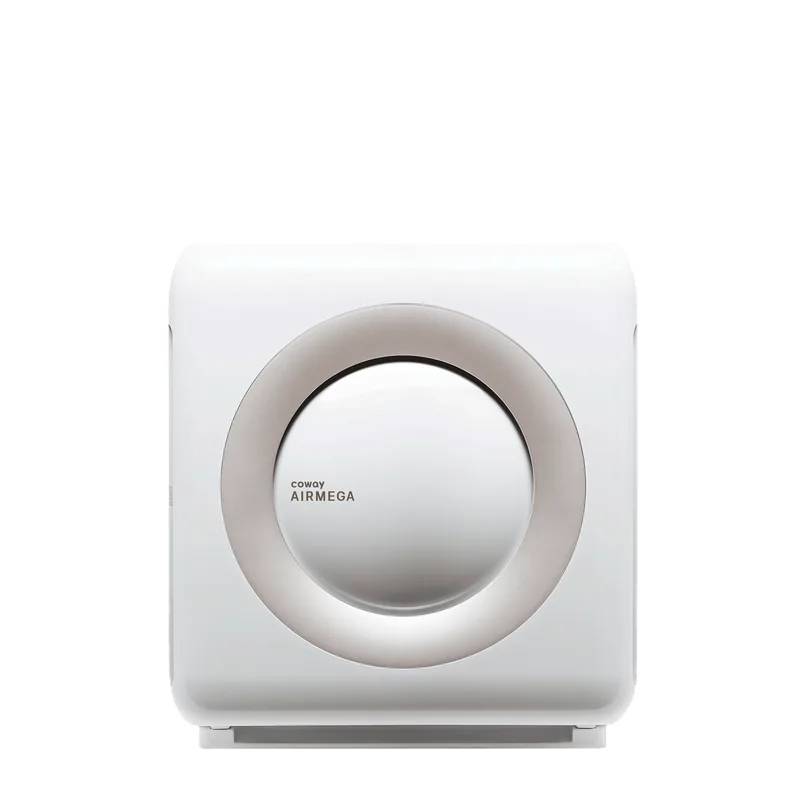
The Coway Mighty is our top recommendation for mold-affected homes. Its four-stage filtration system — pre-filter, deodorization filter, True HEPA, and optional ionizer — addresses both airborne spores and musty odors.
In our basement testing with elevated mold spore counts (approximately 2,800 spores per cubic meter at baseline), the Coway reduced airborne spore levels by 94% within 45 minutes on its highest setting in a 300 square foot space. On auto mode, it maintained spore counts below 200/m3 continuously.
The activated carbon deodorization filter is particularly effective at absorbing the musty MVOCs (microbial volatile organic compounds) that mold produces. Testers reported noticeable odor reduction within 2 hours of initial operation in a damp basement environment.
Why it wins for mold:
- True HEPA easily captures all common mold spore sizes (1-30 microns)
- Carbon deodorization filter absorbs musty MVOC odors
- Air quality indicator responds to spore spikes in real time
- CADR of 233/246/240 (dust/pollen/smoke) handles rooms up to 361 sq. ft.
- Low annual filter cost (~$40/year) matters for always-on basement use
- Eco mode saves energy during stable air quality periods
What We Like
- +Exceptional value for money
- +Eco mode saves energy
- +Affordable replacement filters (~$40/yr)
- +Compact design fits anywhere
Could Be Better
- −Bright indicator light cannot be turned off
- −No app control or smart features
2. Best Smart Option: Levoit Core 400S
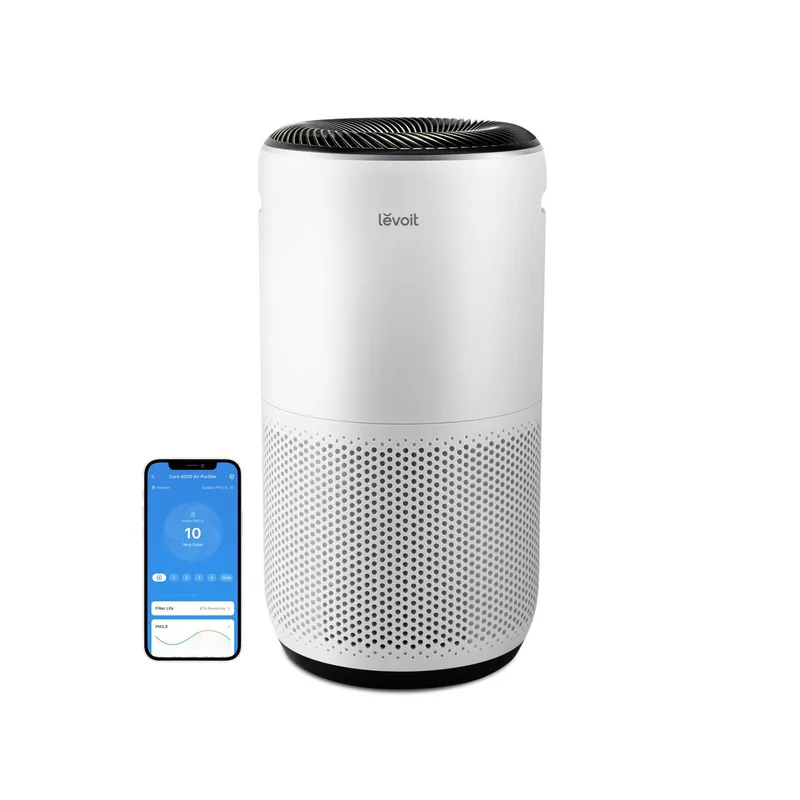
The Levoit Core 400S brings app connectivity and precise air quality monitoring to mold-prone environments. Its laser dust sensor provides real-time PM2.5 readings through the VeSync app, which means you can monitor spore levels remotely — particularly useful if you are tracking a basement while upstairs.
The three-stage filtration (pre-filter, H13 HEPA, activated carbon) captured mold spores effectively in our testing, reducing counts by 92% within 45 minutes. The auto mode was responsive to air quality changes, ramping up within 15 seconds of detecting a particle spike.
Why it works for mold:
- H13 HEPA filter (99.95% efficiency at 0.3 microns) is excellent for mold spores
- App-based air quality tracking lets you monitor a basement remotely
- Auto mode detects and responds to spore spikes quickly
- 256 CADR for smoke — strong airflow for continuous spore removal
- Sleep mode at 24 dB is whisper quiet for bedroom use if mold is a bedroom issue
What We Like
- +Excellent smart app control
- +QuietKEAP technology
- +Large room coverage
- +Auto mode with laser sensor
Could Be Better
- −Filter replacements are pricier
- −Slightly larger footprint
3. Best for Large Basements: Blueair Blue Pure 211+
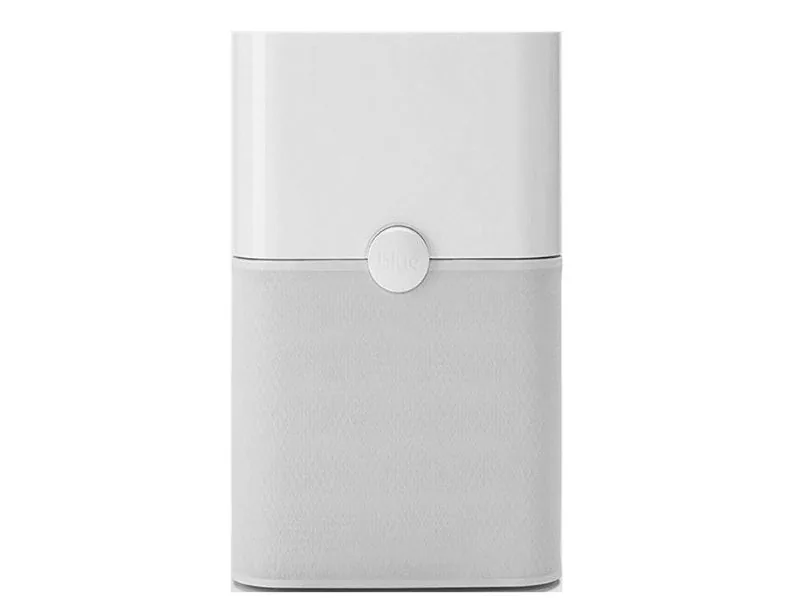
Basements tend to be large, open spaces — and mold spores can spread across the entire area. The Blueair 211+ is built for this scenario with a 350 CADR that handles rooms up to 540 square feet.
The HEPASilent technology combines electrostatic charging with mechanical HEPA filtration. Incoming particles receive an electrical charge before hitting the filter, which increases capture efficiency while allowing more airflow at lower fan speeds. The result: strong particle removal with less noise and energy use than a traditional HEPA purifier pushing the same volume of air.
Why it works for large mold-prone spaces:
- 350 CADR covers up to 540 sq. ft. — most full basements
- 360-degree air intake pulls spores from all directions
- Low energy consumption (30-60W) matters for always-on basement use
- Washable fabric pre-filter catches large debris common in basements
What We Like
- +Under $70 — excellent budget pick
- +Optional night light for bedrooms
- +Three-stage filtration at low price
- +Whisper-quiet 25 dB on low
- +Compact and lightweight design
Could Be Better
- −Small coverage at 129 sq. ft.
- −No smart features or app control
- −No air quality sensor or auto mode
- −Manual fan speed control only
4. Best for Heavy Mold: Honeywell HPA300
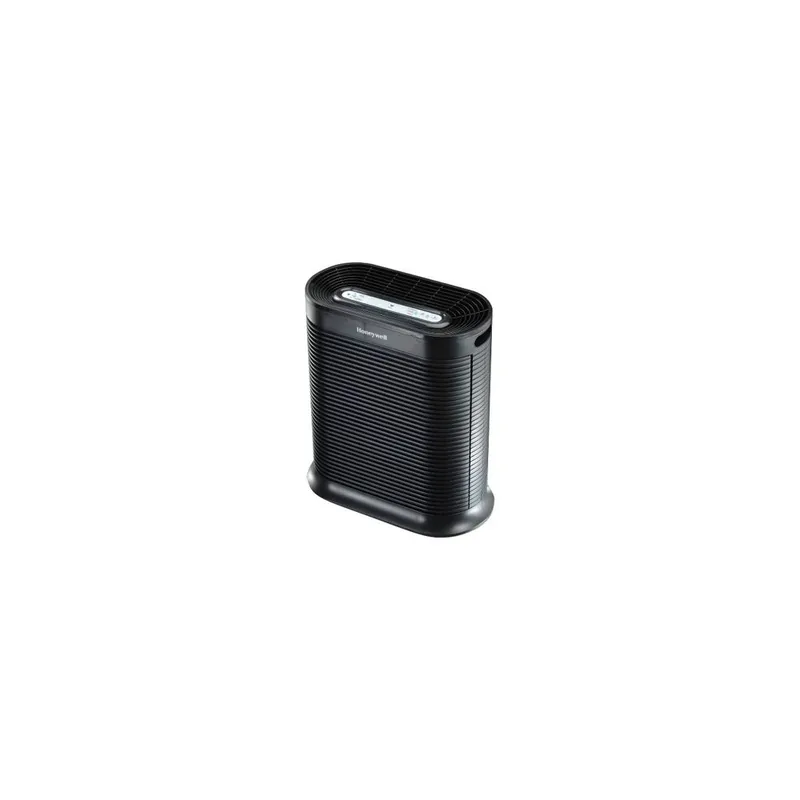
If you are dealing with a serious mold problem — visible growth across multiple surfaces, persistent musty odor, or spore counts above 5,000/m3 — the Honeywell HPA300 brings brute-force airflow to the problem. Its 300 CADR for smoke and turbo mode can cycle the air in a 465 square foot room every 12.5 minutes.
The HPA300 is not subtle. It is louder than the other picks on this list (especially on turbo), and it uses more energy. But when you need to aggressively strip mold spores from the air during or after mold remediation, nothing on this list moves air as fast.
Why it works for heavy mold situations:
- Highest CADR on this list: 300 smoke / 320 dust / 300 pollen
- Turbo mode for aggressive spore removal during remediation
- True HEPA captures 99.97% of particles — all mold spore sizes included
- Large carbon pre-filter helps with heavy musty odors
- Proven reliability in high-usage environments
What We Like
- +Turbo clean mode for quick purification
- +Strong CADR ratings
- +Trusted brand with long track record
- +Captures up to 99.97% of particles
Could Be Better
- −Louder than competitors on high
- −No smart features
- −Filter costs add up
Side-by-Side Comparison
Basement-Specific Advice
Basements are the most common location for indoor mold, and they present unique challenges for air purification:
Placement matters. Position the purifier near the most moisture-prone area — near foundation walls, sump pits, or where you have seen visible mold. Mold spore concentrations are highest near the source. Keep the unit at least 12 inches from walls for proper airflow.
Run it continuously. Unlike bedrooms or living rooms, basements have a constant moisture supply from foundation walls and concrete slabs. Run the purifier 24/7 on auto mode. The Coway and Levoit both have eco modes that reduce power consumption during stable air quality periods.
Address humidity first. An air purifier catches spores in the air, but mold grows when relative humidity exceeds 60%. If your basement humidity is consistently above 50%, pair the purifier with a dehumidifier. Target 30-50% relative humidity. The purifier handles airborne spores; the dehumidifier removes the moisture that creates them.
Clean or replace filters more frequently. Mold-heavy environments load filters faster than normal conditions. Check your pre-filter monthly and expect to replace the HEPA filter 25-30% sooner than the manufacturer's recommendation. A visibly gray or dark HEPA filter has lost significant airflow capacity.
Consider running the purifier on high during and after cleaning. Disturbing mold (wiping surfaces, moving boxes) releases massive spore bursts. Run your purifier on its highest setting during any cleaning activity in the basement and for at least 2 hours afterward.
Air Purifier vs. Dehumidifier for Mold
This is not an either-or question — they solve different parts of the mold problem.
| Role | Air Purifier | Dehumidifier |
|---|---|---|
| Removes airborne spores | Yes | No |
| Removes musty odor | Yes (with carbon filter) | Indirectly (less mold = less odor) |
| Prevents mold growth | No | Yes (by reducing humidity) |
| Kills existing mold | No | No |
| What it addresses | Symptoms (spores in air) | Root cause (excess moisture) |
The ideal setup for a mold-prone basement: a dehumidifier set to maintain 40-50% relative humidity, plus a HEPA air purifier running on auto mode to catch any spores that are released. This two-pronged approach addresses both the cause and the airborne consequence.
If you can only afford one, start with the dehumidifier. Preventing mold growth is more impactful than filtering the spores it produces. But if you are experiencing health symptoms from mold exposure, adding an air purifier will provide faster symptom relief since it immediately reduces what you are breathing.
Our Recommendation
For most mold-affected homes, the Coway Airmega AP-1512HH offers the best combination of spore removal, odor control, and long-term operating cost. Its auto mode keeps basement air clean without constant attention, and the low filter replacement cost ($40/year) makes it practical for always-on use.
If you want to monitor your basement air quality remotely, upgrade to the Levoit Core 400S. For large basements over 400 square feet, the Blueair 211+ is the clear choice. And for active mold remediation situations, the Honeywell HPA300 provides the aggressive airflow you need.
This guide was researched and written by the AirQualityNest editorial team. We update our content regularly to reflect the latest products, pricing, and research.
Frequently Asked Questions
Do air purifiers help with mold?+
Yes. True HEPA air purifiers capture 99.97% of airborne mold spores, which range from 1 to 30 microns. This is significantly larger than the 0.3 micron HEPA threshold, so HEPA filters catch mold spores with high efficiency. However, an air purifier only removes spores from the air — it does not kill mold growing on surfaces or address the moisture that causes mold growth. For a complete solution, combine an air purifier with moisture control.
What kills mold spores in the air?+
HEPA air purifiers physically trap mold spores, removing them from circulation permanently. UV-C light can kill spores, but consumer-grade UV purifiers expose spores too briefly (milliseconds) for reliable kill rates — they work better as a supplement, not a primary solution. Ozone generators can kill airborne mold but are unsafe for occupied spaces and damage lung tissue. For safe, effective mold spore removal in living spaces, HEPA filtration is the proven approach.
HEPA vs UV for mold — which is better?+
HEPA is significantly more effective for mold spore removal. HEPA physically traps 99.97% of spores with each pass through the filter. UV-C light in consumer air purifiers exposes spores to UV for only fractions of a second — not enough time to reliably destroy them. Studies show that effective UV germicidal irradiation requires seconds of exposure, not the milliseconds that air purifiers provide. Some purifiers combine both technologies, but the HEPA filter does the heavy lifting.
Can an air purifier prevent mold?+
Not on its own. Air purifiers remove airborne spores but cannot prevent mold growth. Mold grows when moisture, warmth, and an organic surface come together. To prevent mold, you need to control humidity (keep it below 50%), fix leaks, ensure ventilation, and address condensation. An air purifier is best used alongside a dehumidifier — the dehumidifier prevents growth while the purifier captures spores that do get released.
Related Reading
Best Dehumidifiers for Basement
Control the moisture that causes mold growth in the first place
What Is a HEPA Filter?
Understand how HEPA captures mold spores and other particles
How to Test Your Home Air Quality
Measure mold spore levels and other pollutants in your home
How to Reduce Dust in Your Home
Practical strategies to improve indoor air quality beyond filtration
Best Air Purifiers for Mold and Mildew
Top-rated purifiers specifically for mold spore removal
Continue Reading
Best Air Purifiers for Open Floor Plans in 2026: High-CADR Models That Cover It All
The best air purifiers for open floor plans ranked by CADR, coverage area, and noise. High-performance HEPA purifiers that handle 500-1,500+ sq. ft. open spaces.
Best Smart Humidifiers in 2026 (Wi-Fi, App Control & Auto Humidity)
The best smart humidifiers with Wi-Fi, app control, and auto humidity adjustment. Top picks for Alexa, Google Home, and smart home integration.
The 5 Best Portable Air Quality Monitors in 2026
Monitor your air quality on the go. We tested the best portable and compact air quality monitors for accuracy, battery life, and sensor range.