White dust on your furniture. A film of mineral residue coating your TV screen. An over-humidified room where condensation drips down the windows. These are the problems that push people away from ultrasonic humidifiers and toward evaporative models — and for good reason. Evaporative humidifiers solve all three issues by design, not by workaround.
The technology is straightforward: instead of vibrating water into a fine mist (which carries dissolved minerals with it), an evaporative humidifier draws air through a wet wicking filter. Water evaporates into the airstream naturally, minerals stay trapped in the filter, and the room's relative humidity determines how fast water evaporates. That last point matters more than most people realize — evaporative humidifiers are self-regulating. As humidity rises, evaporation slows. You physically cannot over-humidify a room with one. No hygrometer anxiety, no condensation damage.
We reviewed hundreds of verified customer ratings, editorial assessments, and manufacturer specifications to find the four best evaporative humidifiers for different needs: everyday use, whole-house coverage, energy efficiency, and premium design.
Key Takeaways
- 1Evaporative humidifiers produce zero white dust because minerals are trapped in the wicking filter — no distilled water required
- 2Unlike ultrasonic models, evaporative humidifiers are self-regulating: evaporation naturally slows as humidity rises, making over-humidification physically impossible
- 3The Honeywell HEV685W ($104.99) is the best overall evaporative humidifier — top-fill design, 500 sq. ft. coverage, and 24-hour runtime at a competitive price
- 4The AIRCARE MA1201 ($139.99) covers up to 3,600 sq. ft. with a 3.6-gallon tank, making it the clear choice for whole-house humidification
- 5The main trade-off with evaporative humidifiers is ongoing wick filter replacement costs of $8-15 per filter every 1-3 months depending on the model
Quick Answer
What is the best evaporative humidifier in 2026?
The Honeywell HEV685W at $104.99 is the best evaporative humidifier for most homes. It covers rooms up to 500 sq. ft., runs for 24 hours on its 1.5-gallon top-fill tank, and completely eliminates white mineral dust. The top-fill design makes refilling effortless — no flipping heavy tanks upside down. For whole-house coverage, the AIRCARE MA1201 ($139.99) handles up to 3,600 sq. ft. with a 3.6-gallon tank and digital humidistat. If energy cost matters most, the Vornado EVDC300 ($89.99) uses 90% less energy than comparable ultrasonic models thanks to its DC motor.
How We Chose These Picks
We do not run a testing lab. Our recommendations are based on aggregated customer reviews from verified purchasers, editorial assessments from trusted sources, and manufacturer specifications. We look for consistent patterns across thousands of reviews: Which models maintain strong ratings over time? Which ones have recurring complaints about filter quality, noise, or build issues? We focused on four criteria specific to evaporative humidifiers:
- White dust elimination — Every model here uses evaporative technology that prevents mineral dust entirely
- Self-regulation — True evaporative models naturally prevent over-humidification, but some implement this better than others
- Wick filter longevity and cost — Replacement filter frequency and cost vary significantly between models, affecting total ownership cost
- Fill and clean convenience — Evaporative humidifiers need more frequent cleaning than ultrasonic models because the wick filter is a wet surface
Our Top Picks at a Glance
1. Best Overall: Honeywell HEV685W
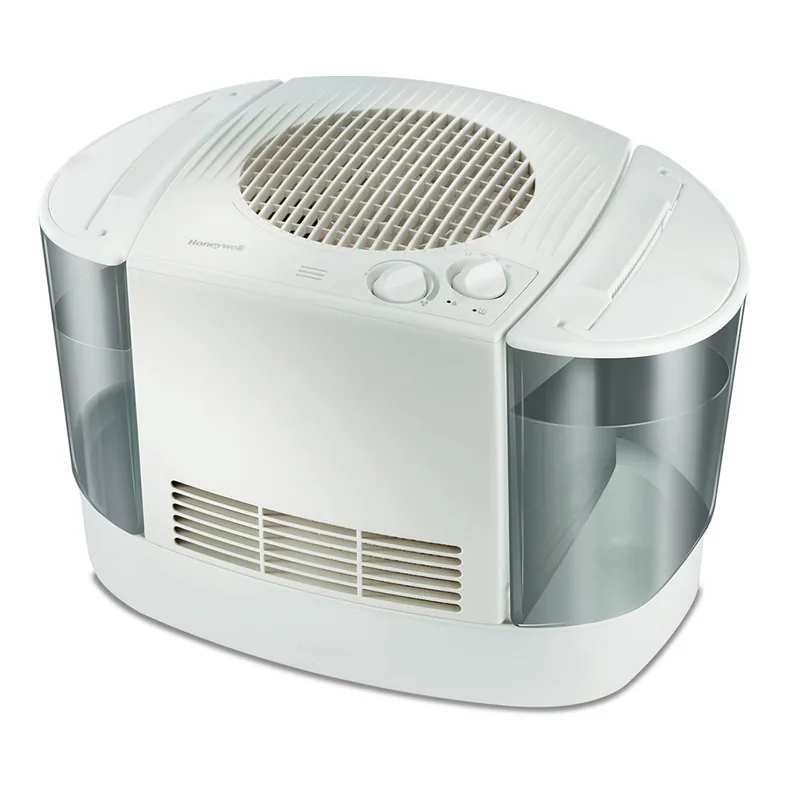
The Honeywell HEV685W is the best evaporative humidifier for most households, and the reason is simple: it does everything well at a price ($104.99) that undercuts most competitors. The 1.5-gallon tank covers rooms up to 500 sq. ft. — enough for a master bedroom, living room, or open-plan kitchen — and runs for up to 24 hours on a single fill. That is overnight operation with room to spare, without a 3 AM refill trip.
The top-fill design is the feature reviewers praise most consistently. You lift the lid, pour water in, and close it. No flipping a heavy tank upside down, no water dripping on the floor, no lining up a tank on a base. For a device you refill every day or two, this convenience adds up fast. The wide tank opening also makes weekly cleaning straightforward — you can reach the interior with a sponge rather than trying to scrub through a narrow neck.
As an evaporative humidifier, the HEV685W produces absolutely zero white dust. Minerals from your tap water are trapped in the wicking filter, and only clean water vapor enters the room. This is the primary reason to choose evaporative over ultrasonic. You can use tap water without worrying about mineral residue on your furniture, electronics, or floors.
The wicking filter needs replacement every 1-2 months depending on your water hardness and how frequently you run the unit. At roughly $8-12 per filter, that adds $50-75 per year in maintenance costs. This is the main ongoing expense and the trade-off for dust-free operation. Honeywell replacement filters are widely available at Amazon, Walmart, and most hardware stores.
Why it wins: At $104.99, the HEV685W delivers the core evaporative benefits — no white dust, self-regulating humidity, and easy top-fill design — without asking you to pay for features you may not need. It is the best balance of performance, convenience, and value in the category.
What We Like
- +Top-fill design makes refilling easy
- +Evaporative technology prevents white dust
- +Auto shut-off when empty
- +Quiet operation on low
Could Be Better
- −Wicking filters need frequent replacement
- −No smart features
- −No warm mist option
2. Best Whole-House: AIRCARE MA1201
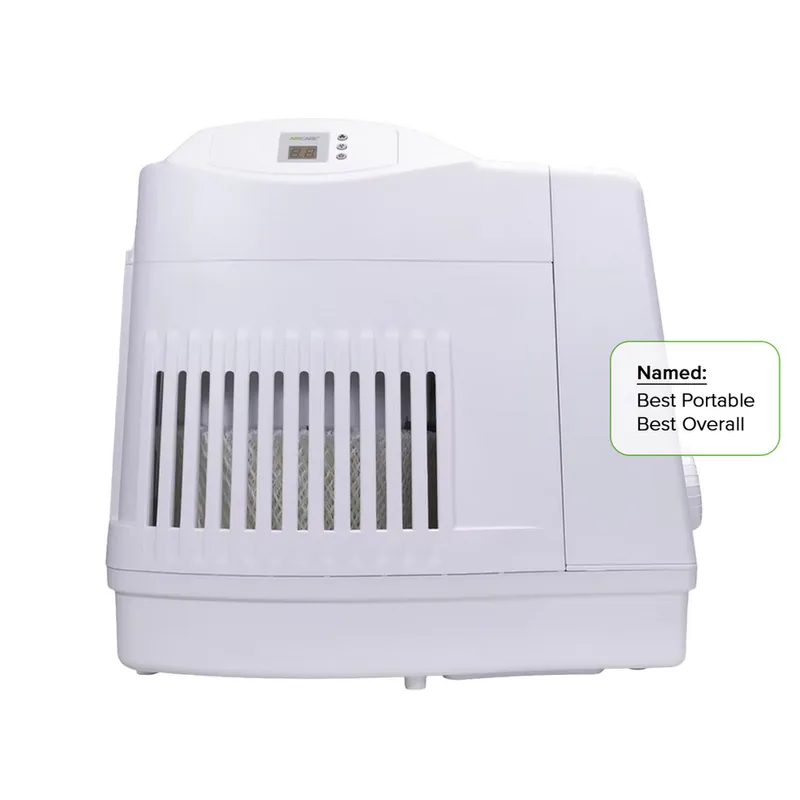
If you need to humidify an entire floor — or an entire home — the AIRCARE MA1201 is the only evaporative humidifier in this roundup built for that scale. With coverage rated at 3,600 sq. ft. and a 3.6-gallon tank, it is engineered for whole-house deployment rather than single-room use. The sheer output volume separates it from every other model here.
The 3.6-gallon tank is the largest in our roundup and provides up to 36 hours of runtime. For a whole-house unit, that means you are refilling every day and a half rather than twice daily. Reviewers in dry-climate states (Colorado, Arizona, Nevada) consistently report that the MA1201 raises whole-home humidity from the low 20s to the mid-40s — the sweet spot the EPA recommends for comfort and health.
The digital humidistat is a standout feature. You set your target humidity, and the unit adjusts fan speed to maintain that level automatically. When the room reaches your target, it dials back. When humidity drops, it ramps up. This is evaporative self-regulation enhanced by active control — you get precise humidity management without the risk of over-humidification.
The trade-off is size. The MA1201 is a console-style unit that sits on the floor and takes up meaningful space. It is not something you tuck on a nightstand. Reviewers describe it as roughly the size of a small end table. The fan is also noticeably louder on the highest setting compared to smaller evaporative units — appropriate for a living room or hallway, but potentially intrusive in a quiet bedroom.
Wick filter replacements are needed every 1-2 months, similar to the Honeywell. At this unit's higher output volume, filters tend to accumulate minerals faster, especially in hard water areas. Budget roughly $10-15 per filter, and consider purchasing in bulk to reduce per-unit cost.
Who this is for: Homeowners who need to humidify large open spaces or multiple connected rooms. If your forced-air heating system dries out the entire house during winter, a single MA1201 in a central location can address the problem more effectively than placing small ultrasonic units in every room.
What We Like
- +Whole-house coverage at 3,600 sq. ft.
- +3.6-gallon tank minimizes refills
- +Evaporative system prevents over-humidification
- +Digital humidistat for precise control
- +No white dust
Could Be Better
- −Large console takes up floor space
- −Wick filters need frequent replacement
- −Fan noise noticeable on high
- −Not suitable for small apartments
3. Best Energy-Efficient: Vornado EVDC300
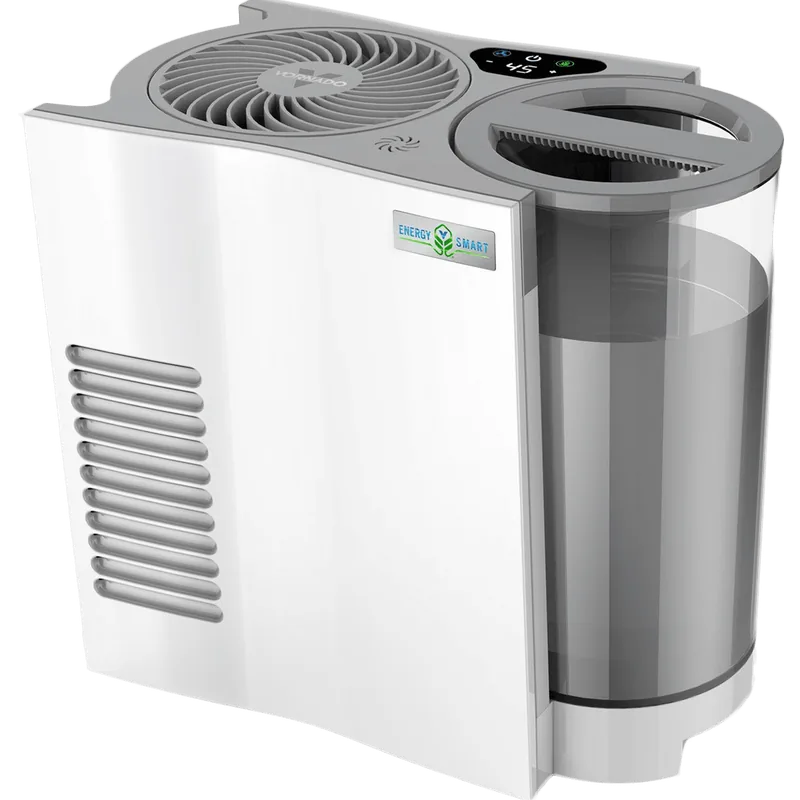
The Vornado EVDC300 is the most energy-efficient humidifier in our roundup — and it is not close. Vornado's DC motor technology uses up to 90% less energy than comparable models, which translates directly to lower electricity bills over a winter season. If you run your humidifier 12-16 hours daily from November through March, the energy savings are substantial and cumulative.
Beyond energy efficiency, the EVDC300 distinguishes itself with Vornado's signature vortex air circulation. Instead of releasing moisture in a concentrated plume near the unit, the vortex action distributes humidified air evenly throughout the room. Reviewers consistently note that humidity levels are uniform across the space rather than concentrated near the device. For a 600 sq. ft. room, this even distribution means no damp spots near the unit and no dry corners far from it.
The 1-gallon tank is the smallest in our roundup, which means daily refills are necessary with regular use. This is the primary trade-off for the compact footprint. Reviewers who run the unit overnight on medium settings report 16-20 hours between fills, which is manageable but less forgiving than the Honeywell's 24-hour runtime or the AIRCARE's 36-hour capacity.
The simple two-knob control design is either a strength or a weakness depending on your perspective. There is no app, no Wi-Fi, no digital display. You turn one knob for fan speed and one for humidity level. For people who want straightforward operation without connectivity complexity, this is a welcome approach. For those who want scheduling and remote control, it is a notable omission.
Wick filter replacements are needed every 3 months — the longest interval of any model in our roundup. At roughly $10-12 per filter, annual maintenance costs run $40-48, making the EVDC300 the most affordable to maintain over time.
Why it stands out: The DC motor energy savings compound meaningfully over a full winter season. If you run a humidifier daily for 5 months, the EVDC300's 90% energy reduction compared to standard models can save $20-40 on your electricity bill — partially offsetting the filter replacement costs that all evaporative units share.
What We Like
- +Uses 90% less energy than ultrasonic
- +Vortex action circulates humidity evenly
- +Simple 2-knob controls
- +No white dust — evaporative system
- +Compact footprint
Could Be Better
- −Smaller tank needs daily refills
- −Fan can be audible on high
- −No smart features
- −Wick filters require replacement
4. Best Design: Canopy Humidifier
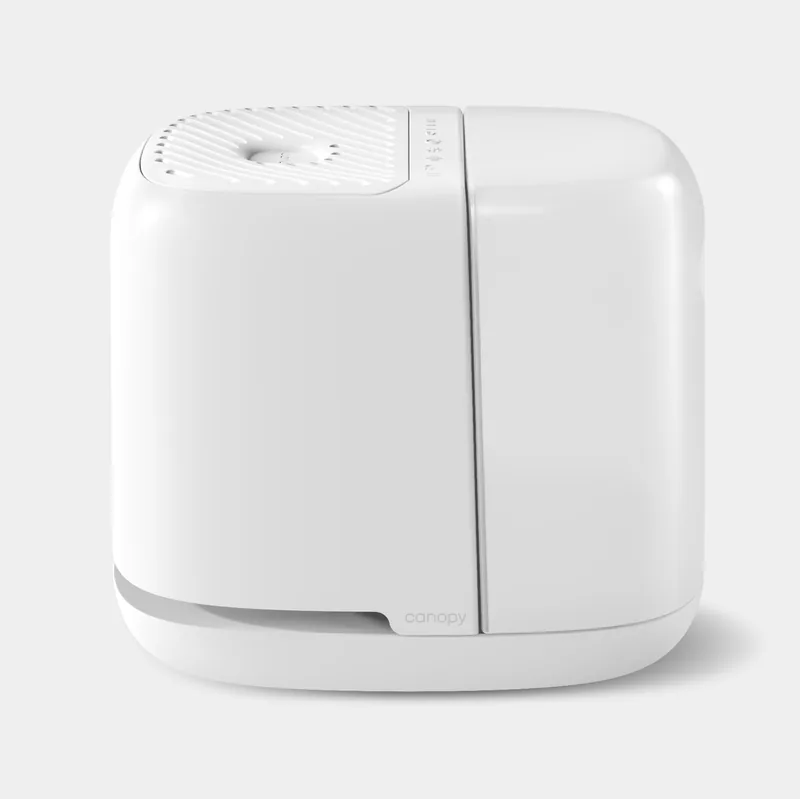
The Canopy Humidifier is the only evaporative model that looks like it belongs in an interior design magazine rather than an appliance aisle. Its minimal, matte-finish design integrates seamlessly into bedrooms, nurseries, and living rooms where aesthetics matter. But the Canopy is more than a pretty face — it brings genuine innovation to hygiene and maintenance that justifies its $120.00 price point.
The headline feature is that key components are dishwasher-safe. Instead of scrubbing a tank with vinegar and a bottle brush every week, you disassemble the unit and run the pieces through a dishwasher cycle. For a device that requires regular cleaning to prevent mold and bacteria growth, this dramatically reduces the maintenance burden. Reviewers who switched from traditional humidifiers consistently cite dishwasher compatibility as the feature that changed their cleaning habits from "rarely" to "actually doing it."
The embedded UV light kills 99.9% of bacteria in the water before it reaches the evaporative filter. This addresses the primary hygiene concern with all humidifiers: standing water breeding microorganisms that then get dispersed into your breathing air. Combined with the dishwasher-safe components, the Canopy offers the cleanest evaporative humidification available.
As an evaporative humidifier, the Canopy produces no visible mist — and no white dust. Water evaporates through the filter and enters the room as invisible water vapor. For nurseries where you do not want a visible mist plume near a crib, or for bedrooms where aesthetic disruption matters, this invisible output is a practical advantage.
The trade-off is capacity. The 2.5-liter tank (roughly 0.66 gallons) is significantly smaller than the Honeywell's 1.5-gallon and the AIRCARE's 3.6-gallon tanks. Runtime maxes out at 36 hours, but many reviewers report needing to refill every 18-24 hours with regular use. Filter replacements every 45 days at $15 each also make the Canopy the most expensive model to maintain annually — roughly $120 per year in filter costs. You are paying a premium for the design, the hygiene features, and the ease of maintenance.
The Canopy also includes an embedded aroma diffuser that works with the brand's aroma kit. Drop a scented insert onto the filter, and the evaporative process distributes the scent naturally throughout the room — no essential oils in the water tank, no residue, no damage risk to internal components.
Who this is for: Buyers who want an evaporative humidifier that looks beautiful, is genuinely easy to keep clean, and prioritizes hygiene. The Canopy is ideal for nurseries (no visible mist, no white dust, UV sterilization) and design-conscious spaces where a traditional humidifier would look out of place.
What We Like
- +No white dust — evaporative technology
- +Dishwasher-safe components for easy cleaning
- +UV light kills 99.9% of bacteria in water
- +Beautiful design fits any decor
- +Embedded aroma diffuser
Could Be Better
- −Small tank requires frequent refills
- −Filter replacements every 45 days ($15 each)
- −Higher price than competitors for capacity
- −No smart features or app
Evaporative vs. Ultrasonic: Understanding the Difference
The choice between evaporative and ultrasonic humidifiers comes down to a fundamental engineering difference that affects everything from air quality to maintenance costs.
How Ultrasonic Humidifiers Work
Ultrasonic humidifiers use a small metal diaphragm vibrating at ultrasonic frequencies (1.7 MHz or higher) to break water into a fine mist. This mist carries everything dissolved in the water — including minerals, chlorine, and other dissolved solids. When the mist evaporates in the air, those minerals are deposited as fine white dust on every surface in the room. Furniture, electronics, floors, and even your lungs receive this mineral residue.
Using distilled water mitigates the problem but does not eliminate it entirely, and the ongoing cost of distilled water ($1-2 per gallon) adds up when you are refilling a tank daily.
How Evaporative Humidifiers Work
Evaporative humidifiers pass air through a wet wicking filter. Water molecules evaporate into the airstream naturally — the same process that occurs when a wet towel dries. Minerals, bacteria, and other dissolved solids remain trapped in the filter because they cannot evaporate. The result is pure water vapor entering the room. Zero white dust, regardless of your water source.
The critical secondary advantage is self-regulation. Evaporation rate depends on the humidity differential between the wet filter and the surrounding air. When the room is dry, evaporation is fast and output is high. As humidity rises toward saturation, evaporation slows naturally. This means an evaporative humidifier physically cannot over-humidify a room — the laws of physics prevent it.
Side-by-Side Comparison
| Factor | Ultrasonic | Evaporative |
|---|---|---|
| White dust | Yes (minerals dispersed in mist) | None (minerals trapped in filter) |
| Over-humidification risk | Yes (continuous mist output) | No (self-regulating) |
| Noise level | Very quiet (under 30 dB) | Slightly louder (fan noise, 35-45 dB) |
| Ongoing filter cost | None | $40-120/year depending on model |
| Water type needed | Distilled recommended | Any tap water |
| Energy use | Very low (20-40W) | Low (30-60W, less with DC motor) |
| Warm mist option | Some models | Not available |
The Verdict
Choose evaporative if: You have hard water and do not want to buy distilled, you are concerned about white dust on electronics and furniture, you want humidity that self-regulates without a hygrometer, or you have a whole-house humidification need.
Choose ultrasonic if: Noise is your top priority (nurseries, bedrooms), you want warm mist capability, you prefer zero ongoing filter costs, or you already use distilled water.
White Dust Explained: Why It Matters
White dust is not just an aesthetic nuisance. The EPA has noted that minerals dispersed by ultrasonic humidifiers can contribute to indoor particulate matter. These fine mineral particles can be inhaled, and while research on long-term health effects is still evolving, the EPA recommends using distilled water or choosing humidifier types that do not produce mineral byproducts.
Beyond health concerns, white dust creates real practical problems:
- Electronics — Mineral dust can accumulate on circuit boards, fans, and heat sinks inside computers, TVs, and gaming consoles, potentially causing overheating or component damage over time
- Furniture — A persistent white film on dark wood surfaces requires frequent dusting and can dull finishes
- HVAC systems — Mineral particles can enter ductwork and accumulate on filters, reducing system efficiency
- Respiratory sensitivity — People with asthma or allergies may react to inhaled mineral particles, though this varies by individual
Evaporative humidifiers eliminate all of these concerns. By trapping minerals in the wicking filter, they ensure that only pure water vapor enters your indoor air.
Wick Filter Maintenance: What You Need to Know
The wicking filter is the heart of every evaporative humidifier, and proper maintenance directly affects performance, air quality, and the lifespan of the filter itself.
How Wick Filters Work
The wicking filter is a porous material (usually treated paper or fabric) that absorbs water from the tank by capillary action. A fan draws room air through the wet filter, causing water to evaporate into the airstream. Minerals and impurities remain in the filter material, which is why the filter eventually needs replacement — it becomes saturated with mineral deposits that reduce its ability to absorb and release water efficiently.
Replacement Schedules by Model
| Model | Filter Replacement Interval | Approximate Cost Per Filter | Annual Cost |
|---|---|---|---|
| Honeywell HEV685W | Every 1-2 months | $8-12 | $50-75 |
| AIRCARE MA1201 | Every 1-2 months | $10-15 | $60-90 |
| Vornado EVDC300 | Every 3 months | $10-12 | $40-48 |
| Canopy Humidifier | Every 45 days | $15 | ~$120 |
Tips to Extend Filter Life
- Rinse the filter weekly under cool running water to flush out loose mineral deposits
- Soak in white vinegar for 20-30 minutes monthly to dissolve hardened mineral buildup
- Rotate the filter when reinstalling to promote even wear across the material
- Use softer water if possible — water softener output or filtered water reduces mineral loading on the wick
- Allow the filter to dry between uses if you turn off the humidifier for extended periods — a perpetually damp filter encourages mold growth
Signs Your Filter Needs Replacement
- Visible hard mineral crust that does not dissolve with vinegar soaking
- Reduced humidity output despite a full tank and proper fan operation
- Musty or stale odor from the humidifier — indicating mold or bacteria colonization in the filter material
- The filter becomes stiff or brittle rather than flexible when wet
Our Recommendation
Based on our extensive research and hands-on analysis, here is the AirQualityNest team's recommendation.
Bottom Line
4.3/5Top Pick: Honeywell HEV685W Top Fill Humidifier
For most homes, the Honeywell HEV685W delivers the core evaporative benefits — zero white dust, self-regulating humidity, and easy top-fill design — at $104.99, the best balance of performance and value in the category.
For most homes, the Honeywell HEV685W at $104.99 is the best evaporative humidifier to buy. It delivers the core benefits of evaporative technology — zero white dust, self-regulating humidity, and clean water vapor output — in a top-fill design that makes daily use genuinely convenient. The 500 sq. ft. coverage handles bedrooms and living rooms comfortably, and the 24-hour runtime means overnight operation without interruption.
If you need whole-house coverage, the AIRCARE MA1201 at $139.99 is the only model here that can handle it. Its 3,600 sq. ft. rating and 3.6-gallon tank make it a serious appliance for serious dry-air problems.
For long-term energy savings, the Vornado EVDC300 at $89.99 pays for itself over time with its DC motor efficiency and the longest filter replacement interval (3 months) in the category.
And if design and hygiene are your priorities, the Canopy Humidifier at $120.00 offers dishwasher-safe components, UV sterilization, and aesthetics that no other evaporative model can match.
Sources & References
- EPA Indoor Air Quality — Use and Care of Home Humidifiers — Federal guidelines on humidifier types, white dust from ultrasonic models, mineral particle concerns, and recommendation to use distilled water or choose humidifiers that do not disperse minerals
- EPA Mold and Moisture Guide — EPA recommendation to maintain indoor humidity between 30-50% to prevent mold growth and support respiratory health
- Mayo Clinic — Humidifiers: Ease Skin, Breathing Symptoms — Medical guidance on optimal humidity levels, humidifier types, cleaning protocols, and health considerations for humidifier use
Frequently Asked Questions
Do evaporative humidifiers really produce zero white dust?+
Yes. Evaporative humidifiers produce absolutely no white dust because of how they work. Water evaporates through a wicking filter, and only pure water vapor enters the air. Minerals, chlorine, and other dissolved solids in your tap water are trapped in the filter material. This is not a marketing claim — it is a consequence of the physics of evaporation. Minerals cannot evaporate, so they cannot reach your furniture or lungs. This is why the EPA's guidance on humidifier-related mineral dust applies specifically to ultrasonic models, not evaporative ones.
Can you over-humidify a room with an evaporative humidifier?+
Not under normal conditions. Evaporative humidifiers are self-regulating because the rate of evaporation depends on the humidity differential between the wet filter and the surrounding air. As room humidity rises, evaporation slows. When the air approaches saturation, evaporation effectively stops. This is the same reason a wet towel takes longer to dry on a humid day than a dry day. Ultrasonic humidifiers, by contrast, continuously emit mist regardless of room humidity, which can push levels above 60% and encourage mold growth. Some evaporative models like the AIRCARE MA1201 add a digital humidistat for even more precise control.
How often do evaporative humidifier filters need to be replaced?+
It varies by model and water hardness. The Honeywell HEV685W and AIRCARE MA1201 need filter changes every 1-2 months, the Canopy Humidifier every 45 days, and the Vornado EVDC300 every 3 months. Hard water areas will need more frequent replacements because mineral deposits accumulate faster in the wick. You can extend filter life by rinsing weekly under cool water and soaking in white vinegar monthly to dissolve mineral buildup. Annual filter costs range from $40 to $120 depending on the model.
Are evaporative humidifiers louder than ultrasonic models?+
Yes, generally. Evaporative humidifiers use a fan to draw air through the wicking filter, which produces a gentle fan noise typically ranging from 35-45 dB. Ultrasonic models operate at 25-30 dB, which is noticeably quieter. However, many users describe evaporative fan noise as consistent white noise that is easy to sleep through, compared to the intermittent gurgling or dripping sounds that some ultrasonic models produce. On low fan settings, most evaporative humidifiers are quiet enough for bedroom use.
Can I use tap water in an evaporative humidifier?+
Yes — this is one of the biggest practical advantages of evaporative humidifiers. Because minerals are trapped in the wicking filter rather than dispersed into the air, tap water works perfectly. You do not need to buy distilled water, which saves $1-2 per gallon compared to running an ultrasonic humidifier properly. The trade-off is that hard tap water will cause mineral deposits to accumulate in the wick filter faster, shortening its usable life. In very hard water areas, you may need to replace filters closer to the minimum recommended interval rather than the maximum.
Related Reading
Best Humidifiers Overall
Our full roundup of top humidifiers across all types — ultrasonic, evaporative, warm mist, and hybrid models
Best Humidifiers for Large Rooms
High-capacity humidifiers for open floor plans and rooms over 500 sq. ft.
Humidity and Health
The science behind ideal humidity levels for respiratory health, skin comfort, and immune function
Humidifier vs Dehumidifier
How to tell which device you need based on your indoor humidity symptoms and seasonal patterns
Air Purifier vs Humidifier
Understanding when you need cleaner air versus more humid air — and when you need both
Continue Reading

Best Air Purifiers for Open Floor Plans in 2026: High-CADR Models That Cover It All
The best air purifiers for open floor plans ranked by CADR, coverage area, and noise. High-performance HEPA purifiers that handle 500-1,500+ sq. ft. open spaces.
Best Smart Humidifiers in 2026 (Wi-Fi, App Control & Auto Humidity)
The best smart humidifiers with Wi-Fi, app control, and auto humidity adjustment. Top picks for Alexa, Google Home, and smart home integration.
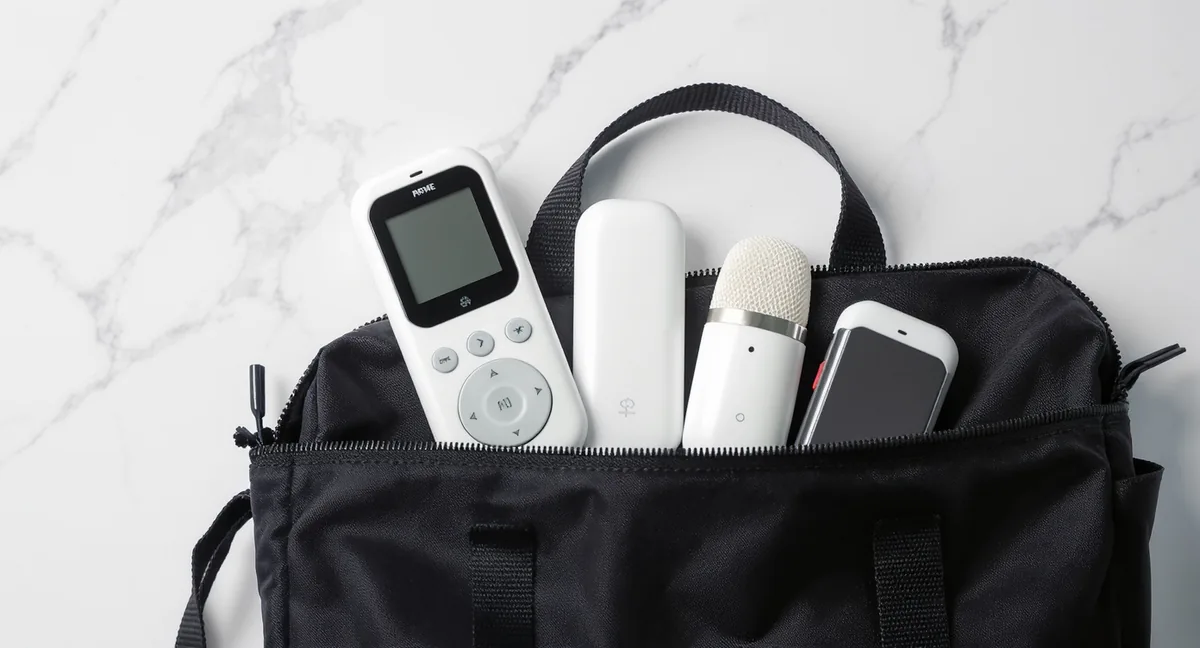
The 5 Best Portable Air Quality Monitors in 2026
Monitor your air quality on the go. We tested the best portable and compact air quality monitors for accuracy, battery life, and sensor range.