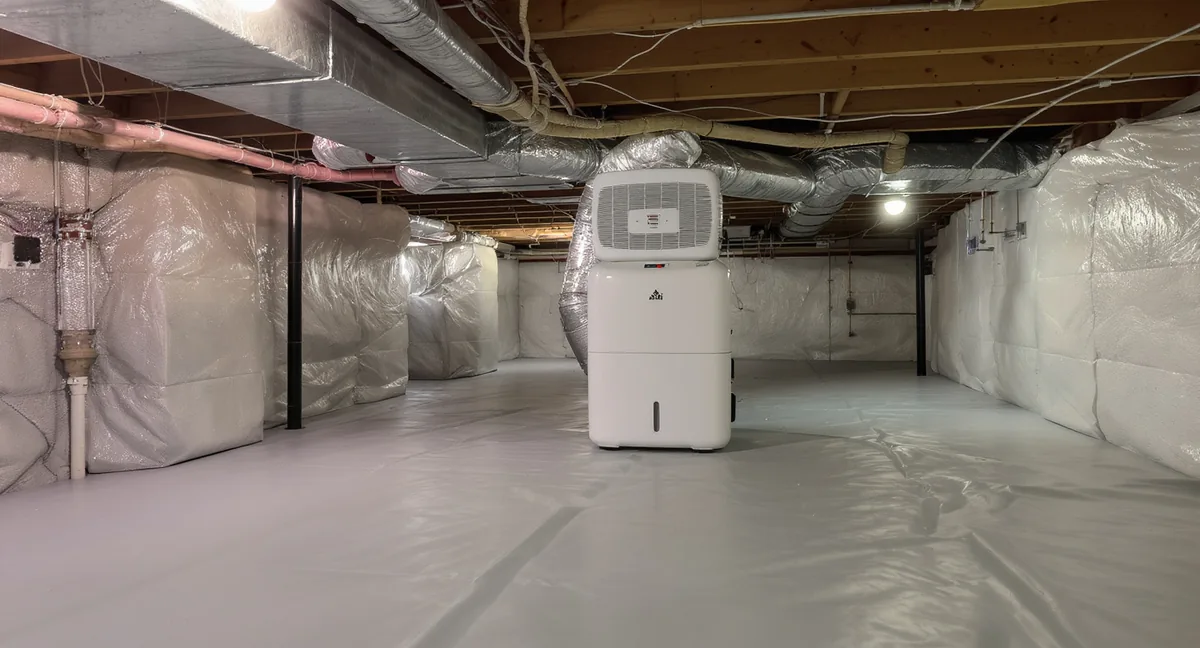
Update (April 2026): The Hisense 70-Pint dehumidifier has been discontinued and is no longer available on Amazon. The current Hisense recommendation is the Hisense 50-Pint Dehumidifier with Built-In Pump, which covers up to 4,500 sq. ft. at a lower price point. This review covers the updated model.
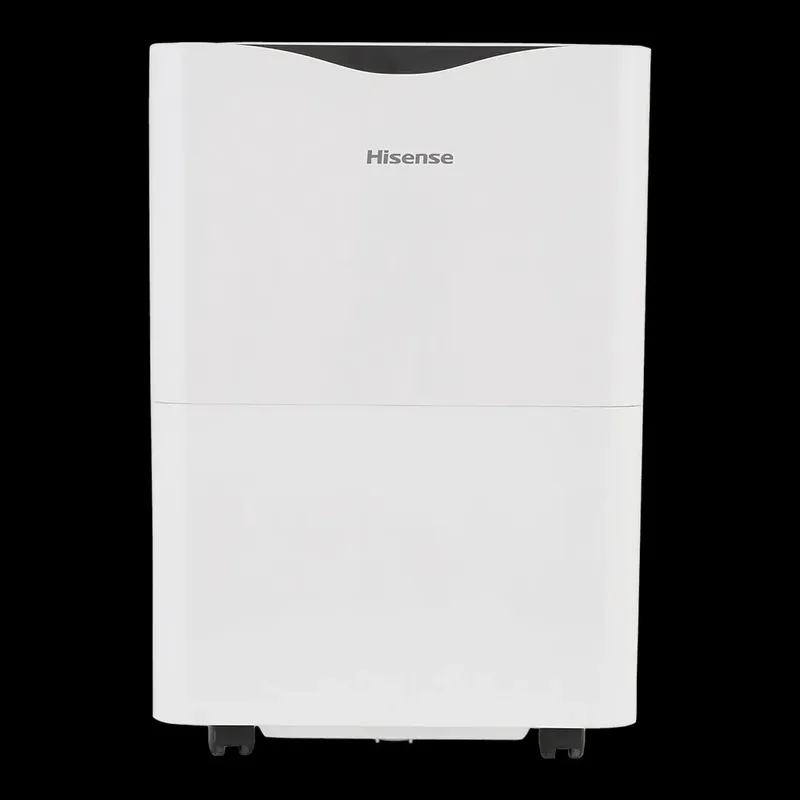
Hisense 50-Pint with Built-In Pump: What You Get
The Hisense 50-Pint replaces the discontinued 70-pint model as Hisense's go-to residential dehumidifier. At $309.00, it is $70 cheaper than the old model while retaining the built-in pump that made the 70-pint popular. The trade-off is a smaller 50-pint daily capacity, but for most homes — including large basements — 50 pints per day is more than adequate.
Key Specifications
Design & Portability
The Hisense 50-Pint features a black finish that blends into basements, garages, and utility rooms better than the white housing on most dehumidifiers. It includes caster wheels and a carry handle for repositioning between rooms.
The built-in pump is the standout feature. Instead of relying on gravity drainage or manually emptying a bucket, you can route the pump hose to a sink, floor drain, or even upward to a window. This makes it practical for basements where the nearest drain is above the unit. A standard bucket is also included for situations where pump drainage is not set up.
Performance
With 50 pints of daily moisture removal, this unit handles spaces up to 4,500 sq. ft. according to Hisense's specifications. Based on customer feedback, it performs well in basements, bathrooms, and garages with moderate to high humidity. The 48 dB noise level is quieter than the old 70-pint model (which ran at 52 dB), making it more livable in finished basements.
The unit is Energy Star certified, which means lower electricity bills compared to non-certified models running similar capacity. For a dehumidifier that may run 12-18 hours per day during humid months, this adds up.
Running Costs
| Item | Estimated Cost | Notes |
|---|---|---|
| Electricity | $15-25/month | Energy Star certified |
| Filter cleaning | $0 | Washable, monthly rinse |
| Annual total (6-month season) | $90-$150 |
Pros and Cons
What We Like
- +Built-in pump for hands-free drainage
- +Energy efficient and quiet operation
- +4,500 sq. ft. coverage for large spaces
- +Portable design works in basement, bathroom, garage
- +Black finish blends into any room
Could Be Better
- −50-pint capacity vs larger 70-pint models
- −No Wi-Fi or smart app control
- −Heavier than compact models
- −Pump drainage setup requires routing hose
Hisense 50-Pint vs. Frigidaire FFAD5033W1
Both are 50-pint dehumidifiers with built-in pumps. The Hisense covers a larger area (4,500 vs. 1,500 sq. ft.) and runs quieter at 48 dB. The Frigidaire ($314) now includes Wi-Fi and custom humidity control. The Hisense is slightly cheaper at $309 and offers broader coverage for large basements.
The Verdict
After extensive research and analysis, here is the AirQualityNest editorial team's verdict.
Bottom Line
4.5/5Hisense 50-Pint Dehumidifier with Built-In Pump
The Hisense 50-Pint with Built-In Pump is the best current Hisense dehumidifier. It covers 4,500 sq. ft., runs quietly at 48 dB, and the built-in pump eliminates the hassle of bucket emptying — all for $309.00.
- +Built-in pump for hands-free drainage
- +Energy Star certified and quiet at 48 dB
- +4,500 sq. ft. coverage for large spaces
- +Portable — works in basement, bathroom, or garage
- +Black finish blends into any room
- −50-pint capacity vs the old 70-pint model
- −No Wi-Fi or smart app control
- −Heavier than compact models
- −Pump hose routing requires some setup
If you previously had the Hisense 70-Pint on your list, this 50-pint replacement handles most residential humidity problems at a lower price. The lack of Wi-Fi is a downgrade from the old model, but the built-in pump, Energy Star efficiency, and quiet operation make it a solid pick for anyone dealing with basement or whole-home moisture.
Sources & References
- EPA Moisture Control Guide — Federal guidelines on indoor moisture control and mold prevention
- Energy Star Dehumidifier Specifications — Energy efficiency standards and certified product specifications for dehumidifiers
- Hisense Dehumidifiers — Official Hisense product page with specifications for the 50-pint dehumidifier with built-in pump
FAQ
Is the Hisense 70-pint dehumidifier discontinued? Yes. The Hisense 70-pint model is no longer available on Amazon or through most retailers as of 2026. Hisense has replaced it with the 50-Pint Dehumidifier with Built-In Pump.
What replaced the Hisense 70-pint? The Hisense 50-Pint Dehumidifier with Built-In Pump (model B0GWFVLJF3) is the current Hisense option. It covers 4,500 sq. ft. and retains the built-in pump at a lower $309.00 price.
Is Hisense a good dehumidifier brand? Hisense is a well-known appliance manufacturer. Their dehumidifiers receive solid customer ratings (4.5 stars average) and offer competitive features like built-in pumps at reasonable prices. They are not as established in the dehumidifier category as Frigidaire or hOmeLabs, but the products perform well based on customer reviews.
Related Reading
Best Dehumidifiers for Basement
Our top basement dehumidifier picks by capacity
Do I Need a Dehumidifier?
Signs your home humidity is too high
Best Dehumidifiers Under $100
Budget-friendly dehumidifiers that still perform
Best Dehumidifiers (2026)
Our complete dehumidifier ranking across all sizes
Basement Air Quality Guide
Complete guide to solving basement moisture and air quality
Continue Reading

Best Air Purifiers for Open Floor Plans in 2026: High-CADR Models That Cover It All
The best air purifiers for open floor plans ranked by CADR, coverage area, and noise. High-performance HEPA purifiers that handle 500-1,500+ sq. ft. open spaces.
Best Smart Humidifiers in 2026 (Wi-Fi, App Control & Auto Humidity)
The best smart humidifiers with Wi-Fi, app control, and auto humidity adjustment. Top picks for Alexa, Google Home, and smart home integration.
The 5 Best Portable Air Quality Monitors in 2026
Monitor your air quality on the go. We tested the best portable and compact air quality monitors for accuracy, battery life, and sensor range.