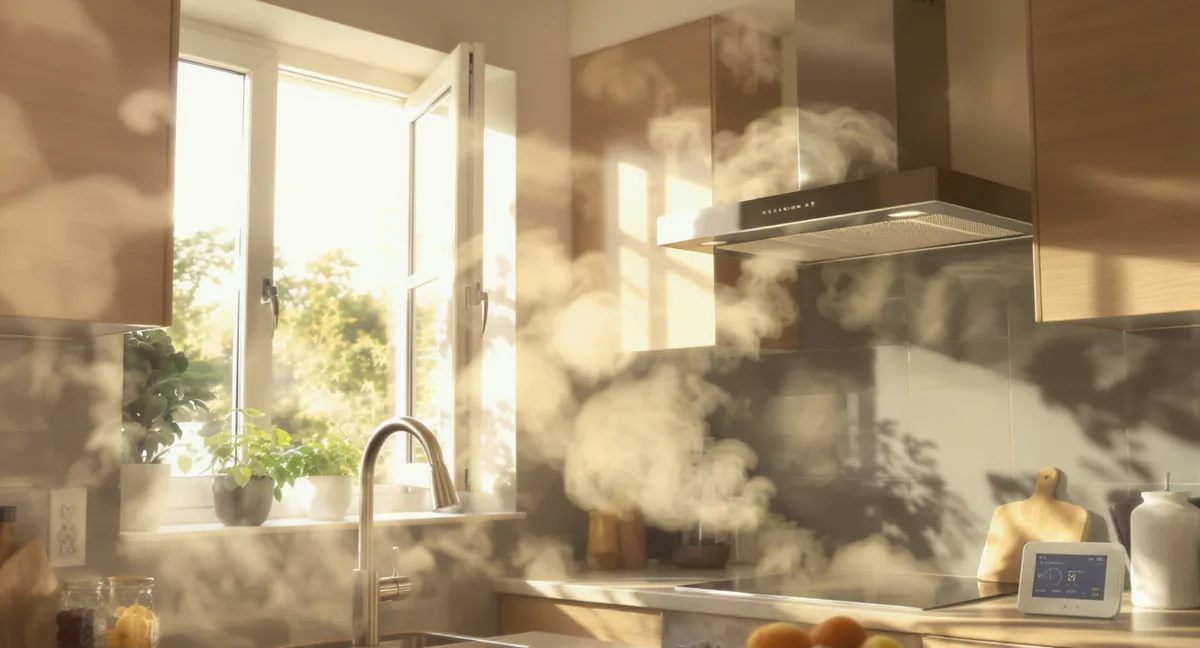
Winter turns your home into a sealed box. You close the windows in November, crank the heat, and do not let fresh air in until spring. From a comfort perspective, this makes sense. From an air quality perspective, it creates a slow-building problem that most people do not notice until the damage is done.
Every pollutant generated inside your home — cooking fumes, cleaning product vapors, off-gassing from furniture, carbon dioxide from breathing, pet dander, dust mite allergens, radon from the soil — has nowhere to go. In summer, air exchange through open windows dilutes these contaminants. In winter, they accumulate day after day, week after week. The EPA estimates that indoor air quality is typically two to five times worse than outdoor air, and in sealed winter homes, it can be significantly worse than that.
Meanwhile, your heating system strips humidity from the air, dropping indoor levels to 15-25% in many homes — well below the 30% minimum recommended for health and comfort. Dry air irritates airways, cracks skin, and increases susceptibility to respiratory infections.
This checklist gives you 10 actionable steps to maintain healthy indoor air quality throughout heating season.
Key Takeaways
- 1Sealed winter homes trap pollutants that accumulate to concentrations 2-5 times higher than outdoor levels — CO2, VOCs, pet dander, radon, and cooking fumes all concentrate without ventilation
- 2Heating systems drop indoor humidity to 15-25%, well below the EPA-recommended 30-50% range, causing dry skin, nosebleeds, respiratory irritation, and increased cold/flu transmission
- 3Carbon monoxide risk peaks in winter from furnaces, fireplaces, and attached garages — test CO detectors monthly and service heating equipment annually
- 4Radon concentrations reach their highest levels in winter because sealed homes create a pressure differential that draws more soil gas upward through foundation cracks
- 5A 10-step checklist approach (humidity control, filtration, ventilation, monitoring) addresses all major winter air quality threats systematically
Quick Answer
How do I improve indoor air quality in winter?
Follow this priority order: 1) Check and maintain humidity at 40-45% with a humidifier, 2) Replace your HVAC filter with a MERV-13 rated filter, 3) Run a HEPA air purifier in the rooms you use most, 4) Test CO detectors and radon levels, 5) Ventilate briefly during midday (even 10 minutes of cross-ventilation helps). These five steps address the biggest winter threats — dry air, particle accumulation, gas-phase pollutants, and CO/radon dangers.
Why Winter Air Quality Is Worse Than You Think
The sealed-home problem is more severe than most people realize. Here is what is happening inside your home between November and March.
Pollutants concentrate without dilution. In well-ventilated homes (windows open, natural air exchange), indoor pollutants are continuously diluted by fresh outdoor air. In winter, air exchange rates in typical homes drop by 60-80%. CO2 from breathing alone can elevate from the outdoor baseline of 400 ppm to 1,000-2,000 ppm in bedrooms overnight. VOCs from cleaning products, cooking, and off-gassing furniture accumulate hour by hour. Pet dander and dust mite allergens build up without the airflow that would normally disperse them.
Heating systems recirculate pollutants. Your furnace does not bring in fresh air — it heats and recirculates the same indoor air through ductwork. If your ducts have accumulated dust, mold, or debris over summer, the furnace redistributes those contaminants every time it cycles. A standard MERV-8 filter captures large particles but allows PM2.5, bacteria, mold spores, and VOCs to pass through repeatedly.
Dry air compounds every problem. Low humidity irritates the respiratory system, thins the protective mucus lining of your airways, and makes your body more vulnerable to airborne pathogens. Research from Yale University published in PNAS found that low humidity impairs mucociliary clearance — the mechanism your body uses to trap and expel inhaled particles and pathogens. In dry winter air, your natural defenses are compromised precisely when pollutant concentrations are highest.
Carbon monoxide risk peaks. Furnaces, gas water heaters, fireplaces, wood stoves, and attached garages all produce or introduce CO into your home. In winter, all of these sources run more frequently while the house is sealed. According to the CDC, more than 400 Americans die from unintentional CO poisoning every year, with peak incidents occurring during winter months.
Radon concentrations are highest in winter. Radon is a radioactive gas that seeps up through foundation cracks from naturally occurring uranium in soil. In winter, the heated air inside your home creates a pressure differential — warm air rises and escapes through the upper levels, creating a slight negative pressure at ground level that actively draws more radon in through the foundation. Combined with zero ventilation, winter radon levels can be 2-3 times higher than summer levels in the same home.
The 10-Step Winter Air Quality Checklist
Follow these steps in order of priority. Steps 1-4 address the most common and impactful winter air quality problems. Steps 5-10 handle secondary threats and ongoing maintenance.
Step 1: Check Your Humidity Levels
What you need: A digital hygrometer ($10-15 from any hardware store or online retailer).
What to do: Place the hygrometer at breathing height in your bedroom and check the reading first thing in the morning and before bed. The target range is 35-45% during winter. Below 30% means your air is harmfully dry. Above 50% risks condensation on cold windows, which can lead to mold growth on window frames.
What you will likely find: In homes with forced-air heating in cold climates, readings of 15-25% are common by mid-winter. This is severely dry — dryer than the Sahara Desert in many cases. If your reading is below 30%, a humidifier is not optional; it is necessary for your health and comfort.
Why this is Step 1: Humidity affects everything else. Dry air worsens respiratory symptoms, makes airborne particles feel more irritating, damages your home, and increases susceptibility to illness. Fixing humidity creates a foundation that makes every other step more effective.
Step 2: Replace Your HVAC Filter
What you need: A MERV-13 rated furnace filter that fits your system (check dimensions on your current filter).
What to do: Replace the filter at the start of heating season and again at mid-season (January or February). A MERV-13 filter captures 85% or more of particles in the 1-3 micron range, including most mold spores, bacteria, and fine dust — a significant upgrade from the standard MERV-8 filters that many homes run.
Why this matters: Your HVAC system moves more air through your home than any portable device. Every cubic foot of air passes through this filter multiple times per day. Upgrading from MERV-8 to MERV-13 dramatically reduces the fine particle load in every room connected to your ductwork. This is whole-house filtration for the cost of a single filter ($15-30).
Important note: Verify that your HVAC system can handle MERV-13. Some older systems with weaker fans may experience reduced airflow with higher-rated filters. If your system struggles (longer heating cycles, reduced air from vents), drop to MERV-11, which still offers a meaningful improvement over MERV-8.
Step 3: Position a Humidifier in the Bedroom
What you need: A humidifier sized for your bedroom, with a tank large enough to run overnight (at least 1 gallon for 8 hours).
What to do: Place the humidifier on a nightstand or dresser at least 3 feet from the bed, aimed away from your face. Set the target to 40-45% humidity. Run it every night throughout heating season. Clean it every 3-7 days to prevent bacterial and mold growth in the tank.
Why the bedroom first: You spend 7-9 hours breathing bedroom air every night. This is when dry air does the most damage — you wake up with a dry throat, cracked lips, nosebleeds, and congested sinuses. Fixing bedroom humidity alone can dramatically improve sleep quality, reduce morning symptoms, and lower respiratory infection risk during winter.
Based on our research into customer reviews, the most effective approach is a humidifier with auto mode that maintains a target humidity level, a large tank that lasts all night, and quiet operation below 30 dB so it does not disrupt sleep.
Step 4: Run a HEPA Air Purifier
What you need: A HEPA air purifier rated for your room size, with at least a three-stage filter system (pre-filter, HEPA, activated carbon).
What to do: Run it continuously in the room where you spend the most waking hours — typically the living room or home office. A second unit in the bedroom provides overnight protection. Set to auto mode for energy-efficient continuous operation, with the ability to ramp up when particle levels spike (from cooking, cleaning, or door openings).
Why it matters in winter: With windows sealed, every particle generated inside your home stays inside. Cooking, cleaning, vacuuming, pets, and simply moving around stir up dust that has nowhere to go. A HEPA purifier provides continuous filtration that substitutes for the fresh air exchange you are missing. The activated carbon stage also handles VOCs from cleaning products, candles, and off-gassing materials that concentrate in sealed homes.
Step 5: Test for Radon
What you need: A long-term radon test kit ($15-30) or a continuous radon monitor ($150-200 for ongoing monitoring).
What to do: Place the test in the lowest lived-in level of your home (basement if occupied, otherwise first floor). Leave it undisturbed for 90 days for a long-term test, or use a continuous monitor for real-time readings. The EPA action level is 4 pCi/L — if your result exceeds this, radon mitigation is recommended.
Why winter is critical for radon testing: According to the EPA, radon levels are typically highest during winter months because the thermal stack effect in heated homes draws more soil gas upward through foundation cracks. A winter test captures your worst-case exposure. If you tested during summer and passed, retesting in winter may reveal elevated levels that the summer test missed.
Why this is not better known: Radon is the second leading cause of lung cancer in the United States after smoking, causing an estimated 21,000 deaths per year according to the EPA. It is odorless, colorless, and undetectable without testing. Approximately 1 in 15 homes has radon levels above the EPA action level. Testing is inexpensive and mitigation (if needed) typically costs $800-1,500 for a professional sub-slab depressurization system.
Step 6: Test and Maintain CO Detectors
What you need: A working CO detector on every level of your home, especially near bedrooms and within 15 feet of any fuel-burning appliance.
What to do: Test each detector monthly by pressing the test button. Replace batteries annually (or at the start of heating season). Replace the entire unit every 5-7 years, as sensors degrade over time. Schedule annual professional inspection of your furnace, water heater, and any gas appliances.
Winter-specific risks:
- Furnaces that develop cracked heat exchangers can leak CO into your home's air supply
- Blocked chimney flues cause CO from fireplaces and wood stoves to back-draft into living spaces
- Running a car in an attached garage — even briefly — allows CO to seep into the home through shared walls and gaps
- Portable generators used during winter power outages are a leading cause of CO death if used indoors or in garages
Based on expert recommendations, never use generators, charcoal grills, or camp stoves inside the home or garage, regardless of ventilation. CO is lethal at concentrations that produce no warning symptoms until it is too late.
Step 7: Reduce Winter VOC Sources
What to do: Identify and minimize the major VOC sources that are common during winter months.
Holiday-specific VOC sources:
- Scented candles and incense release particulate matter, soot, and VOCs (benzene, toluene, formaldehyde) into sealed indoor air
- New furniture received as holiday gifts off-gases formaldehyde and other compounds — allow new items to air out in a well-ventilated area before bringing them into bedrooms
- Artificial Christmas trees stored in attics or garages can off-gas plasticizers when first set up — unbox them in a ventilated space
- Wrapping paper, gift bags, and packing materials release VOCs when new
Year-round winter VOC sources:
- Cleaning products used with windows closed — switch to low-VOC or fragrance-free alternatives
- Air fresheners and plug-in scent devices add a continuous VOC load to sealed indoor air
- Paint, stain, or adhesive from any winter home projects — avoid these unless you can ventilate the space
- Dry cleaning bags — remove plastic immediately and hang dry-cleaned garments in a ventilated area before wearing
The practical fix: Run your air purifier with an activated carbon filter stage when using any VOC-producing products. Reduce or eliminate scented candles and air fresheners — they create the illusion of better air quality while actually degrading it. Use fragrance-free cleaning products or clean during brief ventilation windows.
Step 8: Ventilate Strategically
What to do: Even in winter, brief ventilation significantly reduces accumulated indoor pollutants.
The cross-ventilation method: Open windows on opposite sides of your home for 5-10 minutes during midday (when outdoor temperature is highest). This creates a cross-breeze that rapidly exchanges indoor air without significantly dropping your home's temperature. Five minutes of cross-ventilation can reduce CO2 levels by 50% or more and flush accumulated VOCs that your purifier cannot fully eliminate.
When to ventilate:
- Midday when outdoor temperatures are highest (to minimize heat loss)
- After cooking, especially gas stove use
- After cleaning with any chemical products
- After painting, staining, or using adhesives
- When CO2 monitors show readings above 1,000 ppm
Use exhaust fans as supplemental ventilation. Bathroom and kitchen exhaust fans vent directly to the outdoors. Running the bathroom fan for 15-20 minutes provides some air exchange without opening windows. The kitchen range hood exhaust does the same. These do create negative pressure that draws in outdoor air through cracks and gaps — which is the point. Fresh air enters and stale, polluted air exits.
Step 9: Address Dust Accumulation
What to do: Winter is peak dust season because sealed homes recirculate the same air through HVAC systems, redistributing settled dust continuously.
HVAC duct cleaning considerations: If your ducts have not been cleaned in 5+ years and you notice dusty air when the furnace kicks on, professional duct cleaning can reduce the particle load circulating through your home. Based on our research, this is most impactful in older homes, homes with pets, and homes where construction or renovation work was done with ducts exposed.
Vacuum with HEPA filtration. Standard vacuums exhaust fine particles back into the air through their bag or canister. A vacuum with a sealed HEPA filtration system captures particles down to 0.3 microns and retains them, actually reducing airborne dust rather than redistributing it. Vacuum high-traffic areas twice weekly during winter.
Dust surfaces with damp or microfiber cloths. Dry dusting launches particles into the air. Damp cloths capture and hold dust rather than dispersing it. Pay special attention to horizontal surfaces near HVAC vents, which accumulate dust faster than other areas.
Wash bedding weekly. Dust mites accumulate in bedding year-round but become more problematic in winter when you spend more time in bed with less ventilation. Wash sheets, pillowcases, and blankets weekly in hot water (130 degrees Fahrenheit or higher) to kill mites and remove allergens.
Step 10: Monitor Air Quality
What to do: Invest in an indoor air quality monitor to track the invisible threats you cannot smell, see, or feel.
What to monitor:
- CO2 — Levels above 1,000 ppm indicate insufficient ventilation. Above 2,000 ppm causes drowsiness and reduced cognitive function. In sealed winter bedrooms, levels routinely exceed 1,500 ppm by morning.
- PM2.5 — Fine particulate matter from cooking, candles, dust, and infiltration. Keep below 12 micrograms per cubic meter for long-term health.
- Humidity — Track to ensure your humidifier is maintaining 35-45%.
- VOCs — Total volatile organic compound readings help identify when cleaning, cooking, or off-gassing has elevated chemical levels.
Why monitoring matters in winter: Without a monitor, you are guessing. Many winter air quality problems are invisible — CO2 builds gradually, VOCs have no color, fine particles are too small to see. A monitor provides objective data that tells you when to ventilate, when to run the purifier on high, and whether your interventions are actually working.
Our Top Picks for Winter Air Quality
Based on our analysis of customer reviews and specifications, these two products address the most critical winter air quality needs.
Best Humidifier for Winter Dry Air: Levoit LV600S
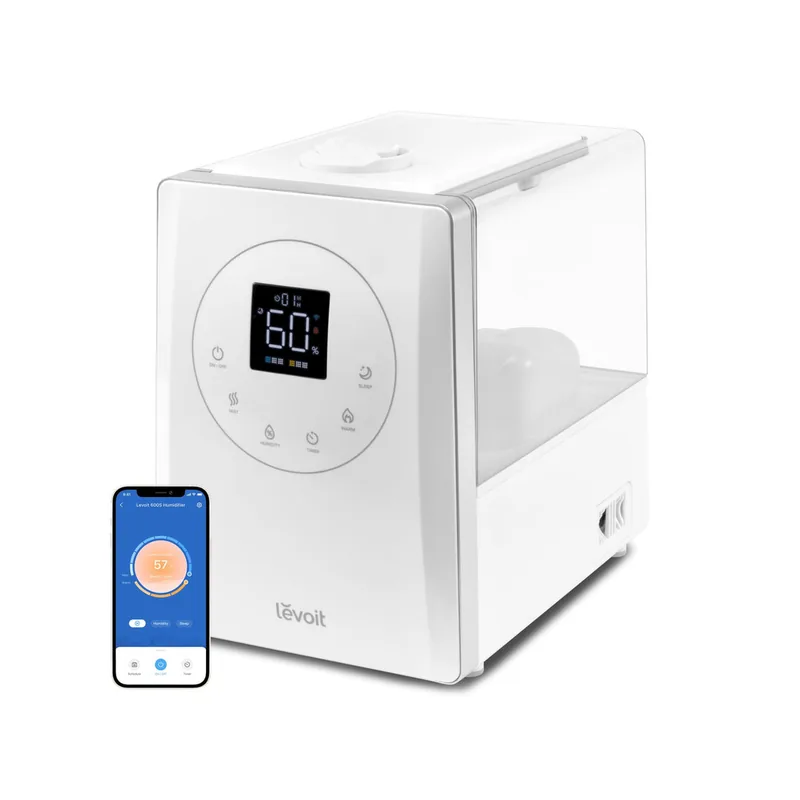
The Levoit LV600S is our top recommendation for winter humidity control. Its 1.5-gallon tank runs up to 50 hours on low, meaning you can go two full days without refilling — a major advantage when running it continuously from November through March. Both warm and cool mist options let you choose based on comfort, and the warm mist setting is particularly welcome in cold bedrooms.
The smart auto mode is what makes this humidifier effective for all-winter use. Set your target humidity (we recommend 40-45%), and the unit automatically adjusts output to maintain that level. No more waking up to a bone-dry room because the humidifier ran at full blast, emptied the tank at 2 AM, and left you with six hours of dry air. The auto mode paces output to match conditions and maintain your target throughout the night.
Customer reviews consistently praise three winter-specific features: the warm mist option that adds comfort in cold rooms, the marathon tank life that eliminates constant refilling, and the VeSync app that lets you monitor and adjust humidity from bed without getting up.
Best Air Purifier for Winter: Winix 5510
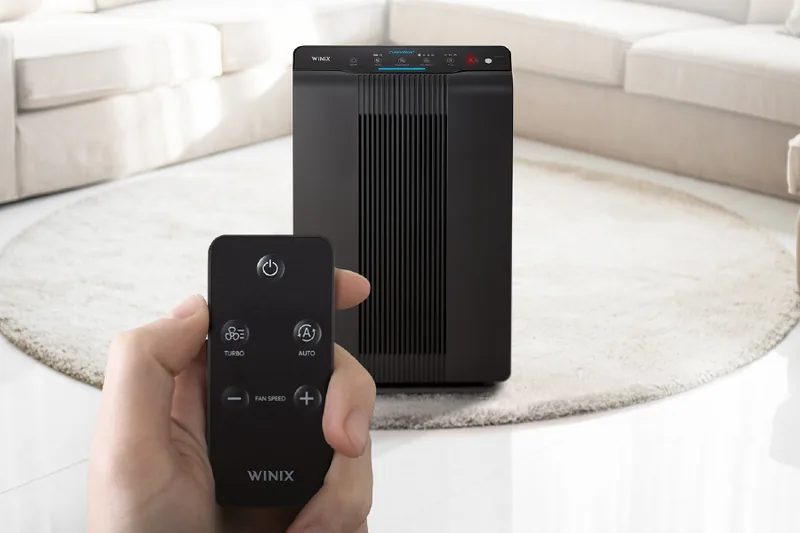
The Winix 5510 is ideally suited for winter use because it combines HEPA particle filtration with effective VOC removal — both of which are critical in sealed homes. Its True HEPA filter captures 99.97% of airborne particles (dust, pet dander, mold spores), while the washable carbon pre-filter handles the VOCs, cooking odors, and chemical vapors that accumulate when windows stay closed for months.
The auto mode with smart sensor is particularly valuable in winter. When you cook, clean, or light a candle, the sensor detects the particle or VOC spike and ramps the fan speed automatically. When levels return to normal, it drops back to whisper-quiet operation. This responsive behavior keeps air clean without you having to manually adjust settings throughout the day.
The washable carbon pre-filter is a cost-saving feature that matters during the extended winter season. Instead of replacing the pre-filter every few months, you rinse it under the tap and reuse it — extending HEPA filter life and reducing annual operating costs. PlasmaWave technology provides supplemental filtration without generating harmful ozone, according to independent testing by CARB (California Air Resources Board).
At approximately $180, the Winix 5510 delivers four-stage filtration, smart auto mode, and built-in WiFi app control at one of the lowest price points in its class. It handles rooms up to 392 square feet — suitable for bedrooms, living rooms, and home offices.
This guide was researched and written by the AirQualityNest editorial team. We update our content regularly to reflect the latest products, pricing, and research.
Frequently Asked Questions
Why is indoor air quality worse in winter?+
Two compounding factors. First, you seal your home tight (closing windows, weatherstripping doors), which traps every pollutant generated indoors — cooking fumes, VOCs, CO2, pet dander, dust, and radon have no way to escape, so concentrations build day after day. Second, your heating system strips moisture from the air, dropping humidity to 15-25%, which irritates your respiratory system and reduces your body's natural defenses against airborne pathogens and particles.
What is a safe humidity level in winter?+
Aim for 35-45% relative humidity. Below 30% causes dry skin, nosebleeds, respiratory irritation, and increased illness susceptibility. Above 50% in winter risks condensation on cold windows, which can lead to mold growth on window frames and sills. Use a hygrometer to monitor and a humidifier with auto mode to maintain your target. Watch windows for condensation — if you see droplets, reduce humidity by 5%.
How often should I ventilate my home in winter?+
Based on expert recommendations, open windows for 5-10 minutes at least once daily, preferably during midday when outdoor temperatures are highest. Cross-ventilation (opening windows on opposite sides) exchanges air rapidly with minimal heat loss. This brief ventilation can reduce CO2 by 50% and flush accumulated VOCs. Supplement with bathroom and kitchen exhaust fans, which provide continuous low-level ventilation without opening windows.
Should I worry about radon in winter?+
Yes. Radon levels peak in winter because sealed homes create negative pressure at the foundation level, actively drawing more radon up through cracks and gaps. The EPA recommends testing during winter for worst-case readings. Test with a long-term kit (90 days) or continuous monitor. If results exceed 4 pCi/L, professional mitigation is recommended. Radon is the second leading cause of lung cancer after smoking — testing is inexpensive and potentially life-saving.
Can I run a humidifier and air purifier in the same room?+
Yes, and for winter this combination is ideal. The humidifier adds necessary moisture to combat dry heated air, while the air purifier removes particles and VOCs that concentrate in sealed homes. Position them at least 6 feet apart to prevent the purifier from drawing in mist directly (which can wet the filter over time). Point the humidifier output away from the purifier's intake. Many people run both in the bedroom overnight with excellent results.
Sources & References
- EPA — Indoor Air Quality (IAQ) — Documents that indoor air is 2-5 times more polluted than outdoor air and provides guidance on ventilation, filtration, and source control
- EPA — Radon in Homes — Reports that radon causes 21,000 lung cancer deaths annually, recommends 4 pCi/L action level, and notes 1 in 15 homes exceed this threshold
- CDC — Carbon Monoxide Poisoning — Documents over 400 annual CO deaths and 50,000 emergency visits, with peak incidents during winter heating season
- Kudo et al. — Low ambient humidity impairs barrier function and innate resistance against influenza infection (PNAS, 2019) — Yale University research demonstrating that low humidity impairs mucociliary clearance and innate immune defense, increasing infection susceptibility
- ASHRAE — Ventilation for Acceptable Indoor Air Quality (Standard 62.2) — Establishes minimum ventilation rates for residential buildings and guidance on maintaining indoor air quality during heating season
Related Reading
Winter Dry Air Solutions
Complete guide to choosing and using humidifiers for winter dry air relief
Best Humidifiers for 2026
Our top humidifier picks for every budget and room size
Radon in Your Home
How radon enters homes, testing methods, and mitigation options
How to Test Home Air Quality
Guide to monitoring CO2, PM2.5, VOCs, humidity, and radon in your home
Best Air Purifiers for Dust
Top HEPA purifiers for homes with dust accumulation problems
Continue Reading

Best Air Purifiers for Open Floor Plans in 2026: High-CADR Models That Cover It All
The best air purifiers for open floor plans ranked by CADR, coverage area, and noise. High-performance HEPA purifiers that handle 500-1,500+ sq. ft. open spaces.
Best Smart Humidifiers in 2026 (Wi-Fi, App Control & Auto Humidity)
The best smart humidifiers with Wi-Fi, app control, and auto humidity adjustment. Top picks for Alexa, Google Home, and smart home integration.
The 5 Best Portable Air Quality Monitors in 2026
Monitor your air quality on the go. We tested the best portable and compact air quality monitors for accuracy, battery life, and sensor range.