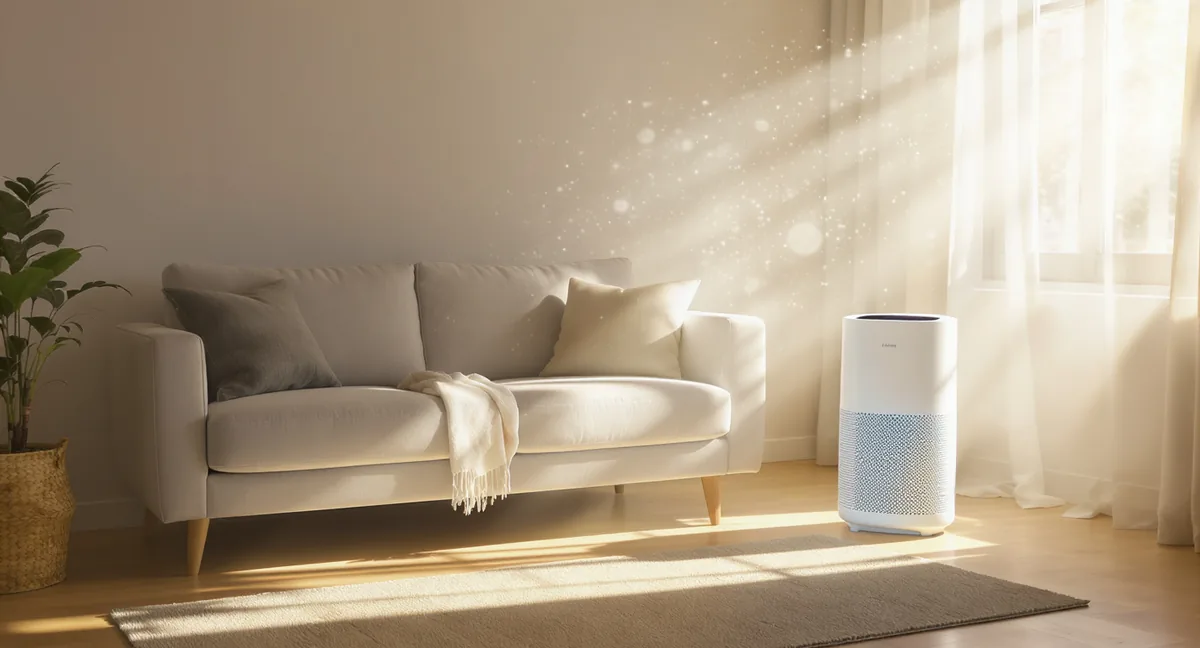
Choosing between a whole-house air purification system and a portable unit is one of the biggest decisions you will make for your indoor air quality. Both approaches work, but they solve different problems at very different price points.
This guide breaks down the real trade-offs so you can make the right call for your home, your budget, and your health goals.
Key Takeaways
- 1Whole-house systems integrate with your HVAC ductwork and filter every room simultaneously, but at lower intensity than a dedicated portable unit
- 2Portable HEPA purifiers deliver more concentrated filtration in a single room — ideal for bedrooms, nurseries, or home offices where you spend the most time
- 3Whole-house systems cost $500-2,000+ installed versus $100-600 per portable unit, but portables add up fast if you need multiple rooms covered
- 4The best strategy for most homes is a MERV 13 filter in your HVAC system plus a portable HEPA purifier in the rooms where you sleep and spend the most time
- 5Renters, apartment dwellers, and anyone without central HVAC should go portable — no installation required and you take it with you when you move
Quick Answer
Should I get a whole-house or portable air purifier?
It depends on your situation. If you own a home with central HVAC and want every room filtered with zero noise, a whole-house system makes sense. If you rent, lack HVAC, or want the strongest possible filtration in specific rooms like bedrooms, go portable. For the best of both worlds, upgrade your HVAC filter to MERV 13 and add a portable HEPA purifier in key rooms.
What Is a Whole-House Air Purifier?
A whole-house air purifier integrates directly into your home's HVAC (heating, ventilation, and air conditioning) system. Instead of cleaning air in one room, it filters the air flowing through your ductwork — every room that has a vent gets filtered air.
There are three main types:
MERV-Rated HVAC Filters
The simplest upgrade. You replace the standard filter in your furnace or air handler with a higher-rated one. MERV (Minimum Efficiency Reporting Value) ratings range from 1 to 20:
- MERV 8 — Standard residential. Catches dust and pollen but misses smaller particles.
- MERV 11 — Catches mold spores, pet dander, and some fine dust. A solid upgrade for most homes.
- MERV 13 — Catches bacteria, smoke particles, and fine particulate matter (PM2.5). The EPA recommends MERV 13 as the minimum for meaningful air quality improvement. This is the sweet spot for most HVAC systems.
- MERV 16+ — Approaching HEPA-level filtration. May restrict airflow in residential HVAC systems not designed for this level of resistance.
Important: Not every HVAC system can handle higher-MERV filters. A filter that is too restrictive can reduce airflow, overwork your blower motor, and increase energy costs. Check with an HVAC technician before jumping to MERV 13 or higher.
In-Duct HEPA Systems
These are separate filtration units installed in your ductwork, often with their own fan to pull air through a True HEPA filter without restricting your main HVAC airflow. Brands like Lennox and Trane offer these systems.
- Pros: True HEPA filtration (99.97% at 0.3 microns) across your entire home.
- Cons: Expensive ($1,000-2,500 installed), requires professional installation, and adds another maintenance item.
UV-C In-Duct Systems
Ultraviolet germicidal irradiation (UVGI) units install inside your ductwork and use UV-C light to neutralize airborne microorganisms. They are not true filtration — they do not remove particles from the air — but they can reduce viable bacteria, mold, and some viruses as air passes through the irradiated zone.
- Pros: Targets biological contaminants that filters do not sterilize.
- Cons: No particle removal, limited effectiveness against fast-moving air, and bulb replacement costs.
UV-C works best as a supplement to filtration, not a replacement.
What Is a Portable Air Purifier?
A portable air purifier is a standalone unit that sits in a room and draws air through its own internal filters. Most quality models use a multi-stage filtration system:
- Pre-filter — Catches large particles like hair, lint, and pet fur. Extends the life of the main filter.
- True HEPA filter (H13) — Captures 99.97% of airborne particles at 0.3 microns, including dust, pollen, mold spores, pet dander, bacteria, and smoke particles.
- Activated carbon filter — Absorbs gases, volatile organic compounds (VOCs), and odors that HEPA filters cannot catch.
Some models add additional stages like ionizers or photocatalytic oxidation, but the HEPA + carbon combination is the proven core technology.
Portable purifiers are rated by CADR (Clean Air Delivery Rate), which measures how many cubic feet of clean air the unit delivers per minute. The higher the CADR, the larger the room it can handle effectively.
Effectiveness: Which Cleans the Air Better?
This is the most important question, and the answer is nuanced.
Whole-House: Broad Coverage, Lower Intensity
A whole-house system filters air everywhere your ducts reach. But it only filters air when the HVAC system is running — and even then, the air only passes through the filter when it circulates through the ductwork. In many homes, this means:
- Air near vents gets filtered relatively quickly.
- Air in corners, closets, and areas far from vents takes much longer to cycle through.
- A MERV 13 filter captures fewer particles per pass than a True HEPA filter (roughly 85% of PM2.5 versus 99.97%).
- The system relies on your HVAC fan running. If your heating or cooling is off, filtration stops (unless you run the fan continuously, which adds energy cost).
Portable: Focused Filtration, One Room at a Time
A properly sized portable HEPA purifier in a closed room can reduce PM2.5 levels by 90% or more within 30 to 60 minutes. Research published in the Journal of Allergy and Clinical Immunology found that portable HEPA purifiers reduced indoor PM2.5 by an average of 55% across 10 randomized controlled trials.
The catch: a portable unit only cleans the room it is in. Close the door and it performs exceptionally well. Leave doors open and effectiveness drops significantly as it tries to filter a much larger volume of air.
The Verdict
Portable purifiers win for single-room effectiveness. Nothing beats a True HEPA filter running continuously in a closed room.
Whole-house systems win for convenience and whole-home baseline. You get some level of filtration everywhere without thinking about it.
| Factor | Whole-House | Portable HEPA |
|---|---|---|
| Filtration efficiency per pass | 85-95% (MERV 13) | 99.97% (True HEPA) |
| Coverage | Every room with a vent | One room at a time |
| Best PM2.5 reduction | 30-50% home-wide | 55-99% in a closed room |
| Gas and odor removal | Limited (no carbon) | Yes (with activated carbon) |
| Requires HVAC running | Yes | No |
Cost Comparison
Upfront Costs
| Approach | Cost Range | What You Get |
|---|---|---|
| MERV 13 HVAC filter | $15-40 per filter | Basic whole-home filtration upgrade |
| In-duct HEPA system | $500-2,500 installed | True HEPA filtration through ductwork |
| UV-C in-duct system | $400-1,200 installed | Germicidal supplement (no particle removal) |
| Portable HEPA purifier | $100-600 per unit | Focused True HEPA + carbon in one room |
Annual Operating Costs
| Approach | Filter Replacement | Energy | Total Annual |
|---|---|---|---|
| MERV 13 filter | $45-120/year (2-4 filters) | Minimal (uses existing HVAC fan) | $45-120 |
| In-duct HEPA | $100-200/year | $50-100/year (additional fan) | $150-300 |
| Portable purifier | $30-80 per unit/year | $20-60 per unit/year | $50-140 per unit |
A single portable purifier is cheaper to buy and run than a whole-house system. But if you need to cover four or five rooms, the cost of multiple portables ($400-3,000 upfront, $200-700/year in filters) can exceed a whole-house solution.
Maintenance Comparison
Whole-House Systems
- MERV filters: Replace every 60-90 days. This is the same maintenance cadence as a standard furnace filter — just swap in the higher-rated version.
- In-duct HEPA: Replace the HEPA media every 1-2 years depending on air quality and usage. Requires accessing the unit inside the ductwork.
- UV-C bulbs: Replace annually. The UV-C output degrades over time even if the bulb still lights up.
Advantage: Out of sight, out of mind. You set a reminder, swap a filter a few times a year, and forget about it.
Portable Purifiers
- Pre-filter: Clean every 2-4 weeks (washable on most models).
- HEPA filter: Replace every 6-12 months. Most quality purifiers have a filter life indicator.
- Carbon filter: Replace every 3-6 months (varies by model and odor exposure).
Disadvantage: If you have three portables, you are managing three sets of filter schedules. It adds up in both cost and effort.
Noise Comparison
This is where whole-house systems have a clear advantage.
Whole-House: Silent in Living Spaces
The HVAC blower motor is typically located in a utility closet, basement, or attic. You hear nothing in your bedrooms and living areas. The only sound is the faint hiss of air through your vents — the same sound your HVAC already makes.
Portable: Adds Room Noise
Every portable purifier generates some noise. Even the quietest models produce measurable sound:
| Purifier | Low Setting | High Setting |
|---|---|---|
| Coway Airmega AP-1512HH | 24 dB | 53 dB |
| Dyson Big Quiet Formaldehyde | 20 dB | 48 dB |
| Levoit Core 300 | 24 dB | 50 dB |
For context, 24 dB is quieter than a whisper and most people sleep through it without issue. On high, however, some models can reach conversation-level noise. If you are a light sleeper, noise matters — the Dyson Big Quiet lives up to its name on low settings.
When to Choose a Whole-House System
A whole-house air purification system makes sense when:
- You own your home and plan to stay for several years (recoup the installation cost).
- You have central HVAC with ductwork in good condition.
- You want every room filtered without placing units throughout your home.
- You want an invisible solution — no units on the floor, no cords, no noise in living spaces.
- You have a large home (2,000+ sq. ft.) where buying portables for every room becomes impractical and expensive.
- You are willing to invest upfront — a professionally installed in-duct HEPA system costs $1,000-2,500 but covers your entire home.
The simplest starting point: Upgrade your existing HVAC filter to MERV 13. This costs $15-40 per filter change and delivers meaningful improvement in whole-home air quality. Have an HVAC technician confirm your system can handle the increased airflow resistance before making the switch.
When to Choose a Portable Purifier
A portable HEPA air purifier is the better choice when:
- You rent — No installation required, no landlord permission needed, and you take it with you when you move.
- You do not have central HVAC — Homes with radiators, baseboard heat, mini-splits, or window units have no ductwork to integrate with.
- You need targeted, high-intensity filtration — A portable HEPA unit in your bedroom gives you 99.97% filtration where you spend 7-8 hours sleeping, which is when clean air matters most for health.
- You are budget-conscious — A single Levoit Core 300 costs under $100 and covers a bedroom effectively. Compare that to $1,000+ for a whole-house installation.
- You want gas and odor removal — Most portable purifiers include activated carbon filters that absorb VOCs, cooking odors, and smoke. Whole-house MERV filters do not address gases at all.
- You live in an apartment — Portable is your only realistic option.
Can You Use Both?
Yes — and for many homeowners, using both is the best strategy.
The combination approach works like this:
-
MERV 13 filter in your HVAC system — Provides a baseline level of filtration throughout your entire home. Catches large particles, pollen, and some PM2.5 as air circulates. Cost: $15-40 per filter, changed every 60-90 days.
-
Portable HEPA purifier in key rooms — Add a True HEPA unit in the bedroom where you sleep and any room where you spend extended time (home office, nursery, living room). This provides the high-intensity, 99.97% filtration where it matters most.
This layered approach gives you whole-home coverage at a baseline level plus medical-grade filtration in priority rooms. The EPA recommends this type of multi-strategy approach for improving indoor air quality, noting that portable air cleaners are most effective when used alongside upgraded HVAC filtration.
What this looks like in practice:
- MERV 13 in HVAC: ~$80/year in filters
- Coway Mighty in the bedroom: $229 upfront, ~$50/year in filters
- Levoit Core 300 in the home office: $99 upfront, ~$40/year in filters
- Total first-year cost: ~$450 | Annual ongoing: ~$170
That is less than most in-duct HEPA installations, and you get superior filtration in the rooms that matter most.
Top Portable Purifier Picks
If you are going the portable route (or adding portables to supplement a whole-house system), these are the three models we recommend based on our research and analysis of thousands of customer reviews:
Best Overall Portable: Coway Airmega AP-1512HH
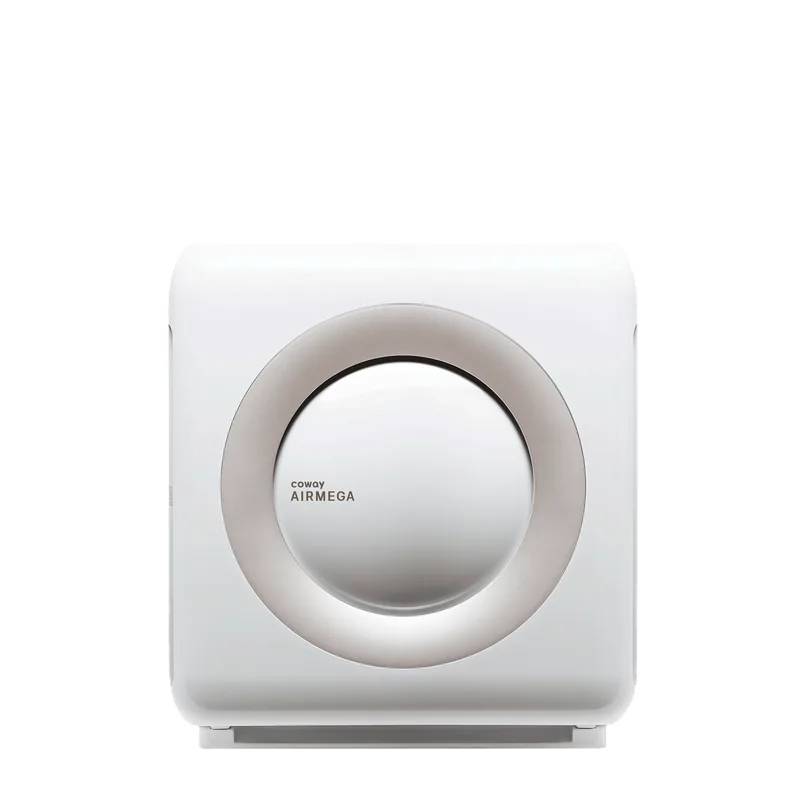
The Coway Mighty consistently earns the top spot in customer satisfaction across major retailers. With a 233 Smoke CADR, it handles rooms up to 350 sq. ft. and delivers 4+ air changes per hour in a typical bedroom. The four-stage filtration system (pre-filter, odor filter, True HEPA, ionizer) covers both particles and odors. At roughly $229, it hits the sweet spot between performance and value.
Best for Whole-Room Coverage: Dyson Big Quiet Formaldehyde
The Dyson Big Quiet is engineered for large spaces. Its sealed HEPA H13 filtration system and formaldehyde-destroying catalytic filter make it one of the most comprehensive portable purifiers available. The "Big Quiet" name is earned — it runs at just 20 dB on its lowest setting. If you need a single portable to cover a large living room or open floor plan, this is the one to consider.
Best Budget Portable: Levoit Core 300
At under $100, the Levoit Core 300 is the entry point we recommend for anyone who wants True HEPA filtration without a large investment. Its 141 Smoke CADR is well-suited for bedrooms up to 200 sq. ft., and at 24 dB on low it will not disturb your sleep. Filter replacements cost about $20 every 6-8 months. If you are testing the waters with your first air purifier, start here.
Sources & References
- EPA Guide to Air Cleaners in the Home — Guidance on portable air cleaners and whole-house filtration strategies for residential use
- ASHRAE (American Society of Heating, Refrigerating and Air-Conditioning Engineers) — Develops MERV filter rating standards and HVAC filtration guidelines for residential and commercial buildings
- AHAM (Association of Home Appliance Manufacturers) — Administers the CADR certification program used to rate portable air purifier performance
This guide was researched and written by the AirQualityNest editorial team. We update our content regularly to reflect the latest products, pricing, and research.
Frequently Asked Questions
Is a whole-house air purifier worth the money?+
It depends on your home size and goals. For homeowners with central HVAC and 2,000+ square feet, a whole-house system (even just upgrading to a MERV 13 filter) provides meaningful baseline filtration throughout the home without the hassle of managing multiple portable units. However, if you primarily want to clean the air in one or two rooms, a portable HEPA purifier delivers better filtration at a fraction of the cost. The best value for most homeowners is upgrading to MERV 13 in the HVAC ($15-40 per filter) and adding a portable HEPA unit in the bedroom.
Can a portable air purifier clean my whole house?+
Not effectively. A portable purifier is designed to clean one room at a time. With doors closed, a properly sized unit can reduce PM2.5 by 90% or more in that room. With doors open, its effectiveness drops dramatically because it is trying to filter a much larger air volume. If you want whole-home coverage with portables, you need one unit per room — which quickly becomes expensive and maintenance-heavy. A whole-house system or the MERV 13 plus portable hybrid approach is more practical for full-home coverage.
What MERV rating should I use in my HVAC system?+
MERV 13 is the recommended sweet spot for most residential HVAC systems. It captures 85% or more of PM2.5 particles, pollen, mold spores, and bacteria — a significant upgrade from the standard MERV 8 filters most homes use. However, not every HVAC system can handle MERV 13 without airflow issues. Higher-MERV filters are denser and restrict more airflow, which can strain your blower motor. Have an HVAC technician verify your system's compatibility before upgrading beyond MERV 11. ASHRAE recommends MERV 13 as the minimum for adequate filtration when the system can support it.
Do whole-house air purifiers remove odors and VOCs?+
Standard MERV-rated HVAC filters do not remove gases, odors, or volatile organic compounds (VOCs) — they only capture particles. Some whole-house systems include activated carbon stages or photocatalytic oxidation modules that address gases, but these add significant cost. Portable air purifiers have a clear advantage here, as most quality models include activated carbon filters that absorb VOCs, cooking odors, and smoke gases as a standard feature.
How often do I need to replace filters in each type of system?+
For whole-house MERV filters, replacement is typically every 60-90 days — the same schedule as a standard furnace filter. In-duct HEPA filters last 1-2 years depending on usage. For portable purifiers, plan on replacing the HEPA filter every 6-12 months and the carbon filter every 3-6 months. Pre-filters on portable units are usually washable and should be cleaned every 2-4 weeks. If you run multiple portable units, the filter management and cost multiply with each unit.
Related Guides
Best Whole-House Air Purifiers
Our top picks for HVAC-integrated and ducted air purification systems
Best Air Purifiers for Large Rooms
High-CADR portables that can handle 500+ square feet
Air Purifier Sizing Guide
Calculate exactly what CADR your room needs for effective filtration
What Is a HEPA Filter?
Understand True HEPA vs HEPA-type and why filter grade matters
Air Purifier Placement Guide
Where to put your portable purifier for maximum effectiveness
Continue Reading
Best Air Purifiers for Open Floor Plans in 2026: High-CADR Models That Cover It All
The best air purifiers for open floor plans ranked by CADR, coverage area, and noise. High-performance HEPA purifiers that handle 500-1,500+ sq. ft. open spaces.
Best Smart Humidifiers in 2026 (Wi-Fi, App Control & Auto Humidity)
The best smart humidifiers with Wi-Fi, app control, and auto humidity adjustment. Top picks for Alexa, Google Home, and smart home integration.
The 5 Best Portable Air Quality Monitors in 2026
Monitor your air quality on the go. We tested the best portable and compact air quality monitors for accuracy, battery life, and sensor range.