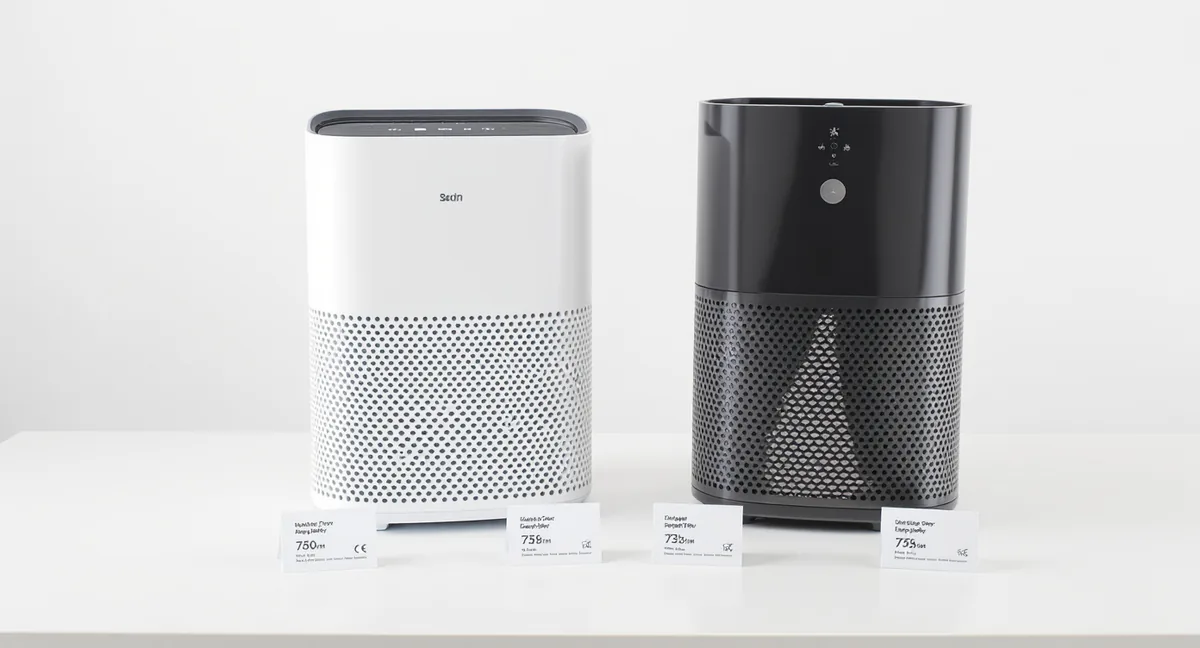
The Dyson Purifier Cool TP07 costs $560.99. The Levoit Core 400S costs $181.95. That is a $379 difference — and on paper, the cheaper purifier actually has a higher CADR. So what exactly does Dyson's premium buy you, and is it worth more than double the price?
This is one of the most common questions we see from buyers deciding between a premium and a mid-range air purifier. The answer is not straightforward, because these two machines are designed around different philosophies. The Dyson is a bladeless cooling fan and air purifier combined into a single tower with a premium build and the full Dyson smart ecosystem. The Levoit is a focused, no-nonsense air purifier with smart features, a laser PM2.5 sensor, and aggressive pricing.
We analyzed customer reviews, manufacturer specifications, and long-term ownership costs to break down every meaningful difference. Here is what we found.
Key Takeaways
- 1The Levoit Core 400S delivers higher CADR (256 CFM) than the Dyson TP07 (~250 CFM) at less than half the price — $181.95 vs $560.99.
- 2The Dyson TP07's biggest unique advantage is its bladeless cooling fan function, making it a genuine two-in-one device that can replace a separate purifier and fan.
- 3Both purifiers offer full smart app control and voice assistant support, but the Levoit includes a laser PM2.5 sensor for real-time air quality monitoring that the Dyson lacks in hardware accuracy at this price point.
- 4Over three years, the Levoit costs approximately $407-467 total (purchase + filters + electricity) compared to the Dyson's $834-864 — a difference of roughly $400.
- 5The Dyson justifies its premium for buyers who value the fan combo, prefer its industrial design, and want the Dyson Link ecosystem. For pure air-cleaning performance per dollar, the Levoit wins decisively.
Quick Answer
Should I buy the Dyson TP07 or the Levoit Core 400S?
For most buyers, the Levoit Core 400S ($181.95) is the smarter purchase. It delivers comparable or slightly higher CADR, includes a laser PM2.5 sensor with true auto mode, runs quieter, and costs roughly $400 less over three years to own. Buy the Dyson TP07 ($560.99) only if you specifically want the bladeless cooling fan function, prefer the premium Dyson design aesthetic, or are already invested in the Dyson Link smart ecosystem.
Head-to-Head Specs
| Feature | Dyson Purifier Cool TP07 | Levoit Core 400S |
|---|---|---|
| Price | $560.99 | $181.95 |
| CADR | ~250 CFM | 256 CFM |
| Room Coverage | 800 sq ft (rated) | 403 sq ft |
| Filtration | HEPA H13 + Activated Carbon | True HEPA H13 + Activated Carbon |
| Noise (Low / High) | 30-55 dB | 24-52 dB |
| Smart App | Dyson Link | VeSync |
| Voice Assistants | Alexa, Siri, Google | Alexa + Google Assistant |
| Air Quality Sensor | Particulate + VOC sensors | Laser PM2.5 sensor |
| Auto Mode | Yes | Yes (sensor-driven) |
| Fan Function | Yes (bladeless purified airflow) | No (purifier only) |
| Annual Filter Cost | ~$70-80 | ~$60-80 |
| Weight | 16.2 lbs | 14.5 lbs |
| Dimensions | ~41" tall tower | ~20.5" tall cylinder |
1. CADR and Coverage
Winner: Levoit Core 400S (CADR per dollar) / Dyson TP07 (rated coverage)
This is where the price gap becomes hard to justify on performance alone. The Levoit Core 400S produces a CADR of 256 CFM — slightly higher than the Dyson TP07's estimated ~250 CFM. Dyson does not publish traditional CADR numbers for all models, relying instead on their proprietary POLAR metric, but independent assessments and customer feedback consistently place the TP07 around the 250 CFM mark.
Both purifiers use HEPA H13 filtration (99.97% capture efficiency at 0.3 microns) combined with activated carbon for gas and odor absorption. Neither produces ozone. On raw particle removal capability, these two machines are remarkably close — yet one costs $379 more.
The Dyson TP07 claims a larger room coverage of 800 sq ft, while the Levoit is rated for 403 sq ft. However, manufacturer coverage ratings typically assume 2 air changes per hour (ACH). At the 4+ ACH threshold that most air quality experts recommend for effective allergen and particle removal, the real-world effective coverage narrows considerably.
| Room Size | Dyson TP07 (est. ACH) | Levoit 400S (ACH) | Recommendation |
|---|---|---|---|
| 250 sq ft | 7.5 | 7.7 | Either works well |
| 350 sq ft | 5.4 | 5.5 | Either works well |
| 400 sq ft | 4.7 | 4.8 | Either works well |
| 450 sq ft | 4.2 | 4.3 | Both adequate |
| 500 sq ft | 3.8 | 3.8 | Both stretched thin |
With nearly identical CADR numbers, the two purifiers deliver virtually the same air changes per hour in any given room. The Dyson's larger coverage rating on paper does not translate to a practical advantage when both units push roughly the same volume of clean air per minute.
The bottom line on performance: The Levoit matches or slightly beats the Dyson on CADR while costing $379 less. If raw air-cleaning throughput is your priority, the Levoit is the objectively better value.
2. Smart Features and App Control
Winner: Tie — different strengths
Both purifiers are fully connected smart devices, which sets them apart from budget units and analog competitors. But they approach the smart experience differently.
Dyson Link App
The Dyson TP07 connects to the Dyson Link app, which is widely regarded as one of the best-designed appliance apps available. It provides:
- Real-time air quality monitoring with PM2.5, PM10, VOC, and NO2 readings
- Historical air quality graphs and trends over time
- Remote control from anywhere with an internet connection
- Scheduling, timers, and auto mode configuration
- Fan speed, oscillation angle (up to 350 degrees), and airflow direction control
- Filter life monitoring with replacement reminders
- Integration with Apple Siri Shortcuts, Amazon Alexa, and Google Assistant
The Dyson app excels at presenting air quality data in a polished, intuitive interface. Many owners report that the air quality reporting alone justifies the connected experience — it gives you visibility into pollution events (cooking, cleaning, outdoor air quality changes) that you would otherwise never notice.
VeSync App (Levoit)
The Levoit Core 400S connects to the VeSync app, which offers:
- Real-time PM2.5 readings from the built-in laser particle sensor
- Air quality history and trends
- Remote control, scheduling, and timer functions
- True auto mode that adjusts fan speed based on measured PM2.5 levels
- Filter life tracking with replacement notifications
- Alexa and Google Assistant voice control
- Display brightness control and sleep mode scheduling
The VeSync app is functional and reliable, though less visually refined than Dyson's. It gets the job done — you can monitor air quality, set schedules, and let auto mode handle fan adjustments.
The Key Difference: Sensor Hardware
The Levoit Core 400S includes a laser PM2.5 sensor — a hardware component that uses laser scattering to detect and count airborne particles with high accuracy. This sensor drives the auto mode, providing responsive, data-driven fan speed adjustments based on what is actually in the air. When cooking fumes drift into the room or someone stirs up dust, the sensor detects the spike within seconds and the fan ramps up accordingly.
The Dyson TP07 has its own particulate and gas sensors that feed air quality data to the app and auto mode. The Dyson system also reports VOC and NO2 levels, giving it broader environmental awareness. However, customer reviews consistently note that the Levoit's laser sensor is exceptionally responsive — it reacts almost instantly to changes in particle levels, which makes its auto mode feel more immediate.
If the Dyson ecosystem, design polish, and VOC/NO2 monitoring matter to you, Dyson's smart features are superior. If responsive, laser-accurate PM2.5 monitoring and a practical auto mode are the priority, the Levoit matches or exceeds the Dyson's everyday usefulness at a fraction of the price.
3. Noise Levels
Winner: Levoit Core 400S
| Setting | Dyson TP07 | Levoit Core 400S |
|---|---|---|
| Low | 30 dB | 24 dB |
| High | 55 dB | 52 dB |
The Levoit is quieter at every speed setting, and the gap on low is significant. At 24 dB, the Levoit Core 400S is essentially inaudible in a typical room — below the level of ambient background noise in most homes at night. The Dyson TP07 at 30 dB on its lowest setting is still quiet, but noticeably more present. That 6 dB difference represents a roughly 4x increase in sound intensity (decibels are logarithmic), which is perceptible to most listeners in a quiet bedroom.
On high speed, the Levoit runs at 52 dB versus the Dyson's 55 dB. Both are audible at this level — comparable to a quiet conversation — but neither is intrusive. The difference here is less noticeable in everyday use because ambient noise levels during daytime tend to mask it.
The Dyson TP07 can also generate additional turbulence noise when oscillating and directing airflow as a fan, particularly at higher speeds. This is an inherent characteristic of its bladeless fan design — air is accelerated through the amplifier loop, creating a steady airflow but also a persistent whooshing sound that some customers mention in reviews.
For bedroom use, the Levoit's 24 dB minimum combined with its display-off sleep mode and auto mode (which keeps the fan on low when PM2.5 levels are stable) makes it the better overnight purifier. The Dyson is acceptable for most sleepers but not as silent.
4. Filter Costs and Long-Term Ownership
Winner: Levoit Core 400S
This is where the $350 purchase price difference compounds into an even larger gap over time.
| Cost Factor | Dyson TP07 | Levoit Core 400S |
|---|---|---|
| Purchase price | $560.99 | $181.95 |
| Filter cost (each) | ~$60-70 (HEPA + Carbon combined) | ~$40 |
| Replacement cycle | Every 12 months | Every 6-8 months |
| Annual filter cost | ~$70-80 | ~$60-80 |
| Electricity (annual, est.) | ~$18 | ~$15 |
3-Year Total Cost of Ownership
| Dyson TP07 | Levoit Core 400S | |
|---|---|---|
| Purchase | $560.99 | $181.95 |
| Filters (3 years) | ~$210-240 | ~$180-240 |
| Electricity (3 years) | ~$54 | ~$45 |
| 3-Year Total | ~$825-855 | ~$407-467 |
| Cost per CADR point (purchase) | $2.24 | $0.86 |
| Cost per CADR point (3-year) | $3.30 | $1.77 |
Over three years, the Dyson TP07 costs roughly $360-390 more than the Levoit Core 400S to own. That is almost the price of a second Levoit. Annual filter costs are comparable between the two — Dyson filters are more expensive individually but last longer — so the purchase price difference is the dominant factor.
To put this in perspective: you could buy the Levoit Core 400S today, use it for three years, throw it away, buy a second one, and still spend less money total than buying a single Dyson TP07 and using it for the same period.
The Dyson's filter longevity (12-month replacement cycle versus 6-8 months for the Levoit) is a genuine convenience advantage — fewer filter changes per year. But it does not offset the upfront price difference in any meaningful way.
5. Design and Build Quality
Winner: Dyson TP07 (premium build) — but it depends on what you value
This is where the Dyson earns its premium in the most visible way.
Dyson Purifier Cool TP07
The TP07 is an unmistakable Dyson product — a tall, slender tower standing roughly 41 inches with the signature bladeless amplifier loop at the top. It is built from high-quality materials with tight tolerances and a finish that looks and feels expensive. The design is architectural, more like a piece of modern furniture or a sculptural object than a household appliance.
The tower form factor is space-efficient in terms of floor footprint — it occupies minimal floor space despite its height. The 350-degree oscillation distributes airflow (and purified air) throughout the room, which is a practical advantage in open floor plans.
And critically, the TP07 functions as a cooling fan. The bladeless amplifier loop creates a smooth, steady airflow that can replace a standalone fan during warm months. This dual functionality is its most compelling differentiator and the single strongest argument for the price premium. If you would otherwise buy both a $200+ air purifier and a $100+ fan, the Dyson's combined price looks more reasonable.
Levoit Core 400S
The Core 400S is a compact white cylinder — clean, modern, and unobtrusive but clearly a utilitarian appliance. It stands about 20.5 inches tall with a 360-degree air intake at the base and upward exhaust. The top-mounted display shows real-time PM2.5 readings with a color-coded air quality indicator.
Build quality is good for the price — solid plastics, well-fitted panels, no rattles or flex. But it does not feel premium in the way the Dyson does. It is designed to sit quietly in a corner and do its job, not to be a visual centerpiece.
If design, build quality, and the dual-function fan feature matter to you, the Dyson is genuinely superior. If you want a compact, effective purifier that blends into the background, the Levoit's understated form factor is perfectly adequate.
6. Value for Money
Winner: Levoit Core 400S (decisively)
The value equation here is stark. Let us lay out what each dollar buys:
| Value Metric | Dyson TP07 | Levoit Core 400S |
|---|---|---|
| CADR per dollar | 0.45 CFM/$ | 1.16 CFM/$ |
| Smart features | Full app, air quality data, scheduling | Full app, laser PM2.5, auto mode, scheduling |
| Unique features | Bladeless cooling fan, 350-degree oscillation, Siri | Laser PM2.5 sensor, display-off sleep mode |
| 3-year cost per CADR | $3.30/CFM | $1.77/CFM |
The Levoit delivers 2.6 times more CADR per dollar spent at purchase. Over three years, it still delivers nearly twice the CADR value per dollar of total cost. Both purifiers offer comparable smart features — app control, auto mode, scheduling, voice assistants. The Levoit even includes a laser PM2.5 sensor that provides arguably more precise particle detection.
Where the Dyson's premium is justified
The $379 difference is not a pure markup — it buys three things the Levoit cannot offer:
- The bladeless cooling fan. This is a genuine two-in-one feature. If you would otherwise spend $100-150 on a quality tower fan, the effective price premium for the Dyson drops to $229-279.
- Premium industrial design. The TP07 is a design statement that many buyers consider worth paying for. It is the kind of product that draws compliments.
- The Dyson ecosystem. If you already own Dyson products and use the Dyson Link app, the TP07 fits seamlessly into your existing setup.
Where the Dyson's premium is not justified
If you do not need a fan, do not care about design aesthetics, and are not invested in the Dyson ecosystem, there is no performance-based argument for spending $379 more. The Levoit cleans air just as effectively (slightly more, by CADR), runs quieter, and costs dramatically less to own.
The Verdict
Buy the Dyson Purifier Cool TP07 ($560.99) if:
- You want a combined air purifier and cooling fan in a single device
- The bladeless design and premium build quality matter to you
- You are already in the Dyson ecosystem and want everything in one app
- You have the budget and consider the TP07 a design investment, not just an appliance
- You want 350-degree oscillation for distributed airflow in an open room
- You value Siri integration (which the Levoit does not offer)
Buy the Levoit Core 400S ($181.95) if:
- Air purification performance per dollar is your priority
- You want smart features (app, auto mode, voice control) without the premium price
- Quiet bedroom operation matters — the 24 dB low setting is near-silent
- You prefer to keep $379 in your pocket for the same (or better) air cleaning
- You value the laser PM2.5 sensor for precise, responsive auto mode
- You do not need a fan function — you already have a fan or your home has central air
Our recommendation for most buyers
The Levoit Core 400S is the better air purifier for the money. It matches the Dyson on CADR, undercuts it on noise, includes a laser PM2.5 sensor the Dyson's price point should arguably include, and costs less than half as much to buy and own. For a buyer whose primary goal is clean air in a room under 500 sq ft, the Levoit is the rational choice.
The Dyson TP07 is the better lifestyle product. If you value the fan-purifier combo, the design, and the Dyson brand experience, the premium is a conscious trade-off rather than a performance investment. You are paying for what the TP07 is, not just what it does — and for many buyers, that is a perfectly valid decision.
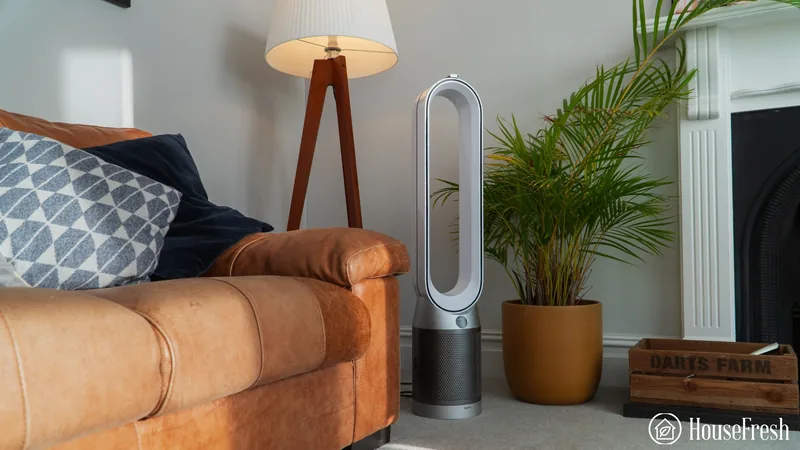
The Dyson Purifier Cool TP07 is the premium pick for buyers who want a combined purifier and cooling fan with Dyson's signature design and smart ecosystem. Best for living rooms and bedrooms where the fan function replaces a standalone unit.
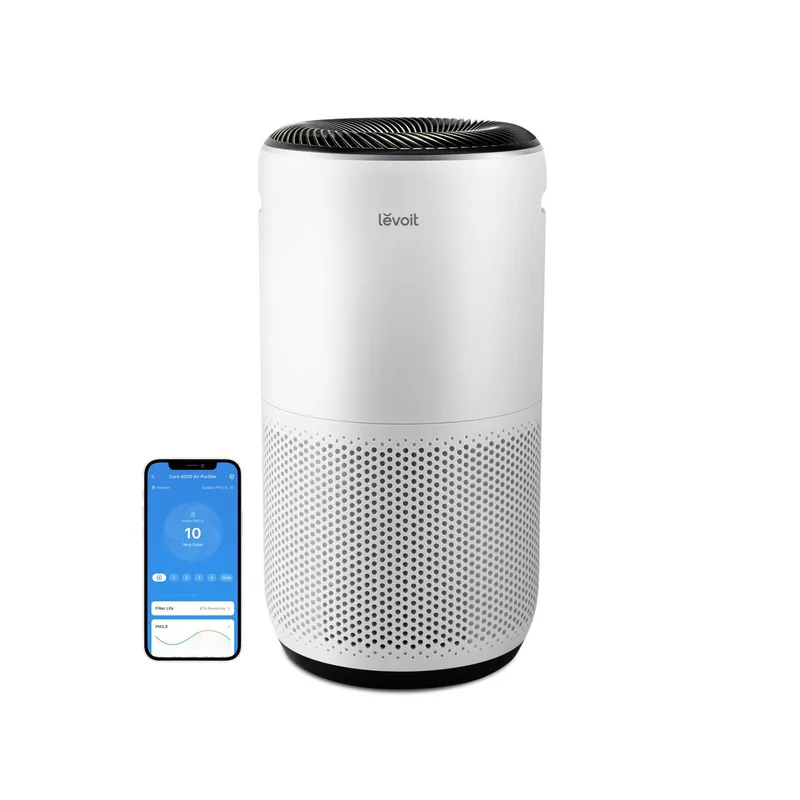
The Levoit Core 400S is the value champion. Full smart features, laser PM2.5 sensor, comparable CADR, and whisper-quiet operation at less than half the Dyson's price. Best for buyers who want effective air purification without paying the design premium.
Sources & References
- EPA — Indoor Air Quality Guide — EPA guidance on portable air cleaners, HEPA filtration, and room sizing for residential air purification
- AHAM (Association of Home Appliance Manufacturers) — CADR certification program and standardized testing methodology for portable air cleaners
- EPA — Guide to Air Cleaners in the Home (2nd Edition) — Recommendations on air changes per hour (ACH) and effective room coverage for residential purifiers
- Dyson Product Specifications — Manufacturer-published specifications for the Dyson Purifier Cool TP07
- Levoit Product Specifications — Manufacturer-published specifications for the Levoit Core 400S
This guide was researched and written by the AirQualityNest editorial team. We update our content regularly to reflect the latest products, pricing, and research.
Frequently Asked Questions
Is the Dyson TP07 worth $379 more than the Levoit 400S?+
For pure air purification, no. The Levoit Core 400S matches or slightly exceeds the Dyson TP07 on CADR (256 vs ~250 CFM), runs quieter (24 dB vs 30 dB on low), and costs $379 less at purchase. Over three years, the total ownership cost gap is roughly $360-390. The Dyson's premium is justified only if you value its bladeless cooling fan function, premium design, and Dyson ecosystem integration. If those features do not matter to you, the Levoit is the objectively better value.
Can the Dyson TP07 replace both a fan and an air purifier?+
Yes, the Dyson TP07 functions as both a bladeless cooling fan and a HEPA air purifier simultaneously. It provides smooth, steady airflow through its amplifier loop while filtering air through the sealed HEPA H13 and carbon filters in the base. However, its cooling output is less powerful than a dedicated high-performance fan, and its CADR (~250) is moderate compared to dedicated purifiers. It works best as a convenient two-in-one for rooms under 450 sq ft where neither the cooling nor purification demands are extreme.
Which is better for bedroom use — the Dyson TP07 or Levoit 400S?+
The Levoit Core 400S is the better bedroom purifier for most people. It operates at just 24 dB on its lowest setting — essentially inaudible — compared to the Dyson's 30 dB. The Levoit also has a display-off sleep mode and a responsive auto mode that keeps the fan on low when PM2.5 levels are stable overnight. The Dyson TP07 is still a fine bedroom option, and its gentle airflow can provide a pleasant breeze for sleepers who like air movement, but on noise alone, the Levoit has a meaningful advantage.
How often do you replace filters on each purifier?+
The Dyson TP07 uses a combined HEPA and carbon filter unit that lasts approximately 12 months, costing about $60-70 per replacement. The Levoit Core 400S uses a HEPA and carbon combination filter that lasts 6-8 months, costing about $40 per replacement. Annual filter costs are roughly similar at $60-80 for either unit. The Dyson's longer replacement cycle means fewer filter changes per year, which is a minor convenience advantage.
Do the Levoit 400S and Dyson TP07 both work with Alexa?+
Yes, both purifiers support Amazon Alexa voice control for hands-free operation — you can turn them on and off, adjust fan speeds, and check status by voice. The Dyson TP07 also supports Apple Siri Shortcuts and Google Assistant. The Levoit Core 400S supports Alexa and Google Assistant but does not support Siri. If you are in the Apple ecosystem and want voice control, the Dyson has an edge; for Alexa and Google users, both are fully supported.
Related Comparisons and Guides
Dyson vs Blueair Comparison
How Dyson models stack up against Blueair's premium purifiers
Levoit 400S vs Blueair 211+ Comparison
Two popular mid-range purifiers go head to head
CADR Rating Explained
What CADR means and how to use it to size your purifier
Best Smart Air Purifiers
Top picks for app-connected purifiers with auto mode and sensors
Air Purifier Sizing Guide
How to choose the right purifier for your room size
Continue Reading
Best Air Purifiers for Open Floor Plans in 2026: High-CADR Models That Cover It All
The best air purifiers for open floor plans ranked by CADR, coverage area, and noise. High-performance HEPA purifiers that handle 500-1,500+ sq. ft. open spaces.
Best Smart Humidifiers in 2026 (Wi-Fi, App Control & Auto Humidity)
The best smart humidifiers with Wi-Fi, app control, and auto humidity adjustment. Top picks for Alexa, Google Home, and smart home integration.
The 5 Best Portable Air Quality Monitors in 2026
Monitor your air quality on the go. We tested the best portable and compact air quality monitors for accuracy, battery life, and sensor range.