Dyson and Blueair sit at different ends of the premium air purifier market. Dyson is the household name known for sleek industrial design, bladeless fans, and a full smart ecosystem. Blueair is the Swedish specialist that has spent three decades perfecting air filtration with its proprietary HEPASilent technology. Both brands charge more than budget competitors — but for very different reasons.
This guide compares three of their most popular models head-to-head to help you decide which brand (and which specific purifier) is the right fit for your home.
Key Takeaways
- 1The Dyson Big Quiet Formaldehyde delivers the highest CADR (423) and largest room coverage (1,076 sq ft) of the three, but costs nearly double the Blueair.
- 2The Blueair Blue Pure 211+ offers the best value per CADR dollar, with 350 CADR at just $299.99.
- 3The Dyson TP07 has the most advanced smart features and app integration, but its CADR (~250) is lowest of the group.
- 4Blueair replacement filters cost significantly less per year, giving it a long-term cost advantage.
- 5For raw air-cleaning power on a budget, Blueair wins. For design, smart home integration, and premium build, Dyson wins.
Quick Answer
Is Dyson or Blueair better?
It depends on what you value most. Blueair offers stronger filtration performance per dollar — the Blue Pure 211+ delivers 350 CADR at $299.99 with low ongoing filter costs. Dyson offers premium design, superior smart features, and unique extras like formaldehyde destruction, but at significantly higher prices. If budget and pure air-cleaning power are your priorities, choose Blueair. If design, smart home integration, and the Dyson ecosystem matter to you, the premium is justified.
Head-to-Head Specs
| Feature | Dyson Big Quiet Formaldehyde | Blueair Blue Pure 211+ | Dyson Purifier Cool TP07 |
|---|---|---|---|
| Price | $1,029.00 | $299.99 | $560.99 |
| CADR | 423 CFM | 350 CFM | ~250 CFM |
| Room Coverage | 1,076 sq ft | 540 sq ft | 800 sq ft |
| Filtration | HEPA H13 + Catalytic Oxidation | HEPASilent + Carbon | HEPA H13 + Carbon |
| Noise (Low/High) | 20-48 dB | 31-56 dB | 30-55 dB |
| Smart Features | Dyson Link app, auto mode, air quality sensors | None (basic model) | Dyson Link app, auto mode, Alexa/Siri |
| Fan Function | Whole-room purified airflow | Purifier only (360-degree intake) | Purified cooling fan |
| Formaldehyde Removal | Yes (catalytic oxidation) | No | No |
| Annual Filter Cost | ~$80-100 | ~$40-50 | ~$70-80 |
| Weight | 17.4 lbs | 13.2 lbs | 16.2 lbs |
1. CADR and Filtration Performance
Winner: Dyson Big Quiet (raw CADR) / Blueair 211+ (CADR per dollar)
The Dyson Big Quiet Formaldehyde leads with a CADR of 423 CFM — the highest of any Dyson purifier and competitive with units twice its size. It uses sealed HEPA H13 filtration (99.97% capture at 0.3 microns) combined with a catalytic oxidation filter that continuously breaks down formaldehyde into water and CO2. This catalytic filter never needs replacement, which is a genuine engineering advantage for homes with new furniture, flooring, or renovation off-gassing.
The Blueair Blue Pure 211+ delivers 350 CADR using Blueair's proprietary HEPASilent technology. This hybrid approach electrically charges incoming particles before they reach the filter media, allowing Blueair to use a less dense filter that achieves high airflow with lower resistance. The result is strong CADR relative to the unit's size and price. However, the electrostatic charging process does produce trace ozone — well below the California CARB safety limit of 0.050 ppm, but worth noting for extremely sensitive individuals.
The Dyson Purifier Cool TP07 has the lowest CADR of the three at roughly 250 CFM. Dyson does not officially publish CADR ratings for all models (they use their own POLAR metric), but third-party estimates and customer reports place the TP07 significantly behind the Big Quiet and the Blueair 211+. The TP07 is a tower fan and purifier combined, and its narrow airflow path limits how much air it can process compared to dedicated purifiers.
Value perspective: The Blueair 211+ delivers approximately 1.17 CADR per dollar spent. The Dyson Big Quiet delivers 0.73 CADR per dollar. If air-cleaning throughput is your primary concern, the Blueair is the better investment.
2. Room Coverage
Winner: Dyson Big Quiet Formaldehyde
| Model | Rated Coverage | Recommended for 4+ ACH |
|---|---|---|
| Dyson Big Quiet Formaldehyde | 1,076 sq ft | ~700-800 sq ft |
| Dyson Purifier Cool TP07 | 800 sq ft | ~450-500 sq ft |
| Blueair Blue Pure 211+ | 540 sq ft | ~350-400 sq ft |
Manufacturer coverage ratings typically assume 2 air changes per hour (ACH). For effective allergen and particle removal, most experts recommend at least 4 ACH. At that threshold, the Dyson Big Quiet still handles very large rooms and open-plan living spaces comfortably. It is genuinely suited for great rooms, combined kitchen-living areas, and loft spaces.
The Blueair 211+ is best suited for a single large room — a living room, bedroom, or home office up to about 400 sq ft at the recommended 4 ACH rate.
The TP07 falls in between, but its tall, narrow tower design disperses air less evenly than the other two models. In larger rooms, the TP07's lower CADR becomes a limiting factor despite its generous rated coverage.
3. Noise Levels
Winner: Dyson Big Quiet Formaldehyde
| Setting | Dyson Big Quiet | Blueair 211+ | Dyson TP07 |
|---|---|---|---|
| Low | 20 dB | 31 dB | 30 dB |
| High | 48 dB | 56 dB | 55 dB |
The Dyson Big Quiet lives up to its name. At 20 dB on its lowest setting, it is essentially inaudible — quieter than a whisper, quieter than ambient noise in most rooms. This makes it one of the quietest high-CADR purifiers available, and a genuine standout for bedroom use despite its large size.
The Blueair 211+ is noisier on both low and high settings. At 31 dB on low, it produces a noticeable but gentle white noise. On high (56 dB), it is audible across the room — comparable to a normal conversation. For bedrooms, many users keep it on a low or medium setting overnight.
The Dyson TP07 is similar to the Blueair on noise, sitting at 30 dB on low and 55 dB at maximum. Its fan function can create additional turbulence noise depending on the oscillation setting.
Key insight: The Dyson Big Quiet achieves both the highest CADR and the lowest noise — a combination that is unusual in air purifiers, where higher airflow typically means more noise. This is the Big Quiet's strongest selling point.
4. Smart Features and App Control
Winner: Dyson (both models)
Dyson Smart Ecosystem
Both Dyson purifiers connect to the Dyson Link app, which provides:
- Real-time air quality monitoring (PM2.5, PM10, VOCs, NO2, formaldehyde on the Big Quiet)
- Historical air quality graphs and trends
- Remote control from anywhere
- Scheduling and timer programming
- Auto mode with intelligent fan speed adjustment
- Integration with Apple Siri Shortcuts, Amazon Alexa, and Google Assistant
- Filter life monitoring with replacement reminders
The Dyson app is widely regarded as one of the best appliance apps available — responsive, well-designed, and genuinely useful. The air quality data alone justifies the connected experience for many users.
Blueair Blue Pure 211+
The Blue Pure 211+ has no smart features. There is no app, no Wi-Fi connectivity, no air quality sensor, and no auto mode. It is a manual purifier with a single-button speed control and a filter replacement indicator LED. This simplicity is either a drawback or a feature depending on your perspective — some buyers appreciate the lack of connectivity requirements and potential data collection.
Blueair does offer smart features on its higher-end models (like the HealthProtect 7470i and Blue Pure 311i+), but the 211+ remains intentionally basic.
If smart home integration, real-time air quality data, or app-based scheduling matter to you, Dyson is the clear choice.
5. Design and Build Quality
Winner: Subjective — Dyson for aesthetics, Blueair for simplicity
Dyson
Dyson purifiers are design statements. The Big Quiet Formaldehyde is a large, architectural piece with Dyson's signature amplifier loop and solid construction. It is meant to be seen. The TP07 is the classic Dyson tower form — tall, slim, and unmistakably modern. Both are built with premium materials and feel substantial.
The trade-off is size. The Big Quiet is a large appliance that requires dedicated floor space. The TP07, while slender, stands nearly 3.5 feet tall and demands vertical clearance.
Blueair
The Blue Pure 211+ takes a completely different approach. It is a fabric-wrapped cylinder with a removable pre-filter sleeve that comes in multiple colors (blue, dark gray, and more). The design is Scandinavian-minimal — clean, soft, unobtrusive. It blends into rooms rather than commanding attention.
Build quality is solid but simpler than Dyson. The 211+ feels like a well-made appliance rather than a luxury object. For buyers who want their purifier to disappear into the background, Blueair's understated approach is appealing.
6. Filter Replacement Costs (Annual)
Winner: Blueair Blue Pure 211+
| Annual Cost | Dyson Big Quiet | Blueair 211+ | Dyson TP07 |
|---|---|---|---|
| HEPA filter | ~$70 | ~$30-35 | ~$60 |
| Carbon filter | ~$20 (combined) | ~$10-15 | ~$15 |
| Catalytic filter | $0 (never replace) | N/A | N/A |
| Total annual | ~$80-100 | ~$40-50 | ~$70-80 |
| 3-year filter total | $240-300 | $120-150 | $210-240 |
Blueair filters are significantly cheaper to replace. The Blue Pure 211+ combination filter runs about $40-50 per year — roughly half what either Dyson purifier costs in annual filters. Over three years, this saves $120-150 compared to the Dyson models.
Dyson's catalytic oxidation filter on the Big Quiet is worth noting — it never needs replacement, which is a long-term advantage if formaldehyde is a concern. But the standard HEPA and carbon filters still need regular replacement at Dyson-level pricing.
7. Price and Value Proposition
Winner: Blueair Blue Pure 211+ (value) / Dyson Big Quiet (premium performance)
3-Year Total Cost of Ownership
| Cost Factor | Dyson Big Quiet | Blueair 211+ | Dyson TP07 |
|---|---|---|---|
| Purchase | $1,029.00 | $299.99 | $560.99 |
| Filters (3 years) | ~$270 | ~$135 | ~$225 |
| Electricity (3 years, est.) | ~$55 | ~$40 | ~$50 |
| 3-Year Total | ~$905 | ~$475 | ~$836 |
| Cost per CADR point | $2.14 | $1.36 | $3.34 |
The Blueair Blue Pure 211+ costs less than half of either Dyson purifier over three years. Its cost per CADR point ($1.36) is dramatically better than the Dyson TP07 ($3.34) and meaningfully better than the Dyson Big Quiet ($2.14).
However, raw value is not the only consideration. The Dyson Big Quiet delivers capabilities no Blueair model at this price can match: 1,076 sq ft coverage, 20 dB whisper operation, catalytic formaldehyde destruction, and a full smart ecosystem. You are paying for features that genuinely do not exist in the Blueair lineup at this price point.
The Dyson TP07 is the hardest to justify on value alone. Its CADR is the lowest, its price is nearly as high as the Big Quiet, and its main differentiator — the cooling fan function — may not justify the premium over a dedicated purifier plus a separate fan.
8. Who Should Buy Which
Buy the Dyson Big Quiet Formaldehyde if:
- You need to cover a very large room or open floor plan (700+ sq ft)
- Whisper-quiet operation is non-negotiable (20 dB low setting)
- You want real-time air quality monitoring and app control
- Formaldehyde from new furniture, flooring, or renovations is a concern
- Design and build quality are part of the purchase decision
- Budget is not the primary constraint
Buy the Blueair Blue Pure 211+ if:
- You want the best air-cleaning performance per dollar spent
- Your room is under 500 sq ft
- You prefer simple, manual operation without apps or connectivity
- Lower long-term costs (filters and electricity) matter
- You like the understated Scandinavian design aesthetic
- You want a proven workhorse purifier with a strong track record
Buy the Dyson Purifier Cool TP07 if:
- You want a combined purifier and cooling fan in one device
- You are already invested in the Dyson smart home ecosystem
- Your room is under 500 sq ft and you value the app experience
- Floor space is limited (slim tower footprint)
- You prioritize smart features over raw CADR
Skip the TP07 and consider alternatives if:
- Pure air cleaning performance is your priority (the Blueair 211+ offers more CADR for half the price)
- You need coverage for rooms larger than 500 sq ft at 4+ ACH
- You want the best Dyson experience (the Big Quiet is better in almost every metric)
The Bottom Line
Blueair wins on value. The Blue Pure 211+ delivers 350 CADR at $299.99 with the lowest filter costs of the group. It is a straightforward, no-frills purifier that cleans air efficiently and affordably. For single-room use where you want the most clean air per dollar, this is the smarter buy.
Dyson wins on the premium experience. The Big Quiet Formaldehyde is the superior machine — highest CADR, quietest operation, best smart features, largest coverage, and unique formaldehyde destruction. At $1,029.00, it costs nearly double the Blueair, but it does things no $300 purifier can.
The TP07 is the toughest sell. Unless you specifically need its cooling fan function or are committed to the Dyson ecosystem, the Big Quiet is the better Dyson and the Blueair 211+ is the better value.
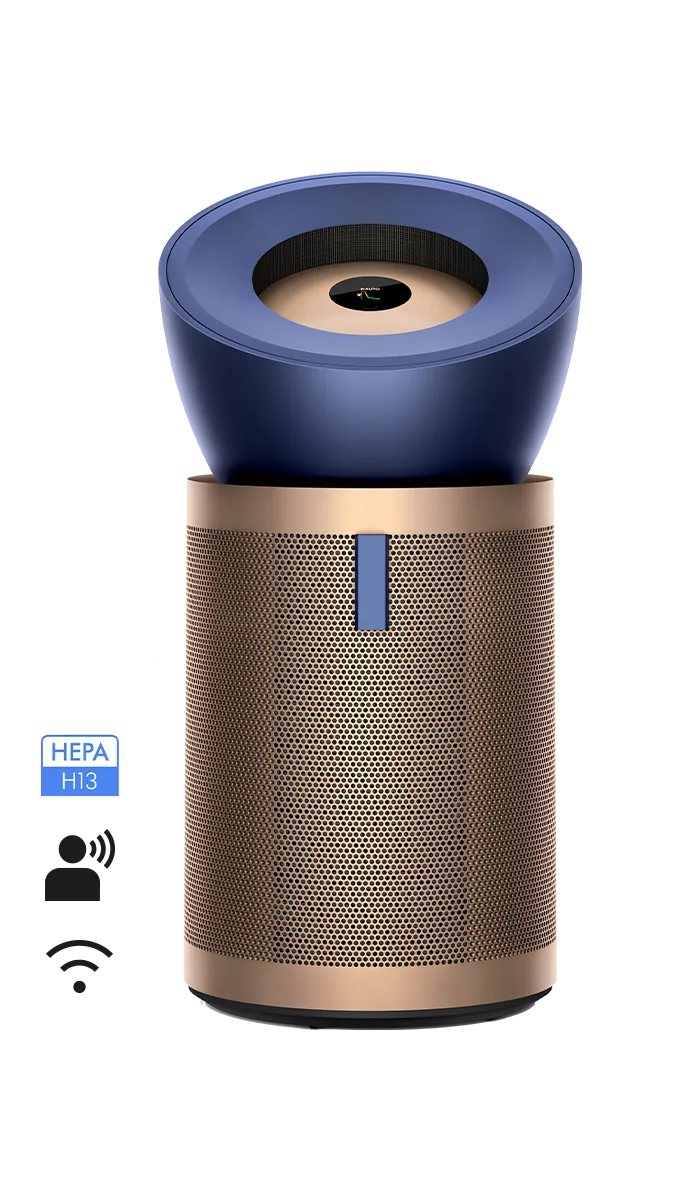
The Dyson Big Quiet Formaldehyde is the premium pick. Best for large spaces, quiet bedrooms, and buyers who want the most capable purifier regardless of price. Its combination of high CADR, ultra-quiet operation, and smart features is unmatched.
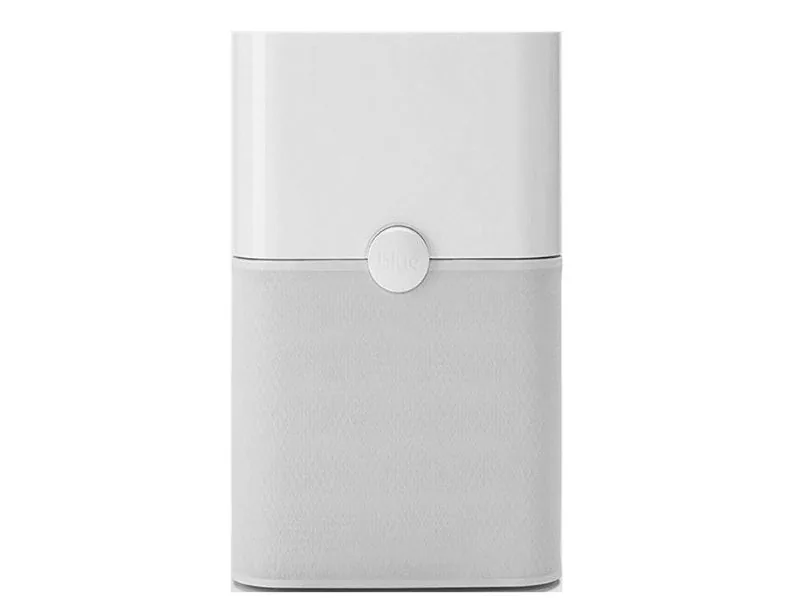
The Blueair Blue Pure 211+ is the value champion. Best for buyers who want strong filtration performance without paying for features they may not use. It does one thing — clean air — and it does it very well.
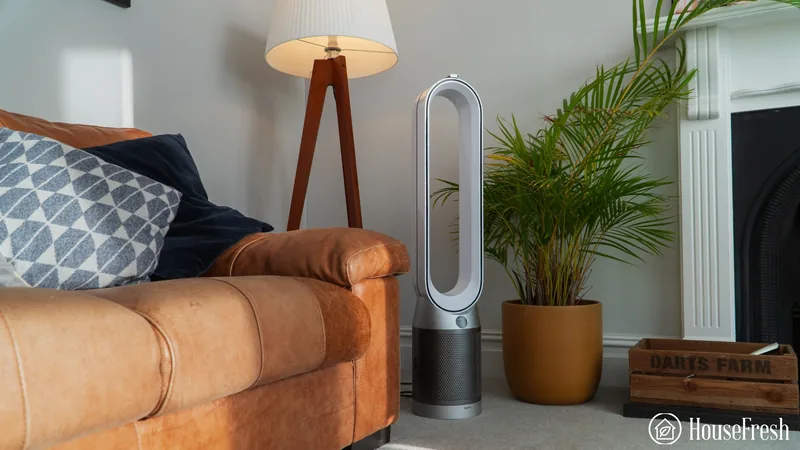
The Dyson Purifier Cool TP07 is a solid dual-function device. Best for buyers who want a purifier and cooling fan in a single slim tower with full app control.
Sources & References
- AHAM (Association of Home Appliance Manufacturers) — CADR certification program and testing standards for portable air cleaners
- California Air Resources Board (CARB) — Ozone emission certification for air cleaning devices sold in California
- Dyson Product Specifications — Manufacturer-published specifications for Dyson purifier models
- Blueair Product Specifications — Manufacturer-published specifications for Blueair purifier models
This guide was researched and written by the AirQualityNest editorial team. We update our content regularly to reflect the latest products, pricing, and research.
Frequently Asked Questions
Is Dyson better than Blueair for air purification?+
Not necessarily. Blueair's Blue Pure 211+ delivers 350 CADR at $299.99, offering more air-cleaning power per dollar than the Dyson TP07. The Dyson Big Quiet Formaldehyde has the highest CADR (423) and quietest operation (20 dB) of any model in this comparison, but at nearly double the price. Choose Dyson for premium features and design; choose Blueair for the best filtration value.
Which is quieter, Dyson or Blueair?+
Dyson is quieter across the board. The Dyson Big Quiet Formaldehyde operates at just 20 dB on its lowest setting — essentially inaudible. The Blueair Blue Pure 211+ starts at 31 dB on low, which is a soft hum. On maximum, the Dyson Big Quiet reaches 48 dB versus the Blueair's 56 dB. If quiet operation is a priority, particularly for bedroom use, the Dyson Big Quiet has a significant advantage.
Do Blueair purifiers produce ozone?+
Blueair's HEPASilent technology uses electrostatic charging as part of its filtration process, which produces trace amounts of ozone. However, all Blueair models are certified by the California Air Resources Board (CARB) with ozone emissions well below the safety limit of 0.050 ppm. For most people, this is not a concern. If you have severe asthma, respiratory sensitivities, or pet birds, consult with your doctor or consider a pure mechanical HEPA purifier like the Dyson models.
Are Dyson air purifier filters expensive?+
Yes, Dyson filters are among the more expensive on the market. Annual filter costs run approximately $80-100 for the Big Quiet Formaldehyde and $70-80 for the TP07. By comparison, Blueair Blue Pure 211+ filters cost roughly $40-50 per year. Over three years, filter costs alone can add $120-150 more for a Dyson versus a Blueair. The Big Quiet's catalytic oxidation filter is a notable exception — it never needs replacement.
Can the Dyson TP07 replace a fan and an air purifier?+
The Dyson Purifier Cool TP07 does function as both a cooling fan and an air purifier, and for moderate needs it can replace both devices. However, it has trade-offs compared to dedicated units. Its CADR (~250) is lower than the Blueair 211+ (350) and much lower than the Dyson Big Quiet (423). Its cooling output is less powerful than a dedicated Dyson fan. If you need strong air purification or powerful cooling, separate devices will outperform the TP07. It works best as a convenient all-in-one for small to medium rooms where neither demand is extreme.
Related Reading
Dyson Big Quiet Formaldehyde Review
Full editorial review based on specs and aggregated customer feedback
Blueair Blue Pure 211+ Review
In-depth look at Blueair's popular mid-range purifier
Dyson Purifier Cool TP07 Review
Is the combined fan-purifier worth the premium?
Coway vs Winix Comparison
Another popular head-to-head at a lower price point
Coway vs Levoit Comparison
Three mid-range purifiers compared on every metric
Best Premium Air Purifiers
Our top picks for buyers with higher budgets
Continue Reading
Best Air Purifiers for Open Floor Plans in 2026: High-CADR Models That Cover It All
The best air purifiers for open floor plans ranked by CADR, coverage area, and noise. High-performance HEPA purifiers that handle 500-1,500+ sq. ft. open spaces.
Best Smart Humidifiers in 2026 (Wi-Fi, App Control & Auto Humidity)
The best smart humidifiers with Wi-Fi, app control, and auto humidity adjustment. Top picks for Alexa, Google Home, and smart home integration.
The 5 Best Portable Air Quality Monitors in 2026
Monitor your air quality on the go. We tested the best portable and compact air quality monitors for accuracy, battery life, and sensor range.