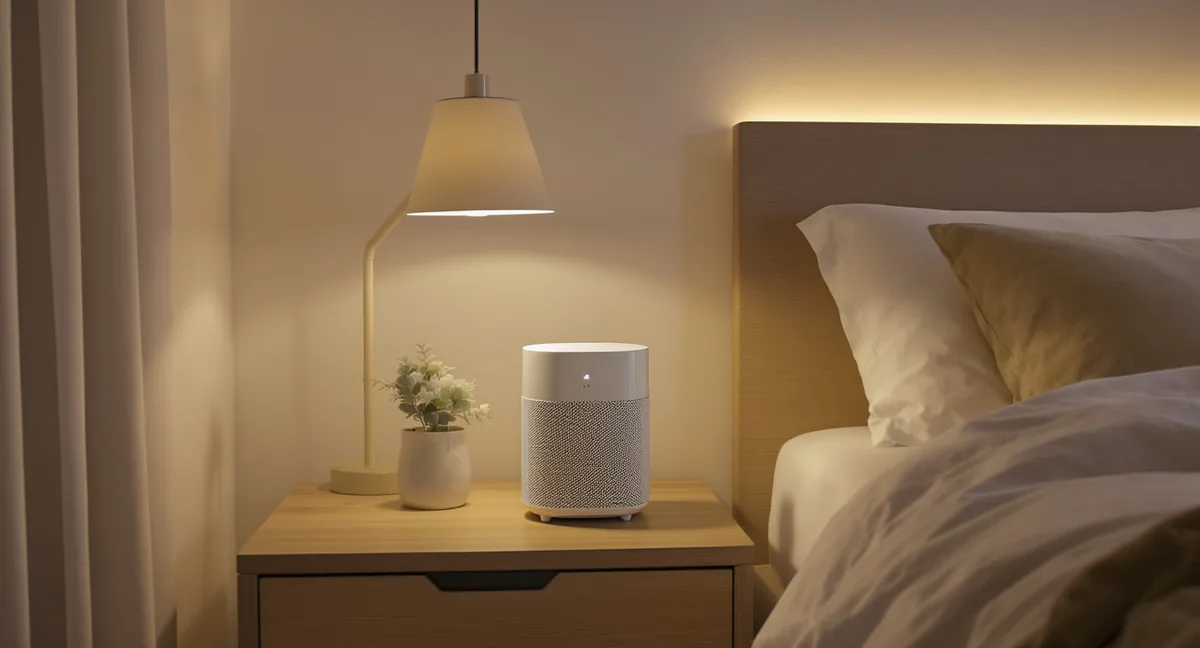
Your dorm room is probably the worst air quality environment you have lived in. A 150-to-250-square-foot box shared with another person, connected to an aging HVAC system you cannot control, furnished with pressed-wood pieces off-gassing formaldehyde, and cleaned with whatever industrial products your housing department stocks. You have no say over the building's ventilation, your roommate's habits, or what drifts in through hallway doors that never fully close.
According to the EPA, indoor air is typically 2 to 5 times more polluted than outdoor air. Dorm rooms — with their small volumes, high occupancy density, and limited ventilation — concentrate pollutants far beyond what that average suggests. The good news: a few affordable, compact devices and some practical habits can make a significant difference, even on a student budget.
Key Takeaways
- 1Dorm rooms concentrate pollutants at higher levels than typical homes due to small room volume, shared HVAC systems, high occupancy density, and limited ventilation control
- 2The most common dorm air pollutants are dust and allergens, VOCs from new furniture and cleaning products, mold from poor humidity control, and wildfire smoke infiltration during fire season
- 3A compact HEPA air purifier under $100 — like the Levoit Core 300 — is the single highest-impact purchase for dorm air quality, covering rooms up to 219 sq. ft. at noise levels quiet enough for sleep
- 4Check your school's housing policies before bringing a humidifier — many dorms restrict or ban them due to mold risk, while air purifiers are almost universally allowed
- 5Plan filter replacements around the academic calendar: replace at the start of fall semester and again at the start of spring semester for consistent performance all year
Quick Answer
What is the best air purifier for a dorm room?
The Levoit Core 300 is the best air purifier for most dorm rooms. At $99.00, it fits a student budget. Its compact cylinder design takes up minimal desk or floor space. It covers rooms up to 219 sq. ft. with True HEPA H13 filtration that captures 99.97% of particles down to 0.3 microns — including dust, pollen, mold spores, and smoke. At its lowest setting, it runs at just 24 dB, which is quieter than a whisper and will not disturb sleep or studying. If you want smart app control and a built-in air quality sensor for just $10 less, the Levoit Vital 200S is an excellent alternative.
Why Dorm Room Air Quality Is Uniquely Bad
Dorm rooms present a combination of air quality challenges that you will not find in a typical apartment or house. Every factor works against you:
Small room volume concentrates everything. A standard dorm room is 150 to 250 square feet — roughly the size of a large walk-in closet in a suburban home. Two people sleeping, breathing, and living in that space produce CO2, moisture, and body-generated particles at a density far higher than normal residential occupancy. The same amount of dust, cooking odors, or off-gassing that would dissipate in a 1,000-square-foot apartment saturates a dorm room almost instantly.
You cannot control the HVAC system. Most dorms use centralized heating and cooling with limited individual room control. Many older residence halls have steam radiators or fan coil units with no filtration whatsoever — they move air but do not clean it. The ductwork connects your room to dozens of others, sharing whatever your neighbors generate: cooking fumes, cigarette or vape aerosol, pet dander from emotional support animals, and cleaning product residue.
The building is old. The average age of a U.S. college building is over 40 years, according to the Society for College and University Planning. Older buildings often have deteriorating insulation (potential asbestos in pre-1980 construction), aging ductwork harboring decades of dust, poorly sealed windows, and plumbing that promotes mold growth behind walls. Deferred maintenance budgets mean these issues persist for years.
Windows are restricted or ineffective. Many dorms limit how far windows can open (or seal them entirely above the ground floor) for safety reasons. Without cross-ventilation — which requires openings on at least two walls — opening a single window does little to flush out pollutants. You are stuck with whatever air the building provides.
Turnover brings new pollutants every year. Each fall, dorm rooms receive new or refurbished furniture, fresh paint, new carpet or vinyl flooring, and new mattresses. All of these off-gas volatile organic compounds most aggressively during their first few months — exactly when you move in. By the time off-gassing slows down, the academic year is nearly over.
Common Dorm Room Pollutants
Understanding what you are breathing helps you address the right problems.
Dust and Allergens
Dorm rooms accumulate dust rapidly. Two people shedding skin cells, tracking in outdoor particles, and stirring up settled dust in a small space keeps airborne particle counts elevated. Add in communal laundry lint, hallway traffic, and infrequent professional cleaning, and most dorm rooms have particulate levels well above EPA-recommended thresholds. If you or your roommate have dust mite allergies, the shared close-quarters environment intensifies exposure.
VOCs from Furniture and Finishes
New pressed-wood desks, dressers, and bed frames release formaldehyde and other VOCs. Vinyl flooring emits phthalates. Fresh wall paint off-gasses for weeks. A 2019 study published in Building and Environment found that newly furnished small rooms can have formaldehyde levels exceeding World Health Organization guidelines for weeks after installation. In a dorm room where the furniture-to-air-volume ratio is high, this concentration effect is amplified.
Mold and Mildew
Poor ventilation, communal bathrooms, wet towels draped over chairs, and steam from microwaved meals all add moisture to an already stuffy space. Many dorms have documented mold problems in bathroom ceilings, window frames, and behind furniture pushed against exterior walls. The CDC notes that mold exposure can cause nasal congestion, throat irritation, coughing, and eye irritation — and can trigger asthma attacks in students with asthma.
Wildfire Smoke
Wildfire smoke season now impacts much of the United States, and college campuses are not exempt. When outdoor air quality deteriorates, that smoke infiltrates dorm buildings through leaky windows, ventilation intakes, and every opened door. Fine particulate matter (PM2.5) from wildfire smoke penetrates deep into the lungs. During the 2023 Canadian wildfire events, universities across the Northeast and Midwest measured indoor PM2.5 levels 5 to 10 times above normal in residence halls without upgraded filtration.
Cleaning Product Residue
Housing staff typically clean common areas with industrial-strength products containing ammonia, bleach, and other chemicals that leave lingering VOCs. These fumes travel through hallways and under doors into your room. Your own cleaning products add to the load — a single use of an aerosol disinfectant can spike VOC levels in a small dorm room for hours.
The Best Air Purifier for Dorm Rooms
For most college students, a compact HEPA air purifier is the single best investment for dorm air quality. It addresses dust, allergens, mold spores, smoke particles, and some VOCs — the full spectrum of common dorm pollutants — in a single device.
The ideal dorm purifier needs to check several boxes: compact enough to fit on a desk or nightstand, quiet enough to run during sleep and studying, affordable on a student budget, and powerful enough to actually clean the air in a small room. Two models stand out.
Our Top Pick: Levoit Core 300
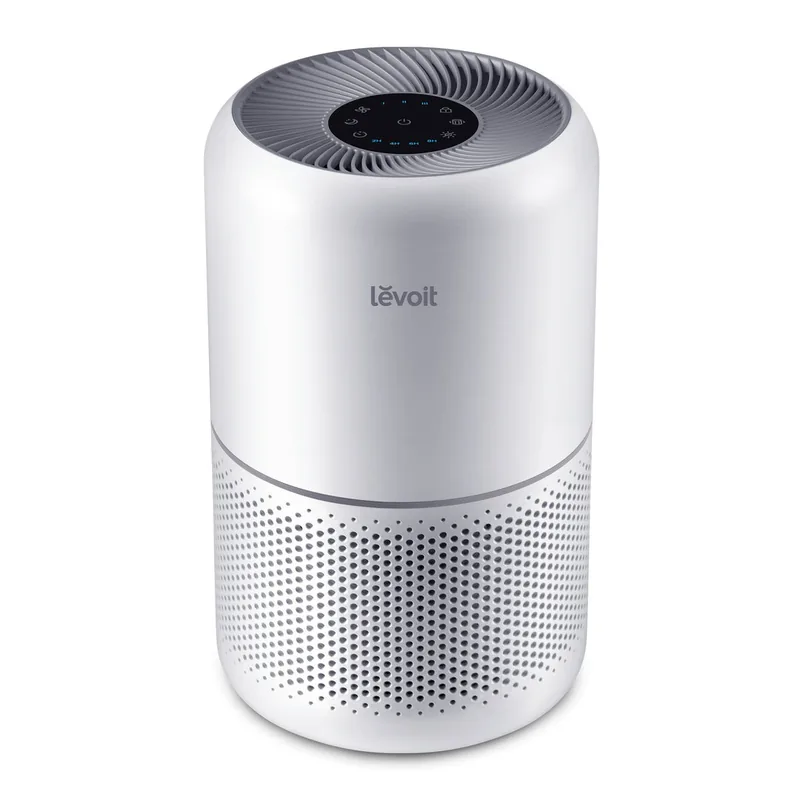
The Levoit Core 300 is tailor-made for dorm life. Its cylindrical design has a footprint barely larger than a dinner plate, so it fits on a desk corner, nightstand, or even the floor beside your bed without blocking walkways. At $99.00, it costs less than most textbooks.
Why it works for dorms:
- True HEPA H13 filtration captures 99.97% of particles down to 0.3 microns — dust, pollen, mold spores, pet dander, and smoke particles
- 219 sq. ft. coverage handles any standard dorm room with margin to spare
- 24 dB on the lowest setting — quieter than a whisper, so it will not wake a sleeping roommate or disrupt studying
- Compact cylinder stands just 14.2 inches tall and 8.7 inches wide
- Multiple filter options — Levoit sells replacement filters optimized for allergens, smoke, or toxin absorption (VOCs and formaldehyde), so you can match the filter to your biggest concern
- No smart features to complicate things — three fan speeds, a sleep mode button, and a filter indicator. That is it. Simple, reliable, effective.
The main limitation is the lack of an air quality sensor or auto mode. You set the fan speed manually. For a dorm room, this is not a significant drawback — run it on the medium or low setting whenever you are in the room, and bump it to high for 20 minutes after cooking, cleaning, or on smoky air days.
Filter replacements run approximately $16 to $20 every 6 to 8 months, which aligns neatly with the academic semester schedule.
Budget Smart Alternative: Levoit Vital 200S
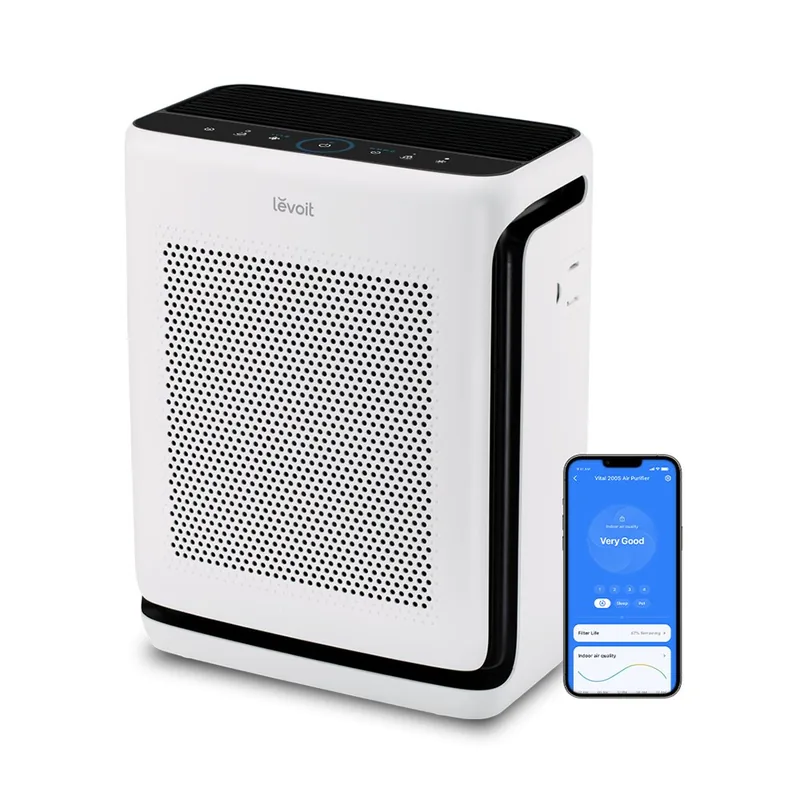
If you want a purifier that thinks for itself, the Levoit Vital 200S costs $10 less than the Core 300 and adds smart features that justify the slightly different design.
What sets it apart:
- Built-in PM2.5 laser sensor detects real-time particle levels and adjusts fan speed automatically — so you do not have to babysit it
- VeSync app control lets you monitor air quality, set schedules, and adjust settings from your phone without getting out of bed
- 380 sq. ft. coverage gives you significantly more cleaning power than the Core 300, which matters if you leave your door open or want to help clean hallway air that drifts in
- Pet mode ramps up filtration for students with emotional support animals
- Side air intake means you can place it flat against a wall without blocking airflow — valuable when every inch of floor space matters
- 23 dB on the lowest setting — even quieter than the Core 300
The tradeoff: the Vital 200S has a larger rectangular footprint than the Core 300's compact cylinder. It is still small by air purifier standards, but in a tight dorm room, shape matters. The Core 300 tucks into corners and onto narrow surfaces more easily.
Both purifiers use True HEPA H13 filters and activated carbon for odor reduction. You genuinely cannot go wrong with either — the choice comes down to whether you value compactness (Core 300) or smart automation (Vital 200S).
Dorm Purifier Comparison
| Feature | Levoit Core 300 | Levoit Vital 200S |
|---|---|---|
| Price | $99.00 | $169.99 |
| Coverage | 219 sq. ft. | 380 sq. ft. |
| Noise (lowest) | 24 dB | 23 dB |
| Smart app | No | Yes (VeSync) |
| Air quality sensor | No | Yes (PM2.5 laser) |
| Auto mode | No | Yes |
| Footprint | Compact cylinder | Larger rectangle |
| Best for | Minimal desk/floor space | Set-it-and-forget-it operation |
Our recommendation: For most dorm rooms, the Core 300 at $99 is the better buy — it is compact, affordable, and more than sufficient for a typical dorm room. The Vital 200S at $169.99 makes sense if you want smart features like app control and auto mode, but for a dorm on a student budget, the Core 300 is the smarter pick.
Monitoring Your Dorm Air Quality
You cannot fix what you cannot measure. An air quality monitor shows you exactly what is in your air, alerts you when conditions worsen, and proves that your purifier is actually making a difference.
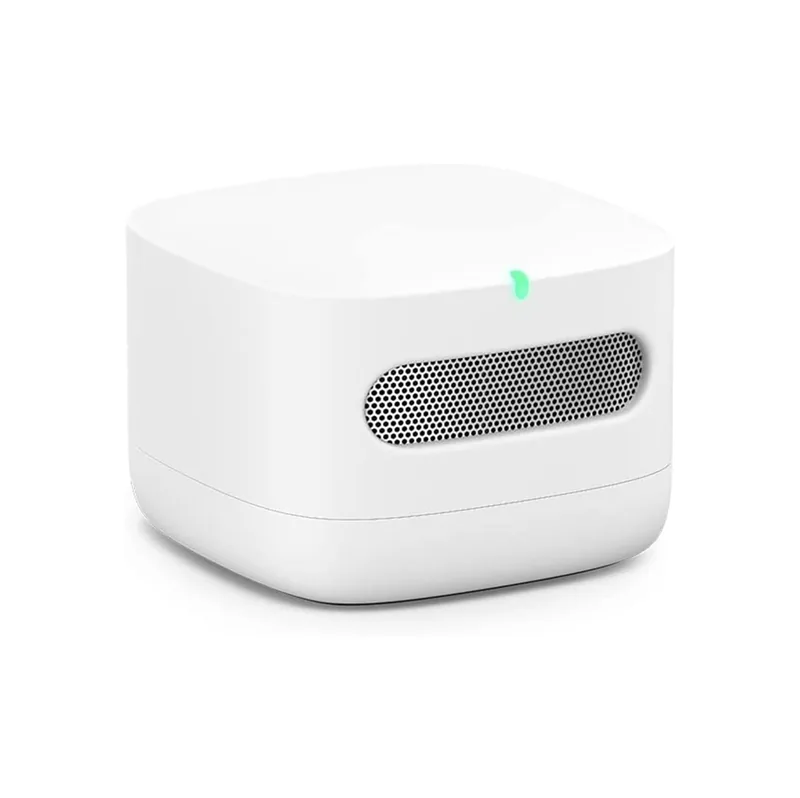
The Amazon Smart Air Quality Monitor is the most practical monitor for dorm students. At $49.99, it is affordable. It tracks PM2.5, VOCs, carbon monoxide, humidity, and temperature — the five metrics most relevant to dorm air quality. Its compact size takes up less space than a coffee mug.
If you already have an Alexa device (or your roommate does), the integration is seamless. You can ask Alexa for your air quality score, set routines that announce when air quality drops, or trigger your purifier to ramp up automatically when particles spike. The color-coded LED gives you an instant visual read — green means good, yellow means fair, red means poor.
The limitation: it does not measure radon or CO2, and it requires the Alexa ecosystem to get the most out of it. For a dorm room where radon is not typically a primary concern (you are not in a basement) and where a simple, affordable tool is what you need, these tradeoffs are reasonable.
Humidity Control in Dorms
Dorm rooms often swing between two humidity extremes. In winter, forced-air heating can drop relative humidity below 20%, causing dry skin, nosebleeds, cracked lips, and increased susceptibility to respiratory viruses. In spring and fall, poor ventilation and moisture from showers, cooking, and breathing can push humidity above 60%, creating conditions for mold growth.
The ideal range is 30 to 50% relative humidity. A simple hygrometer (available for under $10) tells you where you stand. If your dorm is consistently too dry, a small humidifier can help — but check your housing policies first.
If humidifiers are allowed in your dorm:
The Pure Enrichment MistAire Studio is the best option for dorm use. At $32.99, it is the least expensive device in this guide. Its 1.5-liter tank provides up to 25 hours of continuous mist. The whisper-quiet ultrasonic operation will not disturb your roommate, and the optional night light adds a soft glow without the overhead fluorescents.
Key dorm-friendly features:
- 250 sq. ft. coverage — sized right for a dorm room
- Automatic shutoff when the tank is empty — no risk of running dry and overheating
- 360-degree mist nozzle lets you direct moisture where you need it
- No filter to replace — just rinse the tank weekly with white vinegar to prevent mineral buildup
Important: Use distilled water if possible. Tap water minerals create white dust residue on surfaces — not something you want on your laptop, textbooks, or roommate's belongings. If distilled water is not practical, use a demineralization cartridge.
If humidifiers are banned in your dorm:
Many universities prohibit humidifiers because students forget to clean them, creating mold problems that damage the building. If your dorm has this restriction, try these alternatives:
- Place a shallow bowl of water near your radiator or heating vent — evaporation adds modest humidity
- Hang damp towels to dry inside your room rather than in the communal bathroom
- Keep your door closed when the heat is running to retain the moisture your own breathing generates
- Use a personal saline nasal spray to manage dry nasal passages directly
Roommate Considerations
Sharing a small room means your air quality decisions affect someone else, and theirs affect you.
Noise is the number one concern. Even the quietest purifier produces some sound. Have a conversation with your roommate before buying. The good news: most students find that a purifier's white noise actually helps with sleep by masking hallway sounds, slamming doors, and late-night conversations. Both the Core 300 (24 dB) and Vital 200S (23 dB) on their lowest settings are quieter than a typical dorm room's ambient noise.
Allergies change the equation. If either you or your roommate has allergies or asthma, an air purifier becomes a shared health investment, not a personal luxury. A documented allergy (with a note from a doctor) can also help if your housing office has questions about the device.
Splitting costs makes sense. A $100 air purifier split two ways is $50 each for a full academic year of clean air. Filter replacements split to $8 to $10 per person per semester. Frame it as a shared utility cost — because that is what it is.
Placement matters. Position the purifier where it can draw air from the center of the room, not buried in a corner behind a backpack. If space is tight, the Vital 200S's side-intake design lets you place it flat against a wall without blocking airflow. The Core 300's 360-degree intake works best with a few inches of clearance on all sides.
Establish cleaning responsibilities. Whoever is closer to the device handles the weekly exterior wipe-down. Split filter replacement costs. Simple agreements prevent friction.
Dorm Rules and Restrictions
Before buying anything, check your university's residence hall policies. Rules vary widely:
Air purifiers are allowed in nearly all dorms. They are low-power devices (the Core 300 draws just 26 watts — less than a laptop charger) with no moisture output, no open flame, and no safety concerns. If your housing office questions it, it is an electric fan with a filter inside.
Humidifiers are restricted or banned at many universities because of mold liability. Schools that allow them often require ultrasonic (cool mist) models and prohibit warm mist or steam vaporizers. Some require advance approval or a medical need letter. Check before you buy.
Candles, incense, and essential oil burners are almost universally banned in dorms due to fire risk. This actually makes an air purifier more important — you cannot mask odors with fragrance, so you need to remove them at the source.
Space heaters are banned at most schools. If your room is cold, report it to housing rather than trying to heat it yourself.
Extension cords may have restrictions (some schools allow only surge protectors). Both recommended purifiers plug directly into a standard outlet and draw minimal power.
If your air quality is genuinely bad — visible mold, persistent chemical odors, HVAC that blows dusty air — document it and report it to your housing office in writing. Universities have legal obligations regarding habitable living conditions. An air quality monitor gives you data to back up your complaint.
Semester Care Schedule
Aligning purifier maintenance with the academic calendar makes it easy to remember and ensures consistent performance throughout the year.
Move-In (August/September)
- Unbox and set up your purifier on day one. New dorm furniture off-gasses most aggressively in the first weeks — this is when you need filtration the most.
- Run on high for the first 48 hours to scrub initial VOCs and construction dust from any summer renovations.
- Install a fresh filter if you are reusing a purifier from last year. Starting the semester with a used filter reduces effectiveness right when pollutant loads are highest.
- Set up your air quality monitor and note baseline readings. This gives you a reference point for the rest of the year.
Mid-Semester (October/November)
- Check the filter indicator on your purifier. If you have been running it consistently, it may prompt for replacement around this time.
- Clean the pre-filter (if your model has one) by vacuuming or rinsing it. This extends HEPA filter life and maintains airflow.
- Adjust for heating season. As your building switches to heat, indoor air dries out and the HVAC system stirs up dust from dormant ductwork. Consider bumping your purifier up one speed setting during the transition.
Winter Break (December/January)
- Turn off and unplug your purifier before leaving for break. There is no point filtering an empty room, and it saves the filter life for when you need it.
- Leave the window cracked if your housing allows it. A few weeks of passive ventilation while the room is empty helps flush accumulated pollutants.
- If your room tends toward dampness, ask your RA about leaving the heat on at a low setting to prevent condensation and mold growth during extended vacancy.
Spring Semester (January/February)
- Replace the HEPA filter at the start of spring semester. If you moved in with a fresh filter in August, it has now been in use for 4 to 5 months — right in the replacement window for both the Core 300 and Vital 200S (6 to 8 month cycle).
- Monitor humidity. Winter heating makes indoor air extremely dry. If your dorm allows humidifiers, this is when you will need one most.
Allergy Season (March through May)
- Keep windows closed on high-pollen days and rely on your purifier instead of fresh air. Check local pollen counts through weather apps.
- Run the purifier on medium or high during peak pollen hours (typically morning and early evening).
- Wipe down surfaces weekly — pollen settles on desks, windowsills, and bedding. A damp cloth captures it; dry dusting just re-suspends it.
Move-Out (May/June)
- Remove and discard the used filter before storing your purifier. A dirty filter sitting in a closed device over the summer can develop musty odors and mold.
- Wipe down the purifier's interior with a dry cloth.
- Store the purifier in its original box or a sealed bag to prevent dust accumulation during summer storage.
- Empty, clean, and fully dry your humidifier if you have one. Standing water in a stored humidifier is a guaranteed mold issue.
Free and Low-Cost Tips
You do not need to spend a dollar to improve your dorm air quality. These habits make a measurable difference:
Open the window strategically. Even a few inches of opening for 15 to 20 minutes per day flushes stale air. The best time is late morning or early afternoon, when outdoor air quality tends to be best and pollen counts are lower than at dawn. Skip this on days when outdoor AQI is elevated — check AirNow.gov or your weather app.
Dust with a damp cloth weekly. Dry dusting and feather dusters just launch particles into the air. A slightly damp microfiber cloth captures dust and removes it. Focus on your desk, windowsill, headboard, and any flat surfaces where dust visibly accumulates.
Wash bedding in hot water every 1 to 2 weeks. Your bed is the single largest dust mite reservoir in the room. Hot water (130 degrees F or higher) kills dust mites. If your dorm laundry only offers warm water, run the dryer on high heat for at least 30 minutes instead.
Minimize soft surfaces. Tapestries, extra throw pillows, plush rugs, and stuffed animals all trap and release dust. This does not mean living in a bare room — just be intentional about what fabric you bring and keep it clean.
Take shoes off at the door. Outdoor shoes track in pesticides, pollen, mold spores, and fine particulate matter. A simple shoe rack by the door keeps outdoor contaminants from distributing across your floor.
Avoid aerosol sprays. Dry shampoo, aerosol deodorant, spray cleaners, and air fresheners all spike VOC and particle levels in a small room. Switch to roll-on deodorant, liquid cleaners, and skip the air fresheners entirely — your purifier handles odors without adding chemicals.
Do not block air vents. Dorm furniture arrangements often push desks, dressers, or beds against the room's supply or return vents. This chokes airflow and forces whatever ventilation the building provides to work even harder. Keep at least 6 inches of clearance around all vents.
Manage moisture actively. Use the bathroom exhaust fan during and after showers. Hang wet towels and clothes in ventilated areas, not draped over your desk chair. Wipe condensation from windows on cold mornings before it drips into the sill and promotes mold.
This guide was researched and written by the AirQualityNest editorial team. We update our content regularly to reflect the latest products, pricing, and research.
Frequently Asked Questions
Are air purifiers allowed in college dorms?+
Yes, air purifiers are allowed in virtually all college dorms. They are low-wattage electrical devices (typically 15-45 watts, less than a laptop charger) with no moisture output, no heating element, and no safety concerns. Unlike humidifiers, candles, or space heaters, air purifiers are rarely mentioned in restricted-items lists. If you are uncertain, check your university's housing policy or ask your resident advisor — but in practice, no U.S. university we are aware of restricts HEPA air purifiers in dorm rooms.
How much does it cost to run an air purifier in a dorm room?+
Very little. The Levoit Core 300 draws 26 watts on its highest setting and about 7 watts on low. Running it 24/7 on the medium setting costs approximately $2 to $3 per month in electricity at average U.S. rates. If your dorm includes electricity in housing fees — which most do — the cost is effectively zero. The only ongoing expense is filter replacements: roughly $16 to $20 every 6 to 8 months, or about $30 to $40 per academic year.
Will an air purifier help with roommate odors?+
Yes, to a degree. Air purifiers with activated carbon filters adsorb volatile organic compounds that cause many odors, including food smells, body odor, and cleaning product fumes. Both the Levoit Core 300 and Vital 200S include carbon filtration. They will not eliminate strong odors instantly, but they significantly reduce lingering smells within 15 to 30 minutes on the high setting. For immediate cooking odors, the combination of running the purifier on high and opening a window is most effective.
Can I use a humidifier in my dorm room?+
It depends on your university's housing policy. Many dorms restrict or ban humidifiers due to the mold risk they create in small, poorly ventilated rooms. Schools that allow them typically require cool-mist (ultrasonic) models and may prohibit warm-mist or steam vaporizers. Check your residence hall handbook or ask your housing office before purchasing. If humidifiers are allowed, the Pure Enrichment MistAire Studio ($32.99) is a compact, quiet option with automatic shutoff. Clean it weekly and use distilled water to prevent mineral buildup and white dust.
What should I do if my dorm room has visible mold?+
Document it immediately with photos and timestamps, then report it to your resident advisor and housing office in writing (email creates a paper trail). Do not attempt to clean large mold areas yourself — the university is responsible for remediation. While waiting for a response, run a HEPA air purifier to reduce airborne mold spore levels, keep the affected area as dry as possible, and move personal belongings away from the mold. If you experience respiratory symptoms, visit your campus health center and mention the mold exposure. Universities have legal obligations to maintain habitable conditions, and documented mold complaints typically receive prompt attention.
Sources & References
- EPA: Introduction to Indoor Air Quality — States that indoor air is typically 2-5 times more polluted than outdoor air — a problem amplified in small, densely occupied spaces like dorm rooms
- CDC: Mold and Your Health — Health effects of mold exposure including nasal congestion, throat irritation, coughing, and asthma triggers — relevant to dorm rooms with poor humidity control
- EPA: Volatile Organic Compounds in Your Home — Guidance on VOC sources including pressed-wood furniture, paint, and cleaning products — all common in newly furnished dorm rooms
- EPA: Wildfire Smoke and Indoor Air Quality — Recommendations for reducing indoor exposure to wildfire smoke using portable air cleaners with HEPA filters
- American College Health Association: Healthy Campus Guidelines — Standards for college campus environmental health including indoor air quality, ventilation requirements, and mold prevention in residence halls
Continue Reading
Best Air Purifiers Under $100
Our top-rated budget purifiers ranked by performance and value
Air Purifier Sizing Guide
How to match purifier coverage to your room size for maximum effectiveness
Air Purifier Noise Levels Explained
Understanding decibel ratings and what they mean for sleep and studying
Best Air Quality Monitors Under $100
Affordable monitors to track what you are breathing
How to Improve Indoor Air Quality
A complete guide to cleaner air at home, in apartments, and in dorms
Continue Reading

Best Air Purifiers for Open Floor Plans in 2026: High-CADR Models That Cover It All
The best air purifiers for open floor plans ranked by CADR, coverage area, and noise. High-performance HEPA purifiers that handle 500-1,500+ sq. ft. open spaces.
Best Smart Humidifiers in 2026 (Wi-Fi, App Control & Auto Humidity)
The best smart humidifiers with Wi-Fi, app control, and auto humidity adjustment. Top picks for Alexa, Google Home, and smart home integration.
The 5 Best Portable Air Quality Monitors in 2026
Monitor your air quality on the go. We tested the best portable and compact air quality monitors for accuracy, battery life, and sensor range.