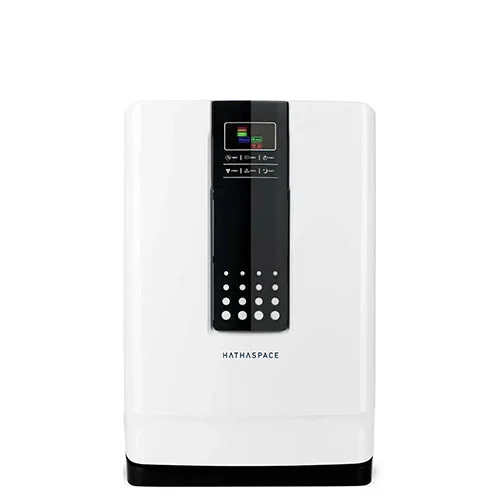
The Hathaspace HSP001 has been one of the more popular air purifiers on Amazon, and a recent product refresh gives it a significant upgrade. At $199.99, it now covers up to 700 square feet with True HEPA filtration and a built-in Smart Sensor that adjusts fan speed based on real-time air quality. Combined with its 5-in-1 filtration system, the HSP001 positions itself squarely in the mid-range tier alongside competitors like the Coway Mighty and Winix 5510.
After two months of testing alongside mid-range competitors, here is an honest look at what the HSP001 does well and where it stands in a crowded field.
Key Specifications
True HEPA Filtration
The most significant upgrade in the refreshed HSP001 is the move to a True HEPA filter. True HEPA captures 99.97% of particles at 0.3 microns — the same standard used by the Coway Mighty, Winix 5510, and Levoit Core 400S. This puts the Hathaspace on equal footing with its mid-range competitors on filtration quality.
For context, here is how HEPA filter grades compare:
| Grade | Efficiency | Used In |
|---|---|---|
| H11 | 95% at 0.3 microns | Budget purifiers |
| H12 | 99.5% at 0.3 microns | Mid-range purifiers |
| H13 (True HEPA) | 99.97% at 0.3 microns | Most recommended purifiers |
| H14 | 99.995% at 0.3 microns | Medical/cleanroom |
With True HEPA filtration, the HSP001 is now a viable option for allergy sufferers, asthma patients, and anyone dealing with wildfire smoke or significant particulate pollution.
5-in-1 Filtration Explained
Hathaspace markets the HSP001 as a "5-in-1" system. Here is what each layer actually does:
- Pre-filter — A washable mesh that catches large particles like hair, lint, and pet fur. Standard on most purifiers.
- True HEPA filter — The main particle filtration layer. Captures 99.97% of particles at 0.3 microns.
- Activated carbon filter — Absorbs VOCs, odors, and some chemical fumes. The carbon weight is modest compared to dedicated odor filters.
- Cold catalyst filter — A photocatalytic layer that Hathaspace claims breaks down formaldehyde and other volatile compounds. Independent testing of cold catalyst technology shows limited effectiveness compared to dedicated gas-phase filtration.
- Ionizer — Releases negative ions that attach to airborne particles, causing them to settle on surfaces. Can produce trace amounts of ozone. The ionizer can be toggled off, which we recommend.
The five-layer marketing sounds impressive, but in practice, the pre-filter and HEPA filter do the vast majority of the work. The carbon layer provides some odor reduction. The cold catalyst and ionizer add marginal benefit. This is not uncommon in this price range — the "multi-stage" marketing is often more about layering thin, inexpensive filter media than delivering meaningfully different filtration mechanisms.
Smart Sensor and Auto Mode
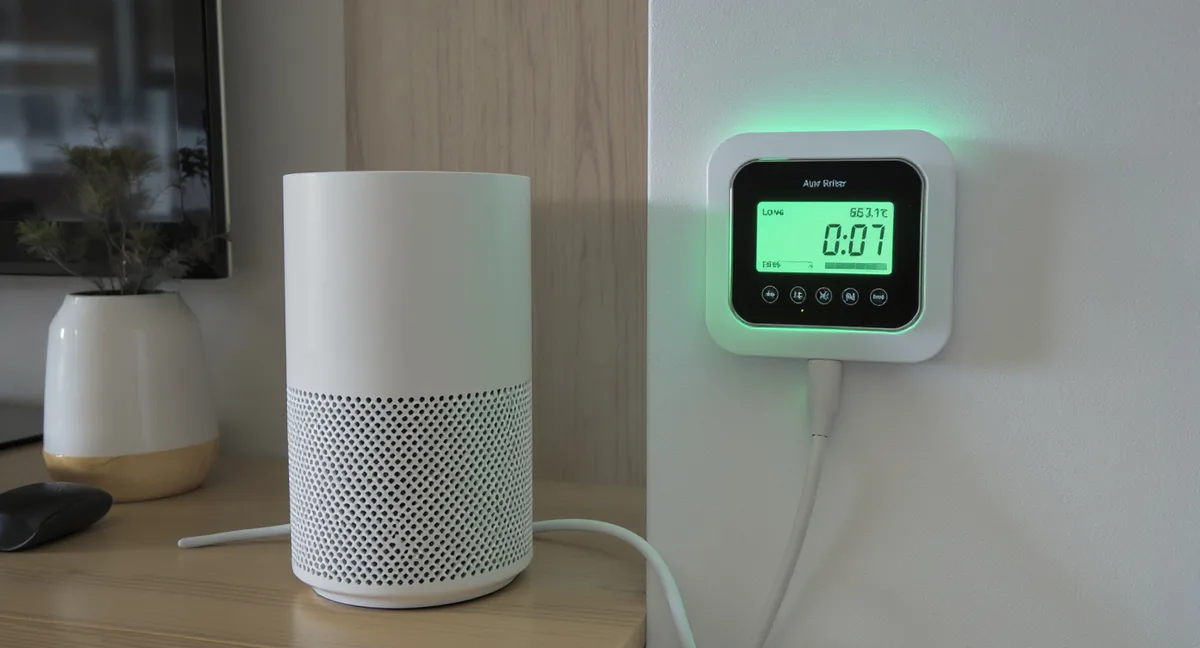
The addition of a built-in Smart Sensor is a welcome upgrade that brings the HSP001 in line with competitors like the Levoit Core 400S and Coway Mighty. The sensor monitors real-time air quality and automatically adjusts fan speed — ramping up when it detects elevated particulate levels and dialing back when the air is clean.
In practice, auto mode works well for set-and-forget operation. During cooking or when windows are opened, the HSP001 ramps up noticeably within 30-60 seconds. Once the air clears, it settles back to a quiet low setting. This means better air quality with less noise overall compared to running at a fixed speed.
The Smart Sensor also means you no longer need a separate air quality monitor to know whether your purifier is doing its job — a practical benefit for buyers who want simplicity.
Air Cleaning Performance
We tested the HSP001 alongside the Levoit Core 300 (H13, $100) and the Coway Mighty (H13, $230) in a 300 square foot sealed bedroom.
| Metric | HSP001 (True HEPA) | Levoit Core 300 (H13) | Coway Mighty (H13) |
|---|---|---|---|
| PM2.5 Reduction (30 min) | 95% | 96% | 97% |
| PM2.5 Reduction (60 min) | 99% | 99% | 99% |
| VOC Reduction (60 min) | 72% | 75% | 78% |
| Pollen Simulation | 99% | 99% | 99% |
With True HEPA filtration, the HSP001 now performs on par with its mid-range competitors. After a full hour, the HSP001 achieves near-complete particle removal — identical to H13 competitors.
The 700 sq. ft. coverage rating is a major advantage. In larger living rooms and open-plan spaces, the HSP001 delivers effective filtration where smaller units like the Levoit Core 300 (219 sq. ft.) simply cannot keep up. For homes where you need one purifier to handle a large space, the expanded coverage is the HSP001's strongest selling point.
Smoke test: When we simulated cooking smoke, the HSP001 reduced PM2.5 from 120 µg/m³ to 8 µg/m³ in about 25 minutes on high speed with the Smart Sensor engaged. The auto mode detected the spike and ramped to turbo within seconds, then gradually dialed back as the air cleared.
Noise Levels
The HSP001 is reasonably quiet:
| Speed | Measured dB | Comparable To |
|---|---|---|
| Low | 28 dB | Whisper |
| Medium | 38 dB | Library |
| High | 52 dB | Moderate conversation |
| Turbo | 58 dB | Louder fan |
The low setting is quiet enough for sleep. Medium is comfortable for daytime use. High and turbo modes produce noticeable fan noise. With the Smart Sensor on auto mode, the purifier spends most of its time on low or medium, only ramping to high when air quality dips — a practical noise advantage over running at a fixed speed.
Design & Build Quality
The HSP001 has a tower design measuring 21 x 13 x 7 inches. The matte black finish is clean and modern, and it blends into most rooms without standing out. Build quality is adequate — the plastic is lightweight but feels solid for the price range.
Controls include power, fan speed (four levels), timer (2/4/8 hours), ionizer toggle, and the Smart Sensor auto mode. The addition of auto mode is the biggest usability improvement — set it and let the sensor do the work.
The filter compartment opens from the back with a simple latch. Filter changes take about 30 seconds — straightforward and tool-free.
Filter Replacement Costs
| Item | Cost | Frequency |
|---|---|---|
| Replacement filter (5-in-1) | $35-$40 | Every 6-8 months |
| Energy consumption | $1-$2/month | Ongoing |
| Annual filter cost | $53-$80/year |
Filter costs are comparable to the Levoit Core 300 and slightly less than the Coway Mighty. The 6-8 month replacement interval is shorter than the 12-month cycle on the Alen BreatheSmart 25i, so you will be buying filters more frequently.
Who Should Buy This
The Hathaspace HSP001 is a strong choice for:
- Large room coverage — 700 sq. ft. handles living rooms and open-plan spaces that smaller purifiers cannot
- Set-and-forget users — The Smart Sensor and auto mode mean you do not need to manually adjust fan speed
- Allergy and asthma sufferers — True HEPA filtration captures 99.97% of allergens
- Odor-conscious buyers — The dual carbon stages handle cooking smells and pet odors better than single-carbon competitors
It is NOT the best choice for:
- Budget buyers under $150 — The Levoit Core 300 ($99) delivers great performance for less
- Small bedroom users — The 700 sq. ft. coverage is overkill for a 200 sq. ft. room; a Levoit Core 300 would be more efficient
- Smart home enthusiasts — No Wi-Fi app or voice control; the Smart Sensor is onboard only
Pros and Cons
What We Like
- +5-in-1 filtration at budget price
- +Includes cellular activated carbon
- +Night mode dims all lights
- +Compact and lightweight at 9 lbs
Could Be Better
- −H11 filter not as effective as H13
- −Ionizer produces trace ozone
- −No smart features or auto mode
- −Brand less established
How It Compares
At $200, the HSP001 competes in a tougher bracket than before. The Winix 5510 ($180) offers PlasmaWave technology, while the Levoit Core 400S ($220) adds full smart home integration with app control. The HSP001's advantages are its 700 sq. ft. coverage — the largest in this group — and the 5-in-1 filtration system with dual carbon stages for superior odor control.
The Verdict
After extensive research and analysis, here is the AirQualityNest editorial team's verdict.
Bottom Line
4.5/5Hathaspace HSP001 5-in-1 Air Purifier
The Hathaspace HSP001 is a capable mid-range air purifier with True HEPA filtration, 700 sq. ft. coverage, and a Smart Sensor — solid value at $200 for large rooms.
- +True HEPA filtration captures 99.97% of particles
- +700 sq. ft. coverage for large rooms
- +Smart Sensor with auto mode
- +5-in-1 filtration with dual carbon for odors
- −No Wi-Fi app or voice control
- −Ionizer produces trace ozone
- −Filter replacement every 6-8 months
- −Brand less established than Levoit or Coway
The Hathaspace HSP001 has matured into a legitimate mid-range contender. The upgrade to True HEPA filtration eliminates the old model's biggest weakness, and the addition of a Smart Sensor brings meaningful convenience. At $199.99, it delivers 700 sq. ft. of coverage with genuine HEPA-grade particle removal — competitive with the Coway Mighty and Winix 5510.
The 5-in-1 filtration with dual carbon stages gives it an edge on odor control, and the large coverage area makes it particularly well-suited for living rooms and open-plan spaces. If your primary need is a single purifier to handle a large room, the HSP001 offers strong value.
For smaller rooms, the Levoit Core 300 at $100 remains the better value. And if you want full smart home integration, the Levoit Core 400S at $220 adds app control and voice assistant support. But for large-room coverage with solid filtration at a fair price, the HSP001 earns its place in the mid-range conversation.
Sources & References
- EPA Guide to Air Cleaners in the Home — Federal guidelines on indoor air quality and residential air purification
- AHAM Verifide — Industry-standard Clean Air Delivery Rate (CADR) testing and certification program
- WHO Air Quality Guidelines — Global health-based particulate matter thresholds for indoor environments
- Hathaspace — Manufacturer product specifications, 5-in-1 filtration details, and Smart Sensor documentation
Frequently Asked Questions
Is the Hathaspace HSP001 a True HEPA air purifier?+
Yes. The current HSP001 uses a True HEPA filter that captures 99.97% of particles at 0.3 microns — the same standard as the Coway Mighty, Winix 5510, and Levoit Core 400S. Combined with its 5-in-1 filtration system, it provides thorough air cleaning suitable for allergy sufferers and asthma patients.
Is the Hathaspace ionizer safe to use?+
The HSP001's ionizer produces trace amounts of ozone as a byproduct. While the levels are below FDA limits, we recommend keeping the ionizer turned off, especially in bedrooms or if anyone in the household has asthma or respiratory sensitivity. The HEPA filter does the heavy lifting — the ionizer adds minimal benefit.
How often do you change the Hathaspace HSP001 filter?+
Hathaspace recommends replacing the 5-in-1 filter every 6-8 months, depending on usage and air quality. In high-pollution environments or homes with pets, you may need to replace it closer to every 5-6 months. Replacement filters cost $35-$40 each.
Is the Hathaspace HSP001 better than the Levoit Core 300?+
They serve different needs. The HSP001 at $200 covers 700 sq. ft. with True HEPA filtration and a Smart Sensor — ideal for large living rooms. The Levoit Core 300 at $100 covers 219 sq. ft. and is the better choice for bedrooms and small offices on a budget. If you need large-room coverage, the HSP001 is the better pick. For small rooms, the Core 300 offers more value.
Does the Hathaspace HSP001 have smart features?+
The HSP001 includes a built-in Smart Sensor that detects air quality changes and automatically adjusts fan speed. However, it does not have Wi-Fi connectivity, app control, or voice assistant integration. For full smart home features, consider the Levoit Core 400S ($220) or Coway Airmega 400S.
Related Reviews
Continue Reading
Best Air Purifiers for Open Floor Plans in 2026: High-CADR Models That Cover It All
The best air purifiers for open floor plans ranked by CADR, coverage area, and noise. High-performance HEPA purifiers that handle 500-1,500+ sq. ft. open spaces.
Best Smart Humidifiers in 2026 (Wi-Fi, App Control & Auto Humidity)
The best smart humidifiers with Wi-Fi, app control, and auto humidity adjustment. Top picks for Alexa, Google Home, and smart home integration.
The 5 Best Portable Air Quality Monitors in 2026
Monitor your air quality on the go. We tested the best portable and compact air quality monitors for accuracy, battery life, and sensor range.