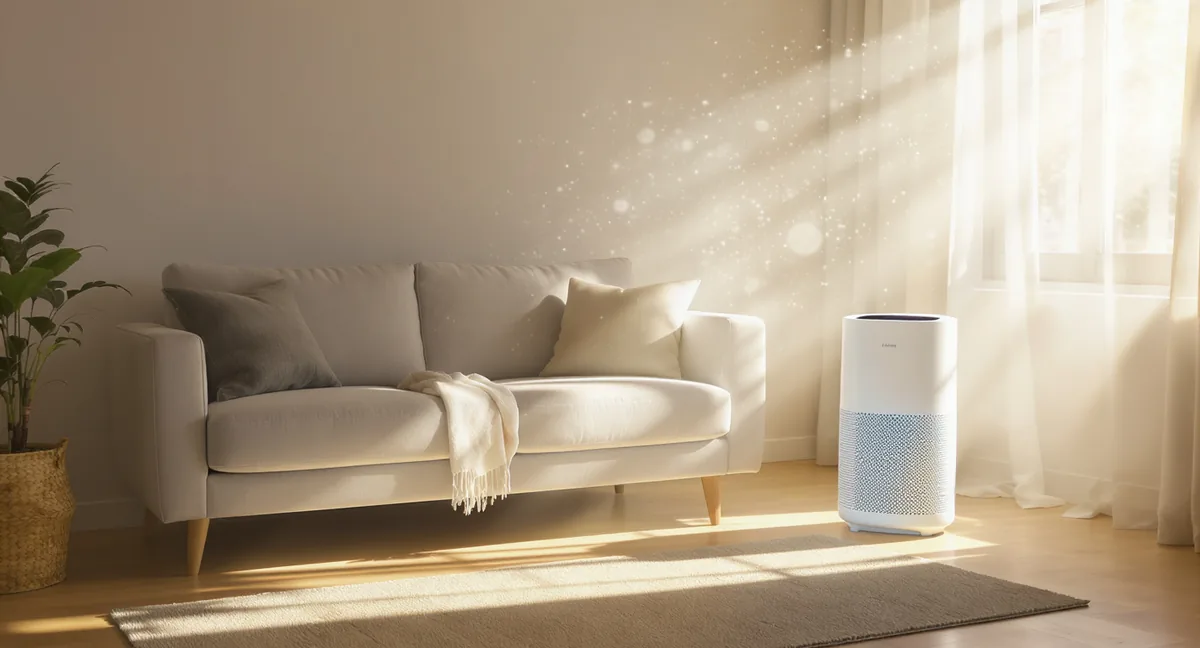
The Coway Airmega AP-1512HH and Honeywell HPA300 represent two fundamentally different philosophies in budget air purification. The Coway is the refined all-rounder — quiet, energy-efficient, and compact. The Honeywell is the brute-force workhorse — loud, powerful, and built to move massive volumes of air. Both use True HEPA filtration. Both cost under $250. But buying the wrong one for your situation means either overpaying for power you do not need or underpowering a room that demands more airflow.
This guide breaks down every meaningful difference to help you make the right call.
Key Takeaways
- 1The Honeywell HPA300 has significantly higher CADR ratings (300/320/300 vs. 233/246/240), making it the stronger choice for large rooms up to 465 sq. ft.
- 2The Coway AP-1512HH is dramatically quieter — 24.4 dB on low vs. the Honeywell's ~42 dB lowest setting. For bedrooms, the Coway is the clear winner.
- 3Coway's Eco mode and ENERGY STAR certification give it a major edge in energy efficiency, consuming roughly 60-70% less electricity annually.
- 4Filter replacement costs strongly favor the Coway at ~$40/year vs. the Honeywell's ~$90-100/year (HEPA + pre-filters).
- 5Over 3 years, the Coway costs approximately $250 less to own despite a slightly lower purchase price — making it the better long-term value for most buyers.
Quick Answer
Is Coway or Honeywell better?
For most buyers, the Coway AP-1512HH is the better purchase. It is quieter (24.4 dB vs. ~42 dB on low), more energy-efficient (ENERGY STAR certified with Eco mode), and significantly cheaper to maintain (~$40/year filters vs. ~$90-100/year). The Honeywell HPA300 wins if you need maximum air-cleaning power for a large room (400+ sq. ft.) or want the fastest possible particle clearance — its CADR of 300+ outmuscles the Coway's 240. Choose the Coway for bedrooms, apartments, and long-term value. Choose the Honeywell for large living rooms, basements, and situations where raw airflow matters most.
Head-to-Head Specs
| Feature | Coway AP-1512HH | Honeywell HPA300 |
|---|---|---|
| Price | $229.00 | $249.99 |
| CADR (Smoke/Dust/Pollen) | 233/246/240 | 300/320/300 |
| Coverage | 361 sq. ft. | 465 sq. ft. |
| Filter Type | True HEPA + Carbon | True HEPA + Carbon Pre-filter |
| Noise (Low) | 24.4 dB | ~42 dB |
| Noise (High) | 53.8 dB | ~63 dB |
| ENERGY STAR | Yes | No |
| Eco Mode | Yes | No |
| Smart Features | Air quality indicator light | None |
| Auto Mode | Yes (sensor-based) | No |
| Pre-filter | Washable | Replaceable (every 3 months) |
| Annual Filter Cost | ~$40 | ~$90-100 |
| Weight | 12.3 lbs | 17 lbs |
| Dimensions | 16.8 x 18.3 x 9.6 in | 20.1 x 22.8 x 10.8 in |
1. CADR and Air Cleaning Performance
Winner: Honeywell HPA300
This is where the Honeywell earns its reputation. With AHAM-verified CADR ratings of 300 Smoke, 320 Dust, and 300 Pollen, the HPA300 pushes roughly 25-30% more clean air per minute than the Coway's 233/246/240. In practical terms, that means faster particle clearance and better performance in larger spaces.
The Honeywell's Turbo Clean mode is particularly effective for rapid recovery — if you open windows during wildfire season, cook a smoky meal, or need to quickly clear a room after vacuuming, the HPA300 will restore air quality faster than the Coway on its highest setting.
| Metric | Coway AP-1512HH | Honeywell HPA300 |
|---|---|---|
| CADR (Smoke) | 233 CFM | 300 CFM |
| CADR (Dust) | 246 CFM | 320 CFM |
| CADR (Pollen) | 240 CFM | 300 CFM |
| ACH in 300 sq. ft. | 5.8 | 7.5 |
| ACH in 400 sq. ft. | 4.4 | 5.6 |
Key insight: Both purifiers use True HEPA filters that capture 99.97% of particles at 0.3 microns. The filtration quality is identical — the Honeywell simply processes more air volume. In a room under 350 sq. ft., both deliver excellent results. Above 350 sq. ft., the Honeywell's CADR advantage becomes meaningful.
2. Room Coverage
Winner: Honeywell HPA300
The Honeywell covers up to 465 sq. ft. versus the Coway's 361 sq. ft. — a 29% advantage. But manufacturer-rated coverage typically assumes just 2 air changes per hour (ACH). For effective allergen and particle relief, most experts recommend 4+ ACH.
| Room Size | Coway ACH | Honeywell ACH | Better Choice |
|---|---|---|---|
| 200 sq. ft. | 8.7 | 11.2 | Either (both excellent) |
| 300 sq. ft. | 5.8 | 7.5 | Either (both very good) |
| 350 sq. ft. | 5.0 | 6.4 | Honeywell has a comfort margin |
| 400 sq. ft. | 4.4 | 5.6 | Honeywell recommended |
| 450+ sq. ft. | 3.8 | 5.0 | Honeywell only |
For rooms under 350 sq. ft. — both purifiers deliver more than enough air changes. The Coway's lower CADR does not matter because either unit can cycle the room volume quickly enough. This is where the Coway's advantages in noise, energy, and filter cost tip the balance in its favor.
For rooms of 350-465 sq. ft. — the Honeywell is the right tool for the job. The Coway dips below the recommended 4+ ACH threshold in rooms above 400 sq. ft., which means slower particle clearance and less effective continuous filtration.
3. Noise: The Decisive Difference
Winner: Coway AP-1512HH — by a wide margin
This is the category that separates these two purifiers most dramatically, and for many buyers, it is the deciding factor.
| Setting | Coway AP-1512HH | Honeywell HPA300 |
|---|---|---|
| Low | 24.4 dB | ~42 dB |
| Medium | ~40 dB | ~52 dB |
| High | 53.8 dB | ~63 dB |
The Coway at 24.4 dB on its lowest setting is essentially inaudible — softer than a whisper, quieter than the ambient noise in most rooms. You can run it in a bedroom overnight and forget it is there.
The Honeywell at its lowest setting (~42 dB) sounds like a gentle desk fan. That is not loud by any standard, but it is clearly audible in a quiet bedroom. On its Turbo setting, 63 dB approaches the volume of a normal conversation — you will hear it from across the house.
The math tells the story: Decibels are logarithmic. The Coway's low setting (24.4 dB) is perceived as roughly three to four times quieter than the Honeywell's low setting (~42 dB). This is not a subtle difference. It is night and day — literally, for bedroom use.
For bedrooms: Buy the Coway. This is not a close call.
For living rooms, basements, or garages: The Honeywell's noise is tolerable and the extra airflow may be worth it.
4. Energy Efficiency
Winner: Coway AP-1512HH
The Coway is ENERGY STAR certified and features an Eco mode that automatically shuts off the fan when the air quality sensor detects clean air, then turns it back on when particles are detected. This duty-cycling approach dramatically reduces energy consumption during periods of stable air quality — overnight, while you are away, or anytime the air stays clean.
| Energy Factor | Coway AP-1512HH | Honeywell HPA300 |
|---|---|---|
| ENERGY STAR | Yes | No |
| Eco Mode | Yes | No |
| Estimated Annual Energy Cost | ~$8-12 | ~$25-35 |
| Wattage (Low/High) | ~4W / ~77W | ~48W / ~112W |
The Honeywell draws more power at every speed setting, and without an eco mode or auto-shutoff, it runs at a constant speed until you manually adjust it. For a device meant to run 24/7, this adds up. Over three years, the Coway saves an estimated $45-70 in electricity alone.
5. Filter Replacement Costs
Winner: Coway AP-1512HH — significantly
Filter costs are where the Honeywell's true expense reveals itself. The Honeywell HPA300 uses three individual HEPA filters plus a carbon pre-filter that requires replacement every three months. The Coway uses a single combined HEPA + carbon filter that lasts 12 months, plus a washable pre-filter that costs nothing to maintain.
| Filter Cost | Coway AP-1512HH | Honeywell HPA300 |
|---|---|---|
| HEPA filter(s) | ~$35-40/year | ~$60-70/year |
| Carbon/Pre-filter | $0 (washable) | ~$30/year (replaceable, every 3 mo.) |
| Total Annual | ~$40 | ~$90-100 |
| 3-Year Filter Total | ~$120 | ~$270-300 |
Over three years, the Honeywell costs $150-180 more in filters alone. This is a substantial ongoing expense that many buyers do not account for at purchase time. The Coway's washable pre-filter is a genuine advantage — rinsing it every month takes 30 seconds and extends the main HEPA filter's life by catching large particles before they reach it.
6. Smart Features and Convenience
Winner: Coway AP-1512HH (slight edge)
Neither purifier has app control, Wi-Fi connectivity, or voice assistant integration. In the smart-features department, both are basic compared to competitors like the Levoit Core 400S.
However, the Coway offers a few convenience features the Honeywell lacks:
- Air quality indicator light — Color-coded LED (blue/purple/red) that changes based on real-time particle readings from the built-in sensor
- Auto mode — Fan speed adjusts automatically based on sensor readings
- Eco mode — Motor shuts off when air quality stabilizes, saving energy
- Filter replacement indicator — LED notification when it is time to change the filter
- Timer — 1, 4, and 8-hour timer settings
The Honeywell HPA300 has a basic filter replacement indicator and a 2/4/8-hour timer, but no air quality sensor, no auto mode, and no eco mode. You manually select a speed and it runs at that speed until you change it.
If smart features are important to you, neither of these purifiers will satisfy. Consider the Levoit Core 400S for app control and real-time PM2.5 monitoring in this price range.
7. Design and Build Quality
Winner: Coway AP-1512HH
The Coway has a modern, compact design that looks at home in a bedroom, living room, or office. At 12.3 lbs and roughly 17 x 18 x 10 inches, it has a small footprint and can sit on a table or desk if needed. The build quality feels solid — premium for a sub-$250 purifier.
The Honeywell HPA300 is a large, boxy appliance. At 17 lbs and 20 x 23 x 11 inches, it is noticeably bigger than the Coway and looks like a utilitarian machine. It sits on the floor and stays there. The build quality is sturdy but basic — functional rather than attractive.
For buyers who care about aesthetics or have limited space, the Coway's compact design is a meaningful advantage. The Honeywell's size is a trade-off for its higher airflow — it needs more physical space for the three HEPA filters and larger fan assembly that enable its higher CADR.
8. Long-Term Value: 3-Year Total Cost of Ownership
Winner: Coway AP-1512HH
| Cost Factor | Coway AP-1512HH | Honeywell HPA300 |
|---|---|---|
| Purchase Price | $229.00 | $249.99 |
| Filters (3 years) | ~$120 | ~$270-300 |
| Electricity (3 years) | ~$30 | ~$85 |
| 3-Year Total | ~$379 | ~$605-635 |
The Coway costs approximately $230-250 less to own over three years. It is both cheaper to buy and dramatically cheaper to operate. The only scenario where the Honeywell's economics make sense is if you need its higher CADR for a large room — in that case, the Coway simply cannot do the job, and paying more for a purifier that actually fits your space is the right call.
The Verdict
Buy the Coway AP-1512HH if:
- Your room is under 350 sq. ft. (bedrooms, offices, apartments)
- Quiet operation matters (especially for sleeping)
- You want the lowest long-term cost of ownership
- Energy efficiency is a priority
- You prefer a compact, modern design
- You want auto mode and air quality monitoring
Buy the Honeywell HPA300 if:
- Your room is 350-465 sq. ft. (large living rooms, basements, open plans)
- You need the fastest possible particle clearance (wildfire smoke, cooking, allergies)
- Noise is not a concern (living rooms, garages, utility areas)
- You prioritize raw airflow power over refinement
- You want a proven workhorse from a trusted brand
The Bottom Line
For bedrooms and medium rooms: The Coway AP-1512HH is the better purifier. It cleans the air effectively, runs whisper-quiet, costs less to buy, and costs far less to operate. It is our top-rated air purifier for a reason — the combination of performance, noise, efficiency, and value is unmatched under $250.
For large rooms where you need raw power: The Honeywell HPA300 earns its place. When your room demands 300+ CADR, the Coway cannot keep up. The Honeywell's noise and higher running costs are the price of covering more space effectively. If your room is too big for the Coway, the Honeywell is the right tool.
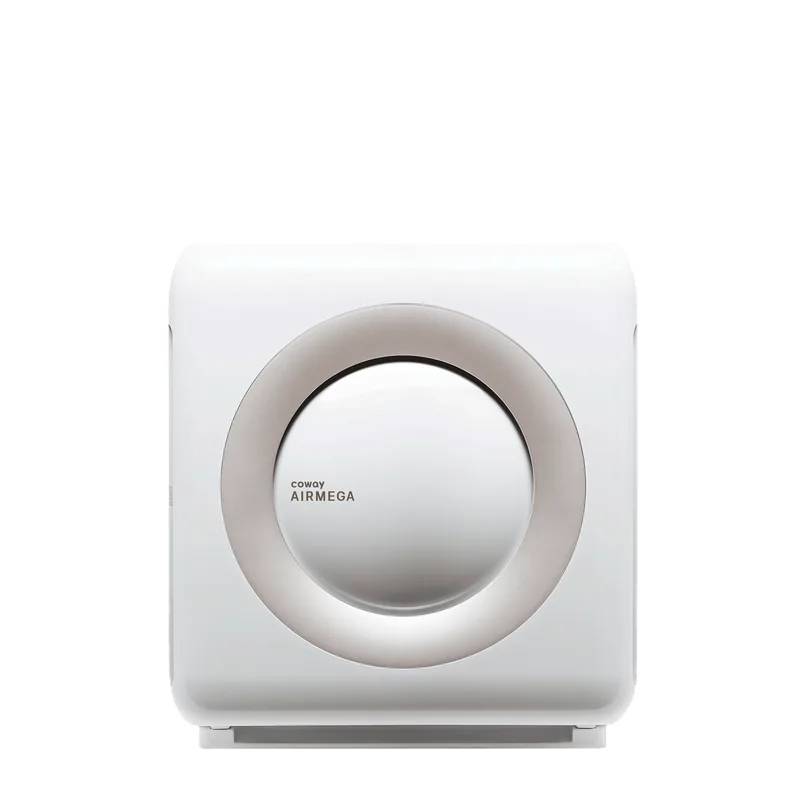
The Coway AP-1512HH is the best all-around budget purifier for rooms under 350 sq. ft. Quiet, efficient, and affordable to maintain — it excels where most people actually use a purifier.
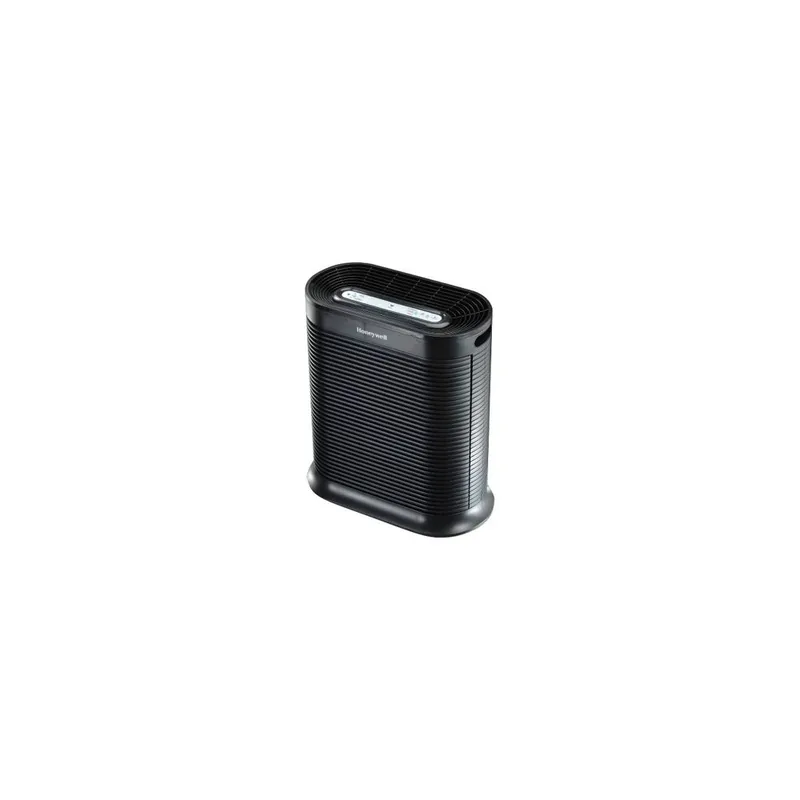
The Honeywell HPA300 is the best raw-power budget purifier for large rooms. When you need maximum airflow at a reasonable price, its CADR of 300+ is hard to beat.
Sources & References
- AHAM (Association of Home Appliance Manufacturers) — CADR certification program and testing standards for portable air cleaners — both the Coway and Honeywell carry AHAM Verified ratings
- ENERGY STAR — The Coway AP-1512HH is ENERGY STAR certified; the Honeywell HPA300 is not listed in the ENERGY STAR certified room air cleaners database
- Coway Product Specifications — Manufacturer-published specifications for the Coway Airmega AP-1512HH Mighty
- Honeywell Product Specifications — Manufacturer-published specifications for the Honeywell HPA300 HEPA Air Purifier
This guide was researched and written by the AirQualityNest editorial team. We update our content regularly to reflect the latest products, pricing, and research.
Frequently Asked Questions
Is the Coway AP-1512HH better than the Honeywell HPA300?+
For most buyers, yes. The Coway is quieter (24.4 dB vs. ~42 dB on low), more energy-efficient (ENERGY STAR with Eco mode), and dramatically cheaper to maintain (~$40/year vs. ~$90-100/year in filters). Over three years, the Coway costs roughly $250 less to own. The Honeywell wins only in raw CADR (300 vs. 233 smoke) and room coverage (465 vs. 361 sq. ft.). If your room is under 350 sq. ft., the Coway is the better buy.
Which air purifier is better for allergies, Coway or Honeywell?+
Both use True HEPA filtration that captures 99.97% of allergens at 0.3 microns — pollen, dust mites, pet dander, and mold spores. For bedrooms where you sleep (the most critical room for allergy sufferers), the Coway is better because its quiet operation lets you run it all night on auto mode without disruption. For large living spaces during high-pollen seasons, the Honeywell's higher CADR clears allergens faster.
How often do you replace filters on the Coway vs. Honeywell?+
The Coway requires a HEPA + carbon filter replacement every 12 months (approximately $35-40), plus monthly rinsing of its washable pre-filter (free). The Honeywell requires HEPA filter replacement every 12 months (~$60-70) plus carbon pre-filter replacement every 3 months (~$30/year total). The Honeywell's quarterly pre-filter changes make it more maintenance-intensive and more expensive to run.
Can I use the Coway AP-1512HH in a large living room?+
It depends on the room size. The Coway is rated for up to 361 sq. ft. and delivers 4+ air changes per hour in rooms up to roughly 350 sq. ft. — adequate for most living rooms. For rooms above 350-400 sq. ft., the Coway's performance drops below recommended levels, and the Honeywell HPA300 (465 sq. ft. coverage) is the better fit.
Is the Honeywell HPA300 too loud for a bedroom?+
For most people, yes. The Honeywell's lowest fan setting produces approximately 42 dB of noise — audible in a quiet bedroom and potentially disruptive for light sleepers. Its Turbo mode reaches 63 dB, which is louder than a normal conversation. By comparison, the Coway AP-1512HH runs at 24.4 dB on low, which is nearly inaudible. If the purifier will live in a bedroom, we strongly recommend the Coway.
Related Reading
Coway AP-1512HH Full Review
Our complete editorial review of the top-rated budget air purifier
Honeywell HPA300 Full Review
In-depth look at the high-CADR workhorse purifier
Coway vs Winix Comparison
How the Coway stacks up against another popular mid-range competitor
Coway vs Levoit Comparison
Coway Mighty vs Levoit Core 400S vs Core 300 compared on every metric
Best Air Purifiers for Allergies
Our top-rated picks for allergy and asthma relief
Best Air Purifiers Under $200
Top budget air purifiers ranked and compared
Continue Reading
Best Air Purifiers for Open Floor Plans in 2026: High-CADR Models That Cover It All
The best air purifiers for open floor plans ranked by CADR, coverage area, and noise. High-performance HEPA purifiers that handle 500-1,500+ sq. ft. open spaces.
Best Smart Humidifiers in 2026 (Wi-Fi, App Control & Auto Humidity)
The best smart humidifiers with Wi-Fi, app control, and auto humidity adjustment. Top picks for Alexa, Google Home, and smart home integration.
The 5 Best Portable Air Quality Monitors in 2026
Monitor your air quality on the go. We tested the best portable and compact air quality monitors for accuracy, battery life, and sensor range.