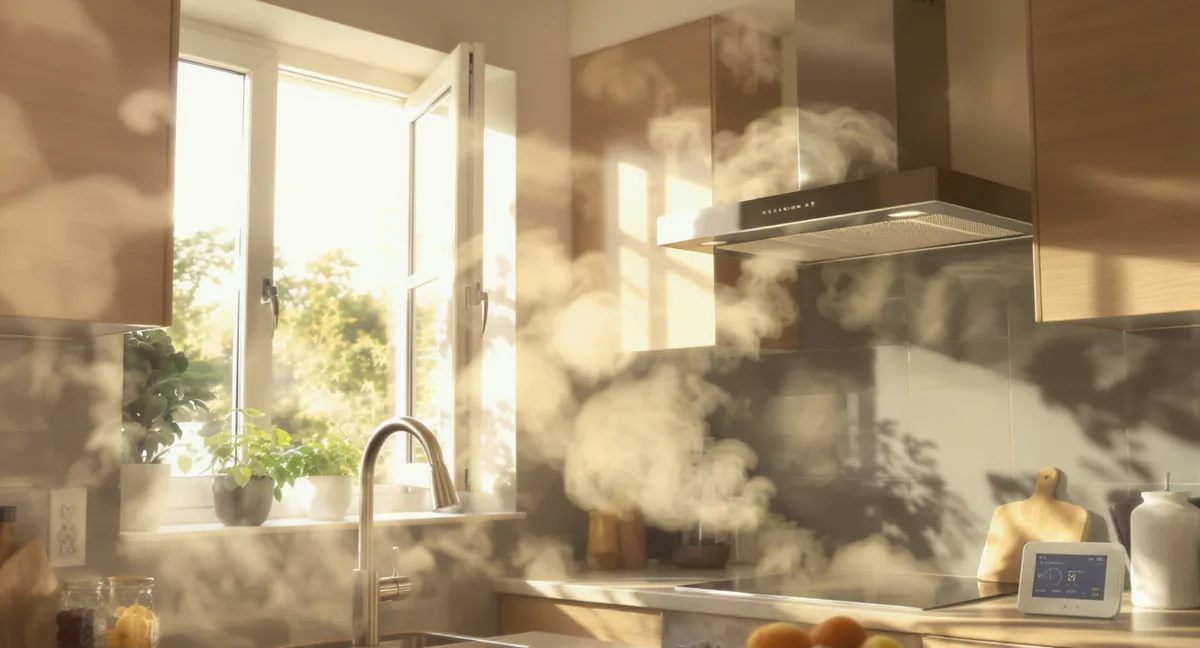
Every August, millions of students walk into classrooms and dorm rooms where the air is working against them. Classrooms routinely exceed 1,000 ppm of carbon dioxide — a threshold where research consistently shows measurable declines in concentration, decision-making, and cognitive performance. Dorm rooms pack two people into spaces smaller than most walk-in closets, with aging HVAC systems and zero ventilation control. And parents sending kids off to college have little visibility into what their children are breathing for eight months straight.
The connection between air quality and academic performance is not speculative. A 2021 study published in Indoor Air found that students in classrooms with CO2 levels below 1,000 ppm scored 12-15% higher on standardized cognitive tests compared to students in poorly ventilated rooms. The Harvard T.H. Chan School of Public Health's CogFx study documented significant reductions in strategic thinking and information processing when CO2 concentrations rose above 1,000 ppm — levels that are routine in packed lecture halls.
This guide covers what parents and students should know about indoor air quality at school, practical steps to improve it, and the specific products worth packing alongside textbooks and bedding.
Key Takeaways
- 1CO2 levels in occupied classrooms regularly exceed 1,000-2,000 ppm — research links levels above 1,000 ppm to measurable declines in concentration, decision-making, and test performance
- 2A compact HEPA air purifier like the Levoit Core 300 ($99.00) is the single most impactful purchase for dorm room air quality, covering rooms up to 219 sq. ft. at whisper-quiet 24 dB
- 3A portable CO2 monitor like the Aranet4 ($189) lets students identify when classroom or dorm ventilation is inadequate — and provides data to advocate for improvements
- 4The Levoit Vital 200S ($169.99) adds smart app control and a built-in air quality sensor to the Levoit lineup, making it an excellent smart alternative for students who want auto mode and app control
- 5Simple habits — opening windows strategically, removing shoes at the door, and washing bedding weekly in hot water — meaningfully improve air quality at zero cost
Quick Answer
What is the best air purifier for a student going back to school?
The Levoit Core 300 ($99.00) is the best air purifier for students. Its compact cylinder design fits on a desk or nightstand, it covers rooms up to 219 sq. ft. with True HEPA H13 filtration, and it runs at just 24 dB on low — quiet enough for sleeping and studying. For students who want smart features and a built-in air quality sensor, the Levoit Vital 200S ($169.99) adds app control, auto mode, and a PM2.5 sensor.
Why School Air Quality Matters More Than You Think
Schools and universities are where students spend the majority of their waking hours — and where indoor air quality tends to be the worst. According to the EPA, approximately half of the nation's 130,000 schools have problems linked to indoor air quality. The reasons are structural: tight budgets defer HVAC maintenance, older buildings have inadequate ventilation by modern standards, and high occupant density in classrooms pushes pollutant concentrations far beyond what the same building would experience as an office.
The health effects are well documented. The American Lung Association reports that poor indoor air quality in schools contributes to increased asthma episodes, respiratory infections, and allergy symptoms — leading to more sick days and reduced academic engagement. According to the EPA, asthma is the leading cause of school absenteeism due to chronic illness, accounting for over 13 million missed school days annually.
But health effects are only half the story. The cognitive effects of poor air quality are equally significant and far less discussed.
The CO2 Problem in Classrooms
Carbon dioxide is the most underappreciated factor in classroom performance. Every person in a room exhales CO2, and without adequate ventilation, levels climb rapidly. Outdoor air contains roughly 420 ppm of CO2. A well-ventilated classroom maintains levels below 800 ppm. A typical classroom with 25-30 students and standard ventilation? According to research published in Indoor Air, levels routinely hit 1,000-2,500 ppm by mid-morning.
What happens above 1,000 ppm:
- Reduced concentration. Studies show that sustained exposure to CO2 above 1,000 ppm impairs attention and focus. Students in these conditions are not just uncomfortable — their brains are literally receiving less cognitive fuel for sustained attention.
- Impaired decision-making. The Harvard CogFx study found that strategic thinking scores dropped by 50% when CO2 levels increased from 600 ppm to 2,500 ppm — a range that many classrooms traverse during a single class period.
- Fatigue and drowsiness. That post-lunch drowsiness in afternoon classes? It is not just food coma. Elevated CO2 levels compound the natural post-meal dip, making afternoon classes in poorly ventilated rooms particularly unproductive.
- Headaches. Levels above 2,000 ppm are associated with increased headache frequency, according to research published in the International Journal of Environmental Research and Public Health.
The cruel irony is that students in poorly ventilated classrooms study harder but retain less. They feel like they need to concentrate more — because their cognitive performance is genuinely impaired by the air they are breathing.
What students can do about it: You cannot control classroom ventilation, but you can identify the problem. A portable CO2 monitor provides real data about the air in your classes, study spaces, and dorm room. When you know which rooms have poor ventilation, you can choose different study locations, request that windows be opened, or advocate to facilities management with data rather than complaints.
Dorm Rooms: A Perfect Storm for Poor Air
Dorm rooms concentrate every air quality problem into the smallest possible space. A 150-to-250-square-foot room shared by two people, connected to centralized HVAC you cannot control, furnished with new pressed-wood furniture off-gassing formaldehyde, and cleaned with industrial chemicals you did not choose. Add in communal bathroom moisture, hallway cooking odors, and whatever your neighbors generate through shared ductwork, and you have an environment the EPA would flag if it were a workplace.
The back-to-school timing makes it worse. Move-in happens in August, when new or refurbished furniture, fresh paint, and new flooring are at peak off-gassing intensity. These VOC levels are highest in the first weeks — exactly when students arrive. By mid-semester, off-gassing has slowed, but by then you have also accumulated dust, allergens, and whatever your roommate contributes to the air.
For a detailed breakdown of dorm-specific challenges and solutions, see our complete dorm room air quality guide. The short version: a compact HEPA air purifier is the single highest-impact purchase, and it costs less than most textbooks.
Best Air Purifier for Students
For dorm rooms, study apartments, and small bedrooms, the Levoit Core 300 is the air purifier we recommend most often — and back-to-school season is no exception.
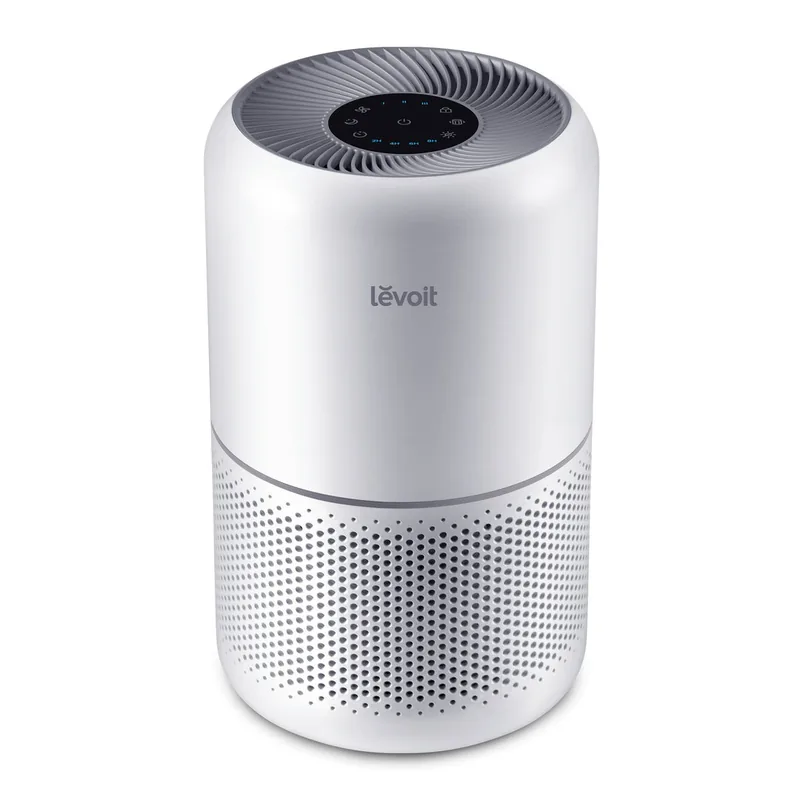
The Core 300 checks every box a student needs. Its cylindrical design has a footprint barely larger than a dinner plate, so it fits on a desk corner or nightstand without competing for space in a cramped room. True HEPA H13 filtration captures 99.97% of particles down to 0.3 microns — dust, pollen, mold spores, pet dander, and smoke particles. The 219 sq. ft. coverage area handles any standard dorm room with room to spare.
Why students specifically love it:
- 24 dB on low — quieter than a whisper, so it will not wake a sleeping roommate or disrupt late-night studying
- $99.00 price — affordable on a student budget, and it frequently drops to $79-89 during back-to-school sales
- No Wi-Fi or app required — three fan speeds, a sleep mode, and a filter indicator. Simple, reliable, and nothing to configure
- 26-watt power draw — less than a laptop charger, so it adds virtually nothing to electricity costs (which are usually included in housing fees anyway)
- Multiple filter options — Levoit sells replacement filters optimized for allergens, smoke, or toxin absorption, so students can match the filter to their biggest concern
Replacement filters run $19.99 every 6-8 months. For an academic year, that is one filter replacement — a $20 investment to maintain performance through spring.
Why a CO2 Monitor Belongs in Every Backpack
If the air purifier is the intervention, a CO2 monitor is the diagnostic tool. Based on our research, the Aranet4 Home is the gold standard for portable CO2 monitoring — and it has become increasingly popular among students, teachers, and parents who take indoor air quality seriously.
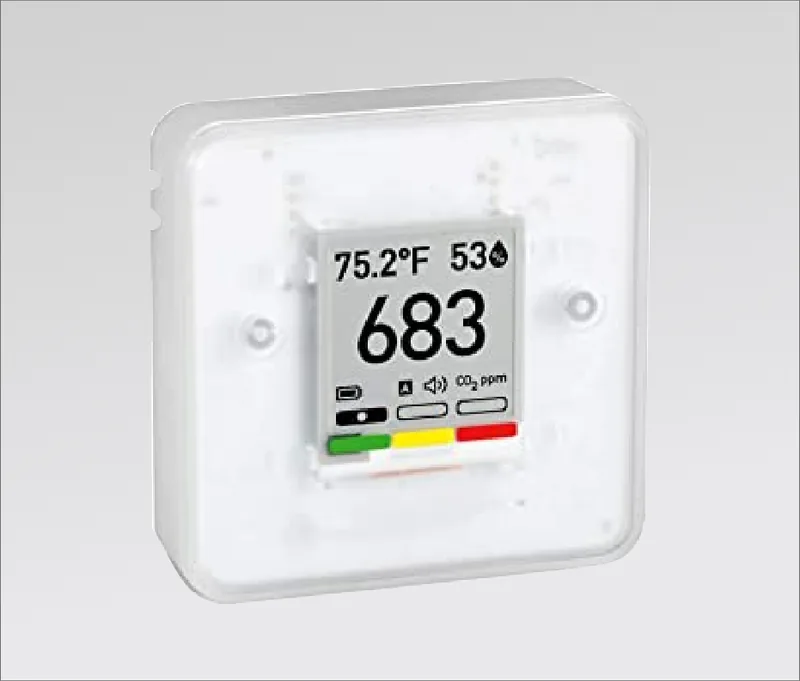
The Aranet4 is a compact, battery-powered CO2 monitor with an e-ink display that shows real-time CO2, temperature, humidity, and atmospheric pressure readings. It runs on two AA batteries for up to two years, connects via Bluetooth to a smartphone app for data logging, and weighs just 4.2 ounces — light enough to toss in a backpack and carry between classes.
Why it matters for students:
- Identify bad classrooms. Carry it to different classes and study spaces over a week, and you will quickly learn which rooms have adequate ventilation and which do not. That data helps you choose where to study.
- Optimize your study environment. When CO2 levels climb above 1,000 ppm in your dorm room, it is time to open a window or take a study break. The Aranet4's traffic-light color system (green, yellow, red) makes this intuitive — no need to memorize thresholds.
- Advocate with data. A student telling facilities management "this room feels stuffy" gets polite acknowledgment. A student showing Aranet4 data logs proving CO2 consistently exceeds 2,000 ppm gets action. Data changes conversations.
- E-ink display — always on, readable in any lighting, and draws minimal power. No charging cables to forget.
At $189, the Aranet4 is not cheap — but it is a one-time purchase that lasts years. For parents looking for a meaningful back-to-school gift beyond the usual supplies, this is the kind of tool that can genuinely impact a student's daily comfort and academic performance.
Budget Smart Alternative: Levoit Vital 200S
For students who want smart features without the premium price, the Levoit Vital 200S offers a compelling alternative to the Core 300.
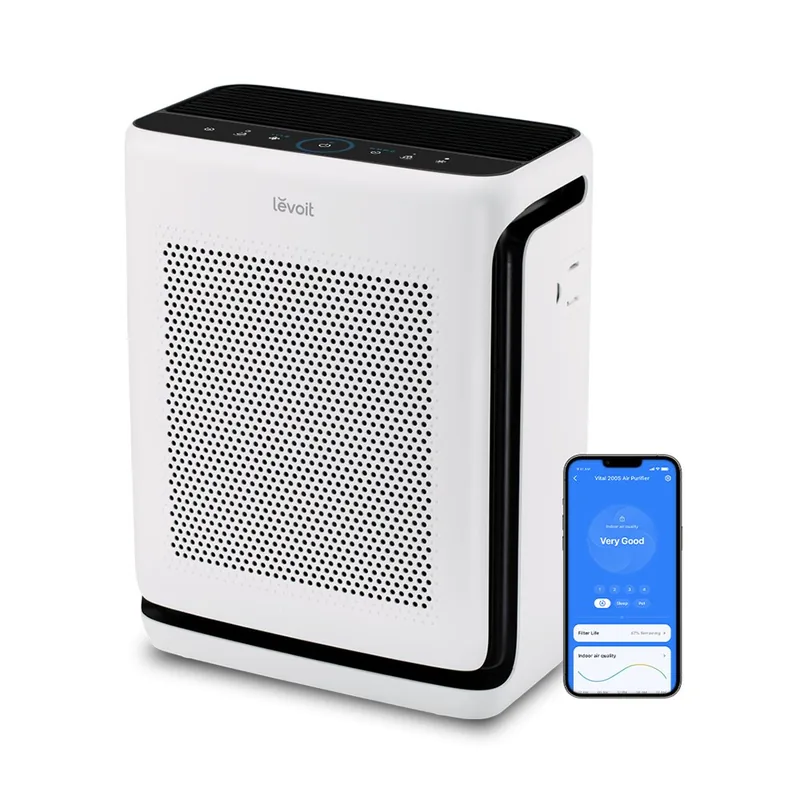
At $169.99, the Vital 200S adds Wi-Fi connectivity, app control, and a built-in air quality sensor that drives an auto mode. The auto mode adjusts fan speed based on real-time particle detection, which means it ramps up when your roommate opens the door after cooking and dials back when the air clears. It costs $71 more than the Core 300, but the smart features add genuine convenience for students who want a set-it-and-forget-it solution.
Why it works for budget-conscious students:
- Built-in air quality sensor doubles as a basic air quality indicator, giving you real-time feedback without a separate monitor
- App control lets you adjust settings from bed or across the room — convenient in a dorm where the purifier might be tucked on a high shelf
- 110 CADR covers rooms up to 380 sq. ft. on paper, though for best results in a dorm room, the real-world coverage is similar to the Core 300
- Smart scheduling lets you set the purifier to run on high during class hours and switch to sleep mode before you return
The trade-off versus the Core 300 is a slightly larger footprint and the complexity of Wi-Fi setup (some dorm networks make IoT device connections tricky). But for students who value the smart features, the Vital 200S delivers more functionality for less money.
A Teacher's Perspective on Classroom Air Quality
Teachers spend 6-8 hours per day in the same air quality conditions as their students — often worse, because they are typically in the room continuously while students rotate between classes. According to expert recommendations from the National Education Association, teachers should be aware of indoor air quality as both a health and performance issue.
What teachers report anecdotally:
- Afternoon classes after lunch in poorly ventilated rooms see the steepest attention dropoff — consistent with elevated CO2 compounding post-meal fatigue
- Classrooms near kitchens, gymnasiums, or recently renovated spaces tend to have the worst air quality complaints
- Students near windows or doors consistently report feeling more alert than those seated in the center of the room, furthest from fresh air sources
- The weeks immediately after summer break — when buildings have been sealed for months and cleaning products are freshly applied — produce the most complaints about headaches and irritation
Teachers who have placed CO2 monitors in their classrooms often report readings that surprise them. A packed classroom of 30 students can push CO2 above 2,000 ppm within 45 minutes of the period starting, especially in rooms without operable windows. Opening even one window can reduce levels by 200-400 ppm within minutes.
Back-to-School Air Quality Shopping Checklist
Here is a prioritized checklist for parents and students preparing for the school year, organized by impact and budget.
Essentials (under $120 total):
- HEPA air purifier for dorm or bedroom — Levoit Core 300 ($99.00)
- Replacement filter to have on hand ($19.99)
- Basic hygrometer to monitor humidity ($8-12)
Recommended additions (under $300 total):
- CO2 monitor — Aranet4 Home ($249) for students serious about optimizing study environments
- Microfiber cleaning cloths for weekly dusting ($5-8 for a pack)
- Foam weatherstripping tape for drafty dorm windows ($5-8)
Nice to have:
- Second air purifier for a study space or common area
- Allergy-proof pillow and mattress encasements ($20-40 each)
- Distilled water for humidifier use if your dorm allows humidifiers
What NOT to buy:
- Ionizers or ozone generators — these produce ozone, a lung irritant, and are banned in many dorms
- HEPA-type or HEPA-like purifiers — these use inferior filters that do not meet the True HEPA standard
- Aerosol air fresheners — they spike VOC levels in small rooms and mask odors instead of removing them
Free Strategies for Better Air at School
Not everything requires a purchase. These habits make a measurable difference at zero cost.
Open windows when possible. Even 15 minutes of cross-ventilation dramatically reduces indoor CO2 and VOC concentrations. The best times are late morning and early afternoon, when outdoor pollen counts are typically lower than dawn. Check AirNow.gov on days when outdoor air quality is questionable.
Choose your study spots wisely. Libraries with high ceilings and modern HVAC systems generally have better air quality than cramped study rooms. Coffee shops with open doors and windows may feel distracting but often have better ventilation than the basement of the student center.
Remove shoes at the door. Outdoor shoes track in pesticides, pollen, mold spores, and fine particulate matter. A simple habit that keeps these contaminants off your floor and out of your breathing zone.
Wash bedding weekly in hot water. Your bed is the largest dust mite reservoir in the room. Hot water at 130 degrees F or above kills dust mites. If your dorm laundry only offers warm water, run the dryer on high heat for at least 30 minutes.
Dust with a damp cloth. Dry dusting and feather dusters re-suspend particles into the air. A slightly damp microfiber cloth captures dust and removes it. Focus on desks, windowsills, and headboards.
Sit near windows in class. If you have a choice of seats, positions near operable windows or doors get better ventilation than the center of the room. This is a small advantage, but over a full semester it adds up.
Report persistent air quality issues. Visible mold, strong chemical odors, or HVAC systems that blow dusty air should be documented with photos and reported to facilities management in writing. Universities have legal obligations regarding indoor air quality. An air quality monitor provides data that turns a complaint into an actionable maintenance request.
This guide was researched and written by the AirQualityNest editorial team. We update our content regularly to reflect the latest products, pricing, and research.
Frequently Asked Questions
Do air purifiers help with studying and concentration?+
Air purifiers reduce airborne particles but do not directly lower CO2 levels, which is the primary driver of concentration impairment in classrooms and dorms. However, by removing dust, allergens, and VOCs, a HEPA purifier reduces symptoms like congestion, headaches, and eye irritation that indirectly impair focus. For the CO2 problem specifically, ventilation — opening windows or choosing better-ventilated study spaces — is the direct solution. A CO2 monitor helps you identify when ventilation is inadequate.
Is the Aranet4 worth $189 for a college student?+
Based on our research, the Aranet4 is a worthwhile investment for students who are serious about understanding and optimizing their environment. It identifies poorly ventilated classrooms, helps optimize dorm ventilation timing, and provides data for advocating for improvements. The two-year battery life and durable build mean it lasts well beyond a single academic year. That said, if budget is tight, the air purifier should come first — it has a more immediate and noticeable impact on the air you breathe in your room.
What CO2 level is too high for a classroom?+
ASHRAE recommends keeping indoor CO2 below 1,000 ppm above outdoor levels (roughly below 1,400 ppm total). However, cognitive research suggests that impairment begins above 1,000 ppm total. For practical purposes, if your CO2 monitor shows readings consistently above 1,000 ppm in a classroom, the room is under-ventilated for its occupancy. Levels above 2,000 ppm indicate serious ventilation deficiency and should be reported to facilities management.
Are air purifiers allowed in college dorms?+
Yes, air purifiers are allowed in virtually all college dorms. They are low-wattage electrical devices (typically 15-45 watts) with no moisture output, no heating element, and no safety concerns. Unlike humidifiers, candles, or space heaters, HEPA air purifiers are rarely mentioned in restricted-items lists. If you are uncertain, check your university's housing policy or ask your resident advisor.
Should I buy an air purifier or a CO2 monitor first?+
If you can only buy one, start with the air purifier. A HEPA purifier like the Levoit Core 300 has an immediate, tangible impact on the air you breathe in your room — reducing dust, allergens, mold spores, and VOCs 24/7. The CO2 monitor is a diagnostic and optimization tool. It helps you make smarter decisions about ventilation and study locations, but it does not clean the air itself. If budget allows both, the combination is powerful: the purifier cleans your personal space, and the monitor helps you navigate shared spaces more intelligently.
Continue Reading
Dorm Room Air Quality Guide
Our complete deep-dive into improving air quality in college dorms
Best CO2 Monitors
Top-rated CO2 monitors for classrooms, offices, and home use
Best Air Purifiers Under $100
Budget HEPA purifiers ranked by performance and total cost of ownership
Air Purifier Sizing Guide
How to match purifier coverage to your room size for maximum effectiveness
Continue Reading

Best Air Purifiers for Open Floor Plans in 2026: High-CADR Models That Cover It All
The best air purifiers for open floor plans ranked by CADR, coverage area, and noise. High-performance HEPA purifiers that handle 500-1,500+ sq. ft. open spaces.
Best Smart Humidifiers in 2026 (Wi-Fi, App Control & Auto Humidity)
The best smart humidifiers with Wi-Fi, app control, and auto humidity adjustment. Top picks for Alexa, Google Home, and smart home integration.
The 5 Best Portable Air Quality Monitors in 2026
Monitor your air quality on the go. We tested the best portable and compact air quality monitors for accuracy, battery life, and sensor range.