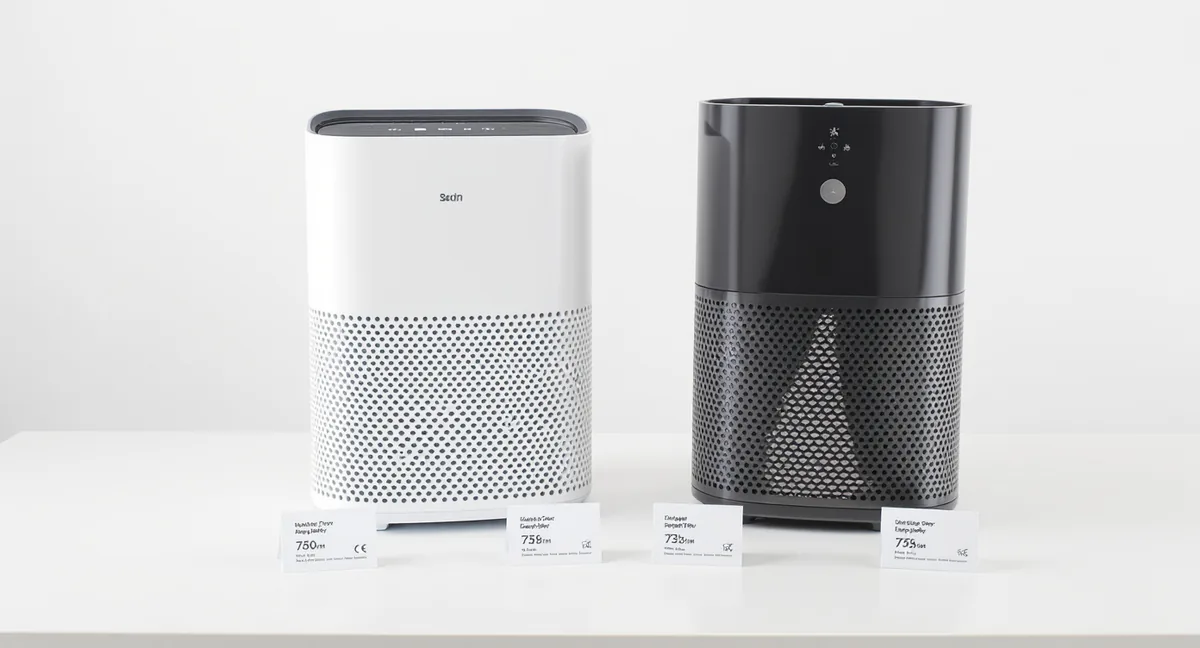
Winix and Honeywell represent two fundamentally different philosophies in air purification. Winix takes the "smart efficiency" approach — sensor-driven auto modes, PlasmaWave technology, ENERGY STAR certification, and whisper-quiet operation. Honeywell takes the "brute force" approach — maximum CADR, aggressive airflow, no-frills manual controls, and the confidence of one of the most recognized brand names in home appliances.
The Winix 5510 at ~$180 and the Honeywell HPA300 at ~$200 are the best-selling models from each brand, and they could not be more different in personality. One is a sophisticated, sensor-equipped machine with WiFi app control that adjusts to your environment. The other is a raw airflow powerhouse that simply blasts as much filtered air as possible into the room. Both clean air effectively — but the experience of owning each is very different.
Based on our research and analysis of customer reviews, here is the complete brand comparison.
Key Takeaways
- 1The Honeywell HPA300 has dramatically higher CADR than the Winix 5510: 300 CFM for smoke versus Winix's approximately 116 CFM. If raw airflow is your priority, Honeywell wins by a wide margin.
- 2The Winix 5510 is significantly quieter: approximately 23.5 dB on low versus Honeywell's estimated 45+ dB. For bedroom use, the noise difference is a dealbreaker in Winix's favor.
- 3Winix includes PlasmaWave technology, an air quality sensor, WiFi app control, and auto mode on every model. Honeywell's HPA300 has none of these — it is entirely manual with basic controls.
- 4The Winix 5510 is ENERGY STAR certified. The Honeywell HPA300 is not. Over time, the energy cost difference is meaningful.
- 5Honeywell filter costs run higher: approximately $90-100/year for the HPA300's combined HEPA and carbon pre-filter replacements versus approximately $80/year for the Winix 5510.
- 6For heavy pollution events — wildfire smoke, high-pollen days, or large rooms — Honeywell's raw power is hard to beat. For everyday 24/7 operation in bedrooms and living rooms, Winix's efficiency and quiet operation are more practical.
Quick Answer
Should I buy a Winix or a Honeywell air purifier?
Buy the Winix 5510 if you want a quiet, smart, energy-efficient purifier for everyday use in bedrooms and living rooms up to 392 sq ft. Its auto mode, air quality sensor, WiFi app control, and near-silent operation make it ideal for 24/7 background purification. Buy the Honeywell HPA300 if you need maximum airflow for large rooms up to 465 sq ft, if you prioritize raw air-cleaning speed over noise and smart features, or if you need a purifier specifically for heavy pollution events like wildfire smoke.
Brand Overview
Winix
Winix is a South Korean air quality company founded in 1973 — over 50 years of air purification expertise. In the North American market, Winix has carved out a reputation for delivering feature-rich, energy-efficient purifiers at competitive prices. Their signature technologies are PlasmaWave (a form of bipolar ionization) and smart sensor-driven auto modes. Every Winix model includes an air quality sensor and auto mode, even at entry-level prices.
Key Winix models:
- Winix 5510 — Their best seller (392 sq ft), ~$180. True HEPA + PlasmaWave + WiFi app control + auto mode.
- Winix AM90 — Smart upgrade (360 sq ft), ~$180. Adds Wi-Fi, app control, and Alexa/Google compatibility.
Honeywell
Honeywell is one of the most recognized brand names in home products, with a legacy spanning over a century. Their air purifier line emphasizes straightforward, high-powered filtration without smart features or complexity. Honeywell purifiers are built for raw performance — high CADR, large room coverage, and reliable mechanical filtration. What you see is what you get: a powerful fan behind a HEPA filter.
Key Honeywell models:
- Honeywell HPA300 — Their flagship (465 sq ft), ~$200. Highest CADR in its price range.
- Honeywell HPA200 — Mid-range (310 sq ft), ~$160. Smaller but still powerful.
Head-to-Head: Winix 5510 vs Honeywell HPA300
| Feature | Winix 5510 | Honeywell HPA300 |
|---|---|---|
| Price | ~$180 | ~$200 |
| CADR (Smoke) | ~116 CFM | 300 CFM |
| CADR (Dust) | ~253 CFM | 320 CFM |
| CADR (Pollen) | ~246 CFM | 300 CFM |
| Room Coverage | 392 sq ft | 465 sq ft |
| Filtration | True HEPA + PlasmaWave + Carbon | True HEPA + Carbon Pre-filter |
| Noise (Low) | ~23.5 dB | ~45 dB (estimated) |
| Noise (High) | ~65.7 dB | ~65+ dB (estimated) |
| Air Quality Sensor | Yes — built-in air quality monitor | No |
| Auto Mode | Yes — sensor-driven | No |
| PlasmaWave / Ionizer | Yes (can be turned off) | No |
| Smart App | Yes (WiFi app control) | No |
| ENERGY STAR | Yes | No |
| Pre-filter | Washable carbon pre-filter | Carbon pre-filter (replacement required) |
| Annual Filter Cost | ~$80 | ~$90-100 |
| Weight | 15.4 lbs | 21 lbs |
| Warranty | 2-year | 5-year limited |
1. CADR: Honeywell's Dominant Advantage
The CADR gap between these two purifiers is the single most important data point in this comparison. The Honeywell HPA300 delivers 300 CFM for smoke and 320 CFM for dust — the Winix 5510 manages approximately 116 CFM for smoke and 253 CFM for dust.
That smoke CADR gap is massive. The Honeywell moves roughly 2.5 times more smoke-sized particles per minute than the Winix. For dust-sized particles the gap is smaller but still meaningful at 32% higher.
In practical terms:
- At 300 sq ft: Honeywell delivers approximately 8 ACH, Winix delivers approximately 6 ACH — both excellent.
- At 400 sq ft: Honeywell delivers approximately 6 ACH (still strong), Winix drops to approximately 4.5 ACH (adequate but not ideal).
- At 465 sq ft: Honeywell maintains approximately 5 ACH. The Winix is below 4 ACH — not recommended for allergy relief at this room size.
The takeaway: In rooms under 300 sq ft, both purifiers deliver excellent air quality. Above 350 sq ft, Honeywell's CADR advantage becomes practically significant — it can handle larger rooms that the Winix cannot adequately serve.
For wildfire smoke and heavy pollution: Honeywell's high smoke CADR makes it a strong choice for acute pollution events where you need to clean air fast. The Winix is adequate for everyday particle levels but cannot match Honeywell's speed during severe air quality events.
2. Noise: Winix Wins by a Landslide
This is where the "brute force vs smart efficiency" distinction becomes visceral. The Honeywell HPA300 is, according to countless customer reviews, one of the loudest popular air purifiers on the market.
| Setting | Winix 5510 | Honeywell HPA300 |
|---|---|---|
| Low | ~23.5 dB | ~45 dB |
| Medium | ~38 dB | ~53 dB |
| High / Turbo | ~65.7 dB | ~65+ dB |
At 23.5 dB on low, the Winix is essentially inaudible — quieter than a whisper. At approximately 45 dB on low, the Honeywell produces noise comparable to a quiet office — always audible, always present. That is a 21+ dB gap on the lowest setting, which translates to the Honeywell sounding dramatically louder to the human ear.
On high speed, the Honeywell at 65+ dB is comparable to a vacuum cleaner or a loud conversation. The Winix at 65.7 dB is comparable on its highest setting. According to customer reviews, the HPA300's noise on turbo mode is the most common complaint — many owners run it on low or medium exclusively because turbo is simply too loud for a living environment.
For bedroom use: The Winix is the only viable option between these two. The Honeywell's noise on even its lowest setting would disrupt sleep for most people. Customer reviews repeatedly confirm this: the HPA300 is not a bedroom purifier unless you are a very heavy sleeper or use white noise.
For living rooms and common areas: The Winix on low to medium is unobtrusive. The Honeywell on low is noticeable but tolerable as background noise. On medium and above, the Honeywell will compete with your TV volume.
3. Smart Features: Only Winix Has Them
The feature gap here is not a matter of degree — it is binary. The Winix 5510 has smart features. The Honeywell HPA300 does not.
Winix 5510 Smart Features:
- Built-in air quality monitor with color-coded indicator light (blue/amber/red)
- WiFi app control for remote monitoring and scheduling
- Auto mode that adjusts fan speed based on real-time particle readings
- PlasmaWave technology for additional VOC and odor breakdown (can be disabled)
- Sleep mode that dims the indicator light and runs at the lowest speed
- Light sensor that detects room darkness and adjusts the display accordingly
Honeywell HPA300 Controls:
- Three fan speeds (general, allergen, turbo)
- Timer (2, 4, or 8 hours)
- Filter reset indicator
- Dimmer button for the control panel lights
That is the complete list. The Honeywell HPA300 has no air quality sensor, no auto mode, no sleep mode, and no smart automation of any kind. You turn it on, select a speed, and it runs at that speed until you change it or the timer expires.
For some buyers, this simplicity is a virtue — fewer things to break, fewer settings to configure, no learning curve. For most buyers, having an air quality sensor and auto mode means the purifier actually responds to your environment rather than running at a fixed speed regardless of conditions.
The Winix AM90: The Premium Smart Option
The Winix AM90 (~$180) offers an alternative with Alexa and Google Assistant voice control in addition to app connectivity. Since the Winix 5510 now includes built-in WiFi and app control, the AM90's primary advantage is voice assistant integration and a slightly different design. At $180, it undercuts the Honeywell HPA300's price while delivering a dramatically more modern, connected experience.
4. PlasmaWave: Winix's Differentiator
PlasmaWave is Winix's proprietary technology — a form of bipolar ionization that generates hydroxyl radicals to neutralize bacteria, viruses, and chemical vapors (VOCs) at the molecular level. Unlike standalone ionizers that can produce significant ozone, Winix states that PlasmaWave produces no harmful ozone, and the technology meets California's strict CARB ozone emission standards.
What PlasmaWave does:
- Breaks down odors and chemical vapors that HEPA filters cannot capture
- Provides an additional layer of antimicrobial air treatment
- Operates silently — it adds no noise to the purifier
The caveat: If you have birds, severe asthma, or strong preferences against any ionization technology, you can turn PlasmaWave off with a button press. The Winix operates perfectly well as a pure HEPA + carbon purifier with PlasmaWave disabled.
The Honeywell HPA300 has no ionization or chemical treatment technology. It relies entirely on mechanical HEPA filtration and a carbon pre-filter for odors. For some buyers — particularly those who want zero ionization — this is actually a selling point.
5. Filter Costs and Long-Term Value
| Cost Over 3 Years | Winix 5510 | Honeywell HPA300 |
|---|---|---|
| Purchase price | $180 | $200 |
| Year 1 filters | $80 | $95 |
| Year 2 filters | $80 | $95 |
| Year 3 filters | $80 | $95 |
| Electricity (3 years, est.) | $30 | $55 |
| 3-Year Total | ~$450 | ~$540 |
The Winix is approximately $90 cheaper over three years. The savings come from three sources: lower purchase price ($20 less), slightly lower filter costs ($15/year less), and significantly lower energy consumption (ENERGY STAR certified vs not certified).
Filter Details
Winix 5510:
- HEPA filter replacement: ~$54 (every 12 months)
- Carbon pre-filter: washable — this is a meaningful advantage, as it does not need regular replacement
- Annual filter cost: ~$80 including occasional carbon filter replacement
Honeywell HPA300:
- HEPA filter replacement: ~$60-70 (every 12 months, uses 3 individual HEPA filters)
- Carbon pre-filter: replacement required every 3 months (~$25 for a 4-pack)
- Annual filter cost: ~$90-100
The Honeywell's triple-filter design (it uses three individual HEPA filters rather than one) and its non-washable carbon pre-filters that need quarterly replacement make it the more expensive model to maintain.
6. Energy Efficiency: Winix Wins
The Winix 5510 is ENERGY STAR certified. The Honeywell HPA300 is not.
This matters more than most buyers realize. An air purifier runs 24/7 — that is 8,760 hours per year. Even small wattage differences compound over a year:
| Metric | Winix 5510 | Honeywell HPA300 |
|---|---|---|
| Wattage (low) | ~6W | ~75W |
| Wattage (high) | ~70W | ~100W |
| Est. annual energy cost (avg use) | ~$10 | ~$18 |
| ENERGY STAR | Yes | No |
The Honeywell draws significantly more power, particularly on its lowest setting. This is a consequence of its higher-powered fan motor — the same motor that delivers that impressive CADR. More airflow requires more energy. Over three years, the electricity difference is roughly $25 — modest, but it adds to the Winix's total cost advantage.
7. Build Quality and Warranty
The Honeywell HPA300 has one notable advantage: a 5-year limited warranty versus Winix's 2-year warranty. For buyers who value long-term manufacturer backing, this is meaningful. Honeywell's brand reputation for durability in home appliances is well established.
Build quality is comparable. Both feel solid without being premium. The Winix is lighter at 15.4 lbs versus the Honeywell's 21 lbs, making it easier to move between rooms. The Honeywell's larger size and weight reflect its more powerful fan motor and triple-filter design.
The Upgrade Path: Winix AM90
For buyers leaning toward Winix but wanting more, the Winix AM90 at ~$180 is worth serious consideration. It undercuts the Honeywell HPA300's price while adding everything the 5510 offers plus:
- Full Wi-Fi connectivity and the Winix Smart app
- Amazon Alexa and Google Assistant voice control
- Remote monitoring, scheduling, and control from your phone
- Real-time air quality data in the app
The AM90 uses the same filtration, PlasmaWave technology, and sensor suite as the 5510 with the addition of connected smart features. At the same price as the 5510, it brings Winix's smart efficiency philosophy into the modern connected home. According to customer reviews, the AM90's app is reliable and the smart features work as advertised.
Who Should Buy Which
Buy the Winix 5510 (or AM90) if:
- The purifier will be in a bedroom — Honeywell's noise makes it unsuitable for sleep environments
- You want sensor-driven auto mode that adjusts to your air quality in real-time
- Energy efficiency and ENERGY STAR certification matter to you
- You want the lowest total cost of ownership over time
- PlasmaWave technology appeals to you for odor and VOC reduction
- You prefer a quieter home environment — even in living rooms, the Winix is dramatically less intrusive
- You want smart app control (choose the AM90 for Wi-Fi and voice assistant support)
Buy the Honeywell HPA300 if:
- You need maximum CADR for a large room (400+ sq ft) where the Winix falls short
- You are buying specifically for heavy pollution events — wildfire smoke, high-pollen episodes, or post-renovation dust
- You prefer simple manual controls with no sensor, no app, no automation to configure
- The 5-year warranty matters more to you than smart features
- Noise is not a concern — the purifier lives in a garage, basement, or room you do not sleep in
- You want the most aggressive air cleaning possible and will tolerate the noise trade-off
- You trust Honeywell's brand reputation and want a proven workhorse
The Bottom Line
The Winix 5510 is the better air purifier for everyday life. It is dramatically quieter, more energy efficient, smarter (with auto mode, air quality sensing, and WiFi app control), and cheaper to own over time. For bedrooms, home offices, and living rooms where you want clean air without constant fan noise, the Winix delivers a more livable experience. Its smart features mean it works harder when it needs to and quiets down when it does not — exactly what you want from a device that runs 24/7.
The Honeywell HPA300 is the better air purifier for raw power. If your priority is moving the maximum volume of filtered air as fast as possible — in a large room, during a wildfire smoke event, or in any situation where CADR trumps all other considerations — the Honeywell's 300+ CFM smoke CADR is hard to argue with. It is a blunt instrument, but an effective one.
Based on our research, the Winix 5510 is the better purchase for approximately 80% of buyers. Its combination of quiet operation, smart automation, WiFi app control, energy efficiency, and lower total cost makes it the more practical, more livable air purifier. The Honeywell HPA300 earns its place for the 20% of buyers who need brute-force airflow in large spaces or acute pollution scenarios — and who are willing to tolerate the noise that comes with it.
This guide was researched and written by the AirQualityNest editorial team. We update our content regularly to reflect the latest products, pricing, and research.
Frequently Asked Questions
Is Winix or Honeywell better for allergies?+
Both are effective for allergies, but in different ways. The Honeywell HPA300 has higher CADR, meaning it cleans more air faster — an advantage during high-pollen days or in large rooms. The Winix 5510 has an air quality sensor, auto mode, and WiFi app control that automatically ramps up when it detects increased particles, making it more responsive to allergen spikes. For bedrooms, where allergies often matter most, the Winix is the better choice because its quiet operation lets you run it all night. For large living spaces, Honeywell's raw airflow has the edge.
Is the Honeywell HPA300 really that loud?+
Yes. According to customer reviews, the HPA300 is one of the loudest popular air purifiers available. On its lowest setting, it produces approximately 45 dB — comparable to a quiet office. On turbo mode, it reaches 65+ dB, similar to a vacuum cleaner. Many owners report running it only on low or medium because turbo is too loud for a living environment. If noise sensitivity is a factor, the Winix 5510 at approximately 23.5 dB on low is dramatically quieter.
What is PlasmaWave and is it safe?+
PlasmaWave is Winix's proprietary bipolar ionization technology. It creates hydroxyl radicals that break down odors, VOCs, and some airborne pathogens at the molecular level. Winix states it produces no harmful ozone, and all PlasmaWave models are CARB certified below California's strict ozone limits. You can turn PlasmaWave off with a button press if you prefer pure HEPA-only filtration. It is generally considered safe for most households, but we recommend disabling it if you have pet birds or severe respiratory sensitivity.
Which air purifier has cheaper replacement filters, Winix or Honeywell?+
The Winix 5510 has lower annual filter costs at approximately $80/year versus approximately $90-100/year for the Honeywell HPA300. The Honeywell's higher cost comes from its triple-filter HEPA design (three individual filters) and its carbon pre-filters that require replacement every 3 months. The Winix has a washable carbon pre-filter that reduces ongoing costs.
Can I use the Honeywell HPA300 in a bedroom?+
We do not recommend it for most sleepers. The HPA300's lowest setting produces approximately 45 dB — significantly louder than the 30 dB threshold most sleep experts consider acceptable for restful sleep. Some heavy sleepers or those who prefer significant white noise may tolerate it, but for most people, the Winix 5510 at 23.5 dB is a far better bedroom option.
Related Reading
Honeywell HPA300 vs Winix 5510
Detailed model-to-model breakdown of these two bestsellers
Coway vs Winix
How Winix compares to the other top mid-range brand
Levoit vs Winix
Value brand showdown: Levoit's smart approach vs Winix's PlasmaWave
Best Air Purifiers Under $200
Top picks in the most popular price range including Winix and Honeywell
Continue Reading
Best Air Purifiers for Open Floor Plans in 2026: High-CADR Models That Cover It All
The best air purifiers for open floor plans ranked by CADR, coverage area, and noise. High-performance HEPA purifiers that handle 500-1,500+ sq. ft. open spaces.
Best Smart Humidifiers in 2026 (Wi-Fi, App Control & Auto Humidity)
The best smart humidifiers with Wi-Fi, app control, and auto humidity adjustment. Top picks for Alexa, Google Home, and smart home integration.
The 5 Best Portable Air Quality Monitors in 2026
Monitor your air quality on the go. We tested the best portable and compact air quality monitors for accuracy, battery life, and sensor range.