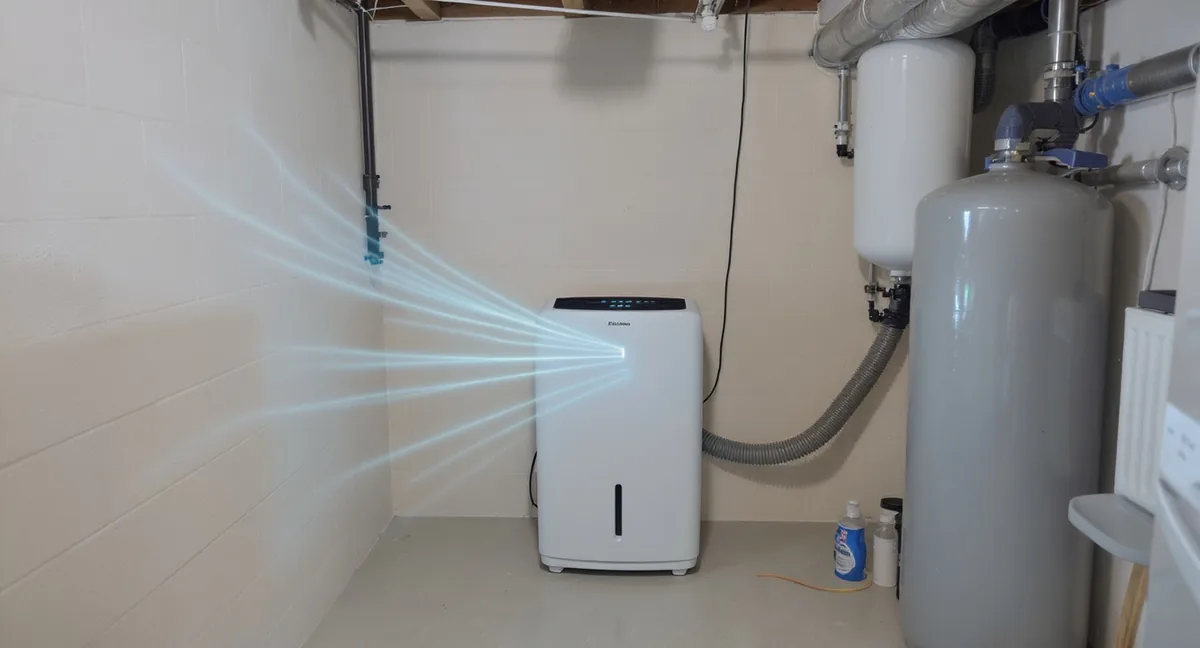
Finding a capable dehumidifier under $100 requires a different mindset than shopping for a full-size unit. At this price point, you are not looking at the 20-50 pint compressor-based models that tackle basements and large living spaces. Instead, the sub-$100 category is dominated by compact Peltier (thermoelectric) dehumidifiers designed for bathrooms, closets, RVs, gun safes, laundry rooms, and small bedrooms.
Based on our research into customer reviews, published specifications, and editorial assessments, these compact units serve a legitimate purpose — but understanding their limitations is essential to avoiding disappointment.
Key Takeaways
- 1Full-size compressor dehumidifiers start at $150+ — the sub-$100 market is almost entirely Peltier (thermoelectric) mini dehumidifiers with capacities of 1-2 pints per day
- 2Peltier dehumidifiers work best in enclosed spaces under 200 sq. ft. — bathrooms, walk-in closets, RVs, laundry closets, and gun safes where moisture control rather than heavy removal is the goal
- 3Energy efficiency is a genuine advantage: compact Peltier units draw only 22-72 watts versus 280-600 watts for compressor models, costing pennies per day to run
- 4If you can stretch to $179, the Midea 20-Pint is the closest budget option that delivers real compressor-based dehumidification with smart app control and 44 dB quiet operation
- 5For basements, large bedrooms, or spaces with humidity consistently above 65%, a sub-$100 Peltier unit will not be sufficient — invest in a 20-50 pint compressor model instead
Quick Answer
What is the best dehumidifier under $100?
The best dehumidifiers under $100 are compact Peltier (thermoelectric) units designed for small, enclosed spaces. Models like the Pro Breeze 30oz Mini (around $45-50), the hOmeLabs Small Space ($40-50), and the Eva-dry E-333 ($30-35) consistently earn strong customer reviews for bathroom, closet, and RV use. However, no sub-$100 dehumidifier can handle rooms over 200 sq. ft. or high-humidity conditions effectively. If you can stretch to $179, the Midea 20-Pint is the best value entry point for real dehumidification with 20 pints/day capacity, smart app control, and whisper-quiet 44 dB operation.
The Honest Truth About Sub-$100 Dehumidifiers
Before recommending anything, we need to be transparent about what this price point delivers — and what it does not.
What you get under $100:
- Peltier (thermoelectric) technology — no compressor, no refrigerant
- Moisture removal of 8-30 ounces per day (0.5-2 pints)
- Coverage for small, enclosed spaces of 50-200 sq. ft.
- Near-silent operation (most run under 35 dB)
- Very low power consumption (22-72 watts)
- Compact, portable form factor — many weigh under 5 pounds
- No ongoing filter costs (most use washable or no filters)
What you do not get:
- Capacity to handle rooms larger than 200 sq. ft. effectively
- Ability to manage high humidity (above 65% relative humidity)
- A built-in humidistat with automatic cycling
- Continuous drainage via hose or pump
- Compressor-based technology that works effectively in cooler temperatures
Peltier vs. Compressor: The Fundamental Difference
This distinction matters more than any brand comparison at the sub-$100 level:
| Feature | Peltier (Sub-$100) | Compressor ($150+) |
|---|---|---|
| Daily capacity | 8-30 oz (0.5-2 pints) | 20-80 pints |
| Best for | Closets, bathrooms, RVs | Bedrooms, basements, living rooms |
| Effective room size | 50-200 sq. ft. | 500-4,500 sq. ft. |
| Noise level | 25-39 dB (near-silent) | 44-52 dB (noticeable hum) |
| Power draw | 22-72 watts | 280-600 watts |
| Temperature range | Above 59°F only | Above 41°F (some have defrost) |
| Humidity management | Slow, gradual reduction | Fast, aggressive removal |
Peltier dehumidifiers use a semiconductor cooling element to condense moisture from the air — no moving parts beyond a small fan. This makes them extremely quiet and energy-efficient, but their moisture removal capacity is a fraction of compressor-based units. They are genuinely useful tools — just not for the same jobs.
Best Sub-$100 Compact Dehumidifiers
Since there are no full-size compressor dehumidifiers available under $100 in our database, the recommendations below are based on our research of customer reviews and editorial assessments of the leading compact dehumidifier models in this price range.
Pro Breeze 30oz Electric Mini Dehumidifier (Around $45-50)
The Pro Breeze is one of the most popular compact dehumidifiers on Amazon, with tens of thousands of customer reviews averaging 4.3+ stars. It removes approximately 18 ounces of moisture per day and works best in enclosed spaces up to 150 sq. ft. — a standard bathroom, walk-in closet, or small laundry room.
Customer reviewers consistently highlight three strengths: it is genuinely silent (you cannot hear it running from across the room), it draws only 22 watts of power (costing roughly $2-3 per month in electricity), and the auto shut-off activates when the 30-ounce water tank is full. The compact 6.5 x 5.2 x 8.6 inch footprint fits on bathroom counters and closet shelves.
Where reviewers see results: Bathrooms where mirror fog and tile condensation are daily problems. Walk-in closets where musty odors develop during humid months. Gun safes and cabinets where moisture can damage equipment. RVs and boats where compact size and low power draw are essential.
Where it falls short: Reviewers in rooms larger than 150 sq. ft. or with humidity above 65% consistently report that the Pro Breeze cannot keep up. It reduces moisture gradually — do not expect a humid room to feel dry within hours. It is a maintenance tool for already-manageable humidity, not a solution for serious dampness.
hOmeLabs Small Space Dehumidifier (Around $40-50)
The hOmeLabs compact dehumidifier occupies a similar niche to the Pro Breeze with a 16-ounce daily capacity and coverage for spaces up to 150 sq. ft. Customer reviewers with 12+ months of daily use praise its reliability and simplicity — single-button operation, auto shut-off, and a translucent tank that shows the water level at a glance.
The design is slightly taller and narrower than the Pro Breeze, which some reviewers prefer for tight spaces like between bathroom vanity items or on narrow closet shelves. At approximately 40-45 watts, it draws more power than the Pro Breeze but is still far more efficient than any compressor model.
Best use cases based on customer feedback: Apartment bathrooms without exhaust fans, bedroom closets in humid climates, and covered porches or sunrooms where a full-size unit is overkill.
Eva-dry E-333 Renewable Mini Dehumidifier (Around $30-35)
The Eva-dry E-333 is unique in this category: it is a renewable, non-electric dehumidifier that uses silica gel to absorb moisture passively. It requires no power, no batteries, and makes zero noise. When the indicator window turns from blue to pink (every 2-4 weeks depending on humidity), you plug it in for 8-10 hours to recharge the silica gel. Then it goes back to silent, electricity-free operation.
At roughly $30, it is the most affordable dehumidifier worth considering. Customer reviewers use it extensively in gun safes, jewelry boxes, small closets, instrument cases, and other enclosed spaces where even the hum of a Peltier fan is unwanted. Its 333 cubic foot rating is optimistic — based on customer feedback, it works best in truly enclosed spaces under 100 sq. ft.
The trade-off: Moisture removal is slower and less aggressive than powered Peltier units. It does not have a water tank — it absorbs moisture into the silica gel beads, which you then drive off during the recharging cycle. For small, enclosed spaces where maintaining low humidity is more important than actively reducing high humidity, it is remarkably effective.
Afloia Dehumidifier (Around $50-60)
The Afloia is a step up in the Peltier category, with a larger 35-ounce tank and approximately 25-ounce daily capacity. Customer reviewers consider it the most capable compact dehumidifier under $100, though it still operates within the same Peltier limitations. At 52 watts, it draws slightly more power but delivers noticeably more moisture removal in spaces up to 200 sq. ft.
The larger tank means fewer emptying cycles — every 2-3 days in moderately humid conditions versus daily for smaller-tank models. Some reviewers position two Afloia units in a larger bathroom or mudroom for combined coverage, which remains cheaper to buy and operate than a single compressor model.
The "Stretch Your Budget" Option: Midea 20-Pint
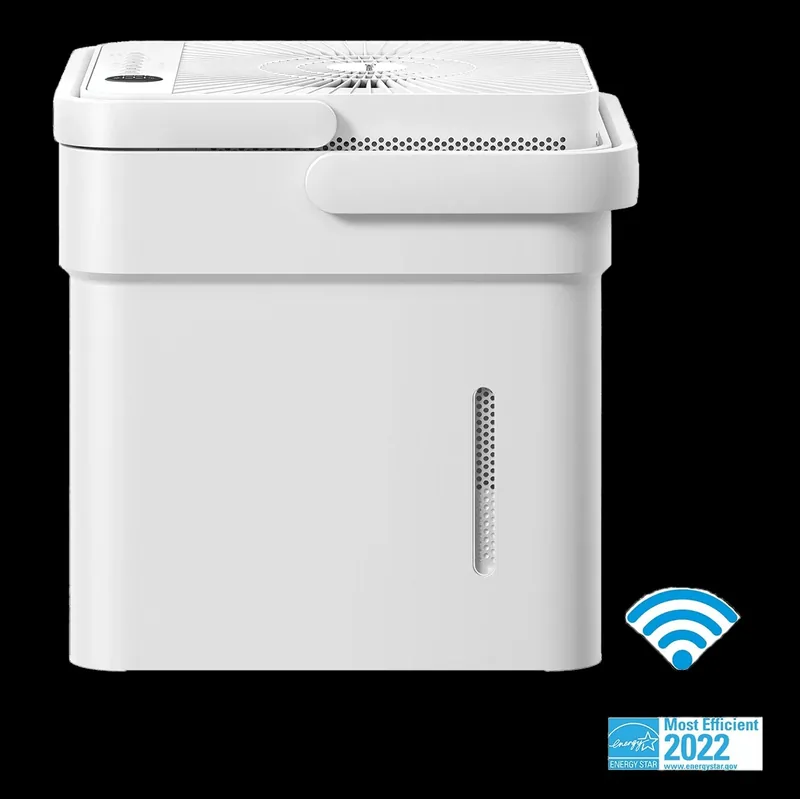
If you can extend your budget to $179, the Midea 20-Pint represents a fundamentally different category of dehumidification. This is a real compressor-based dehumidifier that removes 20 pints of moisture per day — roughly 20 times more than the best Peltier mini unit. For $60 more than the most expensive compact option, you cross the threshold from moisture maintenance to actual humidity control.
Why the stretch is worth it:
- 20 pints/day capacity vs. 1-2 pints for Peltier units
- Covers rooms up to 1,500 sq. ft. vs. 150-200 sq. ft.
- Built-in humidistat maintains your target humidity automatically
- Smart app control via MSmartHome with Alexa and Google Assistant
- 44 dB whisper-quiet operation — quieter than most Peltier fans at their loudest
- Continuous drain port for hands-free operation
According to customer reviews, the Midea 20-Pint is the most recommended entry point into real dehumidification. Reviewers who upgraded from Peltier mini units describe the difference as "night and day" — problems that took weeks to manage with a compact unit are resolved in hours with the Midea.
Our honest assessment: If your space is genuinely small (a single bathroom or closet), a $40-50 Peltier unit does the job well and costs less to buy and operate. But if you need dehumidification for a bedroom, living room, or any space over 200 sq. ft., saving for the Midea is the smarter investment.
What We Like
- +Compact and lightweight
- +Smart app control via Wi-Fi
- +Quieter than most competitors
- +Reusable washable filter
Could Be Better
- −Smaller capacity for large spaces
- −Bucket fills quickly without drain hose
Compact Dehumidifier Buying Guide
Choosing the Right Type for Your Space
The decision tree for sub-$100 dehumidifiers is straightforward:
Choose a Peltier mini dehumidifier ($30-$60) if:
- Your space is under 200 sq. ft. (bathroom, closet, RV, small laundry room)
- Humidity is mildly elevated (50-60%) rather than severe
- Near-silent operation is essential
- You want minimal electricity costs (pennies per day)
- The space is consistently above 59°F
Choose a renewable/non-electric unit ($25-$35) if:
- Your space is truly small (gun safe, instrument case, jewelry box, small closet)
- You want zero electricity use and zero noise
- Moderate moisture maintenance is the goal, not aggressive removal
Save for a compressor model ($150+) if:
- Your space is over 200 sq. ft.
- Humidity regularly exceeds 65%
- You see visible condensation on windows or walls
- You smell persistent musty or mildew odors
- The space is a basement or crawl space
Placement Tips for Maximum Effectiveness
Compact dehumidifiers work best when you help them:
- Close doors and windows — Peltier units cannot keep up with fresh humid air flowing in. Enclosing the space dramatically improves performance.
- Elevate the unit — Place it on a counter, shelf, or table rather than the floor. Warm, humid air rises, and positioning the unit higher puts it in contact with the moistest air.
- Ensure airflow — Do not push the unit against a wall. Leave 6-12 inches of clearance around all sides for proper air circulation.
- Empty the tank regularly — A full tank means the unit shuts off. In humid conditions, check daily until you learn your emptying rhythm.
- Run it continuously — Peltier units work best when running 24/7 to maintain low humidity rather than cycling on and off.
What About Moisture Absorber Products?
Chemical moisture absorbers (DampRid, closet dehumidifier hanging bags) are not dehumidifiers, but they serve a purpose in tight spaces. They use calcium chloride or silica gel to passively absorb moisture without any power source. They are effective in truly tiny enclosed spaces — dresser drawers, storage bins, shoe cabinets — where even a mini dehumidifier is overkill.
For any space larger than a storage container, a Peltier dehumidifier is more effective and more economical over time than disposable absorber refills.
When to Spend More
The sub-$100 compact dehumidifier is the right tool for specific jobs. But if any of these describe your situation, stepping up to the $150-$250 range is strongly recommended:
- Your bedroom or living room feels damp — Compressor models starting at $178.99 (Midea Cube 20-Pint) cover rooms up to 1,500 sq. ft.
- Your basement has humidity issues — You need a 50-pint model. The hOmeLabs 7,000 Sq. Ft. at $212 or Frigidaire FFAD5033W1 at $314 are the best entry points.
- You see mold or mildew growth — This indicates humidity consistently above 60% and likely requires a 20-50 pint compressor unit. A Peltier mini cannot remove moisture fast enough to prevent mold in spaces where it is already growing.
- You need continuous drainage — Only compressor models above $150 offer gravity drain or pump options for true hands-free operation.
Our Recommendation
For bathrooms, closets, RVs, and small enclosed spaces under 200 sq. ft., compact Peltier dehumidifiers in the $40-$60 range are effective and practical tools. The Pro Breeze, hOmeLabs, and Afloia models all earn strong customer reviews for their intended use cases. The Eva-dry E-333 is a clever, power-free option for truly small enclosed spaces.
However, if your dehumidification needs extend beyond a single small room, we strongly recommend stretching your budget to $179 for the Midea 20-Pint. The jump from 1-2 pints per day to 20 pints per day is not incremental — it is transformational. Customer reviewers who make this upgrade consistently describe it as the best $80 they ever spent beyond their original budget.
Sources & References
- EPA Mold and Moisture Guide — Federal guidelines recommending indoor humidity between 30-50% to prevent mold growth and protect indoor air quality
- ENERGY STAR Dehumidifier Specifications — Energy efficiency standards and sizing recommendations for residential dehumidifiers
- ASHRAE Standard 55 — Thermal Environmental Conditions — Industry standard recommending 40-60% relative humidity for occupant comfort
The AirQualityNest editorial team researches and reviews products independently to help you find the best options for your needs.
Frequently Asked Questions
Can a mini dehumidifier work for a bathroom?+
Yes — compact Peltier dehumidifiers in the $40-60 range are well-suited for bathrooms up to 150 sq. ft. Customer reviewers consistently report success reducing mirror fog, tile condensation, and musty odors in standard-size bathrooms. For best results, close the bathroom door when running the unit and position it on the counter rather than the floor. A Peltier unit will not eliminate humidity spikes during showers, but it will bring levels back down within an hour or two afterward.
How much water does a mini dehumidifier collect?+
Compact Peltier dehumidifiers typically collect 8-30 ounces (0.5-2 pints) of water per day, depending on ambient humidity and temperature. In moderately humid conditions (50-60% relative humidity), expect to empty the tank every 1-3 days for most models. This is dramatically less than compressor-based dehumidifiers, which remove 20-80 pints per day. Peltier units are designed for moisture maintenance in small spaces, not aggressive humidity removal.
Are cheap dehumidifiers worth buying?+
For the right application, yes. A $40-50 Peltier dehumidifier is effective and practical for bathrooms, closets, RVs, and small enclosed spaces where humidity is mildly elevated. Running costs are minimal — just a few dollars per month in electricity. However, if you need to dehumidify a bedroom, living room, basement, or any space over 200 sq. ft., a sub-$100 unit is not adequate. In those cases, the Midea 20-Pint at $179 is the minimum investment for meaningful results.
Do Peltier dehumidifiers work in cold rooms?+
Peltier dehumidifiers lose effectiveness below 59°F (15°C). The thermoelectric cooling element becomes less efficient at condensing moisture from cooler air. For unheated garages, basements, or spaces that drop below 60°F, a compressor-based dehumidifier with a defrost cycle is a better choice. Most compressor models work down to 41°F, with some cold-weather models rated even lower.
How do I choose between a dehumidifier and a bathroom exhaust fan?+
If your bathroom has condensation issues, an exhaust fan is the first line of defense — it removes humid air directly during and after showers. A Peltier dehumidifier is a supplement for bathrooms without exhaust fans, or for ongoing humidity control between showers. If you have a functioning exhaust fan and still experience humidity problems, the issue may be inadequate fan sizing, a ducting problem, or whole-home humidity that requires a larger dehumidifier solution.
Related Reading
Best Dehumidifiers Overall
Our complete dehumidifier rankings from budget to premium for every room size
Best Dehumidifiers Under $200
Step up to compressor-based models for real moisture removal power
Do I Need a Dehumidifier?
Signs your home humidity is too high and when it is time to act
Humidity and Health
How excess moisture impacts respiratory health, allergies, and sleep quality
Continue Reading
Best Air Purifiers for Open Floor Plans in 2026: High-CADR Models That Cover It All
The best air purifiers for open floor plans ranked by CADR, coverage area, and noise. High-performance HEPA purifiers that handle 500-1,500+ sq. ft. open spaces.
Best Smart Humidifiers in 2026 (Wi-Fi, App Control & Auto Humidity)
The best smart humidifiers with Wi-Fi, app control, and auto humidity adjustment. Top picks for Alexa, Google Home, and smart home integration.
The 5 Best Portable Air Quality Monitors in 2026
Monitor your air quality on the go. We tested the best portable and compact air quality monitors for accuracy, battery life, and sensor range.