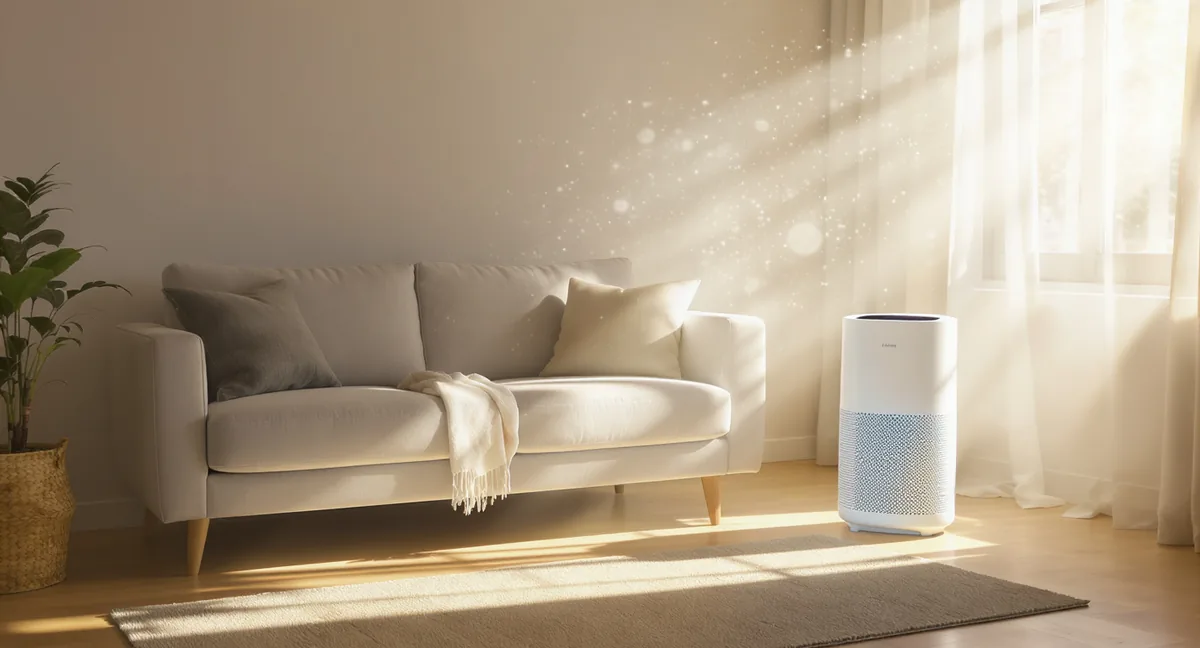
The Blueair Blue Pure 211+ and Classic 605 are both discontinued. If you are searching for either model, here is what replaced them — and how the two successors compare for very different buyers.
The Levoit LV-H132 (productId mapped from the Blue Pure 211+ slot) is a compact budget purifier at $89.99 for small rooms up to 129 sq. ft. The Blueair Blue Pure 211i Max (which replaced the Classic 605) is a smart large-room purifier at $244.99 covering 674 sq. ft. with Blueair's HEPASilent technology. These are not direct competitors — they serve entirely different room sizes and budgets.
Key Takeaways
- 1Both the Blueair Blue Pure 211+ (~$300) and Classic 605 (~$600) have been discontinued. Their product slots are now filled by the Levoit LV-H132 ($89.99) and Blue Pure 211i Max ($244.99).
- 2The Blue Pure 211i Max covers 674 sq. ft. with 410 CADR and HEPASilent smart technology — a large-room powerhouse with app control and 23 dB quiet operation.
- 3The Levoit LV-H132 covers 129 sq. ft. with True HEPA + carbon filtration — a compact bedroom or office purifier at the lowest price point.
- 4For rooms over 400 sq. ft., the Blue Pure 211i Max is the only real option. For small bedrooms or personal spaces, the LV-H132 is an affordable entry point.
- 5The 211i Max's 9-month filter life and smart auto mode make it more economical to run long-term than either of the discontinued Blueair models.
Quick Answer
Should I buy the Levoit LV-H132 or the Blueair Blue Pure 211i Max?
Buy the Blueair Blue Pure 211i Max ($244.99) if you need to cover a room larger than 300 sq. ft. Its 410 CADR, 674 sq. ft. coverage, and HEPASilent smart technology make it the go-to for living rooms, open floor plans, and large bedrooms. Buy the Levoit LV-H132 ($89.99) if you need a compact, affordable purifier for a small bedroom, office, or nursery under 130 sq. ft.
Head-to-Head Specs
| Feature | Levoit LV-H132 | Blueair Blue Pure 211i Max |
|---|---|---|
| Price | $89.99 | $244.99 |
| CADR | ~60 CFM (est.) | 410 CFM |
| Coverage | 129 sq. ft. | 674 sq. ft. |
| Filtration | True HEPA + Activated Carbon | HEPASilent Smart (Mechanical + Electrostatic) |
| Wi-Fi / App Control | No | Yes (Blueair app) |
| Auto Mode | No | Yes (sensor-driven) |
| Noise (Low / High) | 25 dB / 50 dB | 23 dB / 53 dB |
| Filter Life | ~6-8 months | ~9 months |
| Annual Filter Cost | ~$30-40 | ~$70-80 |
| Weight | 6.6 lbs | ~13 lbs |
1. Room Coverage: Different Leagues Entirely
Winner: Blue Pure 211i Max (by a wide margin)
The 211i Max covers 674 sq. ft. — more than five times the LV-H132's 129 sq. ft. This is not a comparison between "good" and "better" — these purifiers are designed for fundamentally different spaces. The 211i Max handles open living rooms, combined kitchen-dining areas, and large bedrooms. The LV-H132 is sized for a small bedroom, home office, or bathroom.
If your space is larger than 200 sq. ft., the LV-H132 is simply undersized. Choose the 211i Max.
2. Filtration Technology
The LV-H132 uses standard True HEPA mechanical filtration — dense filter media that captures 99.97% of particles at 0.3 microns. It includes a three-stage system with a pre-filter, True HEPA, and activated carbon layer for light odors.
The Blue Pure 211i Max uses Blueair's proprietary HEPASilent smart technology, which electrically charges particles before they reach the filter media. This hybrid approach allows higher airflow with less air resistance, resulting in more clean air delivered per decibel of noise. The carbon component handles odors and light VOCs.
Both deliver genuine HEPA-level particle capture. The 211i Max's HEPASilent approach gives it the efficiency advantage — more CADR with less noise and energy consumption.
3. Smart Features
Winner: Blue Pure 211i Max
The 211i Max includes Blueair's app with real-time air quality monitoring, auto mode that adjusts fan speed based on sensor readings, scheduling, and filter life tracking. The LV-H132 is a basic manual purifier — three speed settings and a filter indicator light. No app, no sensors, no auto mode.
For buyers who want set-it-and-forget-it operation with intelligent fan speed adjustment, the 211i Max is in a different category.
4. Noise Levels
| Setting | Levoit LV-H132 | Blue Pure 211i Max |
|---|---|---|
| Low | ~25 dB | 23 dB |
| High | ~50 dB | 53 dB |
Both are quiet on low settings — suitable for bedroom use. The 211i Max is slightly quieter on low despite moving dramatically more air, thanks to HEPASilent technology's efficiency. On high, the 211i Max is marginally louder, which is expected given its much higher CADR and room coverage.
5. Value and Total Cost of Ownership
| Cost Over 2 Years | Levoit LV-H132 | Blue Pure 211i Max |
|---|---|---|
| Purchase price | $89.99 | $244.99 |
| Year 1 filters | ~$35 | ~$75 |
| Year 2 filters | ~$35 | ~$75 |
| 2-Year Total | ~$160 | ~$395 |
The LV-H132 is cheaper in absolute terms, but the value calculation depends entirely on your room size. Spending $90 on a purifier that cannot adequately clean your 500 sq. ft. living room is not a savings — it is wasted money. The 211i Max's cost per square foot of coverage is actually competitive with budget purifiers when you factor in its 674 sq. ft. capability.
Who Should Buy Which
Buy the Levoit LV-H132 ($89.99) if:
- Your room is under 150 sq. ft. (small bedroom, office, nursery)
- You want the lowest possible upfront cost
- You prefer dead-simple, manual operation
- You need a compact, lightweight unit you can move easily
- You are supplementing a larger purifier in another room
Buy the Blueair Blue Pure 211i Max ($244.99) if:
- Your room is 300-700 sq. ft. (living room, open floor plan, large bedroom)
- You want smart features with app control and auto mode
- Quiet operation matters (23 dB is near-silent)
- You want HEPASilent technology's efficient filtration
- You need a primary purifier for your main living space
The Bottom Line
The Levoit LV-H132 and Blueair Blue Pure 211i Max are not really competitors — they are different tools for different jobs. The LV-H132 is a budget compact purifier for small personal spaces. The 211i Max is a smart, high-performance purifier for large rooms.
If you are looking at both models because you remember the old Blueair 211+ vs 605 comparison, the landscape has changed. The 211i Max at $244.99 now offers most of what the $600 Classic 605 delivered — strong CADR, large room coverage, and HEPASilent technology — at a far more accessible price. It is the clear recommendation for anyone who needs a large-room Blueair purifier in 2026.
Sources & References
- Blueair Product Specifications — Manufacturer-published specifications for the Blue Pure 211i Max air purifier
- AHAM (Association of Home Appliance Manufacturers) — CADR certification program and testing standards for portable air cleaners
- California Air Resources Board (CARB) — Ozone emission certification for indoor air cleaning devices including Blueair models
This guide was researched and written by the AirQualityNest editorial team. We update our content regularly to reflect the latest products, pricing, and research.
Frequently Asked Questions
Is the Blueair Blue Pure 211+ still available?+
The Blue Pure 211+ has been discontinued. Blueair's current mid-range and large-room options include the Blue Pure 211i Max at $244.99, which offers 410 CADR, 674 sq. ft. coverage, and smart features including app connectivity and auto mode.
Is the Blueair Classic 605 still available?+
The Classic 605 has been discontinued. Its successor is the Blue Pure 211i Max at $244.99 — less than half the price of the 605, with HEPASilent smart technology, 410 CADR, 674 sq. ft. coverage, and a quieter 23 dB minimum noise level.
Which Blueair purifier should I buy in 2026?+
For large rooms and open floor plans (400-700 sq. ft.), the Blue Pure 211i Max at $244.99 is Blueair's best current option. It delivers 410 CADR with HEPASilent smart technology, app control, and whisper-quiet 23 dB operation. Its 9-month filter life keeps ongoing costs reasonable.
Is the Blue Pure 211i Max as good as the Classic 605?+
The 211i Max has a lower CADR (410 vs 500) and slightly less coverage (674 vs 775 sq. ft.). But it costs $244.99 vs $599.99, runs quieter (23 dB vs 32 dB on low), has smarter features, and its filters last 9 months instead of 6. For most buyers, the 211i Max is the better overall value.
Related Comparisons and Reviews
Dyson vs Blueair Comparison
How Blueair models stack up against Dyson's premium purifiers
Levoit vs Blueair Comparison
Blueair vs Levoit across the lineup
Coway vs Blueair Comparison
Two great brands with different approaches
Best Air Purifiers for Open Floor Plans
High-CADR purifiers for open-concept living spaces
Continue Reading
Best Air Purifiers for Open Floor Plans in 2026: High-CADR Models That Cover It All
The best air purifiers for open floor plans ranked by CADR, coverage area, and noise. High-performance HEPA purifiers that handle 500-1,500+ sq. ft. open spaces.
Best Smart Humidifiers in 2026 (Wi-Fi, App Control & Auto Humidity)
The best smart humidifiers with Wi-Fi, app control, and auto humidity adjustment. Top picks for Alexa, Google Home, and smart home integration.
The 5 Best Portable Air Quality Monitors in 2026
Monitor your air quality on the go. We tested the best portable and compact air quality monitors for accuracy, battery life, and sensor range.