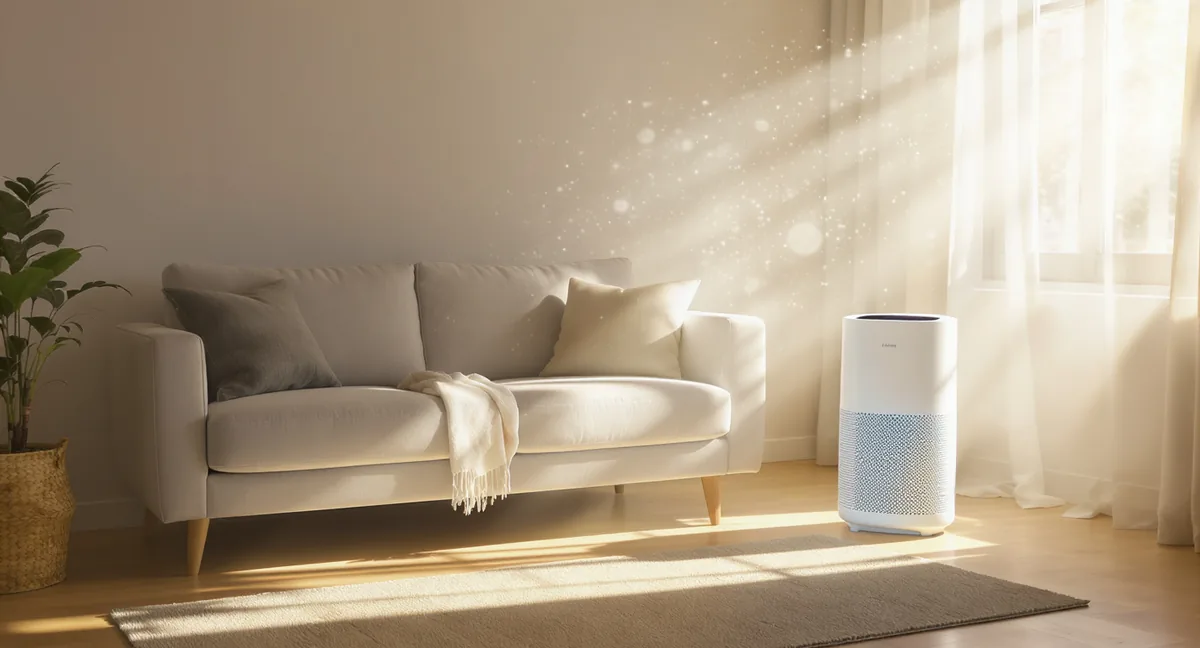
The Blueair Blue Pure 211+ and Coway Airmega AP-1512HH are two of the most recommended air purifiers in the $200-$300 range — and for good reason. Both deliver True HEPA-level filtration, strong customer satisfaction ratings, and reliable long-term performance. But they take distinctly different approaches to air purification.
The Blueair is the high-airflow powerhouse with a Scandinavian design sensibility and CADR ratings that punch well above its price class. The Coway is the compact, feature-rich all-rounder with air quality sensing, auto mode, Eco mode, and one of the quietest low-speed operations in the industry. Based on our research into published specifications, customer feedback, and long-term operating costs, here is the definitive head-to-head comparison.
Key Takeaways
- 1The Blueair 211+ has significantly higher CADR (350 smoke) vs. the Coway (233 smoke) — delivering 50% more clean air per minute and covering rooms up to 540 sq. ft.
- 2The Coway AP-1512HH wins on smart features with a built-in air quality sensor, auto mode, and Eco mode that the Blueair lacks entirely.
- 3Noise levels are comparable on low settings, but the Coway's 24.4 dB low speed has a slight edge over the Blueair's ~25-27 dB.
- 4The Blueair's washable fabric pre-filters come in multiple colors and add a design element — but the Coway's more compact footprint fits smaller spaces better.
- 5Filter costs favor the Coway at ~$40/year vs. the Blueair's ~$35-70/year depending on whether you use carbon filters, but both are affordable to maintain.
Quick Answer
Should I buy the Blueair 211+ or Coway AP-1512HH?
Buy the Blueair Blue Pure 211+ if you need to cover a larger room (400-540 sq. ft.), want the highest possible CADR in this price range, or prefer the Blueair's fabric-wrapped design aesthetic. Buy the Coway AP-1512HH if you want smart features like auto mode and Eco mode, prefer the most compact footprint, or value having real-time air quality feedback. For bedrooms, either works — but the Coway's sensor-driven auto mode is a meaningful convenience advantage. For large living rooms, the Blueair's higher CADR is the decisive factor.
Head-to-Head Specs
| Feature | Blueair Blue Pure 211+ | Coway AP-1512HH |
|---|---|---|
| Price | ~$259.99 | $229.00 |
| CADR (Smoke/Dust/Pollen) | 350/350/350 | 233/246/240 |
| Coverage | 540 sq. ft. | 361 sq. ft. |
| Filter Type | HEPASilent (mechanical + electrostatic) | True HEPA + Carbon |
| Noise (Low) | ~25-27 dB | 24.4 dB |
| Noise (High) | ~56 dB | 53.8 dB |
| ENERGY STAR | Yes | Yes |
| Air Quality Sensor | No | Yes (color-coded LED) |
| Auto Mode | No | Yes |
| Eco Mode | No | Yes |
| Pre-filter | Washable fabric (color options) | Washable mesh |
| Annual Filter Cost | ~$35-70 | ~$40 |
| Weight | 13.2 lbs | 12.3 lbs |
| Dimensions | 13 x 13 x 20.4 in | 16.8 x 18.3 x 9.6 in |
1. CADR and Air Cleaning Performance
Winner: Blueair Blue Pure 211+
The Blueair's CADR ratings of 350/350/350 (smoke/dust/pollen) significantly outperform the Coway's 233/246/240. That is roughly 50% more clean air delivered per minute — a substantial advantage in any room size.
| Metric | Blueair 211+ | Coway AP-1512HH |
|---|---|---|
| CADR (Smoke) | 350 CFM | 233 CFM |
| CADR (Dust) | 350 CFM | 246 CFM |
| CADR (Pollen) | 350 CFM | 240 CFM |
| ACH in 300 sq. ft. | 8.2 | 5.8 |
| ACH in 400 sq. ft. | 6.1 | 4.4 |
| ACH in 500 sq. ft. | 4.9 | 3.5 |
The Blueair achieves this higher throughput through its proprietary HEPASilent technology, which combines mechanical filtration with electrostatic charging. By electrically charging particles before they reach the filter media, the Blueair can use a less dense filter while maintaining capture rates equivalent to standard HEPA. The result is higher airflow at lower resistance — and better CADR numbers.
Practical impact: In a 300 sq. ft. bedroom, both purifiers deliver excellent results. In a 400+ sq. ft. living room, the Blueair's 50% higher CADR translates to noticeably faster particle clearance. According to customer reviews, Blueair owners frequently note the speed at which the 211+ clears cooking odors and smoke.
2. Room Coverage
Winner: Blueair Blue Pure 211+
The Blueair covers up to 540 sq. ft. versus the Coway's 361 sq. ft. — a 50% advantage. More importantly, the Blueair maintains the recommended 4+ ACH in rooms up to approximately 500 sq. ft., while the Coway drops below that threshold in rooms above 350 sq. ft.
| Room Size | Blueair ACH | Coway ACH | Better Choice |
|---|---|---|---|
| 200 sq. ft. | 12.3 | 8.7 | Either (both excellent) |
| 300 sq. ft. | 8.2 | 5.8 | Either (both very good) |
| 350 sq. ft. | 7.0 | 5.0 | Either works |
| 400 sq. ft. | 6.1 | 4.4 | Blueair has more margin |
| 500 sq. ft. | 4.9 | 3.5 | Blueair recommended |
| 540 sq. ft. | 4.5 | 3.2 | Blueair only |
For open-concept apartments and large living rooms: The Blueair is the clear choice. It can handle spaces that the Coway simply cannot serve effectively.
For bedrooms and offices under 350 sq. ft.: Both deliver more than enough ACH. The decision should come down to features, noise, and price rather than raw coverage.
3. Noise
Winner: Coway AP-1512HH — slight edge
Both purifiers are impressively quiet on their lowest settings, but the Coway holds a marginal advantage.
| Setting | Blueair 211+ | Coway AP-1512HH |
|---|---|---|
| Low | ~25-27 dB | 24.4 dB |
| Medium | ~40-43 dB | ~40 dB |
| High | ~56 dB | 53.8 dB |
The difference on low is roughly 1-3 dB — perceptible in a dead-silent room but functionally negligible for most people. Both are among the quietest air purifiers in their class. On high, the Coway is slightly quieter at 53.8 dB vs. the Blueair's 56 dB.
Based on our research into customer reviews, noise complaints are rare for both models. The Blueair's fan produces a smooth, consistent white-noise quality that many users find pleasant. The Coway's fan is slightly more mechanical in tone but quieter overall.
For bedrooms: Either purifier runs quietly enough for overnight use. The Coway's auto mode adds a practical advantage here — it automatically reduces fan speed when the air is clean, minimizing noise without your intervention.
4. Smart Features and Convenience
Winner: Coway AP-1512HH — decisively
This is where the Coway earns its reputation as the most feature-rich purifier in its price class. It includes:
- Air quality sensor with a color-coded LED indicator (blue, purple, red) that provides real-time feedback on particle levels
- Auto mode that adjusts fan speed based on sensor readings — ramps up when air quality drops, dials back when the air is clean
- Eco mode that shuts off the fan entirely when the sensor detects consistently clean air, then reactivates when particles are detected
- Filter replacement indicator that alerts you when it is time to change the filter
- Timer with 1, 4, and 8-hour presets
The Blueair Blue Pure 211+ has none of these features. It offers three manual fan speeds and nothing else — no sensor, no auto mode, no air quality indicator, no timer. You set a speed and it runs continuously at that speed. The Blueair's simplicity is either refreshing or frustrating depending on your preferences.
The practical impact: The Coway's auto mode and Eco mode are not just convenience features — they actively save energy and reduce noise by running the fan only as hard as needed. According to customer reviews, Coway owners cite auto mode as the single most useful feature, particularly for bedroom use where the purifier runs unattended overnight.
Neither purifier has Wi-Fi or app control. If app connectivity matters to you, consider the Blueair Blue Pure 311i+ or the Levoit Core 400S.
5. Design and Aesthetics
Winner: Tie — depends on your taste
The Blueair Blue Pure 211+ has a distinctive cylindrical design wrapped in a washable fabric pre-filter. The fabric comes in multiple colors — diva blue, dark shadow, and buff yellow — allowing you to match the purifier to your room decor. It draws air in from all sides (360-degree intake), sits upright like a pedestal, and has a Scandinavian minimalism that looks like a piece of furniture rather than an appliance.
The Coway AP-1512HH has a more traditional rectangular design — compact, modern, and unobtrusive. At 16.8 x 18.3 x 9.6 inches, it has a smaller footprint than the Blueair's 13 x 13 x 20.4 inches and is lighter (12.3 lbs vs. 13.2 lbs). The Coway's front-facing air quality indicator adds a visual element — the color-changing ring is aesthetically pleasing in a dark bedroom.
If design is a priority: The Blueair's fabric-wrapped look and color options give it an edge in spaces where you want the purifier to blend in or complement decor. The Coway's compact footprint wins in smaller rooms where space is at a premium.
6. Filter Technology and Costs
Winner: Approximately a tie
Both purifiers offer affordable filtration, but the cost structure differs.
| Filter Cost | Blueair 211+ | Coway AP-1512HH |
|---|---|---|
| Main filter per year | ~$35 (particle filter only) | ~$35-40 (HEPA + carbon combined) |
| Carbon filter per year | ~$0-35 (optional carbon upgrade) | Included in main filter |
| Pre-filter | Washable fabric ($0) | Washable mesh ($0) |
| Total Annual | ~$35-70 | ~$40 |
| 3-Year Filter Total | ~$105-210 | ~$120 |
The Blueair's cost depends on whether you use the standard particle-only filter ($35/year) or upgrade to the combination particle + carbon filter ($70/year) for odor and VOC reduction. The Coway's combined HEPA + carbon filter costs approximately $40/year and includes both particle and odor filtration by default.
Important note on filtration technology: The Blueair's HEPASilent technology uses electrostatic charging as part of its filtration process. This is not the same as a standalone ionizer — it is integral to the filter's particle capture mechanism. The trade-off is that the electrostatic component produces trace amounts of ozone, though Blueair models are CARB certified well below safety limits. The Coway also has an optional ionizer that can be turned off for zero-ozone operation.
7. Energy Efficiency
Winner: Coway AP-1512HH — slight edge
Both purifiers carry ENERGY STAR certification, so the baseline energy efficiency is comparable. However, the Coway's Eco mode gives it a practical advantage — by shutting off the fan when air quality is consistently clean, it reduces actual electricity consumption beyond what running on low speed would achieve.
| Energy Factor | Blueair 211+ | Coway AP-1512HH |
|---|---|---|
| ENERGY STAR | Yes | Yes |
| Auto/Eco Mode | No | Yes (both) |
| Wattage (Low/High) | ~1.5W / ~61W | ~4W / ~77W |
| Estimated Annual Cost | ~$10-15 | ~$8-12 |
The difference is modest — perhaps $3-5 per year. Both are energy-efficient appliances that cost very little to run continuously.
8. Long-Term Value: 3-Year Total Cost of Ownership
| Cost Factor | Blueair 211+ | Coway AP-1512HH |
|---|---|---|
| Purchase Price | ~$259.99 | $229.00 |
| Filters (3 years, with carbon) | ~$150-210 | ~$120 |
| Electricity (3 years) | ~$35 | ~$30 |
| 3-Year Total | ~$445-505 | ~$379 |
The Coway costs $65-125 less over three years, depending on whether you use Blueair's carbon filter upgrade. If you use the Blueair's basic particle-only filter (no carbon), the gap narrows to approximately $65. If you use the carbon upgrade for odor reduction, the Coway's value advantage widens.
The Verdict
Buy the Blueair Blue Pure 211+ if:
- Your room is 400-540 sq. ft. (large living rooms, open-concept spaces)
- You want the highest possible CADR under $300
- You prefer the Blueair's Scandinavian design and color options
- You are comfortable manually setting fan speeds
- You do not need an air quality sensor or auto mode
- Maximum airflow per dollar is your priority
Buy the Coway AP-1512HH if:
- Your room is under 350 sq. ft. (bedrooms, offices, apartments)
- You want auto mode that adjusts fan speed automatically
- Eco mode and energy savings matter to you
- You want real-time air quality feedback from the built-in sensor
- You prefer a compact, space-efficient design
- You want the lowest 3-year cost of ownership
The Bottom Line
The Blueair Blue Pure 211+ and Coway AP-1512HH are both outstanding air purifiers — the best in their respective niches. The Blueair wins on raw performance and room coverage. The Coway wins on features, convenience, and long-term value. For large rooms where CADR is king, the Blueair is the better buy. For bedrooms and medium rooms where smart features and quiet auto mode operation matter most, the Coway is the better buy.
Neither is a bad choice. Both will clean your air effectively for years.
Sources & References
- AHAM (Association of Home Appliance Manufacturers) — CADR certification program — both the Blueair Blue Pure 211+ and Coway AP-1512HH carry AHAM Verified CADR ratings
- ENERGY STAR Certified Room Air Cleaners — Both the Blueair Blue Pure 211+ and Coway AP-1512HH are ENERGY STAR certified
- Blueair Product Specifications — Manufacturer-published specifications for the Blueair Blue Pure 211+
- Coway Product Specifications — Manufacturer-published specifications for the Coway Airmega AP-1512HH Mighty
This guide was researched and written by the AirQualityNest editorial team. We update our content regularly to reflect the latest products, pricing, and research.
Frequently Asked Questions
Is the Blueair 211+ better than the Coway AP-1512HH?+
It depends on your priorities. The Blueair 211+ has 50% higher CADR (350 vs. 233 smoke) and covers rooms up to 540 sq. ft. — making it superior for large spaces. The Coway AP-1512HH offers auto mode, Eco mode, and a built-in air quality sensor that the Blueair lacks. For bedrooms and medium rooms, the Coway's features and lower cost make it the better buy. For large living rooms, the Blueair's CADR advantage wins.
Which is quieter, the Blueair 211+ or Coway AP-1512HH?+
They are very close. The Coway measures approximately 24.4 dB on low, while the Blueair sits around 25-27 dB. Both are near-silent on their lowest settings. The Coway has a slight edge, and its auto mode means it can automatically reduce to low speed when air quality is good — maintaining quiet operation without manual adjustment.
Do I need the carbon filter for the Blueair 211+?+
The Blueair 211+ comes with a standard particle filter by default. The optional carbon filter upgrade adds activated carbon for odor, smoke, and VOC reduction at an additional cost (~$35 more per year). If you deal with cooking odors, pet smells, or smoke, the carbon upgrade is worthwhile. The Coway includes carbon filtration in its standard filter.
Which air purifier is better for allergies?+
Both are excellent for allergies. The Blueair's higher CADR clears allergens from the air faster, which is advantageous during high-pollen days when you open windows. The Coway's auto mode means it will automatically ramp up when pollen levels spike, even if you are not home to adjust it manually. For bedrooms where you sleep — the most critical room for allergy sufferers — either purifier delivers strong results.
Can the Coway AP-1512HH handle a large living room?+
The Coway is rated for 361 sq. ft. and delivers good performance (4+ air changes per hour) in rooms up to about 350 sq. ft. For rooms larger than 400 sq. ft., the Blueair Blue Pure 211+ with its 540 sq. ft. coverage and much higher CADR is the significantly stronger choice.
Related Reading
Levoit vs Blueair Brand Comparison
How Levoit and Blueair compare across their full product lineups
Coway vs Winix Comparison
Another popular mid-range matchup featuring the Coway Mighty
Best Air Purifiers for Allergies
Top-rated picks for allergy and asthma relief
Air Purifier Sizing Guide
Calculate the right CADR and coverage for your room
Continue Reading

Best Air Purifiers for Open Floor Plans in 2026: High-CADR Models That Cover It All
The best air purifiers for open floor plans ranked by CADR, coverage area, and noise. High-performance HEPA purifiers that handle 500-1,500+ sq. ft. open spaces.
Best Smart Humidifiers in 2026 (Wi-Fi, App Control & Auto Humidity)
The best smart humidifiers with Wi-Fi, app control, and auto humidity adjustment. Top picks for Alexa, Google Home, and smart home integration.
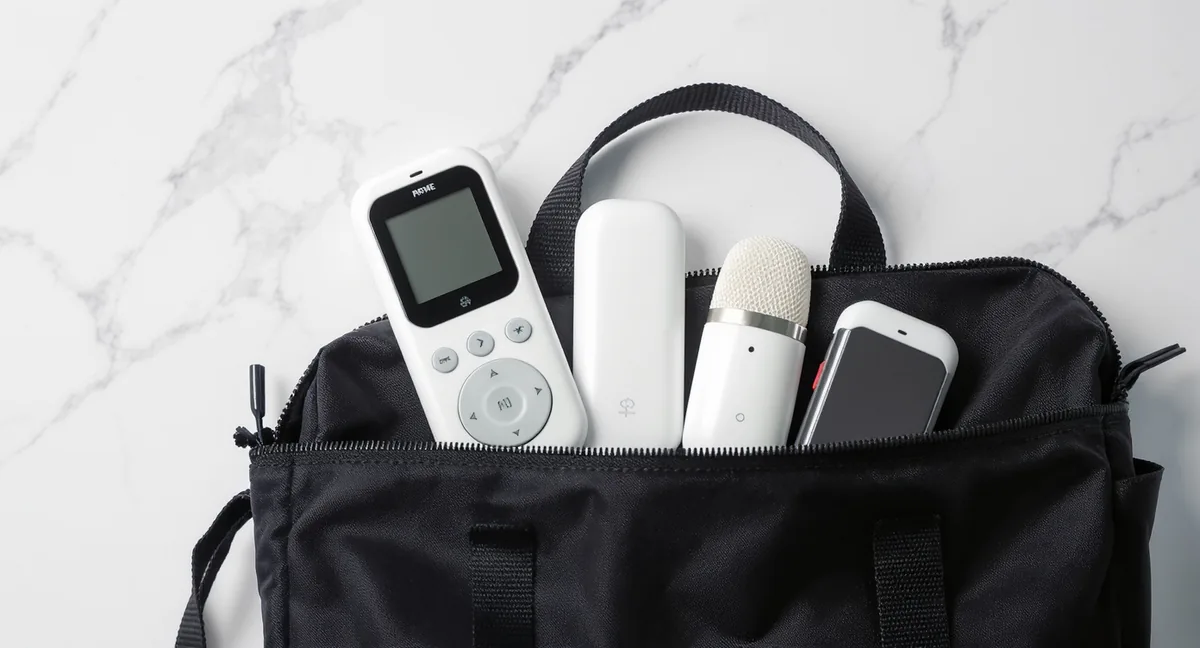
The 5 Best Portable Air Quality Monitors in 2026
Monitor your air quality on the go. We tested the best portable and compact air quality monitors for accuracy, battery life, and sensor range.